

Featured answer: Most Lost Mary disposables sold in the United States are labeled 5% (50 mg/mL) nicotine salt. Some models and markets use 2% (20 mg/mL). The total amount depends on the device’s e-liquid volume and is listed as concentration or mg/mL on packaging.
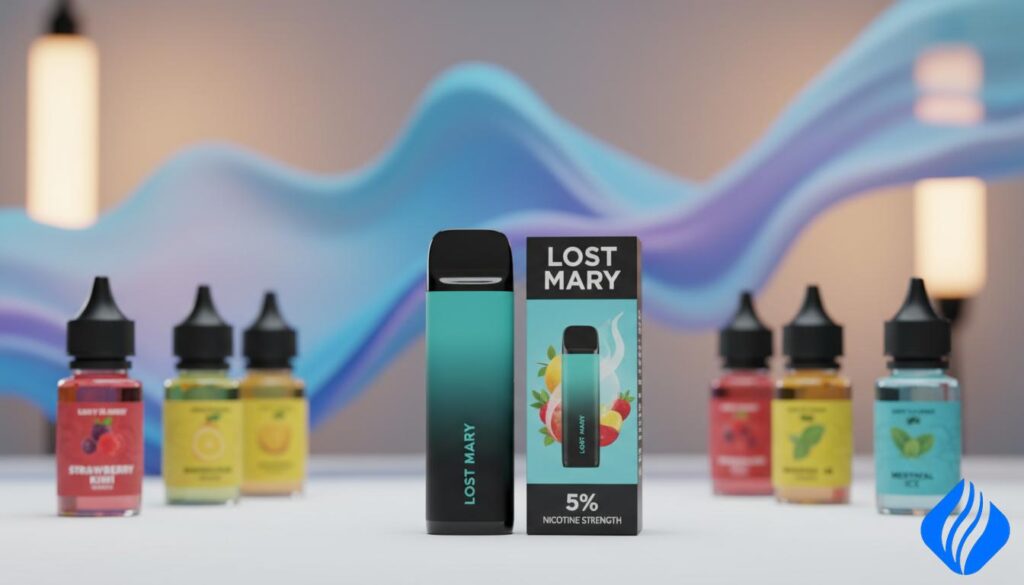
You’ll learn to read labels, convert percentage to mg/mL, and calculate total nicotine content with a simple formula. This guide compares real models — OS5000, MO5000, MT15000 Turbo, MO20000 Pro, and Quasar OS25000 — and explains why two devices with the same percent can hold different total amounts.
Note: Absorption varies by puff style and device. This article offers technical specs and practical tracking tips for adult users and does not replace medical advice.
Key Takeaways
- Most US units are 5% (50 mg/mL); some are 2% (20 mg/mL).
- Label percent shows concentration, not total content.
- Total nicotine = concentration × e-liquid volume; we show the formula.
- Specs cover puffs, mL, mAh, nicotine %, and coil type per model.
- You’ll get practical tips to track and manage intake.
- Information is technical and for adult users, not medical guidance.
How much nicotine is in a lost mary vape?
Quick answer: Most US retail units list their nicotine as 5% (50 mg/mL), though 2% (20 mg/mL) versions also circulate. That 5% label is common on many Lost Mary vapes sold in the United States.
Quick answer for most disposables sold today
Check the box or device. The printed strength is the simplest starting point for estimating total nicotine content.
Typical label formats you’ll see
- “5% Nicotine” — equals 50 mg/mL.
- “50 mg” or “50 mg/mL” — same meaning when paired with e-liquid volume.
- “Nicotine Salt 5%” — indicates salt formulation, not extra total amount.
Note for vapers who switch regions: UK/EU products usually cap at 2% due to regulation; US-packaged items often show higher strength. Even with identical labels, actual intake varies by draw style and device, so avoid treating puff counts as a direct cigarette equivalent.
Next step: Find the printed strength and e-liquid capacity on the device or box, then use the calculation in the next section to get total nicotine content.
How Lost Mary nicotine strength is measured
Start by knowing that label numbers show concentration, not total amount held in the device.
Percent vs mg/mL: Manufacturers list strength either as a percent or as mg per milliliter. For quick conversion, multiply the percent by 10. So 2% ≈ 20 mg/mL and 5% ≈ 50 mg/mL. Packaging may use either format, so check both.
Simple conversion cheat
Remember this shortcut: percent × 10 = mg/mL. It works for common labels and keeps calculations fast when you compare e-liquid bottles or disposables.
Total content formula
Total nicotine content (mg) = nicotine concentration (mg/mL) × e-liquid capacity (mL).
Example: a 2 mL disposable at 20 mg/mL holds about 40 mg total.
Nicotine salts vs freebase
The type of nicotine affects delivery and throat feel. Nicotine salts pair nicotine with organic acids. That makes high strengths feel smoother and absorbs faster. Freebase offers a sharper throat hit at lower concentrations.
When you switch strength or product, expect changes to throat hit and satisfaction even if puff patterns stay the same. That helps explain nicotine lost expectations and guides safer, informed choices when vaping.
Lost Mary nicotine levels by model using real device specs
Device names signal capacity and label strength; use both to calculate total content. Below are real examples with the simple math shown so you can compare models at a glance.
BM600, QM600, AM600, BM3500 — 2% examples
These compact models list 20 mg/mL (2%) and hold 2 mL of e-liquid.
Calculation: 20 mg/mL × 2 mL = 40 mg total nicotine content per device.
OS5000 and MO5000 — 5% mid-capacity examples
Both show 50 mg/mL (5%) with roughly 12 mL capacity.
Calculation: 50 mg/mL × 12 mL = 600 mg total nicotine per device.
MO20000 Pro & MT15000 Turbo — high-capacity examples
High-capacity units also use 50 mg/mL (5%) but hold about 18 mL.
Calculation: 50 mg/mL × 18 mL = 900 mg total nicotine. This is a major jump versus small disposables and changes pacing needs.
Quasar OS25000 — top-capacity example
This model lists 50 mg/mL (5%) with 20 mL of e-liquid.
Calculation: 50 mg/mL × 20 mL = 1,000 mg total nicotine. That total affects storage and use strategies.
Note: Some pod-style or multi-pod formats sold in certain markets differ. Always verify per-pack labeling because the nicotine lost mary range varies by region and model.
Technical specs table: comparing popular Lost Mary devices
This quick spec grid focuses on the variables that most affect nicotine content and delivery.
Note: Puff counts and battery mAh may vary by revision or market. Use the nicotine % and e-liquid capacity as the primary inputs when you calculate total content.
| Model | Puffs | E-liquid Capacity (mL) | Battery (mAh) | Nicotine % | Coil Type |
|---|---|---|---|---|---|
| BM600 / QM600 / AM600 / BM3500 | ~600 | 2 | 350 | 2% | Mesh Coil |
| OS5000 / MO5000 | ~5,000 | 12 | 2,000 | 5% | Mesh Coil |
| MO20000 Pro / MT15000 Turbo | ~15,000–20,000 | 18 | 5,000 | 5% | Mesh Coil |
| Quasar OS25000 | ~25,000 | 20 | 6,000 | 5% | Mesh Coil |
Mesh coil designs aim for even heating and steady vaporization. That consistency can change perceived strength and flavor, even when label % stays the same.
“Verify the box or device label — specs vary by market and revision.”
Next: Once you know your device specs, you can estimate intake per puff with simple math and practical tracking tips in the following section.
How to estimate your nicotine intake from puffs
A short daily tally of draws gives a practical window into your nicotine consumption. Start by noting how many puffs you take each hour. Small logs reveal patterns you can change.
Why puffs aren’t a perfect measurement
Puff duration, airflow, coil temperature, and draw strength change the amount delivered per hit. That means two puffs can vary widely.
Simple tracking method
- Use your phone to count puffs per session.
- Record daily totals for one week.
- When you change strength or device, keep conditions steady for three days and compare.
Practical pacing tips for users
Set time‑based check‑ins. Avoid chain vaping. If daily totals creep up after switching to salts, consider lowering strength or spacing draws.
Cigarette comparisons: limits and cautions
Comparisons to cigarettes are rough. Absorption differs between smoking and vaping, so treat any equivalence as an estimate only.
| Step | Action | Purpose |
|---|---|---|
| Count | Log puffs per hour | Measure real use |
| Compare | Track week-over-week | Detect changes after switching strength |
| Adjust | Space puffs or lower strength | Manage intake and avoid nicotine lost spikes |
“A short log beats guesswork — track, compare, and adjust.”
Manufacturer and origin details: who makes Lost Mary vapes
Packaging often lists the maker and origin; that label tells you what can be verified.
Where many devices are made and why Shenzhen matters
Many disposable vapes are built in Shenzhen, China. The region hosts dense electronics supply chains. That means coils, PCBs, and casings are nearby. Factories can iterate designs fast and scale production.
Design origin versus manufacturing origin
Designed in can be a marketing claim. Made in indicates the factory location and legal compliance. Look for on-package details to know which applies.
What you can verify as a buyer:
- Brand and manufacturer or importer name.
- Batch/lot codes and country-of-origin statements.
- Nicotine type and strength labeling for delivery accuracy.
- Any authenticity or QR check instructions.
| Item | What to check | Why it matters |
|---|---|---|
| Manufacturer | Name and address on pack | Traceability and compliance |
| Batch code | Lot number or serial | Quality control and recalls |
| Label claims | “Designed in” vs “Made in” | Marketing versus factory origin |
| Authenticity | QR or verification steps | Reduce counterfeit risk |
“Verify on-pack details rather than rely on brand claims.”
What the Lost Mary vaping experience feels like in real use
Real-world use shows how airflow, coil build, and salt formulation shape each session. That combo defines mouthfeel, throat sensation, and flavor clarity more than the printed label.
MTL draw quality and throat hit at common strengths
The typical MTL draw has a cigarette-like restriction. If you come from cigarettes, that feels familiar.
At 2%: draws feel milder and easier to chain. At 5%: the hit is more immediate and noticeable, especially for new users.
Flavor consistency from first puff to last puff
Mesh coil designs keep flavor steady for many puffs. Still, sweetness or cooling agents may fade as fluid near the wick drops.
Watch for muted notes or sudden harshness—those signal coil aging or low e-liquid.
Rechargeable models and USB-C charging speed expectations
USB‑C lets you finish the full fluid load without losing time to a dead battery. Charging is about convenience, not increasing intake.
- What to watch for: burnt taste, muted flavor, harsher hits, or changed airflow.
- Key point: experience depends on airflow, coil performance, and strength — not just the number on the pack.
| Feature | Typical effect | What users notice |
|---|---|---|
| MTL draw | Restricted airflow | Familiar cigarette-like pull |
| Nicotine salts | Smoother high-strength use | Softer throat, faster satisfaction |
| USB‑C charging | Fast recharge | Finish e-liquid without downtime |
“A steady draw, healthy coil, and correct strength create the best vaping experience.”
How to verify authenticity and avoid counterfeit Lost Mary devices
Counterfeit disposable units are common; learning simple checks protects your purchase. Use on-pack tools and a quick scan to confirm origin before you trust strength or safety claims.
QR code checks: where to find them and how to scan
Look for the verification panel on the outer box sides, under a flap, or near the barcode. Keep the packaging until you finish verification.
- Open your phone camera and scan the QR code.
- Tap the verification link and view the status page.
- Confirm the code shows first-time activation and that model and flavor match your purchase.
Packaging and labeling red flags that signal a fake
Watch for missing strength, blurry print, wrong warnings, or no batch code. Spelling errors, mismatched flavor names, and suspiciously low prices are common signs.
On the device, check for poor airflow, leaks, weak vapor, or harsh taste straight from the box. Those defects often accompany counterfeits.
Why authenticity matters for nicotine content and safety
Counterfeit units can be mislabeled or filled with unknown liquids. That risks inconsistent nicotine content and potential contaminants.
Buy from reputable sellers, compare packaging to official photos, and treat verification as part of the smart purchase choice you deserve.
“Verify before you activate — it protects your health and your wallet.”
Lost Mary vs a close competitor: value, flavor profile, and nicotine delivery
Side-by-side specs reveal why pay-per-puff can be very different between brands.
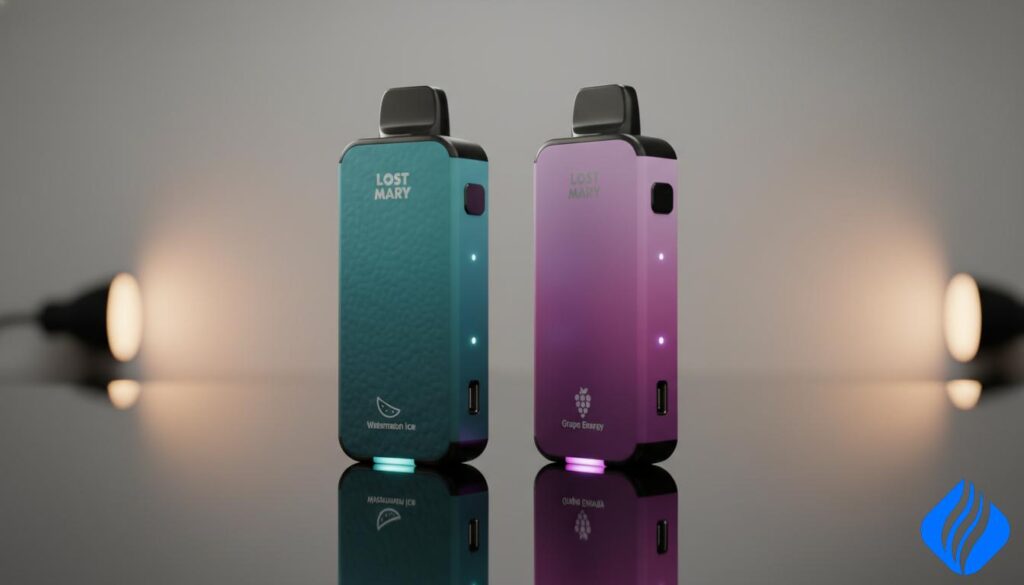
Quick view: Lost Mary and Raz target similar buyers with salt formulations, sweet or icy profiles, and high puff counts. Both lines appear in 2% and 5% strengths depending on market.
Where they differ most
Value: Compare total e-liquid capacity and total nicotine content, not price alone. A higher-priced unit may last far longer per dollar.
Flavor: Lost Mary often tastes bold and dessert- or fruit-forward. Raz styles can lean candy or cooling notes. Pick by preference and tolerance.
Delivery: Mesh coil, airflow, and label strength control satisfaction more than claimed puff count. Those factors shape per-puff output and the overall experience for smokers or vapers switching from cigarettes.
Like Lost Mary clones mimic design but may vary in coil quality and label accuracy. That affects consistency and safety.
| Aspect | Lost Mary | Raz (competitor) | Practical takeaway |
|---|---|---|---|
| Total capacity | Ranges 2–20 mL | Ranges 2–18 mL | Check mL to judge real value |
| Flavor focus | Bold fruit/dessert | Candy/ice variants | Choose by palate, not price |
| Delivery factors | Mesh coil, MTL airflow | Similar tech, varies by line | Test for throat hit and satisfaction |
| Authenticity risk | Clones exist | Clones exist | Buy verified sellers |
“Prioritize clear labeling, authentic sourcing, and the right strength for your needs.”
Conclusion
Conclusion
Summing up: read both the concentration and the e-liquid volume to know total nicotine content per device. Use the simple formula: mg/mL × mL = total mg.
Concrete references help. A 2 mL unit at 20 mg/mL ≈ 40 mg. A 12 mL product at 50 mg/mL ≈ 600 mg. Larger models hold about 900 mg or 1,000 mg total.
Remember: puffs and puff counts vary by draw, airflow, and salt formulation, so they do not replace measured intake tracking. Verify QR or scratch codes, avoid suspiciously cheap listings, and buy authentic units to protect content and safety.
Verdict — Who this suits: If you want a strong, simple disposable vape with clear labeling, lost mary vapes are solid when authentic. If you are sensitive or reducing smoking, choose lower strength and log puffs. For max capacity, pace intake and store responsibly.
 English
  German
  Dutch
Dutch  Danish
  Czech
Czech  Italian
  Slovenian
  French
  Hungarian
  Spanish
  Polish