

As the experts at SokVape who have tested hundreds of devices, we’ll give a clear, safety-first start. Many readers want a clean, comfortable technique that looks good and feels gentle.
We use “vapour” intentionally and focus on control rather than big clouds. If you struggle with coughing or confusing buttons, this short article sets expectations and eases that frustration.
This guide lays out a quick answer, then beginner setup basics, step-by-step techniques (classic nose exhale and the French inhale), device prep, and simple troubleshooting. We emphasize device safety, modest nicotine choice, and measured practice.
Realistic outcome: most people learn this with practice, but sensitivity varies. We keep tips practical and returnable as a reference when you adjust airflow or inhale style.
Key Takeaways
- We give a concise, safety-first practical guide for the technique.
- Focus on vapour control and comfort over large clouds.
- Beginner setup and simple steps make learning easier.
- Device prep and modest nicotine reduce irritation.
- Most people can master this with short practice sessions.
Quick answer: how to blow smoke out of your nose vape
For adult (21+) use only.
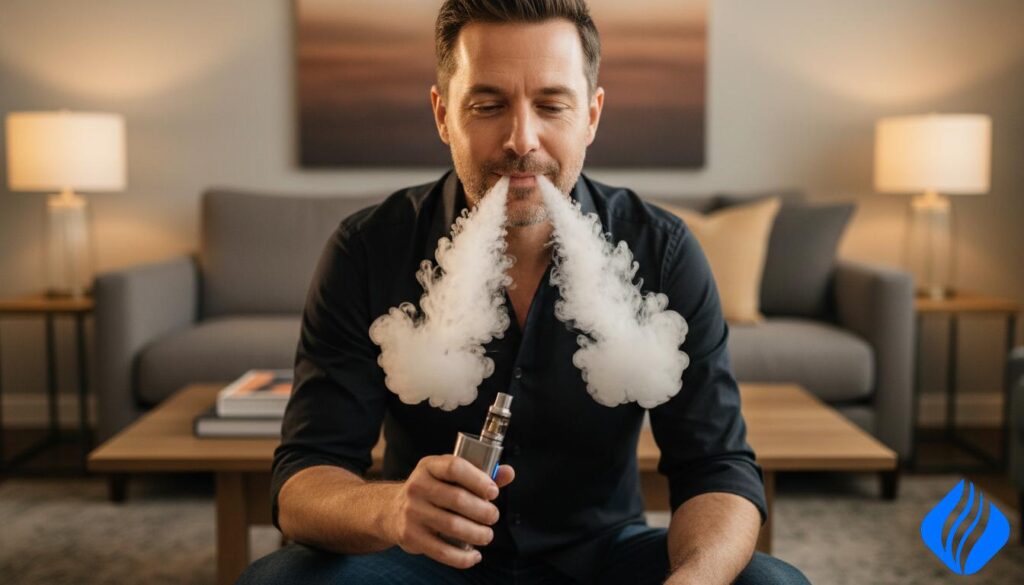
Direct answer: Take a controlled draw, close your lips, and press your tongue to the roof of the mouth so vapor routes upward. Then exhale through your nose gently until the vapour clears.
Featured Snippet setup: simple nose-exhale steps
This short method uses basic mouth and tongue control. Seal the lip opening so air moves toward the nasal passages. Use a calm, steady exhale and avoid pushing hard.
Vapour versus smoke — plain language
People often use smoke terms, but vaping creates vapour, not combustible smoke. Redirecting vapour is about airflow, not force. Keep pulls small and stop if the nose or throat feels irritated. Overuse can cause throat or chest discomfort.
- Quick tip: start small, watch for irritation, and adjust density with airflow settings.
Before you start: basics that make the trick easier for beginners
Start with a steady kit. A reliable pod or simple system with consistent output is easier for beginners than a high-power mod that varies hit-to-hit. Choose a device that matches your comfort level and the throat feel you prefer.
Choose the right setup for thicker cloud and control
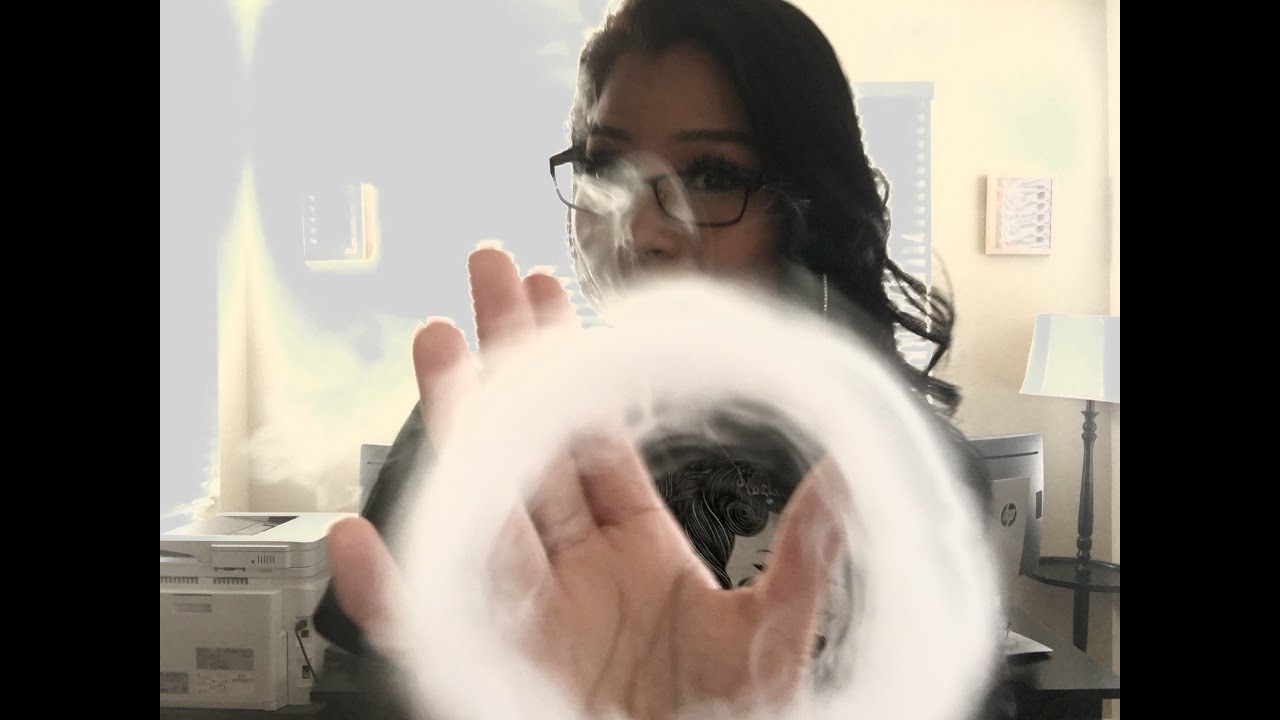
Thicker vapour helps tricks. Devices like RELX-style pods produce denser clouds that are easier to hold briefly in the mouth. Aim for a steady output rather than raw power.
MTL vs. DTL inhaling explained for vape tricks
MTL (Mouth-to-Lung) fills the mouth first. It gives control for precision and works well for most beginner tricks.
DTL (Direct-to-Lung) sends vapour straight to the lungs. It makes larger clouds but reduces the ability to “park” vapour in the mouth.
Nicotine salt vs. freebase juice and airflow timing
Nic salt (common in 10ml SKWEEZ packs at 10mg or 20mg) often feels smoother at low power but can hit stronger at higher strengths. Freebase can sting more at high wattage and may irritate the throat.
Adjust airflow: open for volume, tighter for control. Most of the trick happens in a few seconds, so use short puffs and steady timing.
Quick comparison for beginners
| Goal | System | Inhale | Vapour | Best for |
|---|---|---|---|---|
| Beginner practice | Pod / basic kit | MTL | Moderate | Control, throat comfort |
| Visible tricks | RELX-style pod | MTL/Loose MTL | Thicker | French inhale, nose-based tricks |
| Big cloud demos | DTL system | DTL | High | Volume, experienced users |
- Pacing: take a modest puff, keep vapour in the mouth, then practice the movement.
- Safety: stop if the throat or lungs feel irritated and lower nicotine strength or power.
Step-by-step: the classic blow-through-your-nose technique
We outline a practical sequence that uses small draws and gentle tongue placement to guide vapour upward.
- Take a small-to-medium inhale and keep the vapour in your mouth. Do not rush it into the lungs; park it in the front-to-mid mouth area.
- Close your lips firmly so vapour cannot escape forward.
- Press your tongue gently to the roof of the mouth. This helps route vapour toward the nasal passage.
- Relax your throat. Do not force or push; a calm steady breath works best.
- Exhale through your nose in a smooth, steady stream until the vapour clears.
To get more vapour from the nose, keep a stronger tongue seal and hold briefly. For more return into the back mouth, relax that seal slightly while keeping lips closed.
Timing matters. If you wait too long, vapour thins. If you push hard, the effect feels harsh and looks messy. Stop if the nose or throat burns.
Mouth and nose at the same time
- Take a controlled draw and hold vapour in the vapour mouth area.
- Bring lips together but leave tiny gaps at the corners of the mouth.
- Exhale gently; vapour will stream from the corners while some routes through the nose.
- Safety tip: reduce nicotine strength, shorten holds, and avoid repeating the trick back-to-back if irritation occurs.
- Practice note: consistent draws and steady mouth positioning beat forcing large hits.
Step-by-step: French inhale and related vape tricks that use the nose
We define the French inhale as a controlled release of vapour from the mouth while you gently draw it upward through the nose. The effect is a reverse waterfall—a visible stream that rises from the mouth toward the nose.
Numbered steps for a RELX-style French inhale
- Take a larger pull and hold vapour in the back of the mouth. Avoid sending it into the lungs.
- Slowly open mouth just enough for a steady spill. Keep the release even.
- Pout your bottom lip and push the jaw slightly forward to set the waterfall angle.
- Use your tongue to nudge vapour forward at a constant pace.
- Inhale through the nose as the vapour rises. Do not exhale through the nose during this move.
- Keep inhaling until the vapour clears, then breathe normally and reset.
Beginner practice and safety tips
Practice slowly in front of a mirror. Watch the release and adjust mouth opening if the stream collapses. Start with smaller amounts of vapour and lower nicotine or airflow for comfort.
Compare moves: the French inhale creates a steady waterfall from mouth to nose. The ghost inhale focuses on a faint outgoing stream followed by a quick re-inhale that “pulls back” the vapour. The first is about transfer and visual flow; the second is about vanish-and-retrieve control.
Safety note: stop if the throat or nasal passages sting. Hydrate, lower nicotine, and shorten practice sessions. Thicker vapour systems help the waterfall effect while making the trick easier to master.
Device-specific how-to: getting your vape ready to perform consistently
B A fast prep routine makes the difference between a clean trick and a frustrating session. We keep checks under a minute so practice stays focused and safe.
Raz: quick-start and checks
- Press the button 5 times to power on/off. This is a common lock pattern and prevents accidental firing.
- Confirm the pod sits fully and clicks into place. A loose pod gives inconsistent output.
- Take one short test pull. Verify steady vapour and consistent throat feel before attempting a trick.
Off Stamp: power, airflow, and draw basics
- Press 5 times if the model has a power button. Lock the device when not in use.
- Start with airflow mid-open for balance. Tighten for control or open more for larger clouds.
- Use a slow, steady draw. Sharp pulls can thin the vapour and break timing.
Foger: preventing weak hits
- Press 5 times to switch the unit on or off on button models.
- Clean and align contacts. Misalignment or grime is a frequent cause of weak hits.
- If output feels low, pause chain pulls and allow the wick to resaturate between draws.
Final note: each vape and system behaves a bit differently. Once you find settings that give repeatable vapour density, tricks and timing become far easier. Check battery, pod seating, and airflow before every attempt.
Why is this happening? Troubleshooting common problems
When tricks feel off, quick checks often fix the issue within a few minutes. We normalize coughing, a burnt taste, or a unit that won’t fire. Most fixes are small and safe.
Coughing during first use
Common causes: high nicotine, long draws, and irritation.
- Lower nicotine strength if you use nicotine salt at 10mg or 20mg; these can feel intense.
- Use MTL pacing. Take short pulls and hold vapour in the mouth briefly instead of deep inhalations.
- Space attempts and hydrate. Repeating tricks quickly can sting the throat.
Burnt taste
Quick checks:
- Prime or soak the coil/pod before first use. Dry wick causes harsh hits.
- Avoid chain draws; give the wick time between puffs so it can resaturate.
- If the burnt flavor stays, replace the pod or coil. Burnt material won’t recover.
Device not firing
Simple fixes:
- Charge the battery fully and avoid leaving it plugged in for long periods. Use the original USB‑C cable when possible.
- Clean contact points and reseat the pod firmly. Poor contact is a frequent cause of misfires.
- Follow the power sequence: press 5 times to switch models on or off.
Note: technique can mimic device faults. Low output may be a mouth positioning issue rather than a hardware problem. For beginners, slow, steady practice wins every time.
Conclusion
In summary, steady volume, mouth positioning, and calm breathing give the best results and a safer practice experience.
Quick recap: the basic nose exhale uses a small draw and an upward route. The French inhale is the slower, visual transfer from mouth into the nasal passage. Choose the move that matches comfort and the look you want.
Safety First: adult use only. If irritation, coughing, or a burnt taste appears, stop and check device fit, nicotine strength, and pod condition. Many users who switch from cigarettes need extra patience while they adapt.
For a reliable experience, repeat short sessions, confirm device output, and consult the troubleshooting section for misfires, coughing, or harsh hits. This guide aims for steady progress, not forceful displays.
 English
  German
  Dutch
Dutch  Danish
  Czech
Czech  Italian
  Slovenian
  French
  Hungarian
  Spanish
  Polish