

Direct answer: We hold vapor in the mouth and throat, form an “O,” then release short, controlled bursts to create a spinning vortex. As the experts at SokVape who have tested hundreds of devices, we teach this step clearly and safely.
Many people struggle because they blow too hard, use too much airflow, or run thin clouds. We empathize; this makes learning frustrating. Our quick, practical fixes cut that trial time and keep the session comfortable.
What makes the effect work is simple: a dense cloud plus a pulse of air creates a vortex motion that keeps the shape. We frame this as an adult, safety-first guide that improves your practice and comfort.
Key Takeaways
- Hold vapor in the mouth and form an “O” for short, soft bursts.
- Too much airflow or hard puffs ruin the effect; relax pressure.
- Dense vapor and a clean pulse make the vortex work.
- Practice builds control; start slow and stay comfortable.
- We guide safe prep, device setup, classic throat-pop steps, and troubleshooting.
Quick answer: what vape rings are and how they work
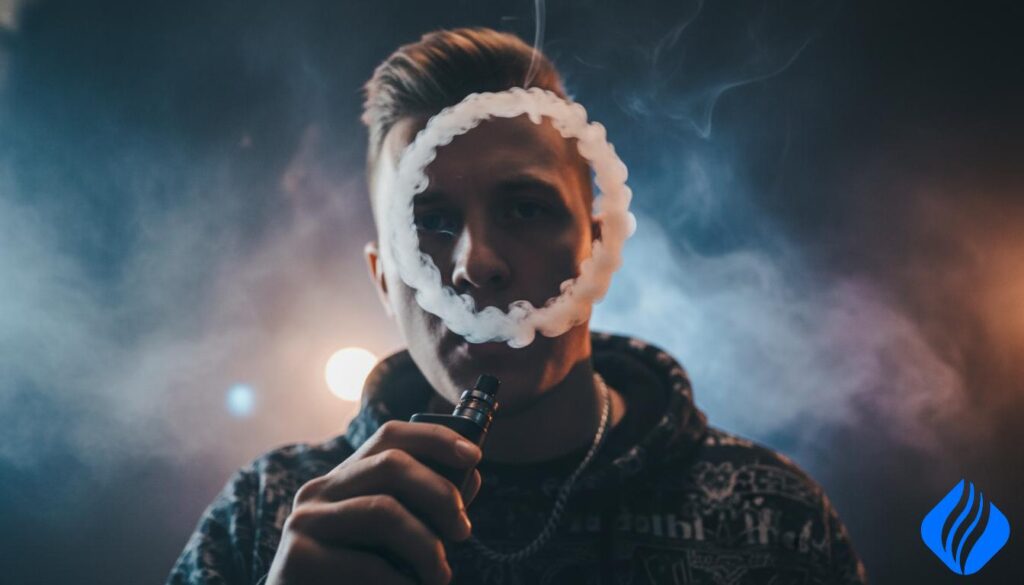
Vapor becomes a visible vortex when released in a neat, measured pulse from the mouth. In short, a ring is a circular cloud formed by pushing dense vapor through a steady O while the glottis makes a short burst.
We describe the effect as a spinning cloud that holds shape briefly in still air. Density and clean pulses matter most. Thin clouds or drafts collapse the form.
- Form an “O.” Keep lips steady and relaxed.
- Hold vapor in the mouth and throat. Not deep lung inhale; keep the cloud dense.
- Push short bursts. Use a throat-driven pop, not a hard blow.
“This is not blowing smoke; it is pulsing vapor with the glottis while the lips remain fixed.”
Good looks: clean edges, slow drift, and a stable circle. Common errors include continuous exhale, tense cheeks, or changing lip shape mid-burst.
| Factor | Effect on ring | Fix |
|---|---|---|
| Vapor density | Thicker = more stable | Use high-VG juice or higher output |
| Air movement | Too much = collapse | Practice in still room |
| Lip shape | Inconsistent = distortion | Keep a tight, steady O |
Safety First: before you practice vape tricks
Before any practice session, prioritize basic safety and sensible limits. We back this guide with simple checks that protect you and your gear.
- Avoid overcharging. Do not leave devices charging unattended.
- Don’t use damaged batteries. Replace torn wrap or swollen cells immediately.
- Use only original USB‑C cables and approved chargers for your device.

“For adult (21+) use only.” This is informational and not medical advice.
Trick practice increases the total amount of vapor you inhale during a session. Pace your breathing and take breaks. Limit session time until you build tolerance.
Comfort tips: drink water, rest between attempts, and lower intensity if coughing starts. Irritation often links to high nicotine or hot hits. We recommend lower nicotine and steady output.
Use reputable devices and quality products. Keep hardware clean. Don’t push wattage beyond coil limits. Monitor heat and stop if dizziness or strong irritation appears.
| Risk | Impact | Action |
|---|---|---|
| Overcharging | Battery failure | Unplug when full; use approved charger |
| Damaged battery | Fire or poor performance | Replace immediately; avoid use |
| High nicotine | Coughing, nausea | Lower strength; shorten sessions |
Dial in your setup for dense, stable rings
Dense vapor and controlled airflow begin at the device and e-liquid choices. We recommend a high‑VG e-liquid (70/30 VG/PG or higher) for thicker vapor and a softer throat hit. Lower nicotine reduces coughing and helps steady practice.
Power, coil, and airflow basics
Sub‑ohm coils (0.4–0.6Ω) plus adequate wattage create larger clouds. Open, adjustable airflow helps cloud formation, but too much turbulence will break shapes. Find a wattage sweet spot that heats the coil evenly without hot hits.
Nicotine salt vs freebase
Nicotine salt gives a smoother throat hit at higher strength but produces less cloud than freebase at the same power. Freebase tends to yield thicker clouds and stronger throat feedback, which can affect ring stability.
MTL vs DTL comparison
| Style | Cloud size | Ease for beginners | Best devices |
|---|---|---|---|
| MTL | Small | Higher; familiar for cigarette users | Pods, low‑wattage tanks |
| DTL | Large | Moderate; faster cloud control learning | Sub‑ohm tanks, RDAs |
| Practical note | DTL makes clearer smoke rings | MTL aids gradual learning | Choose based on comfort |
Device readiness checklist
- Tank/pod level: Keep juice above the minimum to prevent dry hits.
- Coil saturation: Prime coils and wait after filling for even wicking.
- Mouthpiece: Wider drip tips help shape denser clouds.
“Stable rings rely on consistent vapor output and minimal turbulence.”
how to do rings with vape using the classic “throat pop” technique
We teach a compact, repeatable method that centers on a short, controlled glottal pulse. This gives crisp edge and steady flight for each ring.
Step 1: inhale and hold
- Take a slow pull. Fill the mouth and upper throat, not deep lungs.
- Hold the cloud in the mouth/throat for a beat. Keep breath steady.
- Relax before the release; tension ruins the shape.
Step 2: set lip and jaw shape
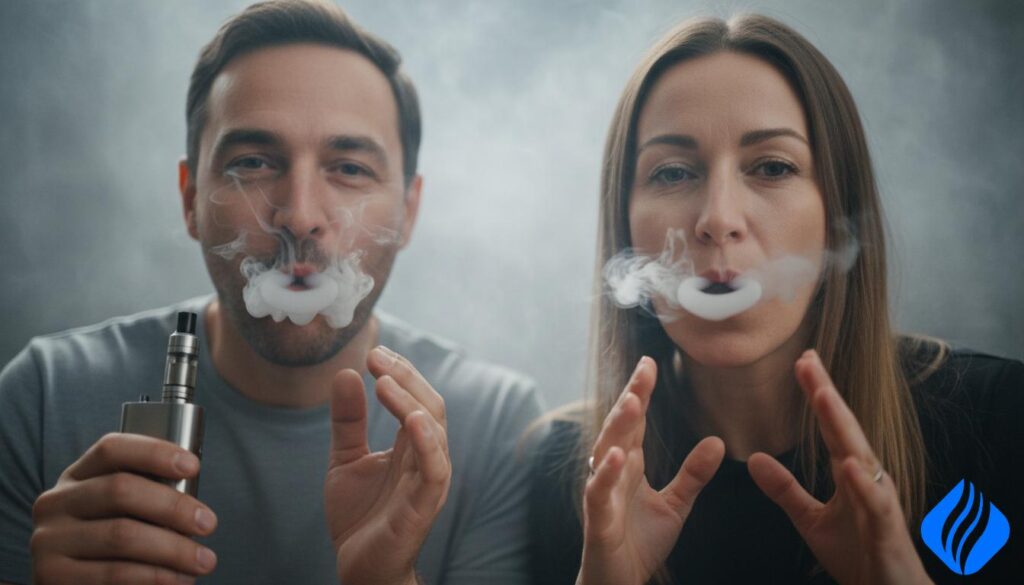
- Form a tight “O” with the lips. Keep cheeks relaxed.
- Drop the tongue back and low so the opening stays clear.
- Maintain slight forward jaw tension for a firm aperture.
Step 3: create the burst
- Use a gentle throat pop—a glottis-driven micro push, like a small cough without voice.
- Don’t blow hard. Short rhythmed pops work best.
- Time it: pop, then relax lips so the circle detaches cleanly.
Step 4: control size and distance
- Open the lips slightly for bigger rings; close for smaller ones.
- Increase burst force for distance; soften for short travel.
- Use subtle jaw lifts or drops to steer and tighten the ring.
Beginner alternative: cheek-tap method
- Hold the same tight “O.”
- Tap the cheek once or twice while holding the cloud.
- Each tap sends a small, consistent mini ring—great for early practice.
Practice tip: work in a still room, use a mirror or phone camera, and stop if irritation starts.
| Step | Focus | Common error |
|---|---|---|
| Inhale | Slow pull; mouth/throat hold | Deep lung inhalation |
| Lip shape | Tight O; relaxed cheeks | Changing lip tension mid-release |
| Burst | Gentle throat pop | Hard blow or noisy cough |
Level up: advanced vape ring control and combo tricks
Advance your control by adding small, deliberate tweaks that tighten the vortex and boost flight.
We present clear, safe steps for tighter spin, longer travel, and guided movement.
Add backspin for tighter circles
Push the tongue slightly forward (still angled down) just as the burst leaves. Then lift the lower jaw quickly. This adds a subtle back spin that reduces size and holds shape.
Send them farther
Time a forward jaw push with a faster, cleaner burst. Use less extra air overall so the vortex stays intact. More force without control just shreds the form.
Steer and “push” safely
Wave your hand gently behind the circle—no slaps. Small, smooth motions give a light nudge. Practice indoors away from fans; wind ruins the flow.
Practice drills and feedback
- 10 reps: consistent small circles.
- 10 reps: distance focus.
- 10 reps: hand push practice.
Film in slow motion to spot lip shifts, burst timing, and whether thin vapor or technique causes failures. Track progress over time.
Tip: Work in steady lighting and dark background so smoke visibility shows real changes.
Device controls for better clouds (Raz, Off Stamp, Foger)
Before practice, verify each control so the device delivers predictable vapor. Consistent output builds steady clouds. Inconsistent firing makes thin, broken forms.
Raz: quick-start checks and confirming firing
Check airflow first. Set open for larger clouds or restrict slightly for denser output. Make sure the airway is clear.
Confirm firing by watching the indicator light or screen when you press the button. If output feels weak, check battery level and pod seating. We’ll need a steady stream for reliable technique.
Off Stamp: power patterns and output basics
Press 5 times to power on/off. Use that pattern before attempts. Select a moderate output mode rather than max heat.
Watch the screen or LED to confirm active firing. Low battery or loose connections mimic poor skill. Make sure this is ruled out first.
Foger: wattage, airflow, and stability
Adjust wattage in safe ranges for the coil. Increase slowly and avoid overheating. Wider airflow helps clouds, but too much creates turbulence.
Use single-click sequences for mode changes if supported. You’ll need repeatable vapor for throat-pop technique and consistent results.
| Brand | Key control | Before-puff checks |
|---|---|---|
| Raz | Airflow position, fire confirmation | Battery, pod seated, airway clear |
| Off Stamp | Press 5 times to power on/off, output mode | LED/screen active, secure connection |
| Foger | Wattage/airflow balance, mode clicks | Coil rating, temp stable, no leaks |
“Stable vapor output is the foundation for repeatable technique.”
Why is this happening? Fix common vape ring problems
When a trick falls apart mid-session, the cause is usually small and fixable. We give a quick diagnostic guide so you can correct issues fast and stay safe.
Coughing on first use
Symptom: sudden coughing. Cause: high nicotine or lung-style inhale (MTL vs DTL mismatch). Fix: take gentler pulls, hold vapor in the mouth, and slow your exhale. Lower nicotine if hits feel too strong.
Burnt taste or dry hit
Symptom: burnt taste or dry hit. Cause: under-saturated coil or chain-heating. Fix: prime the coil—saturate wicks, wait 5–10 minutes, start at low power. Avoid back-to-back pulls while practicing.
Device not firing
Symptom: no output. Quick checklist: check battery, reseat and clean the pod/tank connection, clear any airflow blockage, and confirm click-to-unlock or power state. Make sure the device is charged and unlocked.
Rings falling apart fast
Symptom: unstable or tiny smoke rings. Cause: thin vapor, drafts, or pushing too hard. Fix: use thicker juice, practice in still air, tighten lip shape, and use smaller throat bursts. Good lighting and a dark background improve visibility.
Tip: stop if irritation grows. Safety first; reassess settings rather than forcing more hits.
Conclusion
Keep one simple formula in mind for steady, visible results. Dense vapor, a steady “O” at the mouth, and short throat pops make repeatable rings.
We stress small, controlled reps over bigger hits. Practice builds muscle memory. Track small adjustments rather than chasing massive clouds.
Check key setup levers: higher VG, correct airflow, and coil readiness. Tune technique levers next: shape lips, tongue position, and burst timing.
Comfort matters. Hydrate, pause if irritation starts, and keep sessions short. This is adult-use guidance focused on safety.
Next steps: start with the cheek-tap trick, move to the throat-pop method, then add steering and backspin.
Today’s practice goals: five clean reps, one device check, and one quick safety review. Final tips: avoid fans, steady posture, and practice in still air for reliable results.
 English
  German
  Dutch
Dutch  Danish
  Czech
Czech  Italian
  Slovenian
  French
  Hungarian
  Spanish
  Polish