

how to use a disposable vape is a common query for adults in the United States seeking a clear, safety-first walkthrough. We open with key expectations: a practical guide for the beginner and the data-minded user.
We state our promise plainly. We will explain draw-activation, the correct first puff technique, and pacing for fewer coughs and less irritation. The piece previews technical specs: battery (mAh), e-liquid (ml), coil style (mesh/dual mesh), and nicotine salt levels.
Our approach is evidence-driven. We blend hands-on testing with specs and value comparisons across Geek Bar, Lost Mary, and Raz. We cover puff count, flavor after 5000 puffs, and puffs-per-dollar math.
Consumer protection matters. We include authenticity checks via sokvape.com, safe charging notes for rechargeable disposables, and responsible disposal guidance. Readers can scan sections for basics, step-by-step technique, troubleshooting, and legal safety notes.
Key Takeaways
- We give a safety-first, practical guide for adult users in the US.
- Draw technique and pacing reduce coughing and burnt hits.
- Battery mAh, ml, and coil design drive throat hit and flavor.
- Hands-on tests include flavor checks after 5000 puffs.
- Value comparisons focus on puffs per dollar and consistency.
- Authenticity checks and disposal guidance protect consumers.
Disposable vape basics for beginners in the US
Before you pick a model, learn the core features that drive flavor, throat hit, and run time. We keep guidance practical and compliance-focused for readers 21+ in the United States.
What the pen is and draw-activation
Think of the vape pen as a prefilled, precharged unit built for grab-and-go use. Most are draw-activated: inhaling at the mouthpiece changes airflow and triggers the coil to heat e-liquid into vapor.
Key parts you’ll touch
- Mouthpiece — keep it clean for hygiene and performance.
- Airflow holes — do not block them; they enable proper draw.
- Battery — capacity affects run time; some list mAh and charging port type.
- Coil / atomizer — mesh or dual mesh impacts flavor and vapor.
- E-liquid chamber — determines total puffs and nicotine salt vs freebase options.
Disposable vs refillable
Closed-system pens are simple and portable. Open-system devices let you refill, swap coils, and fine-tune airflow. Choose disposables for consistent, low-maintenance portability. Pick refillables when customization and lower long-term waste matter.
How to use a disposable vape step by step
Begin by clearing all protective seals and confirming vents are open.
Unbox checklist. Remove rubber mouthpiece plugs. Peel stickers that cover vents. Confirm no film remains over intake holes.
Check airflow before the first draw
Locate intake holes; they are often on the bottom or sides. Make sure you do not cover them with fingers during a draw. Proper airflow preserves flavor and coil life.
Scripted first puff
Take a slow, gentle inhale for 1–2 seconds, then exhale. Aggressive suction can flood the coil and cause gurgling or spitback. If you hear gurgle, pause and wipe the mouthpiece.
Pacing and session timing
Wait a short interval between puffs so the coil can re-saturate and cool. This reduces coughing, throat irritation, and overheating.
Storage and basic maintenance
Keep the device upright when possible. Avoid hot cars or direct sunlight; heat can cause e-liquid to leak and stress batteries. Store in a dry place and follow simple maintenance steps for longer, consistent puffs.
“Controlled draws protect flavor and extend coil life.”
Note: Some units are rechargeable; we will cover safe charging practices in the next technical section and troubleshooting for no-hits or airflow blockage in the FAQ.
Inhale technique and common mistakes that ruin the vaping experience
Your inhale technique directly controls vapor temperature and perceived strength. Small changes in draw length and pressure change throat hit, vapor density, and coil stress. We focus on clear, measurable cues so you can evaluate performance.
Mouth-to-lung vs direct-to-lung: which feels smoother
MTL (mouth-to-lung) means you sip into the mouth, then inhale into the lungs. It usually gives a milder throat hit and steadier flavor on most disposables.
DTL (direct-to-lung) draws straight into the lungs. Open airflow devices produce denser vapor, but many single-use units are tuned for restricted DTL or MTL.
Why harder pulls often make things worse
Overpulling can momentarily starve the coil of air, pull liquid into the airway (spitback), or raise coil temperature fast. That creates a sharp, hot throat hit and muted flavor.
Chain vaping and coil overheating: signs and fixes
Overheating feels like hotter, drier vapor, rapid flavor loss, and occasional burnt notes. Stop immediately if the device heats unusually and give it time to cool.
- Fixes: Pause between puffs for 20–30 seconds, take shorter draws, and check airflow holes.
- Measure: If throat hit strengthens while vapor thins, the coil is likely starving or overheating.
“Controlled draws preserve flavor and reduce coil stress.”
Remember: most single-use devices have fixed power, so your draw is the main way to control temperature and comfort. For more detailed draw technique and verification steps, see our draw technique guide.
Choosing nicotine strength, flavor, and puff count that fits your needs
We recommend picking nicotine and flavor based on cravings and daily habits. Match strength and taste so sessions feel consistent and predictable. Use puff count estimates to set realistic expectations for device life and replacement timing.
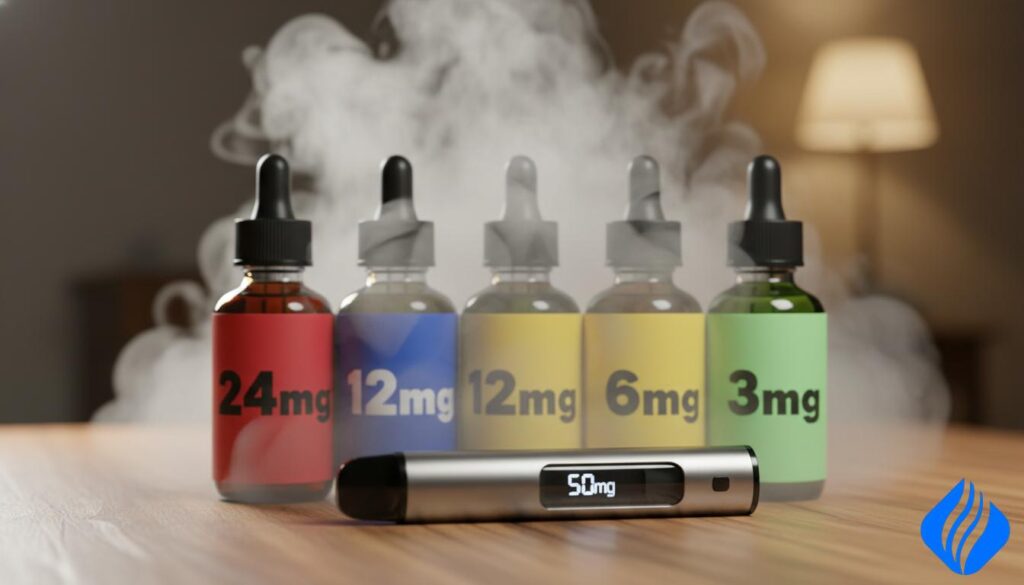
Nicotine options and throat feel
Common labels: 0% (nicotine-free), 2% (20 mg), and 5% (50 mg) nic salt. Sensitivity varies, so start lower if you are reducing intake or are nicotine-naïve.
Higher nicotine often gives a stronger throat hit. Tight airflow and longer draws amplify that feel. If throat hit is harsh, choose a lower level or shorter puffs.
Flavor families and what they deliver
Fruit is bright and forgiving. Menthol/ice adds cooling and a cleaner exhale. Dessert/candy offers richer, heavier notes that may tire the palate across long sessions.
Using puff count to estimate time and routine
Track daily puff numbers for a day or two. Multiply that by the device’s stated puffs to gauge time until finish. Remember that listed puffs are estimates; draw length and times between draws change results.
For practical selection, use our quick guide or choose by puff count when comparing products.
“Puff estimates vary with technique; match strength and flavor to your pattern for best value.”
Core technical specs to check before you buy
Start by scanning the label for the fields that most affect run time and flavor. These specs predict day-to-day performance. We focus on clear, copyable fields you can find on any product page.
Key fields to capture
- Battery capacity (mAh) — higher mAh usually means longer life and steadier power, especially on high-puff models.
- Charging port — note USB‑C when listed; it speeds charging and improves cable availability. Some products have no charging option.
- E-liquid volume (ml) — more ml generally maps to more puffs, but draw length and airflow change consumption.
- Nicotine strength — look for 0%, 2% (20 mg), or 5% (50 mg) nic salt markings.
- Coil type — mesh vs dual mesh affects flavor clarity and stability under long sessions.
Quick checklist you can copy
Copy these product fields:
- Battery mAh:
- Charging: USB‑C / non-rechargeable:
- E-liquid ml:
- Nicotine: 0% / 2% / 5%:
- Coil: mesh / dual mesh:
- Buttons (if any) and seller notes:
Note: Always inspect packaging for leaks or damage. If a model is rechargeable, use the supplied cable and avoid unattended overnight charging.
“Capture mAh, ml, coil, nicotine, and charging info before you compare products.”
Hands-on testing insights: throat hit, vapor production, and flavor after 5000 puffs
We followed a repeatable test plan that tracks flavor and coil behavior through thousands of puffs. Our hands-on testing used consistent draw length, controlled pacing, and note-taking on throat hit, vapor output, and flavor clarity.
Throat feel and nicotine patterns
5% nic salt delivers a firmer throat hit and faster satisfaction. 2% feels milder and smoother under the same draw. Restricted airflow increases perceived strength even at lower nicotine levels.
Vapor trends with draw style
Tighter pulls yield warmer, denser vapor and more concentrated flavor. Airier pulls boost visible cloud but can dilute taste depending on coil and airflow design.
Flavor over long time and at ~5000 puffs
Around 5000 puffs many units show gradual flavor mute. Sugars and cooling agents often fade first as residue builds and wicking slows.
Coil degradation signs and practical steps
Watch for muted flavor, harsher throat hit at the same draw, inconsistent vapor, and burnt notes. These indicate hot spots or reduced saturation in the coil.
“Slow draws, paced sessions, and cool storage preserve flavor and extend coil life.”
- Testing framework: fixed draw duration, timed rests, sensory logs.
- Common failure signs: weak flavor, no vapor, blinking light, burnt taste.
- Prevention: gentle draws, avoid chain vaping, store away from heat, pause when warm.
| Life stage | Typical symptoms | Action |
|---|---|---|
| Early (0–1,500 puffs) | Bright flavor, steady vapor, clean throat hit | Normal pacing; log daily puff count |
| Mid (1,500–4,500 puffs) | Flavor begins to soften; vapor steadies | Reduce chain vaping; shorter draws |
| Late (~5,000+ puffs) | Muted flavor, harsher hit, intermittent spitback | Stop long sessions; check authenticity and storage history |
Consumer note: If performance collapses early, make sure packaging and seller authenticity are verified. Heat exposure and counterfeit units can accelerate degradation and unsafe outcomes.
Value comparison: puffs per dollar and flavor consistency vs Geek Bar, Lost Mary, and Raz
Value for regular users hinges on two linked metrics: puffs per dollar and sustained flavor. We define value the way experienced users do. Price alone does not tell the whole story.
How we calculate puffs per dollar
Take the listed puff count and divide by the listed price. That gives a baseline puffs per dollar figure.
Note: Real output varies with draw length, pacing, and device design. Treat the result as an estimate, not an exact runtime.
Flavor consistency across brands
Our hands-on tests show differences by design. Geek Bar often keeps top notes longer under normal sessions. Lost Mary can present brighter initial flavor but may mute earlier. Raz tends to prioritize steady vapor with moderate flavor fade near end-of-life.
Which brand fits your preference
- Tighter draw / stronger throat: choose units with restricted airflow and higher nicotine options; many pen-style Geek Bar models fit this.
- Airier pull / bigger clouds: Raz-style products lean that way and feel cooler.
- Balanced reliability: Lost Mary often sits between the two for flavor-vs-runtime tradeoffs.
“Measure puffs per dollar, then confirm flavor stability and authenticity before buying.”
| Brand | Estimated puffs/value | Flavor consistency |
|---|---|---|
| Geek Bar | High | Strong mid-life flavor |
| Lost Mary | Medium | Bright early notes, faster mute |
| Raz | Medium‑High | Steady vapor, gradual fade |
For shopping and spec checks, cross‑reference Disposable Vapes and Hot Sale. Quick brand shortcuts: RandM and Bang.
How to know if it’s empty, how to recharge safely, and how to check authenticity
Check the device’s response and sensory cues before you assume it still holds usable e-liquid. We rely on simple signs that are easy to read during normal sessions.
Is it empty?
Look for four clear signals: a sharp drop in flavor, little or no vapor, a blinking light during a draw, or a burnt taste.
Note: a blinking light can also mean a low battery or a protection cutoff. Pair the light with output: no vapor suggests battery or cutout; weak vapor plus muted flavor usually means e-liquid is gone.
Recharge safely (for rechargeable models)
When the product supports charging, use the supplied cable or a quality USB-C cord. Charge on a non‑flammable surface and avoid unattended or overnight charging.
- Avoid damaged cables and hot environments while charging.
- Stop using any device that shows swelling, excessive heat, or physical damage.
- If the unit has a button or buttons, follow the maker’s click pattern; don’t hold buttons continuously.
Is it authentic?
Scan the QR code on packaging and verify at sokvape.com. You may see a redirect format like: https://www.google.com/url?sa=E&source=gmail&q=sokvape.com; make sure you end at sokvape.com for validation.
Won’t hit? Quick flow
- Check intake holes for stickers or lint blocking airflow.
- Let the device reach room temperature if it is too cold or warm.
- Confirm battery level; recharge if supported or replace the unit.
“If troubleshooting fails quickly, stop rather than force repeated overheated draws.”
Legal and safety notes for disposable vapes
Legal rules and safety practices shape responsible ownership across the United States. We focus on clear, protective guidance for adults 21+ who purchase and handle these products.
Nicotine warning
This product contains nicotine. Nicotine is an addictive chemical.
Responsible use and household safety
Keep all units out of reach of children and pets. Store on high shelves and in locked containers when possible.
Do not expose batteries or cartridges to high heat, such as parked cars in summer. Stop using any unit that becomes hot, swollen, or damaged.
Legality and product sourcing
We advise readers to follow federal, state, and local rules. Laws on sales, flavors, and age limits vary by state. Buy from verified sellers and check testing or certification when available.
Disposal and recycling
Devices contain lithium batteries. Do not discard them loosely in household trash.
- Use local e‑waste drop‑off or retailer take‑back programs.
- Remove and recycle packaging separately when possible.
- When in doubt, consult municipal hazardous‑waste guidance.
“Treat nicotine products and batteries as hazardous materials and follow local disposal rules.”
| Risk | Sign | Action |
|---|---|---|
| Child/pet exposure | Missing unit, opened packaging, skin contact | Call poison control; secure remaining products |
| Battery heat or swelling | Warm surface, bulging casing, odor | Stop use; isolate on non‑flammable surface; recycle safely |
| Suspected counterfeit or THC products | Unusual smells, unclear labeling, unexpected effects | Do not use; verify seller and local law; seek tested products |
Conclusion
This final note ties practical steps, specs, and testing into a simple routine.
Quick daily pattern: remove seals, keep airflow clear, draw gently, and pace puffs. These steps protect the coil and preserve flavor over time.
Essential specs: battery mAh, USB‑C charging where listed, e‑liquid ml, nicotine (0/2%/5%), and mesh vs dual mesh coil. Record these fields when shopping.
Our hands‑on tests show throat hit and vapor vary with nicotine and airflow. Expect flavor fade near ~5000 puffs. For best value, weigh puffs per dollar against flavor consistency across Geek Bar, Lost Mary, and Raz.
For next steps, browse Disposable Vapes or Hot Sale. Make sure QR checks at sokvape.com and safe charging are routine.
 English
  German
  Dutch
Dutch  Danish
  Czech
Czech  Italian
  Slovenian
  French
  Hungarian
  Spanish
  Polish