

Direct answer: For most adults the fastest way to stop a harsh throat is simple: slow your draw, match your inhale style to the device, and lower heat or nicotine until the hit feels smooth.
As the experts at SokVape who have tested hundreds of devices, we know that many users struggle when they switch from a cigarette. Coughing is a common early reaction. We offer clear, professional steps that work fast.
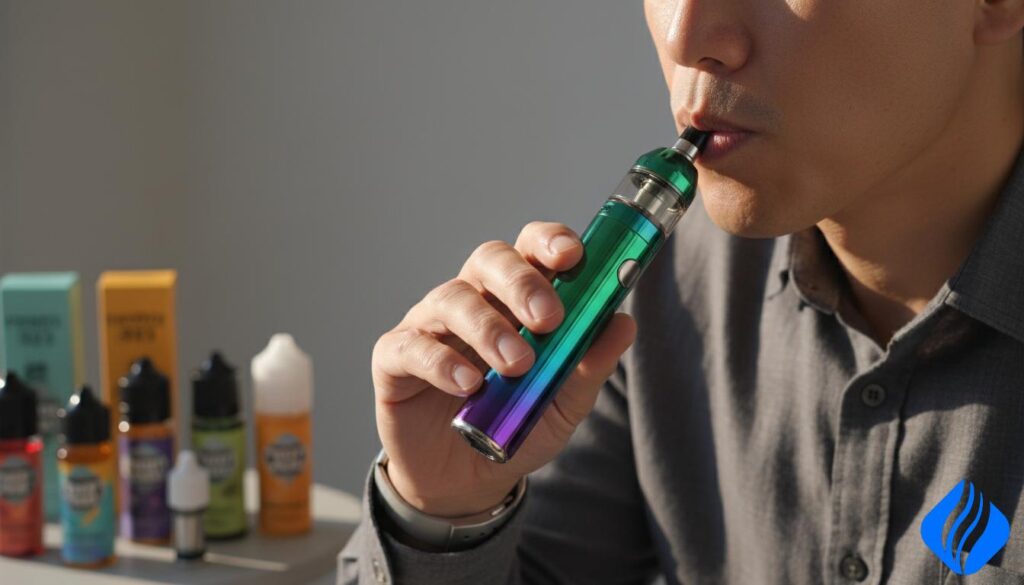
In this guide we will cover mouth‑to‑lung and direct‑to‑lung inhale styles, airflow and wattage settings, choosing milder e‑liquid, and first‑session setup. We will also include a safety section on batteries and charging, plus an adult‑only use reminder. Our goal is a gentler throat feel and a better overall vaping experience, not just bigger clouds.
Key Takeaways
- Slow your draw and seal your lips for a smoother inhale.
- Match inhale style to the device: MTL, RDL, or DTL.
- Reduce heat and nicotine to cut harshness.
- Adjust airflow and technique before upgrading gear.
- Follow safety steps for batteries and charging.
Why you cough when you vape and what changes fix it fastest
Many new users find the first sessions harsh because vaping delivers vapor in a different pattern than a cigarette. The core difference is simple: smoke forms from burning tobacco, while vaping makes an aerosol at a different temperature and density. That change can irritate the throat.
Why vaping feels different from smoking
Takeaway: short, sharp puffs that work for smoking often sting with vapor.
Cigarette draws are quick and hot. Vaping needs longer, slower inhales. Puffing harder won’t give more vapor like a burning stick. Instead, it can make your throat burn.
Common “too much, too soon” triggers
Takeaway: big hits, no recovery time, high nicotine, and hot vapor make many people cough.
- Large hits or chain use overloads the airways.
- Cold or hot density can tickle the lungs.
- High nicotine or power raises throat hit fast.
Match your inhale style to the device
Takeaway: wrong inhale way on a mismatched device often triggers coughing.
Restricted pods suit MTL or RDL draws. Airy, high-output kit needs DTL. If you pull the wrong style, you may pull extra air and cough. Try this quick self-check: seal your lips on the mouthpiece and inhale with steady control. That reduces extra air entry and eases coughing vaping symptoms immediately.
| Trigger | What it feels like | Fast fix |
|---|---|---|
| Big, sharp puffs | Scratchy throat hit | Slow draw, smaller puffs |
| High heat or power | Hot, dense aerosol | Lower wattage, open airflow |
| Device mismatch | Choking or cough during inhale | Match inhale style to device |
| Chain use / no rest | Deep lung tickle | Pause longer between puffs |
How to vape without coughing using the right inhale technique
Choosing the right inhale style makes a big difference in throat comfort and overall control.
Mouth-to-Lung inhaling for a smoother throat hit
MTL (Mouth-to-Lung): draw into the mouth, pause, then finish into the lungs. This gives a mild throat hit on a tight pod or a typical vape pen.
- Take a slow, steady draw into the mouth.
- Hold briefly (about 0–1 second).
- Inhale gently into the lungs.
- Exhale smoothly and wait between puffs.
Direct-to-Lung inhaling for bigger vapor
DTL (Direct-to-Lung): inhale straight into the lungs for higher airflow and more vapor production.
- Open airflow for a relaxed draw.
- Inhale steadily and fill the lungs.
- Exhale slowly and breathe normally before the next puff.
Restricted Direct-to-Lung as the middle ground
RDL (Restricted DTL): a slightly tighter DTL for many modern pod devices. It balances vapor and control.
- Take a slightly deeper draw than MTL.
- Keep the pull smooth and controlled.
- Exhale fully and pause between inhaling cycles.
The “cigar-style” mouth hold for a sore throat
For sensitive days, draw into the mouth only and exhale without inhaling. Use this as a short-term comfort method.
How long to hold vapor in before exhaling
Hold only as long as feels natural—usually 0–2 seconds. Absorption is quick. Long holds raise the risk of dry hits and irritation.
| Style | Best for | Quick tip |
|---|---|---|
| MTL | Pods, tight coils | Seal lips; slow draw |
| RDL | Open pods, balanced clouds | Smooth, slightly deeper pull |
| DTL | High airflow kits | Relaxed lungs-first inhale |
MTL vs DTL vs RDL comparison table and which style fits your device
Different draw styles pair better with certain kits, and that match shapes your session. Below we present a compact comparison that helps you pick a fit quickly.

| Style | Airflow feel | Draw tightness | Vapor amount | Best device |
|---|---|---|---|---|
| MTL | Restricted | High resistance | Low | Pods, tight coils |
| RDL | Moderate | Medium | Moderate | Many modern pods |
| DTL | Airy | Low resistance | High | Tanks, mods |
Vapor density, draw resistance, and airflow control explained
Airflow cools vapor and increases inhaled volume. More airflow often means thinner, cooler vapour but a larger cloud.
Draw resistance is how hard you must pull. High resistance gives a cigarette-like feel. Low resistance feels loose and fills lungs fast.
Vapor density affects irritation. Dense, warm clouds can overwhelm airways. Thin, airy vapor can still trigger a cough if your exhale meets a sudden rush of air.
When the wrong style causes coughing
A DTL pull on a restricted device makes hot, concentrated vapor during the inhale. That often bites the throat.
A tight MTL draw on an airy device can cause surprise coughing on the exhale as volume and airflow clash.
- If your draw feels hot and tight: try a firmer MTL match and open airflow slightly.
- If your hits feel like too much air: move toward RDL or DTL on a suitable device.
Dial in airflow, wattage, and vapor temperature for a smoother vaping experience
Control three variables—airflow, wattage, and puff pacing—to lower throat heat and get a calmer inhalation. Small, measured changes give big comfort gains.
Airflow settings that reduce harshness without flooding your lungs
Airflow affects vapor temperature and volume. Too tight makes warm, concentrated vapor. Too open can push more into the lungs and may make cough happen.
- Start mid-open: set airflow halfway and take one test draw.
- Adjust small steps: move one notch at a time until the hit feels smoother.
- Match pull style: tighter for mouth-first, wider for lung-first draws.
Wattage and coil resistance basics to prevent hot, dry vapor
Higher wattage plus low-resistance coils yields warmer, denser vapor. That can overheat the wick and give a harsh hit.
| Parameter | Effect | Beginner guideline |
|---|---|---|
| Low resistance (≤0.6Ω) | More heat, bigger clouds | Use lower wattage; 30–60W typical |
| Medium resistance (0.6–1.2Ω) | Balanced warmth and flavor | Start midrange wattage; 15–30W |
| High resistance (>1.2Ω) | Cooler, cigarette-like feel | Lower wattage; 6–15W |
How to pace your puffs to avoid overheating and dry burn
Dry burn happens when the wick can’t resaturate. Vapor turns hot and scratchy. Stop immediately at any burnt taste.
- Take a 2–4 second draw.
- Exhale fully.
- Wait 20–60 seconds between puffs, longer after several draws.
- Stop if flavor drops or smoke smells toasted.
Quick tuning sequence for a calmer session: 1) open airflow slightly, 2) lower wattage, 3) take shorter puffs, 4) wait between hits, 5) fine-tune upward only if comfortable.
“A calm draw plus cooler vapor is often the fastest path to a smoother vaping experience.”
Choose the right nicotine and vape juice to reduce throat irritation
Choosing the right nicotine level and juice base can cut throat irritation fast and make sessions gentler.
Nicotine strength and throat hit in plain English
Think of nicotine as a comfort dial. Higher milligram levels raise the throat hit and may trigger coughing. Lower milligram strength feels smoother but may need shorter, more frequent draws.
Nicotine salts vs freebase e-liquid
Nicotine salts absorb quickly and feel smoother at higher strengths. They suit MTL kits and small pods. Freebase e-liquid can taste sharper at the same mg level and fits lower‑nic rigs that aim for bigger clouds.
PG/VG ratios, vapor production, and dryness
Higher-VG blends boost vapor production but can leave your throat feeling dry. Higher-PG gives stronger flavor and a firmer throat feel. If your mouth feels parched, try a different ratio and drink water during sessions.
Flavor factors that may irritate
Intense menthol, sharp citrus, and some sweeteners can aggravate sensitive airways. A simple tobacco or mild flavor often reduces reflexive coughs.
- Quick checklist: lower nicotine; consider nicotine salts if you need higher mg; try a different e-liquid ratio; avoid extra-icy flavors for a week.
- Safety note: use nicotine responsibly and stop if irritation persists.
Device setup steps that prevent coughing on your first session
Start each new device session with a quick, deliberate setup routine. This prevents dry hits and gives a smoother first draw. We keep the steps simple and safety-first.
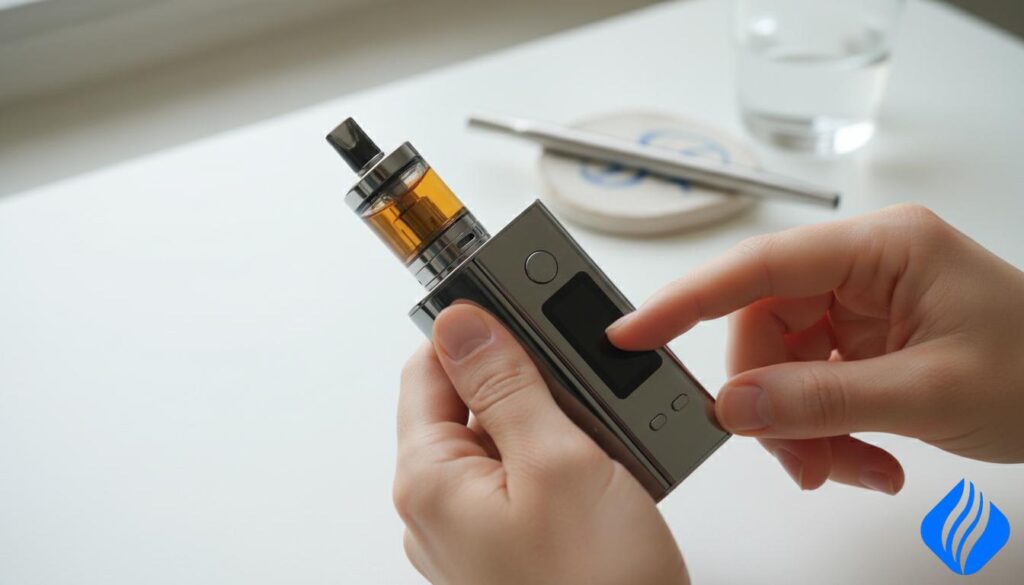
First-session checklist
- Check the pod/tank is seated and contacts are clean.
- Fill correctly with your chosen vape juice; avoid overfilling.
- Prime and soak the coil—see the priming guide below.
- Start low and slow: low power, short draws, pause between puffs.
- Adjust after a few minutes once the wick is fully saturated.
Coil priming steps that matter
- Add a few drops of e-liquid into visible cotton ports if accessible.
- Fill the tank or pod and reassemble the device.
- Wait 5–10 minutes so the wick soaks fully.
- Take 2–3 unpowered primer pulls if your device allows draw activation.
- Begin with gentle, short draws at low power.
Refillable pod and tank prep
For refillable kits and a vape pen transition, we recommend smaller puffs at first. Let your airway adjust over a few sessions.
Choose a mouthpiece that matches your preferred draw. Slower pacing reduces irritation.
Disposable-style basics and power sequences
Recognize draw-activated units vs button models. LED blink patterns often show charge or cutoff. Avoid accidental activation when carrying devices.
- Raz: press the button 5 times to power on/off.
- Off Stamp: press the button 5 times to power on/off.
- Foger: press the button 5 times to power on/off (some Foger units are draw-activated).
| Step | Purpose | Quick action |
|---|---|---|
| Prime | Prevent dry burn | Add drops, wait 5–10 min |
| Start low | Gentle throat feel | Lower power, short draws |
| Adjust | Fine-tune comfort | Open airflow slightly if needed |
“A soaked wick and patient first draws cut harsh hits more reliably than rushing settings.”
Quick tips: keep vapor briefly in the mouth before inhaling for an MTL-style draw, and avoid rapid back-to-back hits during the first 10 minutes.
Safety First: battery, charging, and responsible vaping
A stable power source is the foundation of a better, less irritating vaping session. We place safety at the center of the experience. Good charging habits protect batteries, preserve device performance, and reduce harsh or inconsistent hits.
- Use the original USB‑C cable or a high‑quality equivalent from a reputable brand.
- Avoid cheap cables that may overheat or damage the port.
- Do not charge unattended or overnight.
- Stop use immediately if the device is unusually hot, swollen, or the port is loose.
Charging and cable guidance
Use the manufacturer’s cable whenever possible. A proper USB‑C lead matches the device’s current rating. Cheap leads can cause high resistance and heat.
Tip: don’t charge through a damaged port. Also, avoid using the device while charging unless the maker states pass‑through is safe.
Responsible storage and an adult‑only reminder
Keep devices out of cars in extreme heat. Remove lint or debris from pockets before storing. Store batteries and pods away from children and pets.
“For adult (21+) use only.” Nicotine is addictive. Handle it responsibly and stop if irritation or unusual signs appear.
Quick practical checklist
- Charge with the original cable or certified replacement.
- Monitor the device during charging; unplug after full charge.
- Inspect regularly for damage or swelling and replace if needed.
| Risk | Sign | Action |
|---|---|---|
| Overheating | Warm case during charging | Unplug, let cool, inspect cable and port |
| Swollen battery | Bulging body or stuck panels | Do not use; recycle safely |
| Damaged cable/port | Loose connection or frayed cable | Replace cable; avoid charging until fixed |
Why is this happening? Fixes for coughing, burnt hits, and a device not firing
When a session goes rough, a few quick checks usually stop coughing and restore a smooth draw. These troubleshooting steps focus on comfort and safety. Follow each numbered list in order and stop if the throat feels worse.
Coughing during first use and calming the throat hit
- Switch to MTL or RDL draw and seal the lips.
- Take smaller puffs and pause between hits for recovery.
- Lower nicotine or try nicotine salts suited for your kit.
- Open airflow slightly for cooler vapor.
- Hydrate and rest 10–15 minutes if your throat is raw.
Burnt taste, dry hits, and what priming the coil really means
- Stop immediately at a burnt taste.
- Check liquid level and re-prime the coil/cotton.
- Lower power and lengthen wait between puffs.
- Replace the coil or pod if the burn persists.
Priming the coil means fully saturating the wick before heating so liquid vaporizes instead of dry cotton. Proper priming cuts harsh throat hit fast.
Vape device not firing: airflow, battery, contacts, and cutoff timing
- Charge the battery and confirm the unit is powered on.
- Clear airflow holes and reseat the pod/tank.
- Clean contacts and ensure good connection.
- Account for cutoff timing—many devices stop after a few seconds of continuous firing.
If misfires, overheating, or burnt flavor continue, stop use and replace the coil, pod, or device.
You’ll know the fix worked when inhales feel smoother, flavor stabilizes, and coughing drops over time.
Conclusion
A calm, matched draw and modest settings usually fix the problem fastest. Start slow, match your inhale style to the kit (MTL for tight pods, RDL for many modern pods, DTL for high‑airflow rigs), and lower heat or nicotine until the hit feels smooth.
Quick fixes: lower nicotine, open airflow a notch, drop wattage, and take longer pauses between puffs. Plenty of discomfort comes from trying big hits right away.
If irritation persists, revisit the comparison table and run the troubleshooting checklist. Consider a different e‑liquid or nicotine type before changing hardware. Responsible charging and device checks protect your gear and overall vaping experience.
Safety reminder: follow manufacturer charging guidance and inspect batteries regularly. For adult (21+) use only.
 English
  German
  Dutch
Dutch  Danish
  Czech
Czech  Italian
  Slovenian
  French
  Hungarian
  Spanish
  Polish