

Is there a vape shortage in the U.S.? Yes — supply for high-demand disposable products is tight right now.
We report this as an industry-wide supply issue driven by FDA PMTA enforcement and port actions that cut import volume. Shops face inconsistent restocks, purchase limits, higher shelf prices, and more counterfeit units when legitimate supply tightens.
We will assess realistic alternatives using clear metrics: device specs, battery efficiency, puffs per dollar, and flavor consistency from hands-on tests. Later sections show what we observe after 5,000 puffs for throat hit and vapor output.
Consumer protection is central. We preview safety and compliance guidance, nicotine warnings, and an authenticity checklist that includes QR verification steps.

Key Takeaways
- Yes, the U.S. market faces supply disruption for many disposable brands.
- Drivers include PMTA enforcement, Customs actions, tariffs, and state flavor limits.
- We evaluate products by puffs per dollar, battery efficiency, and flavor stability.
- Expect inconsistent restocks, higher prices, and increased counterfeit risk.
- We provide safety guidance, nicotine warnings, and QR-based authenticity checks.
Why is there a vape shortage in the U.S. right now?
Concrete policy and trade moves have cut import lanes and disrupted normal restocking rhythms.
FDA PMTA enforcement and port seizures by Customs and Border Protection
Under the PMTA framework, products without authorization face removal. Customs and Border Protection works with FDA at ports, and reported seizures and holds are common.
When containers are held or confiscated, store inventory often never arrives. That creates immediate gaps on shelves and forces distributors to ration allocations.

Tariffs and trade pressure on China-made disposable imports
Tariffs on China-made imports raised landed costs sharply in 2025. Peaks reported near 145%–170% pushed importers to order less and delay shipments.
Closure of the de minimis pathway increased scrutiny on small parcels. Higher fees and risk reduce importer willingness to place large orders.
Import volume shock: May 2025 shipments plunge compared with May 2024
Import data shows the scale: May 2025 recorded about 71 shipments from China versus nearly 1,200 in May 2024. That ~94% decline explains why restocks feel random.
Panic buying, purchase limits, and rising retail prices in smoke shops
Shops respond by placing per-customer limits and raising prices to cover replacement risk. Some $20 units now trade for roughly $25 in tight markets.
Panic buying amplifies scarcity. When customers stockpile, the supply chain cannot smooth demand and sellouts accelerate.
State and local flavor restrictions tightening supply channels
State laws add friction. Flavor bans and menthol rules shift legal demand across borders and crowd nearby markets.
That cross-border pressure speeds local sellouts and complicates distributor planning. For adult consumers, the net effect is less availability and higher street-level prices.
What brands and products are most affected and what’s still showing up in stores?
Local shops highlight certain names as consistently hard to keep on shelves. We monitor retailer logs and field reports to create an objective availability snapshot for popular disposables.
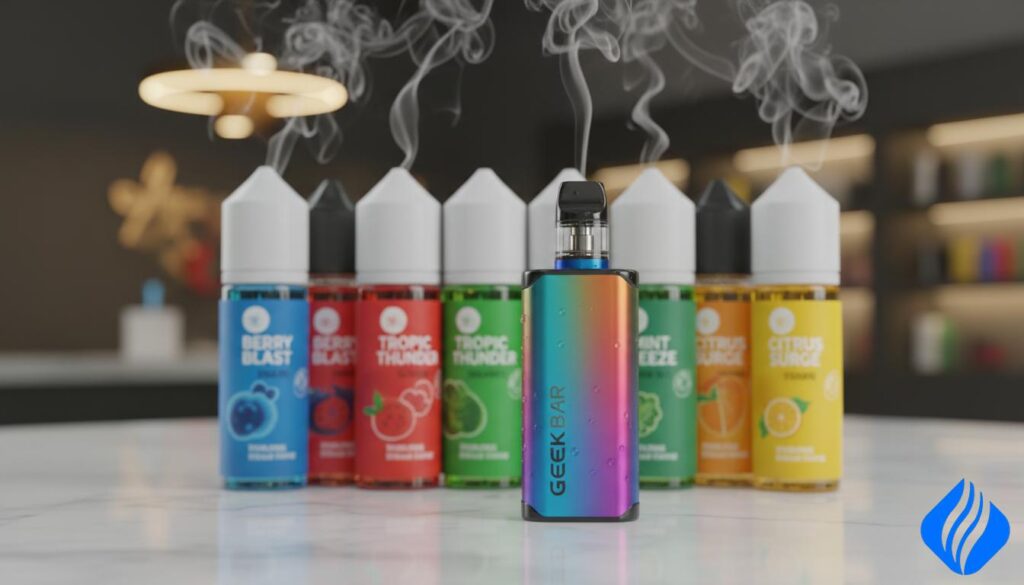
Geek Bar tops the list. It represented roughly 25% of tracked disposable sales in the illicit segment in 2024. With that baseline demand, even modest allocation cuts cause immediate sellouts and long restock gaps.
Restocks arrive in small batches. Shops ration units, set per-customer limits, and raise prices during those windows. Customers call ahead or visit multiple stores to find stock.
Lost Mary shows similar volatility. Parent-brand enforcement pressure makes downstream SKUs unstable. When scrutiny rises, access drops across several lines.
By contrast, RAZ appears more often and functions as a practical alternative when Geek Bar disappears. Shoppers should compare nicotine strength, puff estimates, coil design, and recharge features before switching.
Consumer protection note: scarcity increases counterfeit risk. Availability is not a quality signal. We will provide an authenticity checklist and hands-on value testing next, so customers can choose based on performance rather than luck.
Hands-on testing and value comparison for disposables during the shortage
We tested representative units to judge true puffs per dollar, throat feel, and flavor fade under normal use. Our method avoids chain-puffing and tracks recharge cycles for rechargeable models.
Main pick for shortage-proof stocking: FEEN 50K specs and real-world performance
FEEN 50K technical snapshot:
- Puff count: up to 50,000 advertised
- Battery: ~850–900 mAh, rechargeable (USB‑C)
- Coil: dual-mesh for even heat
- Nicotine: offered in 2% and 5% nic salt
- Design: leak-resistant, stable output over long runs
Competitor comparison: puffs per dollar
We calculate Puffs per Dollar as (advertised puffs ÷ retail price). That metric shifts during tight supply, so recompute at purchase.
| Model | Puffs | Charging | Coil |
|---|---|---|---|
| FEEN 50K | 50,000 | USB‑C | Dual-mesh |
| Geek Bar Pulse | ~15,000 | USB‑C | Mesh |
| Lost Mary (typical) | 5,000–10,000 | Varies | Mesh |
Flavor consistency after 5,000 puffs
What we saw: fruit and dessert profiles held clarity longer. Ice or high-menthol blends grew sharper after heavy use.
At 5,000 puffs, many devices show mild flattening. Dual-mesh FEEN maintained sweeter notes and less coil fatigue in our runs.
Throat hit and vapor production notes
2% nic salt reads smoother; 5% delivers stronger throat impact. Cooler profiles can feel harsher at higher strength.
Airflow matters: tighter MTL draws reduce vapor but sharpen throat; looser draws raise cloud and soften throat feel.
Core technical data shoppers ask for
- Battery (mAh): FEEN ~850–900; verify packaging for others.
- E-liquid (ml): varies—confirm on box.
- Nicotine: typically 2% or 5% nic salt.
- Coil type: mesh vs dual-mesh—dual-mesh aids longevity.
- Charging: USB‑C preferred; use quality cables.
Buying alternatives and authenticity checks
When stock runs low, browse broader collections for substitutes and deals: disposable vapes and hot-sale. Compare brand pages for RandM and Bang listings.
Verify units before use. Inspect printing, seals, batch codes, and scan QR codes. If present, follow the QR path and cross-check via this sourcing link: sokvape.com verification.
User FAQ
- How to know if it’s empty? Vapor drops, flavor mutes, draw blinks, or device stops after charging.
- How to recharge safely? Use USB‑C, avoid unknown fast chargers, charge on non-flammable surface, don’t leave unattended.
- Is it authentic? Buy from trusted retailers and scan QR codes. Avoid unusually low prices and damaged packaging.
Nicotine warning: For U.S. buyers, products contain nicotine. Use only if 21+ and store away from children and pets. Follow state and local laws and use responsibly.
For broader comparison reading, see our related resources: disposable showdown and this roundup: best disposables 2025.
Conclusion
Reduced inbound flow, border enforcement, and tariff shocks have reshaped availability. The current reality stems from regulatory action, port controls, and trade costs. Supply will likely stay volatile while those pressures persist.
For adult consumers, focus on verified sourcing, steady performance, and a clear value metric. Recompute puffs per dollar at the actual price you pay. Compare specs—battery type, coil design, and charge method—before switching brands.
Match nicotine strength to tolerance (2% vs 5%). Prioritize USB‑C charging safety and use packaging plus QR checks to cut counterfeit risk. For context on enforcement and market rules, see e-cigarette facts and stats.
Nicotine warning: This product contains nicotine. Nicotine is an addictive chemical. For adult use only (21+). Keep out of reach of children and pets.
 English
  German
  Dutch
Dutch  Danish
  Czech
Czech  Italian
  Slovenian
  French
  Hungarian
  Spanish
  Polish