

Direct answer: For most devices, the simplest routine is charge, check the mouthpiece, then inhale gently or hold the button while inhaling. Pause between puffs for smoother vapor and less coughing.
As the experts at SokVape who have tested hundreds of devices, we speak from hands-on experience and a safety-first view. We know beginners face common issues like harsh draws, coughing, or confusing buttons.
We provide clear, practical steps and quick fixes. This short guide previews device types, parts, safety rules, step-by-step operation, inhaling technique, and troubleshooting. It is written for adult beginners and returning users who want a steadier flavor and less harshness today.
Key Takeaways
- Charge fully, then inspect the mouthpiece before first use.
- Inhale with a gentle draw; avoid heavy lung pulls that cause coughing.
- Know whether your device is puff-activated or button-activated.
- Pause between puffs to reduce leaking and clogging.
- Follow safety steps and consult the troubleshooting section if something feels off.
Vape pen basics for first-time users
We’ve tested many starter devices and found that naming parts and knowing activation style makes first sessions smoother.
Direct answer (featured-snippet ready)
Press-and-inhale for button models, or inhale gently for draw-activated models. Stop if the hit feels harsh.
Push-button vs. draw-activated
Push-button models require you to press the button while inhaling. That timing controls heating and limits spit-back.
Draw-activated devices fire when you inhale or when the indicator light turns on. The light helps you avoid overpulling.
Rechargeable vs. disposable
Rechargeable devices cost more up front but lower long-term spend and waste. Disposable pens are ready out of the box for grab-and-go convenience.
Know your parts
- Mouthpiece — draw comfort.
- Tank / pod / cartridge — holds liquid.
- Coil / wick — heats and feeds juice.
- Battery — powers the device; charging often uses a USB-C port.
- Airflow — controls draw tightness and vapor density.
Make sure you know your parts before troubleshooting. Coils and pods wear out; handle batteries gently and keep the device dry.
Safety First: battery, charging, and handling rules for vape pens
We prioritize safe battery habits. A simple charging routine protects batteries and keeps your device reliable today.
“Never leave a charging device unattended. Small steps prevent big accidents.”
Safety First
- Use only original USB-C cables from the box; avoid damaged cords.
- Do not expose batteries to water or heat.
- Replace any device with dents, swelling, or malfunctioning lights.
Charging do’s and don’ts
Do charge on a stable surface using a laptop, game console, or quality USB wall adapter. Do unplug when the light shows full.
Don’t charge on bedding, charge overnight, or leave a device unattended. Keep the port free of lint and keep the pen upright to reduce leaks.
| Indicator light | Typical meaning | Recommended action |
|---|---|---|
| Blue | Full charge | Unplug and store safely |
| Green | Mostly full | OK to use; monitor until full |
| Orange | Low | Charge soon from a safe source |
| Red | Nearly empty | Charge now; do not leave charging unattended |
For adult (21+) use only
Make sure nicotine products stay away from children and pets. Nicotine can be addictive. Follow local laws and only allow adult use.
How to use a vape pen step by step
Follow this clear, numbered routine for reliable performance and cleaner flavor.
Before you take a puff
- Charge fully.
- Inspect the tank, pod, or cartridge for cracks or leaks.
- Wipe condensation and clear the mouthpiece of debris.
- Confirm the cartridge or pod is seated snugly.
- Make sure the coil and wick look intact before firing.
Turning on and off
- Most devices use a click pattern. Try 3-click or press 5 times to power on/off.
- An LED light shows charge, firing, or lockout. Red means low; green or blue usually means ready.
- If the device locks, repeat the click sequence or check the manual.
First inhale and refill basics
- For button models, press-and-inhale while holding the button for the draw.
- For draw-activated devices, take a gentle pull until the LED activates — this is puff-activated firing.
- Wait 30–60 seconds between puffs to protect the coil and wick and keep flavor steady.
| System | Action | Tip |
|---|---|---|
| Pod | Swap pod or replace coil | Seat firmly; avoid overtightening |
| Tank | Refill juice and change coil head | Prime new coil before firing |
| 510 | Thread cartridge on/off carefully | Keep threads clean for solid contact |
Brand quick controls
- Raz — example: press 5 times for power on/off.
- Off Stamp — example: press 5 times to toggle power; confirm with LED.
- Foger — example: press 5 times for startup; sequence can vary by model.
Inhaling techniques that prevent coughing and improve flavor
Gentle draws and steady airflow make flavor cleaner and coughing less likely.
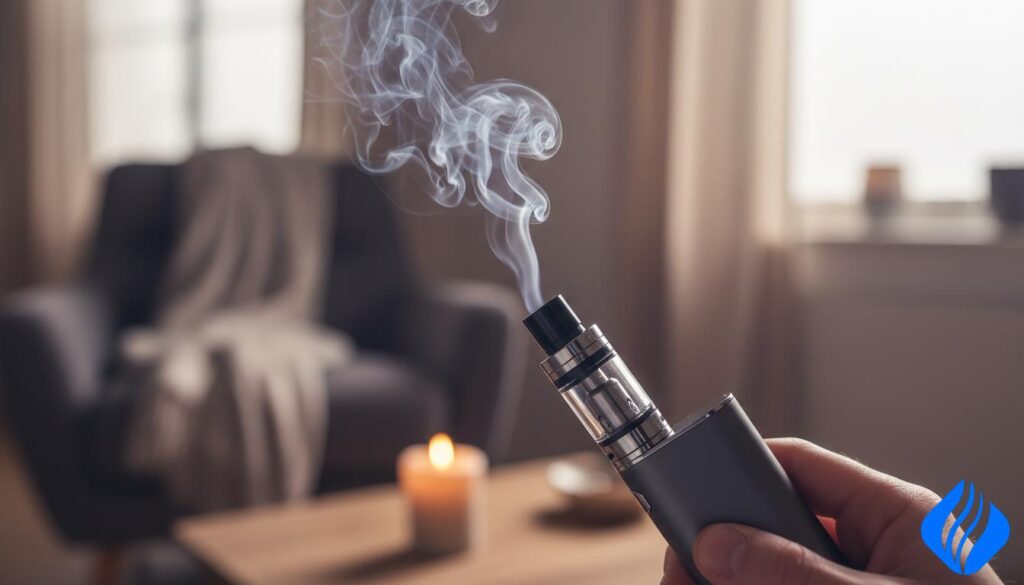
MTL (Mouth-to-Lung) means you draw vapor into the mouth first, then inhale into the lungs. This method feels familiar to cigarette smokers and is gentler with higher nicotine levels.
DTL (Direct-to-Lung) is a straight inhale into the lungs. It gives bigger clouds and stronger throat impact, but can feel harsh if nicotine is high or airflow is too tight.
Why gentler air pressure matters
Correct air pressure is much lower than with a cigarette. Pulling too hard floods the coil, builds condensation, and raises leak risk.
Tight draws boost perceived flavor and throat hit. Open airflow cools vapor and increases cloud size. Finding the right balance shapes the whole experience.
| Method | Cloud size | Harshness | Nicotine feel |
|---|---|---|---|
| MTL | Small | Low | Strong at high nicotine |
| DTL | Large | Variable (can be high) | Less throat at low nicotine |
| Sipping | Very small | Lowest | Smooth; slower onset |
Try this if you cough
- Loosen airflow slightly if adjustable.
- Reduce draw strength; inhale only enough for a proper puff or for the light to engage on puff-activated models.
- Test the sipping method for a short session before changing nicotine strength.
We remind readers that comfort and consistency matter more than cloud size. Most vapers find their best way by adjusting draw speed and air, not by forcing harder pulls.
Dialing in your vape experience: airflow, power, and e-liquid choices
Small changes in airflow and power can turn a rough draw into a smooth, consistent experience.
Adjustable power and wattage basics
Adjustable power controls temperature. Higher wattage gives warmer vapor and a stronger throat hit.
Lowering wattage reduces harshness and stretches coil life. Stay within the coil’s recommended range.
When to raise or lower power
- Lower power if hits feel burnt or too hot.
- Raise slightly if vapor is weak or flavor is muted, but do so in small steps.
- Always check coil specs before changing settings.
Nicotine salt vs freebase
Nicotine salt is smoother at higher strengths and pairs well with pods and low-watt devices.
Freebase suits refillable tanks and higher-watt setups at lower strengths. Match strength to your device and tolerance.
Coil and wick priming
Prime by adding juice to the coil, seating the pod or tank, then wait a few minutes. Take a couple of gentle pulls without firing if possible.
This step prevents dry hits, preserves flavor, and lets the wick fully saturate. Avoid chain puffs; give the wick time between draws.
Dial-in routine: set airflow, set low power, take 1–2 gentle puffs, wait a bit, then adjust in small increments until the experience fits.
Why is this happening? Vape pen troubleshooting
Most complaints we see trace back to airflow, coil priming, or simple contact issues. Below we list quick checks and safety-first fixes you can try.
Coughing on first puffs
Try these steps in order. They reduce harsh hits and soothe the throat.
- Loosen airflow if adjustable.
- Reduce draw strength and shorten each puff.
- Try the “sip” method—draw into the mouth, then inhale gently.
- Consider lower nicotine if symptoms persist.
Burnt taste or harsh hits
Prime the coil before firing. Wait a few seconds between puffs so the wick can re-saturate. If your device has settings, lower the power slightly rather than increasing time at high wattage.
Device not firing
- Check battery charge and the indicator light.
- Reseat the pod or cartridge and confirm it clicks into place.
- Clean contacts and threading with a cotton swab and isopropyl alcohol; wait until dry.
- Remember safety cutoffs and lock modes; follow the click pattern in the manual.
Leaking or clogging
Too much suction can flood the coil and cause leaks. Try gentler pulls or a short firm puff to clear minor clogs.
| Symptom | Likely cause | Fast fix |
|---|---|---|
| Coughing | Tight airflow / high strength | Loosen airflow; sip; shorten puffs |
| Burnt taste | Dry wick / high power | Prime coil; lower power; wait between puffs |
| No fire | Low battery / contact dirt | Charge battery; clean threads; reseat pod |
| Leaking | Overpulling / wrong orientation | Store upright; gentle draws; clean mouthpiece |
Stop using the device immediately if the battery overheats, the tank cracks, or liquid reaches the battery area.
Conclusion
Here’s a brief wrap that highlights safe charging, gentle draws, and basic upkeep. Start low and slow. Favor gentler air pressure and follow the correct method for your pen type. Small changes make big improvements in flavor and comfort.
Safety first: use the right cable, avoid overnight charging, and store upright away from children and pets. Simple maintenance — clean contacts and mouthpiece — keeps the device reliable and extends coil life.
Most early problems trace back to technique, not a bad product. Use the step-by-step routine and troubleshooting tips in this article when issues arise. Revisit these notes whenever you try new e-liquid strengths or swap devices. We’re here to help you keep each session safer and more consistent today.
 English
  German
  Dutch
Dutch  Danish
  Czech
Czech  Italian
  Slovenian
  French
  Hungarian
  Spanish
  Polish