

Fast fact: modern coil tech like Dual Mesh Coils and smart screens can change flavor delivery mid‑device, creating a sudden taste loss that frustrates flavor‑first adult users.
We define this condition as a short‑term loss of flavor perception that usually clears in one to three days. This article sets clear expectations: causes, symptom patterns, fast at‑home fixes, and signs that merit medical or dental attention.
Our approach blends technical credibility and hands‑on testing. We examine coil life, sweetener buildup, airflow settings, and how device performance can mimic a genuine palate problem. We also preview disposable comparisons — Geek Bar vs Lost Mary vs Raz — focusing on Puffs per Dollar and flavor consistency.
For bulk buyers, we note cost savings and supply reliability at sokvape.com. Safety note: nicotine is addictive. Taste shifts may also reflect dehydration, illness, or oral health.
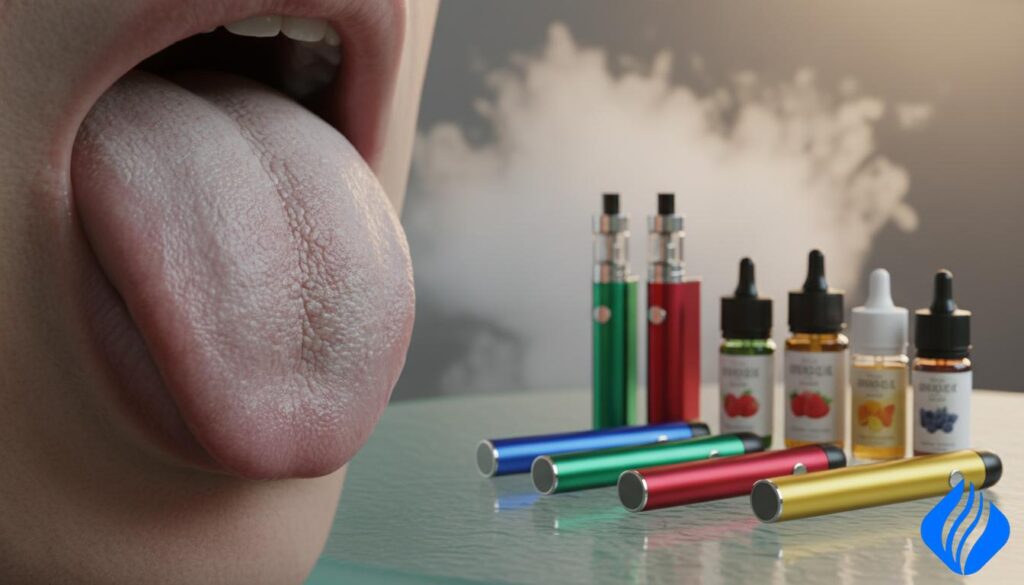
Key Takeaways
- We explain the likely causes and quick home remedies for taste loss.
- Device factors like coil condition and sweeteners often mimic a true palate problem.
- Testing focuses on throat hit, vapor output, and flavor deep into puff counts.
- Disposable comparisons will emphasize Puffs per Dollar and consistency.
- Bulk buyers should consider sokvape.com for cost and supply reliability.
- Seek professional care if symptoms persist beyond a few days.
what is vape tongue and why it happens to vapers
We separate sensory causes from hardware faults to give clear, actionable guidance. Vape tongue operates as a short, temporary drop or distortion in perceived flavor from your e‑liquid or vape juice.
Operationally, it often reflects sensory adaptation rather than device failure. The coils or airflow can mute output, but many cases stem from reduced olfactory input.
Vape tongue vs normal flavor fade
True sensory loss affects multiple foods and drinks. If only the device tastes muted, hardware like coil residue or low battery likely mutes output.
Why taste depends on smell
Taste relies heavily on smell. When olfactory signals decline, the brain reads less detail and your sense taste falls. This sensory adaptation—called olfactory fatigue or nose blindness—happens after repeated exposure to the same profile.
Typical duration
Most episodes clear in one to three days. If reduced ability taste persists beyond that or affects all foods, seek medical or dental follow‑up.
Common symptoms and how vape tongue can affect your oral health
Recognizing early signs helps us protect the mouth and prevent escalation. Below we list common patterns and clear actions to take at home.
Temporary taste loss vs altered sensation, numbness and irritation
Common symptoms include reduced flavor intensity, flat profiles, or altered notes. Some users report numbness, tingling, or irritation on the tongue.
Temporary taste loss often means sensory fatigue. Altered notes or missing cooling point to dehydration or coil residue. Numbness or persistent irritation should prompt closer review.
Dry mouth and reduced saliva: why dehydration changes perception
Lower saliva reduces how flavor molecules reach the taste buds. That reduces your ability to perceive detail across the mouth.
Dehydration can also heighten irritation and make throat hit feel harsher even when nicotine stays the same.
When changes may signal bigger dental issues
Persistent dryness raises risk for gum inflammation, decay, and opportunistic infections. Flavors may mask these issues until they worsen.
“If symptoms last beyond a few days or include pain, swelling or white patches, seek professional care.”
Don’t ignore swollen or bleeding gums, persistent sores, white patches, fever, or symptoms beyond a few days. For routine cases, improve hydration, boost oral hygiene, and reduce vaping intensity as first steps.
Top causes of vape tongue backed by real-world patterns
We track real-world patterns to rank the most common drivers behind sudden flavor loss. This helps readers identify likely causes fast and pick the right remedy.
Common cause ranking
- Dehydration and dry mouth
- Flavor fatigue from the same juice
- Dual use with cigarettes
- Illness and medications
- Device-related issues (covered later)
Dehydration and a dry tongue: signs to watch for
Dehydration reduces saliva and dulls receptors. Watch for a dry tongue, white coating, dark urine, headaches, dry eyes, or dry skin.
Water intake often restores taste faster than other steps. Increasing plain water and electrolytes usually helps within hours.
Flavor fatigue from the same juice
Using the same e‑liquid every day can desensitize your senses. The flavor may seem flat even when the device works normally.
Rotate profiles or take short flavor breaks to reset perception.
Smoking and dual use
Smoking dulls both taste and smell. Even occasional cigarette use can slow recovery. Continued smoking prolongs muted perception and dryness.
Illness and medication effects
Colds, sinus congestion, gingivitis, nutritional deficits, and some medication side effects often reduce taste. If food and drink also taste off, consider recent illness or new medications.
“If everything tastes muted beyond simple fixes, prioritize hydration, then check for recent illness or meds.”
Quick decision way: thirsty/dry → hydrate; only one flavor muted → rotate; everything muted → consider illness or medication. Most causes reverse with simple steps, but repeated dryness can harm oral health over time.
Hands-on testing insights: what we noticed when taste drops mid-device
We ran controlled sessions to note how flavor shifts during a single device cycle. Our checks pair sensory notes with performance metrics so we avoid blaming the user or the hardware alone.
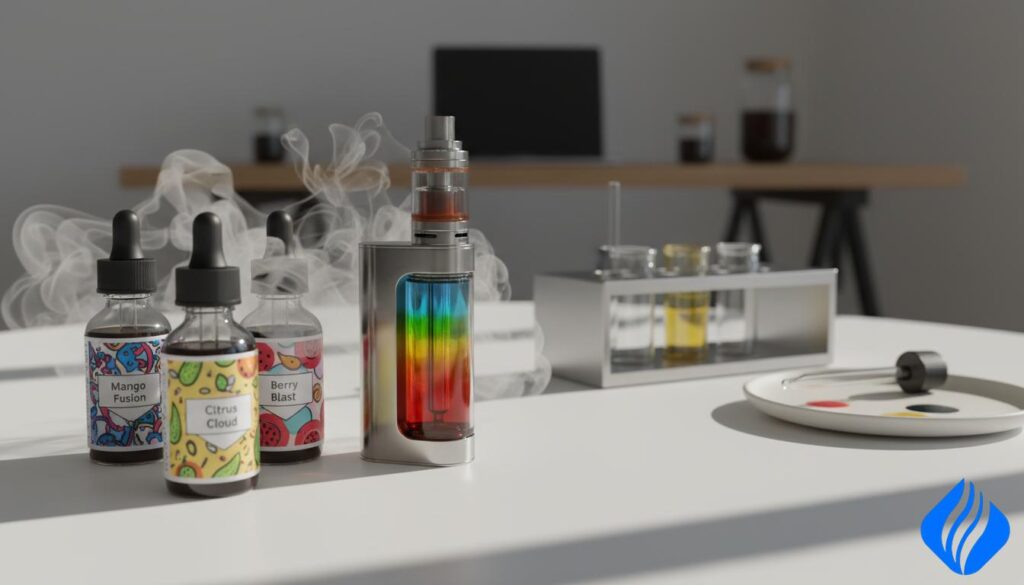
Throat hit changes
When the palate is fatigued a single nicotine level can feel oddly smooth or unexpectedly strong. That change in throat hit marks sensory adaptation or local irritation rather than a formula change.
Vapor output and mouth dryness
Higher vapor output raises evaporation in the mouth. Over time this increases dryness and dulls receptors. Warm indoor air speeds this effect.
Flavor after ~5000 puffs and quick checks
After roughly 5000 puffs we saw sweetness become louder, cooling flatten, and top notes vanish first. Coil residue can make profiles taste too sweet and mask nuances.
| Sign | Likely cause | Quick check |
|---|---|---|
| Burnt or harsh | Coil damage | Replace coil, test |
| Muted across profiles | Palate fatigue | Sip water, fresh air, retry (taste vape check) |
| Too sweet | Sweetener buildup | Prime/clean coil, lower watt |
Quick diagnostic: sip water, breathe fresh air, then try a short draw. Fast recovery points at sensory fatigue; no change signals hardware. Protect your buds by managing dryness and irritation as much as switching flavors.
How to fix vape tongue fast at home
We present a short, practical protocol you can use right now to restore normal flavor and protect oral health. Follow the steps in order and stop if irritation worsens.
Fast, do-this-first sequence
Drink water now. Pause vaping for 15–30 minutes, then reassess your taste. Fast hydration often restores your ability taste within hours.
Hydrate strategically
Keep sipping steady water through the day. If you’ve been exercising or sweating, add electrolytes to maintain saliva production. Avoid dehydrators such as alcohol and excess caffeine; they worsen dry mouth and blunt flavor.
Palate reset and flavor break
Step outside for fresh air and take slow, deep breaths for five minutes. Take a short flavor break—no vaping for 30–60 minutes—to let olfactory receptors recover. The coffee bean trick is popular, but fresh air plus hydration works more consistently.
Rotate flavors on purpose
Switch between fruit, dessert, and mild menthol profiles to reduce desensitization. Aim for deliberate rotation rather than constant single‑profile use to protect long‑term flavor clarity.
Oral hygiene routine for vapers
Brush twice daily, floss, and use a tongue scraper to remove coating that blocks receptors. Good oral hygiene keeps the mouth environment healthy and speeds recovery.
Use menthol cautiously
A mild menthol can feel like a quick reset for some users. Test a low‑menthol profile gently. Stop immediately if cooling increases dryness or irritation.
- Now: drink water, pause, reassess.
- Hydrate steadily; add electrolytes if needed.
- Step outside, breathe deeply, take a 30–60 minute break.
- Brush, floss, scrape the tongue.
- Rotate flavors and test menthol with caution.
“Restore normal taste without increasing puffing intensity; more draws usually backfire by raising dryness.”
Stop blaming vape tongue: coil gunk, sweeteners, and when hardware is the real culprit
Before blaming your senses, confirm the device output — many faults live on the coil. We separate a sensory condition from an output problem so you can diagnose quickly.
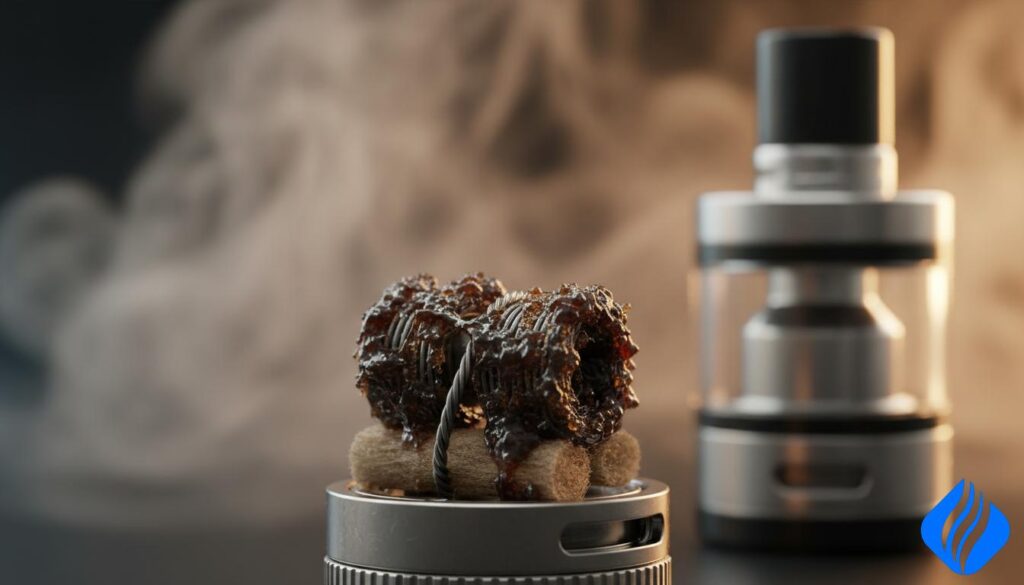
What coil gunk is and why a fresh coil tastes stronger
Coil gunk forms when e-liquid ingredients deposit on the heating element. The residue builds into a sticky layer that distorts vaporization.
A fresh coil has a clean heating surface and proper wicking. That delivers truer flavor and fuller taste to your buds.
How sweetened e-liquid alters perception
Sweeteners in some juice—often sucralose—caramelize and speed coil buildup. That makes output taste unusually sweet and masks subtle top notes.
This is an output issue, not always a palate failure. Replacing the coil or testing a fresh unit will confirm the cause.
- Sign it’s hardware: sudden muting, overly sweet draws, or burnt edges after heavy use.
- Fix for refillables: replace the coil and test at low wattage.
- Fix for disposables: compare with a new unit side‑by‑side before assuming sensory loss.
“Solving the correct issue prevents over‑vaping that increases dryness and prolongs recovery.”
For guided device troubleshooting see our device troubleshooting page.
Disposable comparisons: puffs per dollar and flavor consistency
We set a clear baseline of technical specs, then test how popular disposables hold up deep into their rated puffs.
Baseline specs to check
- Battery capacity (mAh)
- E-liquid volume (ml)
- Nicotine: 2% or 5% nic salt
- Coil type: mesh vs dual mesh
- USB‑C charging availability
Geek Bar vs Lost Mary vs Raz
We compare two practical metrics: Flavor Consistency and real-life drop-off. Geek Bar often gives steady output early but shows sweetness shift after heavy use. Lost Mary tends to keep top notes longer. Raz (dual mesh models) keeps intensity deeper into the puff count but can raise mouth dryness.
Puffs per Dollar and coil effects
Value = advertised puffs ÷ price. Adjust for drop-off: usable puffs fall if flavor collapses early.
| Model | Flavor consistency | Usable puffs |
|---|---|---|
| Geek Bar | Good early; sweetens late | ~75–85% of rated |
| Lost Mary | Balanced; retains notes | ~80–90% |
| Raz (dual mesh) | Intense longer; drier | ~85–95% |
Mesh vs dual mesh: dual mesh sustains perceived intensity when your sense detail is muted, but it can increase vapor and dryness. For recovery, lower nicotine (2%) often feels gentler on a dry palate.
Rotate brands and families to avoid flavor fatigue. Browse Disposable Vapes, check Hot Sale, and consider rotation picks like RandM or Bang. For a detailed buyer guide see our roundup: Best Disposable Vape 2025.
Troubleshooting guide: empty device, safe charging, and authenticity checks
This FAQ helps users stop misdiagnosing a device issue as sensory fatigue. We list quick checks, safe charging best practices, and simple authentication steps you can do now.

FAQ: How to know if it’s empty?
Signs: reduced vapor, weaker throat hit, uneven draw, and blinking indicators that vary by model. A sudden flavor collapse that does not recover after sipping water or fresh air often means true depletion.
If a fresh unit tastes normal while the current one is muted or burned, the problem likely sits with the device. If all units taste flat, it’s likely sensory.
FAQ: How to recharge safely?
Use USB‑C with a reputable low‑output adapter. Charge on a hard, non‑flammable surface. Don’t leave charging unattended. Avoid charging right after heavy use to reduce heat stacking over time. Stop if the device feels hot.
Note: higher nicotine can feel harsher when you recover from dryness. Do not chain puff to compensate; that worsens irritation.
FAQ: Is it authentic?
Check the QR or scratch code on packaging. Verify via sokvape.com and the provided link: https://www.google.com/url?sa=E&source=gmail&q=sokvape.com
Document batch/serial, photograph codes, and note the time you first saw a change. This simple way helps identify counterfeit or defective runs.
| Check | Expected sign | Action |
|---|---|---|
| Empty liquid | Low vapor, muted flavor | Refill or replace pod |
| Battery low | Blinking light, weak draws | Charge via USB‑C, monitor temp |
| Authenticity | Missing/invalid QR | Verify at sokvape.com; save photos |
“Confirm device health before blaming sensory change; that saves time and protects your mouth.”
Safety and nicotine warning
This section gives a concise safety checklist and concrete triggers to prompt medical or dental review.
Nicotine is an addictive chemical. We include that statement verbatim because it must be unambiguous.
When to see a doctor or dentist
Most episodes of muted flavor clear with hydration and brief rest. Still, persistent or worsening signs require evaluation.
- See a clinician if symptoms last more than 7 days despite home care.
- Seek urgent care for worsening pain, swelling, fever, or bleeding gums.
- Report persistent ulcers, white patches, or severe mouth dryness that does not improve with fluids.
Higher risk: people with diabetes, immunosuppression, or existing periodontal disease should seek evaluation sooner.
“Experts note aerosol exposure can contribute to oral dryness, irritation, caries, gingivitis, opportunistic infections, and shifts in the oral microbiome.”
Discuss medications that cause dry mouth with your prescriber. Maintain regular dental checkups; chronic dryness and irritation raise long‑term cavity and gum risk. This is a safety framework, not a diagnosis.
Conclusion
Summing up, simple steps often reset your palate and reveal whether the issue is hardware or sensory. Most cases of vape tongue clear within a few days with basic care. Start with hydration and a short break from use.
For quick recovery, sip water, breathe fresh air, and rotate flavors rather than increasing draws. Support saliva and taste buds with routine oral hygiene—brush, floss, and gently scrape the tongue.
If a unit tastes burnt, muted, or too sweet inspect coil gunk and e-liquid ingredients before blaming your palate. Consider smoking, illness, or medication effects as alternate causes.
Monitor symptoms. Seek dental or medical care if the condition persists or worsens. For rotation tips and value comparisons see our Disposable Vapes and Hot Sale pages at sokvape.com. Use nicotine cautiously; prioritize mouth health over stronger throat hit.
 English
  German
  Dutch
Dutch  Danish
  Czech
Czech  Italian
  Slovenian
  French
  Hungarian
  Spanish
  Polish