

Quick fact: THC and CBD half-lives vary, but inhaled plant alkaloids often show rapid onset and a shorter apparent duration than oral forms, which helps explain why inhaled blue lotus products can feel fast but wear off within a few hours.
We answer “what is blue lotus vape” directly: it is an inhaled product that delivers extracts of the blue lotus flower, usually without nicotine or THC, intended for mood support or relaxation.
We approach this with a harm-reduction lens. The FDA has not approved the blue lotus flower for consumption in the United States, and no standard dose exists. Reports include mild calm for some people, and serious reactions for others, including paranoia and hallucinations in a 2023 case report after use in multiple forms.
Safety first: choose lab-tested products, avoid mixing with alcohol or cannabis, and do not drive after use. This article explains active alkaloids, inhalation bioavailability, onset times, and why metabolic half-life matters for lingering effects.
Key Takeaways
- We define the product plainly and note it’s often nicotine- and THC-free.
- FDA has not approved the plant for consumption; dosing is uncertain.
- Inhalation gives fast onset but variable duration tied to metabolism.
- Serious side effects have been reported; lab testing matters.
- Avoid mixing substances and refrain from driving after use.
- This is informational only; consult a clinician if you take medications or have a health condition.
What is blue lotus vape and what does it do in the body?
We describe a vapor product that converts Nymphaea caerulea extract into an inhalable aerosol. The aerosol enters the lungs and sends compounds into circulation much faster than oral consumption such as teas or infused drinks.
Inhalation bioavailability means a higher fraction of active alkaloids reaches the bloodstream quickly. This typically produces a rapid calming shift or mild mood lift within minutes, rather than the slower onset after digestion.
Typical formulas are marketed as nicotine-free and often THC-free. Some products add cannabinoids and terpenes, which can alter perceived effects, legal status, and interaction risk.
Label clarity matters: “blue lotus” can refer to whole-plant extract, isolated alkaloids, or blended products with hemp-derived components. Consumers should check batch testing and ingredient lists before use.
- Faster onset via lungs versus GI absorption.
- Variable effects depend on product strength and individual sensitivity.
- Terpenes shape flavor and may modify perceived effects.
Blue lotus, Nymphaea caerulea, and the blue lotus flower in modern wellness culture
The Nymphaea caerulea grew along the Nile and appears often in ancient imagery tied to ritual and periods of rest.
Ancient Egyptian culture placed the plant in art, temples, and burial contexts. This long visual presence helped the lotus flower gain associative meaning with relaxation, though history does not prove medical effects.
Today the plant appears across wellness shelves as dried flowers, teas, pre-rolls, vape cartridges, and infused beverages. Each product form carries different onset times and risk profiles, from slow-acting tea to inhaled extracts.
Why modern consumers gravitate here: interest in nicotine-free options, herbal positioning, and gentler mood experiences than high-THC offerings.
- Where to find products: online marketplaces, specialty vape shops, and holistic retailers in the United States.
- Watch for added cannabinoids that change legal status and effects.
- Prioritize transparent batch testing and lab reports before you buy blue lotus.
| Product form | Typical onset | Perceived intensity | Retail locations |
|---|---|---|---|
| Dried flowers / tea | 30–90 minutes | Mild | Herbal shops, online |
| Vape cartridges / extracts | Minutes | Variable | Specialty vape stores, online |
| Pre-rolls & infused drinks | Minutes to 60 minutes | Low to moderate | Holistic retailers, select online sellers |
Active compounds and why effects can feel calming or mildly euphoric
Two alkaloids dominate discussion: nuciferine and apomorphine are the primary compounds linked to mood changes after inhalation. Apomorphine can act as a dopamine agonist, and nuciferine appears to modulate neurotransmitter activity in ways that many users describe as calming.
Mild euphoria here usually means a subtle uplift and relaxed body tension rather than intense intoxication. These sensations depend heavily on dose, extract strength, and individual sensitivity.

Nuciferine and apomorphine: dopamine-receptor activity linked to mood lift
Apomorphine binds to dopamine receptors and can produce a short-lived mood lift. Nuciferine’s exact mechanisms are not fully defined, but studies and reports suggest it helps reduce tension and supports a softer affect.
Psychoactive potential and why intensity varies
Variability matters: dose per puff, extract concentration, formulation differences, and prior tolerance to other compounds shape effects. Claims about anxiety relief or sleep aid remain anecdotal and lack robust clinical proof.
- Benefits reported by users are observational, not medical endorsements.
- Stronger reactions, including dizziness or altered perception, can occur at higher exposures or with added cannabinoids.
Note: Heating and temperature control alter which compounds reach the lungs; we address that in the next section on vaporization science.
How vaping blue lotus works: vaporization science, boiling points, and ingredient stability
We explain the mechanics behind inhaled aerosols and why temperature, device quality, and formulation shape user outcomes.
Vaporization versus combustion
Vaporizing heats extracts to release volatiles without burning plant material. That reduces smoke-related byproducts compared with joints and can lower exposure to char and tar.
Boiling points and terpenes
Different molecules vaporize at different boiling points. Terpenes often evaporate at lower temperatures and give flavor and aroma.
Overheating can degrade terpenes into harsher compounds and change perceived effects. Control temperature to preserve delicate aromatics.
Decarboxylation and blends
If a product contains THCa, heat can trigger decarboxylation and convert it to active THC. That alters impairment risk and may make effects more cannabis-like via the Endocannabinoid System.
- Bioavailability: inhalation gives rapid onset and efficient uptake into blood.
- Metabolism basics: distribution is fast; metabolic half-life helps explain why effects fade over hours.
- Practical note: the way a device heats and how long a puff lasts matter as much as formulation.
Blue lotus vape effects: relaxation, mood support, and sensory changes users report
Many people report subtle shifts in mood and calm after inhaling herbal extracts. We summarize common experiences while stressing harm reduction and practical safety.
Common experiences
- Calm and reduced tension: brief relaxation that often helps evening wind-down.
- Mild euphoria: a gentle uplift rather than strong intoxication for most users.
- Low sensory change: softer perception of stress and body tension rather than vivid effects.
Higher-dose reactions and case literature
Dose matters. At higher exposures, people report dizziness, nausea, or disorientation. A 2023 case report described paranoia, agitation, and hallucination-like behavior after use in multiple forms.
Mixing with alcohol or cannabis
Combining with alcohol can increase central nervous system suppression and next-day grogginess. Using with cannabis may amplify sedation, anxiety, or perceptual shifts, especially when cannabinoids are present.
Safety note: the FDA has not approved this plant for consumption in the United States. Start low and go slow; do not drive or operate machinery until you know how it affects you.
| Reported effect | Typical intensity | Practical precaution |
|---|---|---|
| Calm / reduced tension | Low to moderate | Use in low-demand evenings; test small puff |
| Mild euphoria / mood lift | Subtle | Assess tolerance before more use |
| Dizziness, nausea, agitation | Variable, dose-linked | Avoid repeated large doses; seek care if severe |
| Interaction with alcohol / cannabis | Can increase impairment | Avoid mixing; prioritize safety |
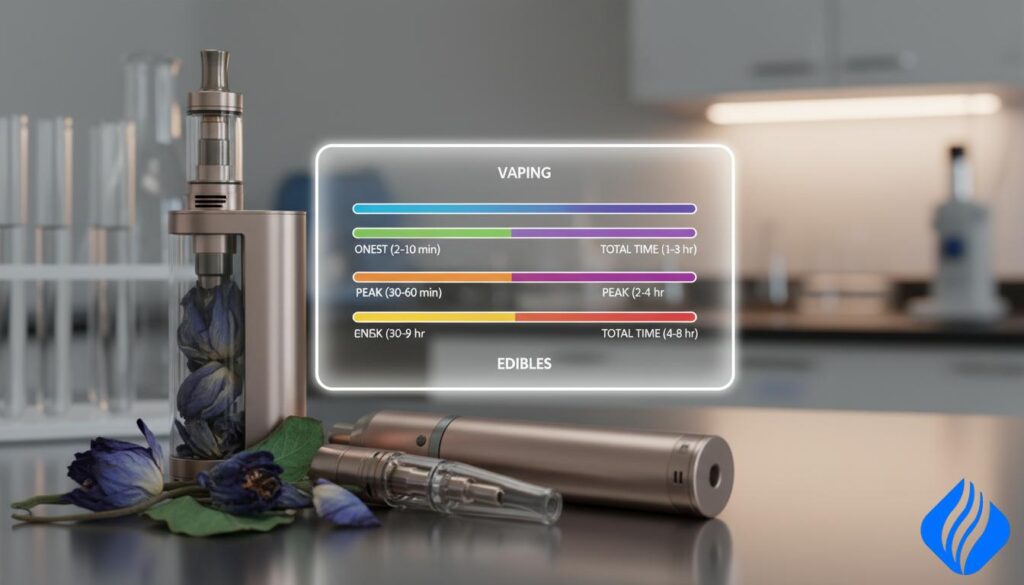
Vaping vs. edibles duration: onset, peak, and total time compared
Choosing a delivery route often comes down to how quickly effects start and how long they last. We define the timing terms so readers can make predictable decisions.
Timing defined in plain language
Onset: when you first notice an effect.
Peak: the period of strongest effect.
Duration: total time effects can be felt before returning to baseline.
Why inhalation and oral routes differ
Inhalation gives faster onset because lungs deliver compounds into circulation quickly. Higher inhalation bioavailability means more active material reaches the blood sooner.
Oral consumption such as teas or edibles absorbs slower. First-pass metabolism and metabolic half-life often extend the peak and total duration.
| Route | Typical onset | Typical peak | Typical duration |
|---|---|---|---|
| Vaping (inhalation) | Minutes | 15–45 minutes | 1–3 hours |
| Edibles / teas (oral) | 30–90 minutes | 1–3 hours | 4–8 hours |
| Mixed or cannabinoid-enhanced products | Variable | Variable | Often longer and less predictable |
- Practical choice: pick inhalation for fast calm and easier titration; choose oral for longer evening support.
- Start low and wait: one puff or a small serving, then assess before more use.
- Blended products can shift timing and intensity; check labels and lab reports on products today.
Blue lotus vape products: disposable vapes, cartridges, and herbal blends
Product forms range from single-use pens to refillable cartridges and multi-herbal blends sold online and in stores. Choosing between them affects dose control, consistency, and safety.
Formats and trade-offs
Disposables are convenient but can vary batch to batch. 510 cartridges pair with a regulated battery for steadier dosing. Herbal blends mix extracts and terpenes for flavor and altered effects.
Pure extracts versus enhanced blends
Pure formulas rely on plant alkaloids such as nuciferine and may offer subtle mood support. Enhanced blends add HHC, Delta 8, or THCa and can engage the ECS, shifting effects toward cannabis-like impairment and longer duration.
Label literacy and safety checklist
- Check extract type: whole extract vs. isolate.
- Look for carrier oils, added terpenes, and artificial flavors.
- Require a COA with batch ID and manufacturing date.
- Confirm nicotine and cannabinoid disclosure before purchase.
| Product type | Pros | Cons |
|---|---|---|
| Disposable | Easy use | Variable consistency |
| 510 cartridge | Better control | Requires battery |
| Herbal blend | Custom effects | Possible mystery additives |
Our advice: avoid mystery blends and buy only items with clear lab testing. When nuciferine or apomorphine nuciferine levels are unknown, effects and safety become less predictable.
Hardware matters: how SOKVAPE devices help preserve extract quality and reduce degradation
Temperature control and coil design together shape which molecules reach the airway and which break down. Heating consistency influences flavor, perceived effects, and the risk that delicate aromatics degrade into harsher compounds.
Ceramic coils for cleaner heating
Ceramic coil technology offers more even heat distribution than lower-grade metals. That reduces scorching and helps botanical extracts keep flavor and active material intact.
Precise voltage to protect terpenes
Precise voltage control helps users stay closer to target boiling points for terpenes and other volatiles. Staying near those temperatures minimizes harsh hits and lowers thermal breakdown.
Choose the right battery or cartridge
For consistent outcomes, we recommend a high-quality 510-thread battery or a specialized oil cartridge. These items support accurate temperature management and consistent dosing across sessions.
- Practical tips: match compatible carts, avoid chain pulls at max heat, and store hardware in a cool, dry place.
- Safety and ease: stable temperatures reduce burned hits and make predictable use more likely.
Note: SOKVAPE’s premium hardware emphasizes ceramic coils and fine voltage steps as an engineering approach to better flavor and reduced degradation, not a medical claim.
How to use blue lotus vape responsibly for a predictable experience
We recommend a careful, stepwise approach so people can predict effects and avoid overshooting a mild mood shift. Start with clear intent and a calm setting before any session.
Start low and go slow
One small puff, set the device down, and wait. Begin with a single short inhale, then pause. Give at least 30 minutes to judge how it affects you.
Repeated puffs in quick succession raise exposure quickly and can push subtle effects into stronger reactions.
Control dose by puff timing
Puff duration, spacing, and total session length define dose more than label claims. Two- to three-second puffs with a five- to ten-minute gap help dose predictably.
Environment and timing
Choose evenings or low-demand settings when coordination and focus are not required. Quiet surroundings often reduce anxiety and support a gentle mood shift.
- Safety: avoid alcohol, cannabis, or other CNS depressants during early trials.
- Stay seated, hydrate, and stop if you feel dizzy or nauseated.
- Keep a short log of product name, batch, voltage, and number of puffs to build consistent results over time.
Safety, harm reduction, and medical cautions in the United States
Regulatory gaps create real uncertainty about dose, purity, and safety for consumers.
FDA status: the plant has not been approved for consumption in the United States. That lack of approval means there is no standard dose and product variability is a primary safety concern.
Who should avoid this product
Do not use if you are pregnant, breastfeeding, or under 18. People with psychosis-spectrum conditions or a history of severe anxiety should avoid it because psychoactive reactions can occur.
Drug interactions and impairment
Mixing with alcohol or cannabis may amplify sedation, anxiety, or disorientation. CNS-active medications (sedatives, some antidepressants, antipsychotics) can interact unpredictably—consult a clinician before combining substances.
Respiratory and adverse-reaction plan
Vaping or smoking any product can irritate airways and harm lung health, especially for people with asthma or COPD. If you experience confusion, severe agitation, chest pain, or hallucinations, stop use, move to a safe place, avoid more substances, and seek medical care.
“Treat unregulated inhaled botanicals as psychoactive and use conservative dosing until safety is clear.”
Pet exposure
If a dog inhales aerosol or ingests product, seek immediate veterinary care—do not wait.
- Practical: do not drive or operate machinery after use.
- Legal note: always check local rules and retailer compliance before purchase.
Is blue lotus vape legal in the US and where can you buy it?
Certain botanical products sit in a legal gray area nationwide. In many states the flower is not scheduled at the federal level and may be sold, but local rules can tighten that access.
General legality and state limits
Legal status varies by state/country. Most states allow sale and possession, but a few have bans; Louisiana explicitly prohibits commercial distribution. Always check local rules before you order or travel.
How added cannabinoids change compliance
Enhanced formulas that include Delta‑8, HHC, or THCa can trigger hemp and cannabis rules. Those additions often require age‑gating, different testing, and tighter shipping limits than plain botanical extracts.
Buying tips for safer purchases
Prioritize transparency: choose reputable sellers, demand batch COAs, and avoid mystery blends. Confirm age requirements and shipping restrictions before you buy blue lotus products today.
| Check | Why it matters | Action |
|---|---|---|
| Batch COA | Verifies purity and cannabinoids | Request and save report |
| Clear ingredients | Avoid hidden additives | Reject proprietary-only lists |
| Seller reputation | Consistency over years | Prefer reviews and verified stores |
- Verify age rules and shipping limits.
- Keep invoices and COAs for records.
- Remember: legal status varies by state/country; always check local guidance.
Conclusion
Conclusion: This inhaled extract of Nymphaea caerulea can produce gentle calm and occasional mild euphoria, but effects vary with dose, formulation, and individual sensitivity.
Safety-first guidance: the FDA has not approved this plant for consumption in the United States. We recommend lab-tested, transparent products and predictable formats rather than mystery blends.
Start low, wait between puffs, avoid mixing with alcohol or other substances, and do not drive after use. Consistent temperature control and quality hardware help preserve terpenes and reduce degradation.
Check local legality and choose vendors that publish Certificates of Analysis. For context on traditional use, see ancient wellness with blue lotus. For product safety and flavoring checks, consult diacetyl guidance.
 English
  German
  Dutch
Dutch  Danish
  Czech
Czech  Italian
  Slovenian
  French
  Hungarian
  Spanish
  Polish