

Short answer: Most commercial mushroom vapes do not deliver classic psilocybin psychedelic effects.
We say this based on product labeling and lab reports showing many cartridges use legal extracts or unnamed blends, not psilocybin. That gap explains why users expecting a full magic trip often feel only a mild buzz or calm.
What to expect: a light change in mood or relaxation is common. The actual outcome varies with formulation, heating hardware, and dose. Unknown actives and vague labels create the biggest safety risk, not the branding itself.
In this guide we combine product-review insights and science. We will cover cartridge contents, marketing claims, heat stability, and harm reduction steps. We also explain why the same oil can behave differently across pens and why testing and COAs matter.
Key Takeaways
- Most branded mushroom vape cartridges lack psilocybin; expect milder effects.
- Label transparency and lab testing (COAs) are crucial before use.
- Device temperature and oil formulation change the experience.
- Unknown additives pose the primary safety concern.
- We prioritize harm reduction and evidence-based guidance throughout this article.
Do mushroom vapes work in 2026? The short, evidence-based answer
Short answer: do mushroom vapes work — mostly no, not in the sense of producing a classic psilocybin psychedelic trip.
Why many products lack psilocybin (and why that matters)
Retail cartridges in the United States commonly omit psilocybin. Brands instead use muscimol from Amanita, hemp-derived cannabinoids, functional extracts, or undisclosed synthetics.
Why that matters: psilocybin and psilocin act on serotonin 5-HT2A receptors. Alternatives do not target that pathway, so subjective effects differ.
What users typically report instead
Across reviews and anecdotes, users report mild euphoria, calm, a light head change, or subtle shifts in mood and relaxation rather than a full trip.
Effect size varies with formulation, labeled actives, device heat, and repeat dosing. “Working” does not equal tested or predictable; potency and safety can be unclear.
| Common Active | Mechanism | Typical Experience | Primary Risk |
|---|---|---|---|
| Muscimol (Amanita) | GABAergic modulation | Calm, drowsy, altered perception | Unpredictable dose |
| Hemp cannabinoids | Endocannabinoid system | Mild buzz, relaxation | Labeling/contaminants |
| Functional extracts | Varied, unclear | Subtle mood shifts | Limited inhalation evidence |
Practical guardrail: marketing terms like “microdose” are not standardized. Without mg labels or COAs, users can unintentionally escalate dosing. Next, we examine what labels actually mean versus what’s inside.
What a “mushroom vape” actually is, based on today’s US market
Across US smoke shops, “shroom” cartridges appear in colorful, cannabis-like formats but vary widely in content. We define mushroom vapes as a retail umbrella: a class of vape products sold with mushroom branding, not a single pharmacological category.
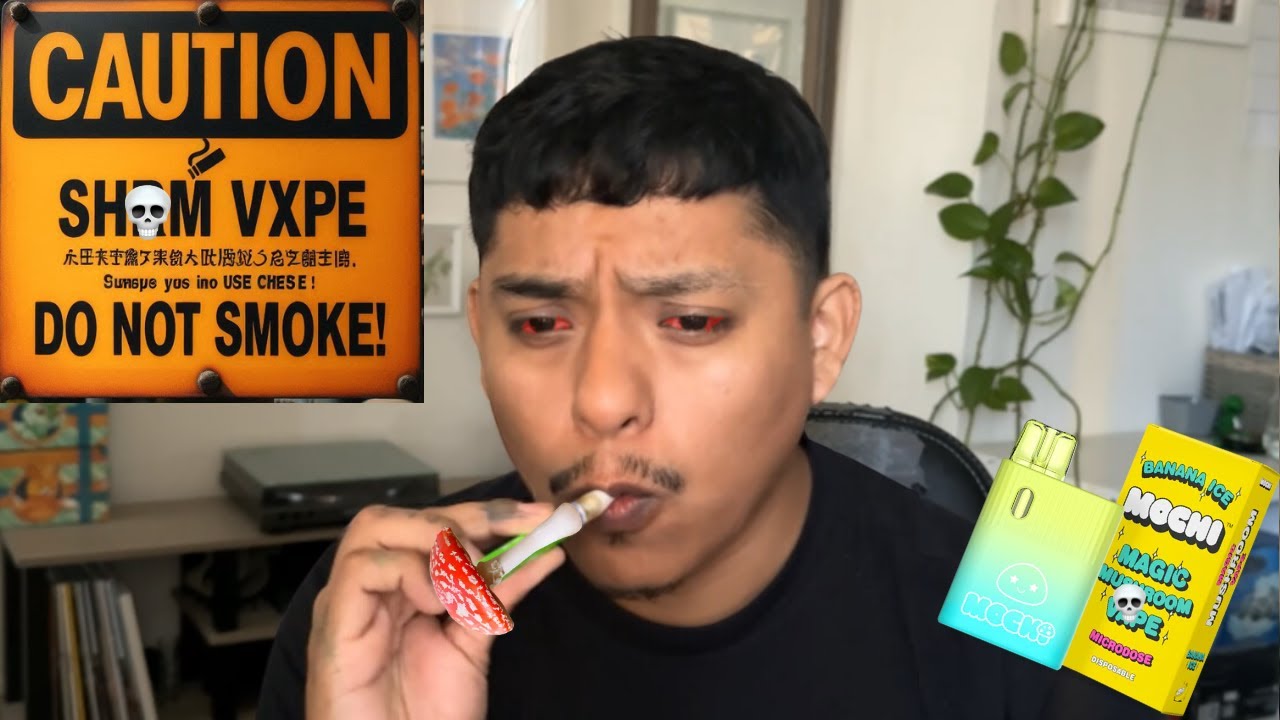
Smoke-shop branding vs. ingredient reality
Brands such as TRĒ House, Mochi Shrooms, and Exodus popularized the look: fruity labels, disposable formats, and “microdose” claims. That styling borrows directly from cannabis marketing.
Labels often use vague phrases like “proprietary mushroom blend”. In practice, a blend may include Amanita extracts, hemp cannabinoids, terpenes, or functional fungi. Named actives and mg amounts are frequently missing.
Common product formats: disposables, prefilled cartridges, and vape pens
Typical formats include all-in-one disposables, 510 prefilled cartridges, and reusable vape pens with replaceable batteries. Each device changes thermal profile and puff behavior.
- Disposables: convenient, brand-controlled oil and battery.
- Prefilled 510 cartridges: fit many batteries but vary by coil type.
- Reusable pens: allow voltage control and cartridge swapping.
Format matters in reviews because coil type and voltage affect flavor, harshness, and the chance of degrading heat-sensitive ingredients. For reliability, we recommend checking for named actives, mg per unit, batch/lot info, and accessible COAs before evaluating any product.
Why vaping psilocybin mushrooms isn’t straightforward (chemistry, heat, and stability)
Turning mushroom chemistry into a vape-ready product faces steep thermal and stability hurdles. We explain the core issues so readers can judge efficacy claims and safety.
Psilocybin versus psilocin and decarboxylation myths
Psilocybin is a prodrug that converts to psilocin in the body. That biochemical step is enzymatic, not equivalent to cannabis-style decarboxylation.
Heating mushrooms will not reliably create a stable, inhalable active the way heat activates THCA to THC.
Boiling points, thermal degradation, and why “just heat it” fails
Many psychoactive compounds break down at common coil temperatures. Uncontrolled coil heat causes thermal degradation, so dose per puff can vary widely.
What this means for efficacy claims and marketing
Extraction and formulation matter more than hype. Even small instability in an extract makes puff-to-puff dosing inconsistent.
| Issue | Chemical Reality | Implication |
|---|---|---|
| Psilocybin stability | Converts to psilocin enzymatically; heat-sensitive | Unreliable inhalation delivery |
| Thermal stress | High coil temps can break compounds | Loss of potency and altered effects |
| Formulation challenges | Extracts must be solvent-stable and aerosolizable | Inconsistent dosing without lab testing |
Practical takeaway: If a product hints at psilocybin-like effects or “magic” marketing, demand ingredient specificity and third-party lab proof. Next we cover what is actually found in many real-world products.
What’s inside popular mushroom vapes: ingredients, compounds, and red flags
We map the market into clear ingredient categories so readers can see what a product likely contains. This helps separate marketing from measured risk.
Amanita muscaria and muscimol
Amanita muscaria products often rely on muscimol. This compound affects GABA systems and feels different than classic psychedelics.
Expect sedation or confusion at higher doses. That pharmacology explains why labeled claims of a “trip” may be misleading.
Functional extracts such as lion mane
Functional mushroom extracts like lion mane are marketed for focus and wellness. Inhalation evidence is limited.
Claims about inhaled benefits rest on weak data. We advise caution when products lack clear active ingredients and dosing.
Hemp-derived cannabinoid blends
Many products mix THC, CBD, and newer cannabinoids such as THC-P with terpenes. These compounds can cause noticeable psychoactive effects.
Terpenes add flavor and may modify effects, but high concentrations or hot coils can raise throat irritation risk.
Undisclosed synthetics and NPS — the biggest red flag
Undisclosed novel substances present the greatest safety concern. Unknown dose, unknown interactions, and limited safety data can harm users.
We note the Diamond Shruumz recall as a market reminder: branding is not a substitute for testing.
| Category | Common actives | Primary risk |
|---|---|---|
| Amanita products | muscimol | Unpredictable sedation, altered cognition |
| Functional extracts | lion mane, other mushroom extracts | Limited inhalation evidence, vague dosing |
| Hemp blends | thc, CBD, THC-P, terpenes | Psychoactivity, contamination, irritation |
| Undisclosed NPS | Unnamed synthetic substances | Unknown toxicity, hospitalizations |
Practical rule: prioritize transparent labels and batch-specific COAs. For related testing and detection concerns, see our guide on drug testing with THC products at THC testing and detection.
How the effects may work in the body: ECS, bioavailability, and half-life
We explain how common inhaled ingredients reach receptors and shape onset, intensity, and duration. This helps readers interpret what they feel and avoid risky repeat dosing.
When THC and CBD are present
THC binds CB1 receptors in the brain and can change mood, perception, and produce mild euphoria. CBD modulates receptor signaling and may alter anxiety or perceived stress without the same intoxicating effects.
Inhalation versus oral bioavailability
Vaping delivers aerosol straight to the lungs. Blood levels rise within minutes, so onset is fast and the experience feels immediate compared with edibles.
Metabolic half-life and variability
Metabolic half-life means how long a compound declines by half in the body. Genetics, tolerance, dose, and repeated puffs change duration. One person may feel effects for an hour; another may notice lingering effects longer.
Terpenes as modifiers
Terpenes add flavor and may alter subjective effects via an entourage-style claim. High-terpene oils can irritate the throat, especially at higher voltage.
| Route | Typical Onset | Peak | Usual Duration |
|---|---|---|---|
| Inhalation (vaping) | 1–10 minutes | 10–30 minutes | 30 minutes–3 hours |
| Oral (edible) | 30–120 minutes | 2–4 hours | 4–12 hours |
Practical note: because many retail products rely on hemp cannabinoids plus terpenes, cannabinoid-driven effects often explain reported changes in mood and impairment. We recommend cautious dosing and waiting between puffs.
Vaping vs. edibles duration: what to expect from onset and effects
Onset and duration differ sharply between inhaled aerosols and edible formulations. We summarize typical timing so readers can set realistic expectations and avoid stacking risks.
Comparing timing and typical patterns
| Route | Typical onset | Peak | Usual duration |
|---|---|---|---|
| Inhalation (vaping) | 1–10 minutes | 10–30 minutes | 30 minutes–3 hours |
| Oral (edibles) | 30–120 minutes | 2–4 hours | 4–12 hours |
| Factors affecting timing | Formulation, potency, metabolism, device heat, and whether cannabinoids or other actives are present | ||
Why “microdose puffs” can still stack
Vaping gives rapid feedback. Because a puff yields a quick change, users often take another puff before the initial effect fully presents.
This stacking can build a greater overall buzz or euphoria and increase impairment even when each puff is small in isolation.
Practical note: edibles can peak much later, so redosing after a short wait risks unexpected intensity. We advise treating any intoxicating product as potentially impairing and planning around responsibilities like driving or childcare.
Next, we explain how to judge product quality beyond timing promises: label transparency, batch testing, and brand trust signals matter more than marketing claims about onset.
Product review lens: what separates a quality mushroom vape from hype
We evaluate products by how easily a buyer can verify claims. Transparency and testing are the core signals we use when reviewing cartridges and disposable formats.
Label transparency: named actives, mg amounts, and sourcing
Named active ingredients should appear on the label. Vague phrases like “proprietary blend” are a red flag.
Look for milligrams per device, batch or lot numbers, and clear sourcing statements you can verify on the brand site.
COAs and contaminant screens: solvents, heavy metals, pesticides, residuals
Third-party COAs must be batch-specific and easy to access via working QR codes or matching lot numbers.
A complete COA lists potency (if cannabinoids are present) and screens for solvents, heavy metals, pesticides, and microbial contamination.
Brand examples driving demand (and why popularity isn’t proof of safety)
Names like TRĒ House, Mochi Shrooms, Exodus, and Binoid often appear in retail roundups. Popularity can drive demand but does not guarantee clear ingredients or adequate testing.
Harsh hits, odd flavor, or unpredictable effects often signal formulation or device mismatch rather than legitimate potency.
- Checklist for shoppers: named actives and mg per unit, batch COA with full contaminant screens, verifiable sourcing, and device compatibility notes.
- Require: batch-specific COAs and accessible lab reports before trusting potency claims.
- Warning sign: no lot number, only vague marketing language, or inaccessible testing links.
| Review Criterion | What to expect on a quality product | Why it matters | Red flag |
|---|---|---|---|
| Labeling | Named active ingredients, mg per unit, lot number | Enables dose control and verification | “Proprietary blend” with no mg |
| COA Accessibility | Batch-specific lab report with contaminant screens | Confirms potency and safety | Generic or absent COA |
| Contaminant Testing | Solvents, heavy metals, pesticides, microbes | Protects health, prevents acute harm | Only partial testing or none |
| Device notes | Recommended coil type and voltage, compatibility with vape pens | Reduces degradation and off-notes | No device guidance or poor fit warnings |
Practical note: we treat product-review findings as one tool. Popular brands may lead the market, but verification and testing determine safety and predictability. Next, we explain how hardware variables can change outcomes.
Hardware matters: how SOKVAPE devices can reduce degradation and improve safety
We find that the same oil can behave very differently by device. Coil material, airflow, and voltage affect aerosol temperature and what reaches the lungs.
Ceramic coils for cleaner heating and fewer off-notes
Ceramic coils heat more evenly and resist hot spots. That reduces burnt flavors and can help protect heat-sensitive compounds and terpenes in terpene-forward formulas.
Precise voltage control helps protect delicate compounds
Lower, stable voltage cuts spikes that cause thermal degradation. Users with adjustable settings on vape pens see smoother hits and fewer breakdown byproducts.
Why batteries and cartridges matter
Cheap batteries can spike temperature and make aerosol harsh. The market uses many disposable pens and 510-style cartridges, so battery quality is a practical safety variable.
- Practical tip: pair a high-quality 510-thread battery with a specialized oil cartridge for consistent performance.
- Premium hardware won’t change legality: what matters legally is the active inside, not the branding.
Legality in the United States: “mushroom vapes legal” is often a gray zone
We focus on one central rule: legality tracks the active ingredient, not the label art. Packaging that says “mushroom” or “magic” does not guarantee a product is lawful.
Why the active, not the name, matters
Federal and state laws classify specific substances. If a cartridge contains psilocybin, it remains illegal federally in most places. If it contains muscimol, hemp cannabinoids, or novel synthetics, the legal treatment differs.
Decriminalization vs. retail sale
Decriminalized psychedelics in cities or states do not automatically make retail products legal to sell. Local policy may deprioritize enforcement while statutes on sale or distribution still apply.
Mixed blends and variable rules
Brands often use complex blends that include kratom, blue lotus, or hemp derivatives. The legal status of those botanicals varies by state and country. Always verify local laws before purchase or travel.
| Active class | Typical legal note | Consumer risk |
|---|---|---|
| Psilocybin | Mostly illegal federally; limited local programs | Criminal exposure if sold as psilocybin |
| Hemp cannabinoids | Often marketed as federally legal; state rules vary | Mislabeling and state restrictions |
| Botanical blends (kratom/blue lotus) | State-dependent; some bans exist | Confusion and unexpected enforcement |
Practical step: confirm what the label lists, check batch COAs, and verify local laws before buying. For more on what these products claim and how they act, see our guide on what a cartridge may contain at what does mushroom vape do.
Safety, harm reduction, and when to seek help
A conservative approach to inhaled products protects users, bystanders, and pets. We offer educational guidance, not medical advice. Consult a clinician for personal questions about medications or mental health.
Who should avoid these products
Avoid or be extremely cautious if you have a personal or family history of psychosis or mania, are pregnant or breastfeeding, take interacting medications, or must drive or operate machinery.
Adverse effects to watch for
Be alert for anxiety, sudden confusion or delirium, nausea, or vomiting. Unexpected potency can occur when puffs stack quickly. If severe agitation, breathing trouble, or loss of consciousness happens, seek emergency care.
Pets and secondhand exposure
If a dog is exposed to vape aerosol or ingests any cartridge, seek immediate veterinary care. Time matters—do not wait for symptoms to appear.
Safer-use checklist
- Start low: take one small puff and wait at least 15–30 minutes before more.
- Avoid mixing substances and do not drive while impaired.
- Use tested, transparent products and reliable hardware to reduce overheating and degradation.
- Store locked away from children and animals.
Conclusion
Bottom line: When shoppers expect a classic psychedelic trip from a cartridge, the science and testing often tell a different story.
Most retail mushroom vape products omit psilocybin and instead use alternative actives, hemp-derived cannabinoids, or botanical blends that produce milder effects. Prioritize transparent ingredients, batch COAs, and contaminant testing over marketing language like magic or microdose.
Remember chemistry: psilocybin is heat-sensitive, so true inhaled delivery is unlikely in mainstream cartridges. Onset is fast with inhalation, but duration varies by compound, formulation, and repeat puffs.
Hardware matters. Ceramic coils, stable voltage, and quality 510-thread batteries help reduce overheating and improve consistency with a vape pen.
Practice harm reduction: start low, wait between puffs, don’t drive, avoid mixing substances, store products away from kids and pets, and seek veterinary care immediately if an animal is exposed. Laws vary by state—verify legality based on the actual compound, not the label.
 English
  German
  Dutch
Dutch  Danish
  Czech
Czech  Italian
  Slovenian
  French
  Hungarian
  Spanish
  Polish