

We open this 2026 legal update for adult readers aged 21 and over. Federal Tobacco 21 sets the national purchase age, and that baseline matters even when local code seems older.
Access to flavored vape products varies by jurisdiction. No single nationwide flavor ban exists. Instead, enforcement forms a patchwork of federal priorities, state laws, and local ordinances.
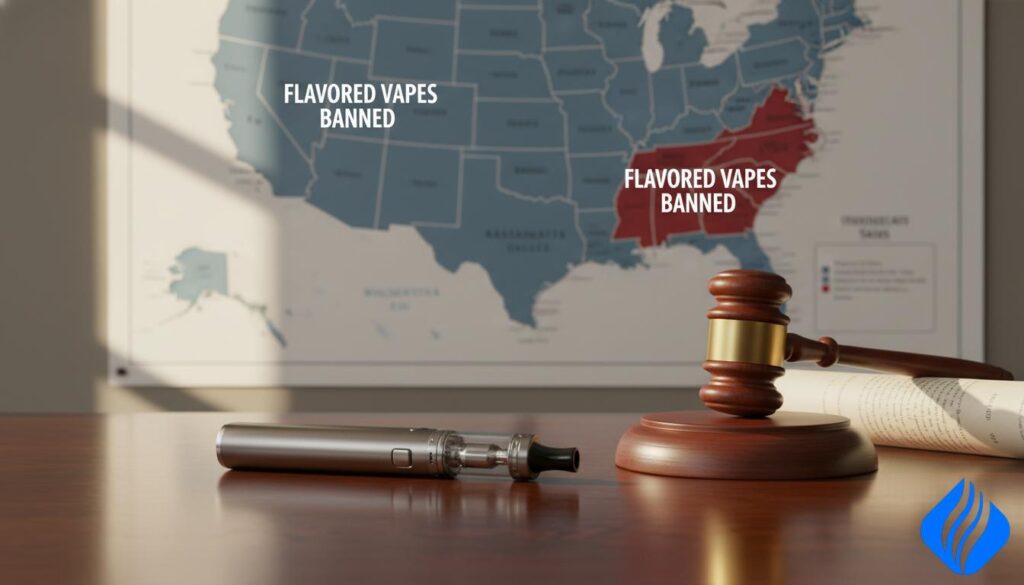
In this update we outline practical effects you’ll see in retail and online sales. Shelves often lose fruit and dessert options first while tobacco or menthol versions may remain. Many adults face quick changes at checkout and at the register.
We preview key 2026 developments: North Carolina directory rules, Kentucky licensing, Utah registry limits, and other enforcement moves that reshape product availability. Our aim is to give clear, compliance-focused guidance without legalese.
Key Takeaways
- Federal Tobacco 21 applies nationwide; buyers must be 21+.
- No single federal flavor ban — rules differ by jurisdiction.
- Retail limits often remove fruit and sweet options first.
- Recent 2026 laws add registries, licensing, and local crackdowns.
- Health and youth protection drive most restrictions.
Flavored vape bans in 2026: what changed and why it matters now
This year’s shifts center less on taste and more on product types, authorization status, and retail controls.
Why the change: Policymakers focused on youth access and concealability. Disposable vapes drew particular attention because they are small, sweet-flavored, and easy to hide. States moved from naming flavors to limiting which products may be sold at all.
Federal vs. state: The FDA enforces authorization pathways (PMTA, authorized products) and prioritized certain enforcement categories since 2020. States still pass stricter retail rules, licensing, and flavor-specific restrictions that go beyond federal action.
Tobacco 21 reminder: Federal law sets the legal age at 21 for all nicotine sales. Retailers must follow the federal age requirement even where state text reads otherwise — a notable case being North Carolina’s older age language; federal law controls retail sales age at 21.
| Policy focus | Main target | Practical effect |
|---|---|---|
| Authorization status | PMTA/authorized | Limits sales to authorized products |
| Product type | Disposable vapes | Point-of-sale restrictions, bans on non-authorized disposables |
| Retail controls | Licensing & registries | Fines, directory requirements, denied sales |
For retailers and consumers tracking changes, monitor flavor, product form, authorization, and where sales occur. See our note on recent legal challenges for retail players: retailer legal update.
what states are flavored vapes banned and what “banned” means in practice
Consumers face three main ban models that determine product availability at point of sale. We explain each model so readers can spot how a rule will change retail choice and shipment behavior.
Total bans vs partial bans
Near-total bans remove most flavors, often including menthol. Shelves shift to tobacco-only lines and authorized e-cigarettes.
Partial bans keep tobacco and sometimes menthol. Fruit, dessert, and sweet options vanish while tobacco products remain legal.
Product-focused restrictions
Some rules target disposable vapes or single-use formats. Retailers stop stocking certain disposable lines even if refillable systems stay available.
Local rules can be stricter
Cities and counties often add limits that exceed statewide law. That creates a patchwork where access can change block by block.
“A written ban is not just legal text — it shapes what retailers stock, what distributors ship, and what payment systems allow at checkout.”
| Model | Typical scope | Retail effect |
|---|---|---|
| Near-total ban | All flavors incl. menthol | Store shelves reduced to tobacco-only and authorized products |
| Partial/tobacco-only | Tobacco ± menthol allowed | Fruit and sweet options removed; tobacco products remain |
| Product-specific | Disposable vapes or certain formats | Disposables pulled; refillables may still sell |
We advise readers to check local ordinances in their city ZIP code before buying. Age, health, and youth-protection goals drive most restrictions, and those policy aims explain why access can change quickly.
State-by-state 2026 updates on flavored vapes, vaping products, and retail sales
By 2026, local rules and product-eligibility lists now shape what appears on store shelves.
North Carolina — directory enforcement
NC HB 900 requires sellers to carry only items on the Department of Revenue directory. As of July 2025, only FDA-authorized or PMTA-pending items may be sold. Popular disposable brands like Raz and Elf Bar may face removal unless listed. Remember: Federal Tobacco 21 still sets the legal age at 21 for retail sales.
Kentucky and Utah
Kentucky: SB 100 takes full effect Jan 1, 2026. Retailers must obtain a state license; heavy fines follow sales of unauthorized products.
Utah: SB 61/HB 0432 limits sales to specialty stores with tobacco and menthol exceptions. An active state registry lists lawful items for sale.
Alabama, Virginia, California
Alabama: HB 445 (effective Jan 1, 2026) regulates consumable hemp vape products and requires licensing; smokable hemp is illegal and repeat offenses can reach Class C felony level.
Virginia: Non-FDA-authorized disposable vapes were banned from Dec 31, 2025, reshaping shelf inventory quickly.
California: Starting Jan 1, 2026, an “Unflavored Tobacco List” narrows permitted flavors to tobacco-only options.
“Enforcement now focuses on product eligibility, registration, and retailer compliance rather than simple taste labels.”
| State | Key law | Effective date | Retail effect |
|---|---|---|---|
| North Carolina | HB 900 (Directory) | July 2025 | Only FDA-authorized/PMTA-pending listed products sell |
| Kentucky | SB 100 (Licensing) | Jan 1, 2026 | License required; heavy fines for unauthorized sales |
| Utah | SB 61 / HB 0432 | 2025–2026 | Specialty-store limits; tobacco/menthol exceptions; registry |
| Alabama | HB 445 | Jan 1, 2026 | Licensing for consumable hemp; smokable hemp illegal; felonies for repeat |
| Virginia / California | Disposable authorization / Unflavored list | Dec 31, 2025 / Jan 1, 2026 | Non-authorized disposables removed; tobacco-only flavor list |
For a full, ongoing state-by-state restrictions guide, check our detailed directory to track changes that affect sales and retailer compliance.
Online sales, shipping, and delivery rules for vapes and e-cigarettes
Online checkout, carrier rules, and state laws now decide whether an item you click can actually reach your door. Sellers, carriers, and regulators each add layers that affect fulfillment and compliance.
PACT Act and carrier limits: why shipping policies affect flavored vapes online
The PACT Act requires age verification, recordkeeping, and registration for nicotine shipments. USPS restricts many e-cigarettes and nicotine products, and major private carriers limit or refuse certain vape items.
Result: Orders often need ID checks, adult signature at delivery, and extra paperwork. Failed verification can cancel shipments or return packages to sender.
States with online sales bans or tight controls: what to expect at checkout and delivery
Certain jurisdictions block online sales or force in-person purchase. Common checkout realities include SKU blocks by ZIP code and retailer refusal to ship into restrictive areas (New York and Rhode Island are often cited).
Compliance checklist for delivery:
- Be 21+ and have matching ID and shipping name.
- Expect an adult signature and identity check on arrival.
- Plan for hold-at-location or carrier reroute if delivery is restricted.
“Seeing an item listed does not mean it can be lawfully shipped to your address.”
| Factor | Practical effect | Retail action |
|---|---|---|
| PACT Act | Age verification, recordkeeping | Require ID checks, signature |
| Carrier limits | Refused shipment or special handling | Block ZIPs, cancel orders |
| State rules | Online-sale prohibitions or in-person only | Refuse to ship, limit inventory online |
Compliance, enforcement, and what retailers and consumers should watch
Regulatory enforcement now targets authorization records and retail practices as much as product aroma or packaging. We advise adults 21+ and retailers to focus on clear legality signals before any transaction.
Product legality signals
Check for FDA authorization, PMTA-pending status, or inclusion on a state directory or registry. North Carolina and Utah use registries as the on/off switch for lawful sales.
If an item is not listed, don’t assume it can be sold. That rule applies even for tobacco or menthol labeled items.
Retail licensing and penalties
Retailers must hold required licenses, keep sourcing records, and expect inspections. Kentucky-level fines are steep, and Alabama’s repeat-offense rules can reach felony exposure for unlicensed consumable hemp sales.
Market impact and risks
Removal of many SKUs drives shoppers toward tobacco menthol options where allowed. Reduced legal access also increases counterfeit and black-market risk, which raises health and safety concerns.
“Compliance protects consumers and keeps businesses operating. Paperwork matters as much as product labels.”
| Signal | Action | Consequence |
|---|---|---|
| FDA authorization | Verify label/PMTA | Allowed sale |
| State registry listing | Match SKU to directory | Retail compliance |
| Missing license | Do not sell | Fines or criminal risk |
- Source from compliant distributors and keep records.
- Train staff on ID checks, online sales controls, and delivery rules.
- Watch for more registries, licensing updates, tighter shipping limits, and continued focus on disposable formats.
Conclusion
In short, availability now depends on product form, authorization lists, and local rules more than simple taste labels. The U.S. has no single nationwide flavor ban; instead, compliance hinges on registry inclusion, licensing, and targeted enforcement of disposables and other formats.
We advise checking local ordinances and a product’s authorization or directory listing before buying in-store or via online sales. Stick with licensed retailers, avoid suspiciously cheap or unlabeled items, and treat missing verification as a red flag. For evidence on how restrictions affect retail units, see this state sales impact study.
Final reminder: Federal Tobacco 21 makes the minimum purchase age 21 nationwide. Verify eligibility and product status first — compliance protects health and keeps businesses operating.
 English
  German
  Dutch
Dutch  Danish
  Czech
Czech  Italian
  Slovenian
  French
  Hungarian
  Spanish
  Polish