

Are you worried about exposure from flavored products and want clear, actionable facts right now?
Direct Answer: Most risk comes from buttery, creamy flavor blends—custards, creams, caramel and dessert mixes—so treat those profiles as higher priority for verification.
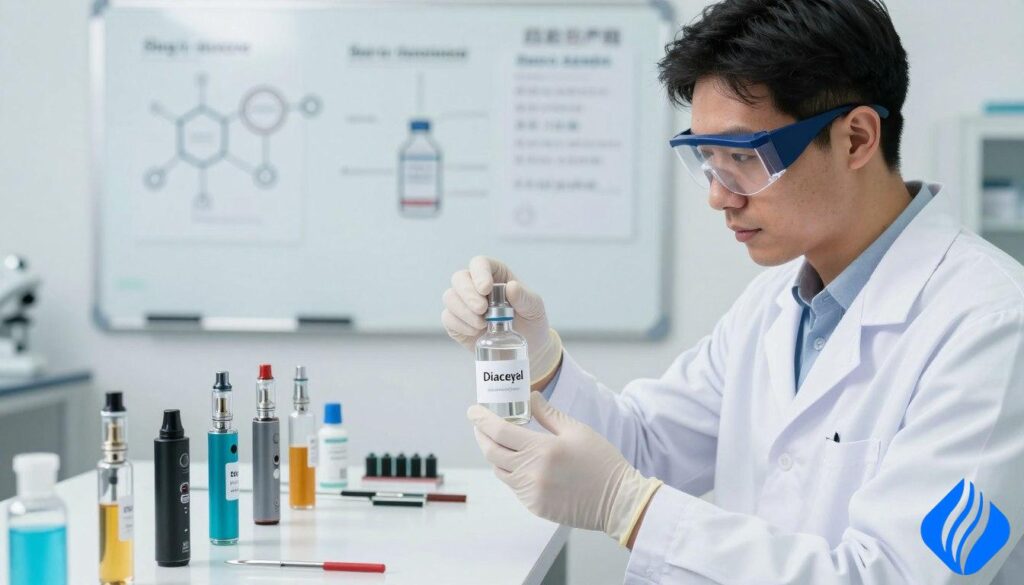
SokVape senior safety consultants note a specific respiratory risk: bronchiolitis obliterans (often called “popcorn lung”) is linked to inhaling certain diketones in aerosol form.
Diacetyl and related compounds are safe to eat but the lungs respond differently to inhaled chemicals. That difference makes inhalation exposure a clinical concern, even in nicotine-free flavored products.
This page helps U.S. consumers learn which flavor categories are most likely to contain these diketones and how to verify “diacetyl-free” claims using batch-level third-party COAs and scannable QR proof.
Key Takeaways
- Custard, cream, caramel, and pastry blends carry higher uncertainty for diketones.
- Verify claims with batch-level COAs and QR-linked lot numbers before purchase.
- Regulatory enforcement and labeling vary in the U.S.; prefer documented supply chains.
- Inhalation risk differs from eating the same additives; treat aerosol exposure cautiously.
- Separate base-liquid (PG/VG) discussions from flavor chemistry risk when evaluating safety.
Key Takeaways
The following takeaways focus on reducing exposure and verifying product authenticity.
Ingestion vs inhalation: Many flavor compounds are safe to eat but may injure the smallest airways when aerosolized. The bronchioles are uniquely vulnerable to scarring and narrowing.
High-risk flavor families include creamy, custard, caramel, and pastry profiles. These styles often rely on buttery diketones (diacetyl, acetyl propionyl, acetoin) to create a rich mouthfeel, which raises chemical concerns for inhalation.
Practical verification steps
- Demand batch-level third-party COAs before purchase; a generic “diacetyl-free” label is marketing without a COA.
- Prefer reputable sellers with traceable lot numbers, tamper-evident packaging, and public testing records.
- Reduce cumulative exposure by choosing simpler flavor profiles and avoiding mystery imports or unusually cheap deals.
| Concern | Why it matters | Consumer check | Risk reduction |
|---|---|---|---|
| Inhalation injury to airways | Bronchioles can scar from aerosolized diketones | Request batch COA showing non-detect | Choose tested, simpler flavors |
| Unverified safety claims | Marketing may not reflect lab results | Scan QR or verify lab links | Buy from authorized retailers |
| Counterfeit/diverted products | Inconsistent QC and unknown formulations | Check packaging, lot numbers, seller reputation | Avoid “too-cheap” imports |
CDC and FDA note that nicotine-free does not guarantee safety if flavor chemicals are present. Prioritize verification to protect long-term respiratory health and reduce avoidable risks.
Quick Reference Table
A concise guide follows so U.S. consumers can spot higher-risk flavor profiles and verify claims fast.
Flavor profile vs likelihood of diketones (diacetyl, acetyl propionyl, acetoin)
| Flavor family | Likelihood | Notes |
|---|---|---|
| Custard / Cream / Caramel / Pastry / Cheesecake | High | Rich mouthfeel often uses diketone chemistry; test before trusting labels. |
| Donut / Dessert blends | High | Often formulated for butter/cream notes; transparency required. |
| Simple fruit / Menthol / Unflavored | Lower | Lower probability, not zero; batch testing still advised. |
What to check before you buy: label claims vs QR/COA vs seller authenticity
| Claim | Evidence required | Seller authenticity checks |
|---|---|---|
| “Diketone-free” label | Batch-specific third-party COA tied to product lot number | Official retailer list, tamper-evident packaging |
| QR / Lab link | Live lab report with limits of detection and units | Scratch codes or serial verification; consistent print quality |
| Generic brand PDF | Not sufficient | Avoid products without batch matching and current testing |
Note: Third-party testing is most meaningful when current, batch-specific, and from an independent lab with clear reporting units.
What Is Diacetyl and Why Is It in Some Vape Flavors?
Diacetyl is a small molecule that gives a buttery, creamy aroma and helps recreate a rich “custard” mouthfeel in dessert-style flavor blends.
Manufacturers have used this type of flavoring because a low concentration produces strong sensory impact. That makes formulations efficient and cost-effective for bakery and cream notes.

Key diketones and their roles
- Diacetyl — the most discussed diketone for buttery notes.
- Acetyl propionyl — a related diketone often substituted for similar creaminess.
- Acetoin — can act as a precursor or co-ingredient to soften sweetness and texture.
Why labels can be vague
Flavor blends are typically proprietary. Manufacturers list umbrella terms like “natural flavors” or “aroma compounds”, which can mask specific constituents.
Natural does not equal safe for inhalation. Toxicology depends on route of exposure and cumulative dose, not just origin.
For consumers, a vague label without a batch COA increases uncertainty—especially for custard, cream, and pastry profiles. For clinical context and testing data, see relevant diacetyl studies.
This chemical background matters because the next section explains small-airway biology and why repeated inhalation can cause lasting harm.
How Diacetyl Can Affect the Lungs
Inhaled flavor chemicals can trigger a cascade of inflammation in the smallest airways of the lungs. This process begins as irritation of bronchioles and can progress with repeated exposure.
The clinical “why”
Mechanism: Irritation from aerosolized compounds prompts inflammation. Repeated inflammation can cause scarring and thickening of bronchiolar walls, narrowing airflow paths that do not regenerate well.
Popcorn lung explained
Popcorn lung is a lay term for bronchiolitis obliterans. It describes irreversible small-airway narrowing that can produce chronic, progressive breathing limitation.
Early symptoms to watch for
- Wheeze or new chest noise on breathing
- Chest tightness or increased work to breathe
- Persistent cough lasting weeks
- Shortness of breath during exertion
“Occupational cases link inhaling diacetyl to bronchiolitis obliterans in some settings.”
Safety note: New or worsening respiratory symptoms lasting more than a few weeks warrant medical evaluation.
Nicotine-free products are not automatically safer. The risk comes from inhaled flavor constituents, not nicotine status alone, so cumulative exposure matters. For public-health context and practical steps, see popcorn lung risk.
Which vapes have diacetyl?
Flavors built to mimic custard and pastry often rely on small molecules that create a rich mouthfeel.
High-risk flavor categories:
- Vanilla custard, creamy caramel, cheesecake
- Donut, cream pie, and other dessert/pastry blends
- Any product—disposable, pod, or bottled e-liquid—with a buttery or custardy profile
Older or budget formulas often lean on diketone-containing concentrates because they deliver a strong, low-cost “rich” note. That raises uncertainty when batch testing is absent.
Evidence snapshot: The 2015 Harvard testing found diacetyl in 39 of 51 flavored e-liquids, showing prevalence across dessert-style samples. Brands were not disclosed, so no single product should be assumed clear without a batch COA.
Transparency lens: Lack of published third-party COAs—in some cases noted for brands like Nasty Juice—increases uncertainty. Reported custard-line discussions (for example, past Geek Bar custard mentions or Raz dessert notes) illustrate that formulas change and only batch-specific testing confirms current status.
“If it’s dessert-heavy and lacks an accessible COA for the exact batch, treat it as higher-uncertainty.”
Is Diacetyl Banned in the United States?
U.S. regulation on flavor chemistry is fragmented; consumers cannot assume a uniform ban or guarantee at point of sale.
Regulatory reality: There is no single consumer-facing prohibition that ensures every flavored aerosol product on U.S. shelves is free of buttery diketones. The FDA sets rules for some products, but enforcement and scope differ by product type and distribution channel.
How “restricted” works in practice
Restrictions may apply to certain ingredients or marketing claims, yet gaps remain. Some manufacturers follow strict testing and publish batch COAs. Others rely on generic labeling without batch documentation.
Public-health context: Major health agencies such as the FDA and CDC advise caution about inhaled flavor chemicals. These agencies note that aerosolized additives can cause popcorn lung and other respiratory disease under some exposure conditions.
EU vs U.S. and the import factor
The EU/TPD-style frameworks are more prescriptive about ingredient disclosure and product registration. That generally reduces uncertainty for compliant products, but it does not completely eliminate risk.
Imported goods can raise higher uncertainty. Supply-chain opacity, variable labeling standards, and limited access to batch-specific third-party testing make it harder for U.S. buyers to verify claims.
Risk-management takeaway
- Regulation alone is not a guarantee. Look for batch-specific third-party COAs.
- Treat vague labels as a red flag; demand verifiable documentation.
- When minimizing exposure, rely on traceable supply chains and verified lab reports rather than labels alone.
| Jurisdiction | Typical focus | Consumer certainty |
|---|---|---|
| United States | Selective enforcement, product-type rules, variable disclosure | Moderate; depends on manufacturer transparency and COAs |
| EU / TPD-style | Stricter disclosure, registration, and limits on ingredients | Higher for compliant products; still requires verification |
| Imported / Unregulated markets | Inconsistent standards, limited batch testing access | Lower; greater uncertainty and verification burden |
“Regulatory coverage reduces but does not remove uncertainty; documentation beats assumptions.”
How to Identify Diacetyl-Free Vape Products With Confidence
Practical verification beats label assurances. Consumers should expect traceable, batch-specific evidence before accepting a “diacetyl-free” claim.
What a meaningful “diacetyl-free” claim includes
Require an independent third-party COA that matches the exact lot number printed on the package and reports non-detect or measured levels for diacetyl and related diketones, including acetyl propionyl and acetoin where available.
Buyer’s step-by-step verification protocol
- Confirm the lot/serial number on packaging and the digital COA.
- Scan any QR code and verify the lab report domain is the manufacturer or an accredited lab.
- Check the COA for lab name, test date, methods, and limits of detection.
- Decline screenshots or generic PDFs from resellers; request live, batch-matched reports.
Red flags and authenticity controls
Watch for vague ingredient lists (“natural flavors” or “aroma compounds”), missing lab links, or safety claims with no documentation.
Prefer official seller networks, scratch/verify codes, and tamper-evident packaging. If packaging is inconsistent or printing looks altered, avoid the purchase.
Why “ppm threshold” arguments can mislead
Units like ppm alone do not capture inhalation patterns. Repeated daily aerosol exposure targets small airways differently than ingestion.
Transparency matters more than a single threshold. Clear COAs let buyers judge cumulative exposure and decide based on evidence, not marketing language.
When to avoid a product
Avoid items with unknown origin, absent lot numbers, inconsistent packaging, or no verifiable testing. If a company cannot produce a batch COA on request, treat the product as high uncertainty.
“When uncertainty is high, the safer decision is to switch products or profiles rather than rely on unverified labels.”
PG/VG and Flavor Chemistry Safety Basics for Consumers
Base liquids shape vapor and throat feel; flavor chemistry determines chemical exposure.
What base liquids do: Propylene glycol (PG) carries flavor and gives a sharper throat hit. Vegetable glycerin (VG) produces thicker vapor and a smoother draw. Neither base typically contains the diketones that raise the main inhalation concerns.
Where higher uncertainty usually sits
Complex, multi-note flavor concentrates—especially creamy or bakery-style blends—can include diketone-adjacent compounds. Those additives are part of the flavoring chemicals group and create the main exposure uncertainty, not the PG or VG base.
Simple profile strategy to reduce risk
When minimizing exposure, prefer single-fruit, menthol/mint, or unflavored e-liquids. Simpler profiles lower the chance of hidden constituents and make batch testing more meaningful.
Note: A buttery or custard-like taste flags higher uncertainty, but only a batch-matched lab report confirms presence or absence of suspect compounds.
Safer, Authentic Alternatives and What to Look For in Top-Tier Brands
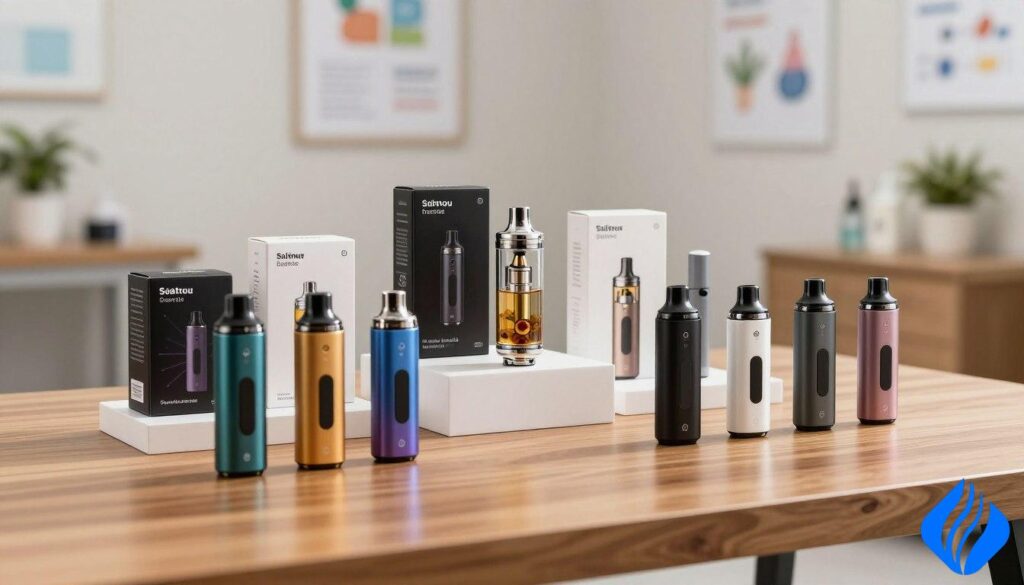
Choosing verified products means favoring consistent manufacturing, traceable sourcing, and published compliance practices over marketing alone.
Top-tier should mean documented quality controls, batch identifiers that match third-party reports, and clear supplier records. These features reduce uncertainty for health-conscious buyers.
Quality assurance expectations
- Consistent manufacturing: lot control, stable formulas, and QC records.
- Published compliance: accessible COAs, test dates, and lab methods.
- Traceable sourcing: verifiable ingredient origins and supply-chain transparency.
Authenticity-focused brand examples
Some buyers look to known names like Geek Bar and Raz for traceability and availability of documentation. Brand recognition can help find genuine supply, but it is not a substitute for batch-matched COAs.
Safer selection strategy
- Prioritize verified batches and simpler profiles over dessert-heavy options unless a COA confirms non-detect levels.
- Buy through official retailer networks, check QR/serial verification, and inspect intact packaging.
- Avoid gray-market sellers offering unusually low prices; counterfeits can alter formulations and raise contamination risk.
“Buying genuine reduces uncertainty and lowers avoidable exposure that can contribute to small-airway irritation and long-term lung damage.”
For a concise buying checklist and vetted supplier guidance, review recommended safest vape options. The goal is to reduce health risks and limit avoidable damage, not to imply any product is risk-free.
Conclusion
To close, focus on clear, practical rules to reduce risk and protect your lungs.
Products built for buttery, custard, cream, caramel, or pastry notes carry the highest likelihood of containing diketones such as diacetyl and acetyl propionyl unless a batch COA shows non-detect.
Repeated inhalation of these flavoring chemicals can irritate and scar small airways, producing bronchiolitis obliterans (often called popcorn lung) with cough, wheeze, and exertional shortness of breath.
Safer steps: buy from reputable sellers, verify lot-matched third-party COAs, scan QR or lab links, and avoid cheap or unverified imports—especially for dessert-style flavors. When documentation is missing, the safer choice is to decline the purchase.
Medical Disclaimer: This article is informational and not medical advice. If you have chest tightness, wheeze, persistent cough, or shortness of breath, seek a clinician. In emergencies (severe breathing difficulty, cyanosis, or chest pain), call 911.
 English
  German
  Dutch
Dutch  Danish
  Czech
Czech  Italian
  Slovenian
  French
  Hungarian
  Spanish
  Polish