why are counterfeit vapes dangerous to use is a pressing industry fact. We open with a clear statement: the U.S. market swelled from 356 disposable models in 2020 to roughly 5,800 today, per AP/IRI.
Nicotine is an addictive chemical. This content targets adults 21+ and is not medical advice. We present a buyer’s guide that checks battery mAh, e-liquid ml, nicotine strength (2% and 5% nic salts), coil type including mesh and dual mesh, and USB‑C charging where applicable.
Why are counterfeit vapes dangerous to use? The answer lies inside. From unregulated e-liquid ingredients to cheap coils leaking heavy metals, fake devices pose serious health risks. Always verify your device’s specs before inhaling.
We define scope: what fake vapes are and why cheap units can create measurable health and safety risks. Our hands-on tests focus on verifiable specs, on-pack labeling, and real performance.
We preview two lenses used across the guide: Puffs-per-Dollar for value and red flags, and Flavor Consistency for throat hit and vapor output. For safer purchases, see our guide on spotting genuine products at Sokvape’s disposable vape guide.
Puffs-per-Dollar and Flavor Consistency are core evaluation metrics.
Hands-on testing and on-pack codes beat hearsay for safety checks.
Nicotine warnings and adult-only guidance are required upfront.
The counterfeit vape problem in the U.S. disposable market right now
Rapid expansion in disposable offerings created new gaps for lookalike products to slip in. The U.S. retail count rose from 356 models in 2020 to about 5,800 today (AP/IRI). That scale change matters for buyers and regulators.
Why the surge happened:
Flavor limits plus enforcement gaps
Flavor restrictions shifted demand toward disposables. Enforcement lag and cross‑border production led many units from China to mimic top brands. This pushed an influx of fake vapes and fake disposable vapes into convenience stores and online listings.
Counterfeit versus illegal
All counterfeit vapes are illegal vapes, but not all illegal vapes are counterfeit. Buyers should treat lack of traceable origin, missing batch codes, or absent authenticity checks as a red flag. That uncertainty raises risk for consumers.
What copycats mimic most
Packaging layout and colorways
Mouthpiece shape and flavor names
Inflated puff counts that defy plausible ml/mAh math
NCPC and the IPR Center, with partners like Juul Labs, monitor the issue. We will later validate mAh, ml, USB‑C, coil, and nicotine specs when comparing brands and models.
Feature copied
Buyer impact
Quick check
Packaging/labels
Misleading identity
Look for batch codes
Flavor names
False expectation
Compare vendor listings
Puff claims
Impossible specs
Match puffs to ml
why are counterfeit vapes dangerous to use: the biggest health and device risks
Absent supplier accountability makes aerosol content and device function unreliable for buyers. We focus on the concrete mechanisms that create harm and the signs consumers can verify.
Unregulated ingredients and contamination
Production without quality controls means no ingredient traceability. Unsanitary lines can add particulates and microbes to e-liquid. That lack of chain‑of‑custody removes recall options when problems occur.
Heavy metals from components
Coils and internal parts can shed metals into the vapor path. Johns Hopkins found cadmium in many tank samples and arsenic in some dispenser samples, showing materials matter. Poor sourcing raises chronic exposure concerns.
Untested flavorings and chemical hazards
Food-safe flavor compounds are not always safe when inhaled. Diacetyl, linked to bronchiolitis obliterans, turned up in historic testing of flavored products. Counterfeit formulations usually lack ingredient transparency.
Filler additives and EVALI lessons
Vitamin E acetate and similar fillers were tied to hospitalizations and deaths during the EVALI outbreak. Unknown additives in fake disposable batches recreate that risk by escaping oversight.
Nicotine uncertainty and acute effects
Mislabeled nicotine levels can cause nausea, dizziness, and stronger addiction than users expect. Verify on‑pack strength, batch codes, and plausibility versus tank size when assessing any vape product.
Battery and device failures
Low‑quality cells and poor assembly lead to overheating, short circuits, and leaking e‑liquid. In hands‑on testing, we note burnt hits, off‑notes, and inconsistent output as red flags for hardware failure.
Bottom line: fake vapes and illegal vapes remove accountability for ingredients, metals, and device quality. Check labels, batch codes, and basic specs; harsh hits, leaks, and overheating are practical warning signs that a product may be unsafe.
Buyer’s guide: the technical specs you should verify before you buy any disposable
A quick in-store checklist helps separate solid products from misleading claims. We give a compact set of checks you can run in under two minutes.
Battery capacity (mAh)
Check: Verify the mAh on the package and device. Higher mAh generally means longer life and steadier voltage. Tiny batteries paired with “all‑day” claims are a red flag.
E-liquid volume (ml) vs. claimed puff count
Check: Match visible tank size or listed ml to the puff claim. Extremely high puff numbers with small tanks usually do not add up. Photograph the claim for later comparison if performance is poor.
Nicotine basics: 2% vs 5% nic salt
Check: Confirm stated nicotine and nicotine levels on the pack. 2% and 5% salt labels reflect different throat hit and absorption. Mislabeled strength can produce unexpected harshness or lightness.
Coil type: mesh vs. dual mesh
Check: Look for coil type in specs. Mesh gives even heat and clear flavor. Dual mesh increases surface area for consistency on long runs.
Charging port checklist
Check: Prefer USB‑C for durability and safer charging behavior. Odd proprietary ports can signal low manufacturing standards.
Puffs per dollar comparison: main product vs. Geek Bar, Lost Mary, and Raz
We convert listed puff counts and price into a single metric: puffs per dollar. This normalizes value across different claims and helps spot deals that look too good for the current market.
How we calculate it: puffs per dollar = (claimed puff count) ÷ (retail price). Rapid MSRP swings or prices far below known bands often signal unknown provenance or counterfeit vapes.
What we verify for each product: battery (mAh), e-liquid (ml), nicotine (2%/5%), coil type (mesh/dual mesh), and charging port (USB‑C).
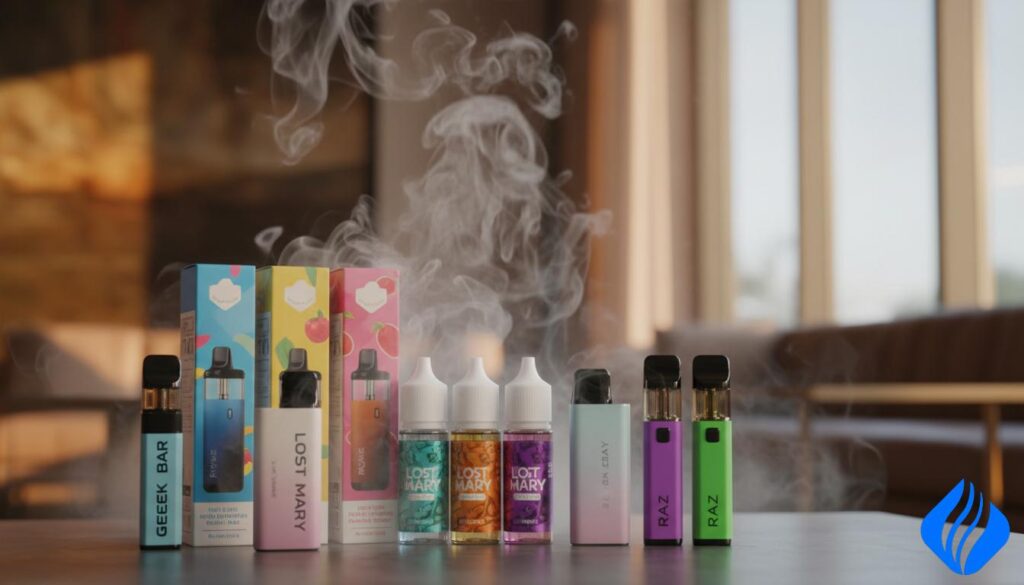
Market favorites like Geek Bar, Lost Mary, and Raz are often targets for copycats. Comparing packaging specs and puff counts is crucial to avoid the risks of counterfeit vapes. Check our [Hot Sale] collection for verified authentic devices.
Main product vs. Geek Bar
We check expected specs and price bands. Flag high puff claims, missing batch codes, or packaging mismatch as value red flags.
Main product vs. Lost Mary
Focus on puff-claim realism and build consistency. Inconsistent airflow and early burnt hits often point at poor internals.
Main product vs. Raz
Emphasize coil performance and charging behavior. USB‑C and steady charge cycles are positive signals for device reliability.
Field
Expected / Verify
Red flag
mAh
Listed on pack/device
Huge life claim, tiny cell
ml / puffs
Plausible math
Unrealistic puff count
Nicotine / coil / USB‑C
2% or 5%, mesh types, USB‑C stated
No nicotine label, odd port
When cheaper becomes riskier: convenience-store deals with no returns, missing inserts, or unstable MSRP deserve caution. For vetted options and further testing, see our guide to the best disposables: best disposable vape 2025.
Flavor consistency comparison: what our hands-on testing found over long use
Our long-run trials measured flavor and output across consistent puff cycles to reveal real-world decline patterns. We kept a fixed cadence, logged charging habits, and noted sensory changes at set intervals.
Methodology: controlled pulls, timed charging, and systematic notes on throat hit, vapor, and taste. This gave repeatable results for each unit tested.
Throat hit analysis
We describe smooth as clean, steady salt-nic hits. Strong means fuller throat presence without harsh edges.
Sudden harshness often signals coil damage, poor saturation, or low-grade formulation rather than normal wear.
Vapor production
Normal output feels balanced and consistent on each pull. Weak draws, flooding, spitback, or early burnt notes point at airflow or coil defects.
Flavor evolution after 5,000 puffs
Typical decline: fading sweetness, muted top notes, rising bitterness, or odd chemical off-notes. Good builds hold character longer; poor units fade fast.
Mesh vs. dual mesh in practice
Mesh gives even heat and clearer flavor early on. Dual mesh sustains flavor longer due to larger surface area and steadier saturation.
Metric
Good build
Poor build
Throat hit
Smooth/consistent
Sudden harshness
Vapor
Steady output
Weak or flooded
Flavor after 5,000 puffs
Gradual fade
Rapid decline / off-notes
Coil type
Mesh / dual mesh longevity
Cheap coils fail early
Practical takeaway: our sensory testing flags inconsistent performance as an experience-based screening tool. Only lab analysis confirms composition, but early flavor and output failures often reflect poor build quality.
How to spot fake vapes before you inhale: packaging, labeling, and build checks
A brief, focused check of packaging and device fitment helps spot misleading products at the shelf.
Quick inspection flow:
Box → seals → inserts.
Labels → device seams → mouthpiece.
Charging port → verification marks (hologram/scratch/QR).
Packaging and label tells
Look for inconsistent fonts, off gradients, low-res printing, and misspellings. Legitimate brands include instruction inserts and clear regulatory language.
Required labeling cues: clear nicotine warning text, stated nicotine content, and batch/expiry codes. These provide traceability and basic quality control for U.S. consumers.
Build quality and verification
Loose mouthpieces, rattles, misaligned seams, and sticky residue often link to leaks and poor internal fitment. Tiny defects signal weak manufacturing standards.
Verification features such as holograms, scratch codes, and functional QR checks usually appear on authentic packaging. Missing or nonfunctional QR elements is a common pattern with fake disposable products.
Check
What it shows
Red flag
Puff vs. tank
Sanity of puff claims
Huge puff count on small device
Batch/expiry
Traceability
No code or blurred print
Verification
Manufacturer authenticity
No hologram or dead QR
Practical note: knockoffs often clone popular brands closely. Rely on verification marks and clear packaging cues rather than appearance alone. Later, scan the QR for full verification on the brand website.
Safe ownership basics: empty signs, recharging safely, and authenticity checks
Safe ownership starts with clear signs and simple checks anyone can run at the pocket level. We give a compact owner checklist for adults who already have a device. Follow these steps to reduce avoidable risks and preserve performance.
How to know if it’s empty
Operational signs: flavor drop-off, repeated dry hits, blinking indicators, little or no vapor, and altered airflow.
Why stop: continuing can burn the coil, produce harsh hits, and shorten the life of the device.
How to recharge safely
Prefer USB‑C with a reputable low-watt charger. Avoid overnight charging and do not use high-watt fast chargers unless the product specs allow it.
Stop charging immediately if the device gets hot, shows swelling, leaks, or emits a burning smell. Those signs point at battery instability and increased safety risks.
Is it authentic?
Scan the QR or use scratch verification where present. Verify the code on the trusted website: Sokvape
If the code fails, or the site shows mismatched model data, treat the unit as a fake vape and avoid further use.
Where to buy with lower risk
Prioritize reputable retailers and verified stock. Avoid extreme discounts with no proof of sourcing.
Browse vetted categories for safer options: Disposable Vapes, Hot Sale, RandM, Bang.
Owner check
Action
Red flag
Empty signs
Stop and inspect
Dry hits / no vapor
Charging
Use USB‑C, monitor temperature
Hot device / swelling
Verification
Scan QR on website
Failed code / mismatched data
Final note: Keep devices away from children and pets. Nicotine exposure matters even when switching from cigarettes; treat handling and storage as part of overall health safety.
Conclusion
Final summary: Fake vapes, counterfeit vapes and illegal vapes raise uncertainty about chemicals, nicotine content, component quality, and battery behavior. That uncertainty creates preventable health risks in a fast-moving market and strains public enforcement.
For buyers: verify specs—mAh, ml, 2%/5% nic salt, mesh/dual mesh, and USB‑C. Check packaging, QR codes, and seller traceability before a purchase. Use our Puffs‑per‑Dollar and Flavor Consistency comparisons as quick filters for value versus real-world performance.
Take action: confirm authenticity on the brand fake vape guide, shop reputable listings, and report suspect sellers to the FDA at 1-888-99-SMOKE.
Nicotine is addictive. If you don’t use nicotine, don’t start; if you do, use responsibly and consult a clinician for health questions.
FAQ
Q: The Risks: Why Are Counterfeit Vapes Dangerous to Use
A: Fake disposable devices often bypass manufacturing controls and safety testing. That leads to unregulated e-liquid ingredients, poor soldering on coils, and substandard batteries. These issues raise the chance of chemical contamination, nicotine mislabeling, and thermal failures such as overheating or venting. We recommend sticking with verified brands and checking technical specs before purchase.
Q: The counterfeit vape problem in the U.S. disposable market right now
A: The U.S. market faces a surge in lookalike products after flavor restrictions and inconsistent enforcement. Many illicit supply chains exploit demand by cloning popular disposables. This creates a flood of illegal vapes sold through corner stores and online marketplaces with limited traceability and no quality assurance.
Q: Why counterfeits surged after flavor restrictions and enforcement gaps
A: When regulation limits legal flavor availability, consumers still seek alternatives. Illicit manufacturers fill that demand quickly because they don’t follow compliance, testing, or labeling rules. Enforcement gaps let these products enter retail channels unchecked, amplifying availability and risk.
Q: How counterfeit vs. illegal vapes differ and why that matters to buyers
A: Counterfeit devices copy brand appearance and claims. Illegal vapes may be original designs but sold outside regulated channels. Counterfeits mislead consumers about quality and provenance. Illegal products lack oversight. Both raise safety and health concerns, but counterfeits add consumer deception on top of technical risk.
Q: What counterfeiters copy most often: popular designs, flavors, and puff claims
A: Copycats target market leaders like Geek Bar, Lost Mary, and Raz. They mimic packaging, flavor names, and inflated puff counts. These claims often don’t match internal specs such as battery capacity or e-liquid volume, producing disappointing and unsafe user experiences.
Q: why are counterfeit vapes dangerous to use: the biggest health and device risks
A: Major hazards include contaminated liquids, toxic flavoring chemicals, heavy metal exposure from poorly made coils, unpredictable nicotine concentrations, and battery failures. Any of these can cause acute nicotine sickness, respiratory harm, or device fires.
Q: Unregulated ingredients and contamination risk from unsanitary manufacturing
A: Illicit production often occurs in non-sterile environments. That allows microbial contamination and chemical impurities. Without lab testing, consumers can be exposed to unknown solvents, residuals, or adulterants in the e-liquid.
Q: Heavy metals exposure concerns linked to coils and internal components
A: Low-quality coils and solder joints can leach metals like lead, nickel, and chromium into aerosol. Long-term inhalation increases respiratory and systemic risk. We advise verifying manufacturer testing and materials when possible.
Q: Untested flavorings and the diacetyl “popcorn lung” cautionary history
A: Some flavoring compounds, including diacetyl and related diketones, can cause bronchiolitis obliterans when inhaled repeatedly. Reputable brands avoid these additives and publish safety data. Fake products may still contain them.
Q: Filler additives and the EVALI-era warning signs (vitamin E acetate)
A: Vitamin E acetate and other thickening agents were linked to severe lung injury outbreaks. Counterfeit liquids may use cheap fillers to alter viscosity or appearance. Those additives can change aerosol chemistry and increase pulmonary risk.
Q: Nicotine strength uncertainty and nicotine sickness risk from mislabeled content
A: Mislabeling can understate or overstate nicotine levels. Unexpectedly high concentrations cause nausea, dizziness, rapid heartbeat, and other acute symptoms. Low levels can lead consumers to overuse the product chasing nicotine satisfaction.
Q: Battery safety hazards: overheating, short-circuiting, and leaking e-liquid
A: Subpar batteries lack protective circuitry and quality control. They may overheat, short, swell, or ignite. Poor seals and assembly errors also let e-liquid contact battery contacts, increasing risk of corrosion and electrical faults.
Q: Buyer’s guide: the technical specs you should verify before you buy any disposable
A: Inspect battery capacity, claimed e-liquid volume, puff count realism, nicotine strength, coil type, and charging standard. Verify packaging labels, batch numbers, and manufacturer verification tools before purchase.
Q: Battery capacity (mAh) and what it means for real-world longevity
A: Higher mAh typically means longer run time, but device efficiency matters. A 550–1000 mAh cell will generally outlast a 300–500 mAh cell in similar builds. Cross-check capacity with claimed puff counts for consistency.
A: Calculate puffs per milliliter using typical consumption metrics. Extremely high puff claims with low e-liquid volumes indicate false marketing. Look for realistic ratios and third-party test data when available.
Q: Nicotine strength basics: 2% or 5% nic salt and what “too strong” feels like
A: 2% (20 mg/mL) and 5% (50 mg/mL) nicotine salt are common. Too strong nicotine often causes throat burn, lightheadedness, nausea, and rapid heartbeat. Select strength based on prior use and tolerance.
Q: Coil type matters: Mesh coil vs. Dual mesh for heat, flavor, and consistency
A: Mesh coils provide even heating and good flavor. Dual mesh increases surface area and can extend coil life and vapor production. Counterfeit devices may use inferior wire or loose wraps that burn unevenly.
Q: Charging port checklist: why USB-C is a modern minimum standard
A: USB-C supports faster, reversible, and safer charging with standardized power delivery. Micro-USB or proprietary ports on cheap devices may lack safety features and degrade faster.
Q: Puffs per dollar comparison: main product vs. Geek Bar, Lost Mary, and Raz
A: Compare MSRP, real puff counts from testing, and device longevity. Brand leaders publish specs and undergo quality control; look for those factors when evaluating cost per puff.
Q: How to calculate puffs per dollar (and why MSRP swings can signal counterfeits)
A: Divide validated puff count by retail price to get puffs per dollar. Sudden price drops or inconsistent MSRP in the market can indicate counterfeit inventory or repackaged illegal stock.
Q: Main product vs. Geek Bar: expected specs, price bands, and value red flags
A: Geek Bar typically lists realistic puff counts, battery specs, and clear labeling. If a product mimics Geek Bar at a much lower price or with implausible specs, treat it as suspicious.
Q: Main product vs. Lost Mary: puff-claim realism and device build consistency
A: Lost Mary devices often use dual mesh and higher e-liquid volumes. Counterfeit versions may copy branding but omit robust internal components, showing poor performance and shorter life.
Q: Main product vs. Raz: coil performance and battery/charging expectations
A: Raz designs prioritize balanced throat hit and battery efficiency. Look for consistent vapor, stable resistance readings, and reliable charging. Deviation suggests assembly or component issues.
Q: When “cheaper” becomes “riskier”: value traps buyers see in convenience stores
A: Low-cost options at convenience outlets can be repackaged or counterfeit. Savings may cost you safety, accurate nicotine dosing, and device reliability. Favor verified retailers and traceable inventory.
Q: Flavor consistency comparison: what our hands-on testing found over long use
A: Authentic devices maintain flavor longer and show consistent throat hit. Counterfeits often fade quickly, develop off-notes, or produce burnt tastes as coils degrade.
Q: Throat hit analysis: smooth vs. strong and what “harsh” can indicate
A: A harsh throat hit can signal overly high nicotine, poor coil wicking, or contaminants in the e-liquid. Smooth hits usually indicate balanced formulation and proper coil construction.
Q: Vapor production: normal output vs. weak pulls, flooding, or burnt hits
A: Weak vapor and frequent flooding point to poor wicking or low e-liquid volume. Burnt hits suggest coil degradation or incompatible formulation. Both are common in low-quality disposable devices.
Q: Flavor evolution after 5,000 puffs: fading sweetness, off-notes, and coil decline
A: Over extended use, legitimate mesh systems retain flavor longer. Counterfeit internals accelerate coil gunk and flavor loss, producing off-notes and reduced vapor well before claimed lifespans.
Q: Mesh vs. dual mesh in practice: which stays consistent longer in testing
A: Dual mesh generally offers greater longevity and uniform heating, which keeps flavor stable. Single mesh can be adequate but may degrade sooner under heavy draw conditions.
Q: How to spot fake vapes before you inhale: packaging, labeling, and build checks
A: Inspect packaging for printing quality, spelling, and proper warning labels. Check seams, mouthpiece fit, and QR codes. Test device heft and look for rattles or loose parts.
Q: Packaging errors: fonts, gradients, misspellings, and missing inserts
A: Look for inconsistent fonts, low-resolution graphics, color mismatches, and absent instruction leaflets. These cues often indicate counterfeit or repackaged stock.
A: Legitimate products include clear nicotine warnings, exact mg/mL or percent nicotine, batch numbers, and expiration dates. Missing or vague labels reduce traceability and safety.
A: Physical defects point to poor assembly. A solid, well-aligned device with tight tolerances usually signals better quality control and fewer internal failures.
Q: Verification features: holograms, scratch codes, and missing QR elements
A: Many brands use holographic seals, scratch-to-reveal codes, and QR verification portals. Absence of these features or nonfunctional QR links should raise concern.
Q: Puff count and tank-size claims that don’t match real-world device limits
A: If a small e-liquid reservoir claims thousands of puffs, do the math. Implausible claims often indicate deceptive labeling or internal modifications that degrade safety.
A: Recognize end-of-life cues, use proper charging methods, and verify authenticity before continued use. Safe handling reduces risk of battery incidents and inhalation of degraded aerosols.
Q: How to know if it’s empty: flavor drop-off, dry hits, blinking indicators, no vapor
A: Flavor loss, increased harshness, dry or burnt hits, and a lack of vapor are reliable indicators. Some devices also flash LEDs or change draw resistance when depleted.
Q: How to recharge safely: USB-C power guidance, overheating precautions, when to stop
A: Charge with a reliable USB-C cable and a low-current charger recommended by the manufacturer. Stop charging if the device becomes hot, swollen, or emits unusual smells. Never leave charging unattended.
Q: Is it authentic: scan the QR code and verify via Sokvape
A: Use the brand’s official verification portal or QR code scanner. Confirm batch numbers and the URL matches the manufacturer’s domain. Mismatched or broken links often indicate counterfeit goods.
Q: Where to buy with lower risk: shop reputable categories and verified stock
A: Purchase from licensed vape shops, manufacturer-authorized retailers, or verified online stores. These channels provide product traceability, customer support, and returns if defects occur.
Q: Internal links to shop safely: Disposable Vapes, Hot Sale, RandM, Bang
A: Look for category pages, verified seller badges, and clear return policies. Use those signals to find legitimate disposables and avoid unverified listings that often carry imitation or illegal inventory.



 English
  German
  Dutch
Dutch  Danish
  Czech
Czech  Italian
  Slovenian
  French
  Hungarian
  Spanish
  Polish