

We open this guide with a clear, practical definition. In simple terms, the atomizer converts e-liquid into inhalable vapor. This function underpins flavor, throat feel, and cloud output across modern devices.
Our review will cover core specs: mAh, ml capacity, nicotine salt ratios, mesh and dual‑mesh coils, and USB‑C charging. We will also report hands‑on testing through roughly 5,000 puffs to show how performance changes over time.
We explain differences between disposable integrated systems, tanks, and rebuildables while keeping technical terms accessible. Expect discussion of wicking, resistance, airflow, and heat management, with no engineering degree required.
We will compare one main product profile against Geek Bar, Lost Mary, and Raz. Metrics include Puffs per Dollar and Flavor Consistency. We frame nicotine use responsibly and signpost Sokvape category links and authenticity checks.
Key Takeaways
- Core function: liquid-to-vapor conversion affects flavor and throat hit.
- Coil design and airflow shape satisfaction and cost efficiency.
- Hands-on testing shows changes after ~5,000 puffs.
- Comparisons use Puffs per Dollar and Flavor Consistency.
- We provide transparent specs, user patterns, and verification tips.
What an atomizer is and why it matters for vapor, flavor, and throat hit
We treat the atomizer as the engine that controls vapor, flavor, and throat hit. It combines coil heat, wick delivery, and airflow to shape every puff. Small design changes change taste clarity, warmth, and cloud size.

Practical outcomes: tighter draws (MTL) feel more like a cigarette and give stronger throat strike. Open draws (DTL/sub‑ohm) make larger clouds and cooler inhalation but use more liquid and stress coils faster.
- Throat hit varies with nicotine format (commonly 2% or 5% nic salt), airflow restriction, and coil temperature.
- Flavor consistency means steady sweetness and clarity over days, not just a sharp first‑day peak.
- Vapor production is a tradeoff: bigger clouds can reduce efficiency and shorten coil life.
Note: many modern disposables integrate the atomizer, so device choice matters more than repairs. For beginners, our starter guide explains matching draw style to nicotine strength responsibly.
How does an atomizer work inside a vape device?
We map the path from reservoir to mouthpiece so readers can trace performance issues logically. The process runs as a clear chain: tank/reservoir → wick saturation → coil heating → vaporization chamber → chimney → mouthpiece.
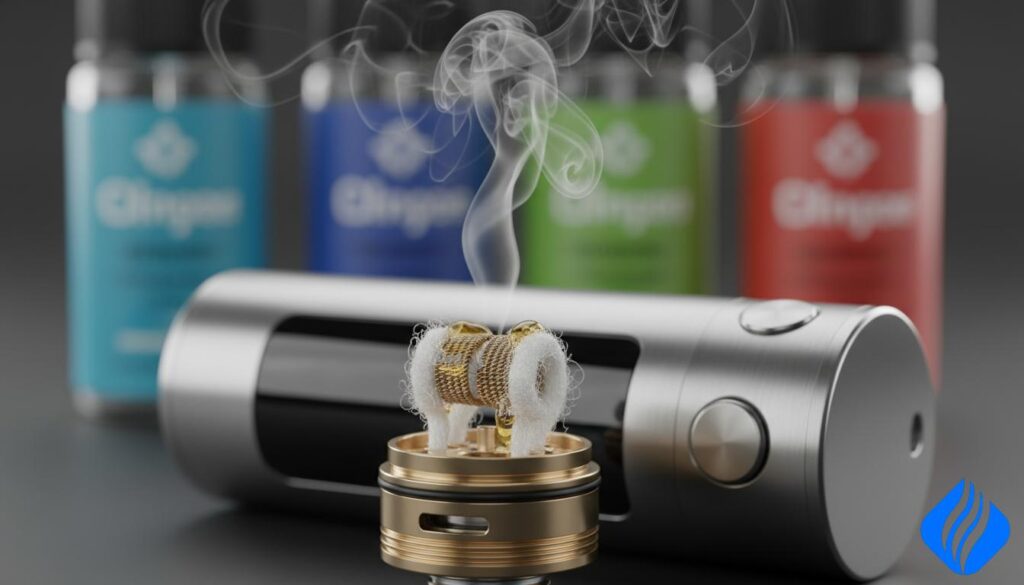
E-liquid absorption through the wick and why cotton leads
Wick material (usually cotton) pulls e-liquid into contact with the coil. Cotton wins for absorbency and neutral taste. When the wick can’t keep up, you get dry-hit notes and burnt flavor.
How the coil heats liquid using resistance
The coil converts electrical power into heat through resistance. Higher current raises temperature and boosts vapor volume. That increase speeds flavor fade when liquid runs low.
“Match coil type to airflow, not just power. Design balance matters more than raw heat.”
Airflow, chimney, and mouthpiece effects
Airflow cools the coil and changes density. A longer chimney or tight airflow makes vapor warmer and gives stronger throat sensation on inhalation. Wide, open paths produce larger, cooler clouds.
Coil resistance basics and sub-ohm notes
Sub-ohm setups (below 1Ω) let more current flow, run hotter, and make more vapor. They need robust batteries and compatible mods. Push power too far and you’ll see overheating, harsh hits, and faster coil wear.
For full mechanical context and device-level details, see our guide on how vapes work.
Atomizer parts and terminology vapers commonly mix up
We clarify common parts names so readers can spot which bits need replacement and which stay put.
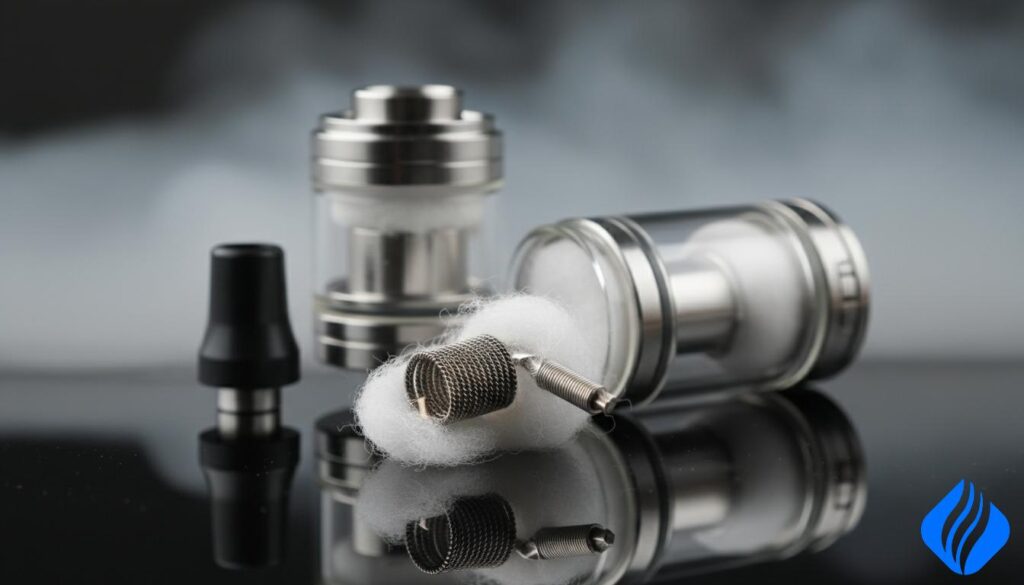
Atomizer vs. coil
Atomizers include the coil plus wick and housing. The coil is the heating element only. Coils wear fastest and get replaced most often in refillable tanks.
Tank, reservoir, clearomizers
People use different words for similar parts. A tank or reservoir holds liquid. Clearomizers combine clear tank glass with removable coils and make inspection easy.
Cartomizers and the cigarette feel
Cartomizers merge cartridge plus atomizing section. Compact airflow and short vapor paths make many designs feel more cigalike.
O‑rings, seals, and leaks
O-rings stop leaks. Hardening, cuts, or misalignment cause seepage. Symptoms differ: seal failure drips externally, while a gunked coil tastes burnt.
Parts vocabulary for troubleshooting
- No Atomizer / connection faults: poor contact or corrosion.
- Leak reports: check seals, tightness, and fill level.
- Coil fatigue: muted flavor, harsh hits, and faster liquid drawdown.
Types of vape atomizers and how to choose one for your vaping style
Different atomizer designs target specific tradeoffs between convenience, control, and flavor. We lay out the main types so readers can match gear to nicotine strength, airflow preference, and maintenance tolerance.
Disposable integrated systems
Prefilled, sealed units for no‑maintenance use. They deliver steady flavor and simple operation. These devices suit users who want consistency and minimal upkeep.
Tank atomizers for everyday use
Tank atomizers offer refillable convenience and replaceable coils. They balance flavor, vaping experience, and ease of care. Routine tasks include priming coils and checking wicks to avoid dry hits.
Rebuildable tank atomizers
Rebuildable tank units let you build coils and select wick material. Over time, rebuilding cuts costs compared with premade coils. Expect a learning curve and regular maintenance.
Rebuildable dripping atomizers
RDAs deliver intense flavor by dripping liquid directly onto coils. They support rapid flavor switching and high vapor production. Hands‑on use suits experienced users comfortable with resistance and battery limits.
MTL vs DTL: match draw to nicotine
MTL (tight draw) pairs well with higher nicotine salts for a stronger throat hit. DTL (open draw) works best with lower nicotine and larger clouds. Choose by nicotine level, airflow taste, and how much upkeep you will accept.
Safety note: rebuildable systems require knowledge of resistance, battery safety, and proper mounting. We recommend practice and verified specs before advanced use.
what is an atomizer on a vape in real-world disposables?
Modern throwaway units hide a compact wick‑and‑coil module engineered for steady output over thousands of draws. In practice, that sealed assembly controls flavor, vapor production, and how long a device feels fresh.
Core technical specs to check
Buyer checklist:
- Battery: 650–900 mAh typical for high‑puff devices.
- E‑liquid: often 12–20 ml per unit.
- Nicotine: commonly 2% or 5% nic salt by percent.
- Coil type: Mesh coil or Dual mesh; many now include USB‑C charging for rechargeables.
Mesh coil vs dual mesh
Mesh coil heats evenly; Dual mesh spreads heat across more surface area. Both aim for steady flavor, but real consistency depends on wick alignment and airflow design.
Hands-on notes and 5,000‑puff evolution
Tighter airflow plus higher nicotine yields a stronger throat hit. Open draws feel smoother and boost vapor output. After ~5,000 puffs, sweet top notes fade first and vapor density drops as coil fatigue appears.
“Specs predict range; real performance depends on draw style and coil efficiency.”
| Spec | Typical Range | Effect on Performance | What to check |
|---|---|---|---|
| Battery (mAh) | 650–900 | Runtime, consistent power | Rechargeable? USB‑C |
| E‑liquid (ml) | 12–20 | Puff count, flavor life | Prefill volume listed |
| Nicotine (percent) | 2% / 5% | Throat hit intensity | Match to draw style |
| Coil type | Mesh / Dual mesh | Even heating, flavor consistency | Marketing vs hands‑on reviews |
To browse comparable disposable vapes and products, see our roundup for the best options and model pages at best disposable vape 2025 and category listings at Sokvape.
Comparison testing: puffs per dollar and flavor consistency vs Geek Bar, Lost Mary, and Raz
To judge real value, we measured how many useful draws each model delivers before flavor collapses. Our baseline is the main product benchmark band used across tests. That keeps comparisons fair and consistent.
Benchmark specs:
- Battery: 650–900 mAh
- E-liquid: 12–20 ml
- Nicotine: 2% or 5% nic salt
- Coil: Mesh coil or Dual mesh
- Charging: USB‑C
Geek Bar vs benchmark
Geek Bar shows strong early flavor and firm throat hit at higher nicotine. Coil wear appears sooner under heavy use. Late-stage taste often drops into a flat, sweet note before full end-of-life.
Lost Mary vs benchmark
Lost Mary excels in airflow stability. That yields steadier coil temperature and more consistent vapor density. Sweetness longevity ranks above average in our tests.
Raz vs benchmark
Raz emphasizes cooling agents and clear fruit notes. Flavor clarity stays sharp early, but draw can feel tighter as condensation alters internal airflow over time.
Estimating puffs per dollar
Use e-liquid volume as the primary proxy. Convert ml to expected usable puffs, then divide by retail price. Adjust down for open airflow or low nicotine, which burn through liquid faster.
5000-puff hands-on recap
After ~5000 draws we tracked these signs of coil fatigue:
- Lower vapor at same draw strength
- Sharper, harsher edges in flavor
- Faint dryness and quicker slide to unpleasant tastes
“Real value ties back to balanced specs: steady battery output, proper coil design, and controlled airflow.”
| Metric | Main benchmark | Typical effect |
|---|---|---|
| Battery (mAh) | 650–900 | Consistent power, runtime |
| E-liquid (ml) | 12–20 | Puff life, flavor longevity |
| Coil type | Mesh / Dual mesh | Even heating, flavor consistency |
Troubleshooting, maintenance, and safety for better atomizer performance
We start with the simplest checks. Minor faults usually stem from low liquid, weak battery, or blocked airflow.
How to know if it’s empty
Watch for quick flavor fade, thin vapor, or a dry, scratchy throat hit. Clear tanks show level drops. In sealed disposables, taste dulls before output stops.
How to recharge safely (USB‑C)
Use a reputable low‑output USB power source. Don’t leave devices charging unattended. Stop charging if the device feels unusually hot or the battery swells.
“No Atomizer” messages — quick fixes
Reseat the tank. Clean 510 contacts and threads. Verify the coil sits correctly and that measured resistance falls inside the mod’s supported range.
Clean versus replace
Rinse removable tanks, mouthpiece, and housings in warm water. Do not expect water to fix a burnt coil or a gunked wick; replace those parts when taste turns sharp.
Leak prevention and seals
Inspect O‑rings, avoid cross‑threading, and keep tanks topped up. Overfilling and misaligned seals cause most leaks, not the coil itself.
Is it authentic?
Scan any QR code and confirm product pages through this link: sokvape.com. Buy from known categories such as Hot Sale or Disposable Vapes on the site for clearer sourcing.
Nicotine warning: This product contains nicotine. Nicotine is an addictive chemical.
Conclusion
We close by tying the technical parts back to clear buying choices and safe use.
Core point: an atomizer is the wick-plus-coil system that turns e-liquid into vapor. That simple setup explains most differences in flavor, throat hit, and cloud output across modern devices.
Match your vaping style (MTL vs DTL) and nicotine strength to airflow and coil design. Then check true value using Puffs per Dollar and long-term Flavor Consistency, not just bold puff claims.
Remember device roles: disposables favor convenience, tanks give repeatable daily use with replaceable coils, and rebuildables reward hands‑on tuning but require coil, wick, and resistance knowledge.
If performance drops, verify in order: liquid level, battery charge, airflow path, then coil condition. This sequence avoids many dry hits and leaks.
Ready to browse? Apply this framework in our catalog at Sokvape (Disposable Vapes, Hot Sale, RandM, Bang) or read more background via what is an atomizer on a.
Safety note: products may contain nicotine. Use responsibly and only by adults.
 English
  German
  Dutch
Dutch  Danish
  Czech
Czech  Italian
  Slovenian
  French
  Hungarian
  Spanish
  Polish