

Fact: modern dual mesh coils and smart screens changed performance, yet spitback and flooding still cause liquid to reach the mouth for some users.
We present a clear, technical guide that defines what it means when you get vape juice in the mouth and separates spitback, simple leaks, and coil flooding.
Readers will get fast, no‑tool fixes to stop spitting liquid, guidance on when hardware needs replacement, and hands‑on testing notes on throat hit, vapor, and flavor after ~5000 puffs.
We also preview a spec‑driven disposable comparison (mAh, ml, nic salts, mesh types, USB‑C) and practical value metrics like puffs‑per‑dollar.
For device maintenance tips and a detailed troubleshooting checklist, see our deeper resource at common causes and fixes.
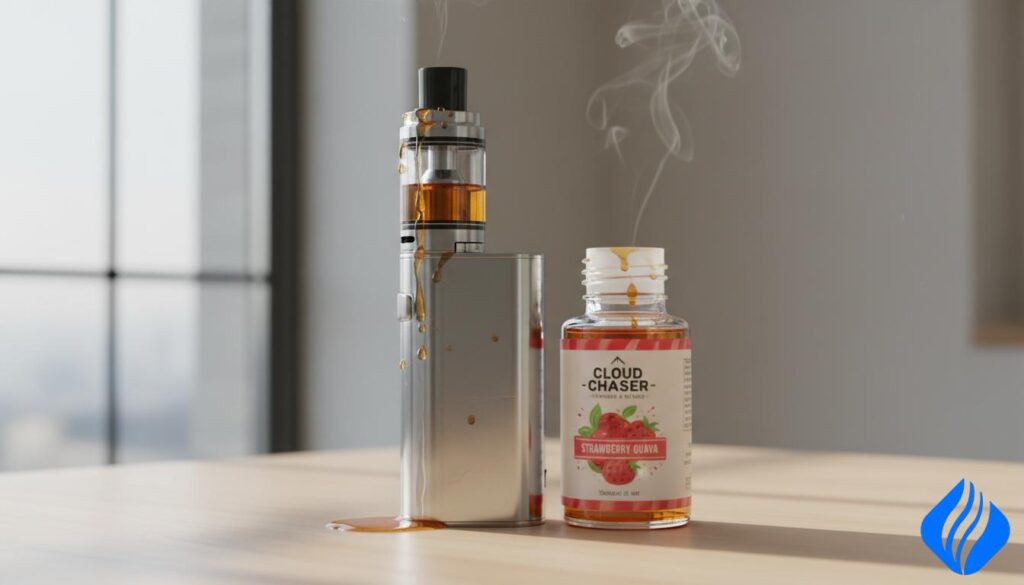
Key Takeaways
- Spitback vs. leaks: similar symptom, different causes.
- No‑tool fixes: quick steps can stop most spitback events.
- When to replace hardware: cracked pods, worn gaskets, and mis‑seated coils.
- Testing notes: airflow, nicotine type, and vapor reveal flooding vs. underpowering.
- Value metrics: puffs‑per‑dollar and puff claims matter for disposables.
- Safety: rinse if accidental intake causes nausea and seek care for severe symptoms.
What “Vape Juice in Your Mouth” Usually Means: Spitback vs. Leaks vs. Flooding
Most cases fall into three categories: spitback, true seal failures, or flooding. We define each so you can self-diagnose and pick the right fix.
How spitting droplets forms
Spitback happens when small droplets of e-liquid contact a hot coil and pop into the airway. This often follows excess saturation, low power, or aggressive draws. The result feels like hot drops on the tongue.
Common liquid pathways
Liquid travels from pooled juice in the coil chamber up the chimney or central airflow tube. Condensation can collect at the mouthpiece and mimic a leak. True leaks come from overfilling, damaged seals, or cracks in a tank or pod.
Quick fix versus hardware failure
One-time gurgling after a refill is usually a quick fix: clear, dry, and resume. Recurring wet mouthpiece, visible cracks, or repeated liquid in the chimney signal hardware failure and replacement.
- Symptom checks: gurgle = pooled liquid; popping = spitback; steady wetness = seal or flooding issue.
- Next steps: clear and clean first, then check fill technique, coil seating, and e-liquid viscosity.
For a deeper troubleshooting checklist, see our common causes and fixes.
Why is my vape leaking juice in my mouth?
A handful of mechanical and user errors explain why e-liquid reaches the airway. We list common causes, how to spot them, and the immediate corrective action.
Overfilling past the fill line removes the small air gap that keeps a stable vacuum. Leave a small air space when you top up a pod or tank. That prevents pooled liquid and reduces gurgle.
Central chimney fills occur when liquid is squeezed into the airflow tube during refills. This creates a direct path for liquid to travel to the mouth and shows as wet pulls right after a refill.
Coil fit and seals matter. Misaligned or loosely seated coil units, damaged O‑rings, or cross‑threaded screw connections break seal integrity. Reseat or replace the coil and inspect gaskets.
Other mechanical and user causes
- Over‑priming: Excess priming oversaturates cotton and causes temporary flooding; wick needs clearing or coil replacement.
- PG/VG mismatch: Thin, high‑propylene glycol blends can overwhelm dense cotton at higher power. Thick high‑VG juice can fail to wick in higher‑resistance MTL setups.
- Heat and wattage: Running above recommended wattage or chain vaping warms the unit. Heat thins the liquid and raises the chance of leaks and spitback.
- Physical damage: Cracked pods, dented tanks, worn gaskets, and cross‑threading create mechanical gaps that mimic random leaks.
| Cause | Key Symptom | Immediate Fix | When to Replace |
|---|---|---|---|
| Overfill past fill line | Gurgle; wet pulls | Drain excess; leave air gap | Never; user fix |
| Chimney filled | Wet mouthpiece after refill | Blow through mouthpiece; dry chimney | Replace pod if soaked |
| Misinstalled coil / bad O‑ring | Continuous seepage | Reseat coil; replace O‑ring | Replace coil or pod |
| PG/VG mismatch | Poor wicking or excess pooling | Match liquid to device (MTL vs DTL) | Change juice or coil type |
Action map: if gurgle follows a refill, clear liquid and slow inhalation. If steady wetness repeats, inspect seals and replace worn parts. Coil life averages 1–2 weeks depending on use and nicotine strength.
Fast Fixes You Can Do Right Now (No Tools Needed)
Act fast: small manual steps stop most wet pulls without tools. We give a quick workflow that works for pods and tanks.
Clear the coil chamber
Remove the pod or tank. Wrap the base in a paper towel and gently blow through the mouthpiece to push excess liquid from the coil chamber.
Wipe the chamber and check the towel for clear or slightly colored e‑liquid. That tells us if flooding was temporary or if a seal may fail.

Clean airflow and chimney
Dry the central chimney and the airflow path with a paper towel. Remove pooled liquid so the next draw can’t pull fluid up as juice mouth.
Technique, refill, and tightness
Let the device cool. Take slower, steadier inhales. Refill at ~45°, fill beside the center tube, and leave a small air gap.
Check connections: snug components, not over‑tight. Over‑torque can deform seals; under‑tightening lets air and liquid pass. After refilling, let the coil rest a minute, then take a few gentle primer puffs.
“A few steady steps often stop the problem without replacing parts.”
For a full checklist and deeper fixes, see our common causes and fixes.
Hands-on Testing Insights: What Worked Best for Throat Hit, Vapor, and Flavor Over Time
We ran controlled trials on multiple kits to track throat hit, vapour output, and taste across extended use. Tests used the same draw style, fixed nicotine strength where possible, and repeatable airflow positions to isolate real effects on the vaping experience.

Throat feel: smooth versus sharp
Nicotine salts delivered a smoother throat feel at higher strengths. Freebase felt sharper at comparable content levels.
Airflow also shaped the hit. Tight airflow increased perceived harshness. Wider airflow softened the sensation while boosting vapour.
Vapour trends and diagnostics
Gurgling plus weak vapour often points to coil flooding. Thin vapour with normal sound usually signals underpowering or low battery.
Strong, sharp inhales pulled liquid upward more often. Adjusting wattage and airflow reduced spitback and improved consistency.
Flavor over ~5000 puffs
After about 5000 puffs we saw taste decline. Residue and heat cycling mute bright notes and can add a slightly “cooked” layer.
Practical rule: clean and lower wattage first. If taste and vapour do not recover, replace the coil to restore original flavour and output.
“Controlled hands-on testing shows small adjustments often restore performance; replacement is the last step.”
- Hands-on testing: consistent method gives reliable comparisons.
- Wattage: stay within the coil’s rated range to avoid overheating and shortened life.
- Decision guide: clean → adjust airflow/wattage → replace coil.
Device Specs & Disposable Comparisons: Puffs per Dollar and Flavor Consistency
A clear device spec sheet helps separate marketing puff counts from real-world value. We use a short checklist to judge a disposable or kit before purchase.
- Battery: capacity in mAh — higher mAh better matches larger ml tanks.
- E-liquid: volume in ml and common strengths (2% or 5% nic salt).
- Coil: mesh vs Dual mesh — mesh aids flavor stability.
- Charging: USB-C for faster, reliable top-ups.
To estimate puffs per dollar, combine battery mAh and ml, then normalize by realistic draw length. Marketing counts vary by draw and power. A low-mAh unit with high puff claims often falls short.
| Model | Puffs/Real | Flavor Stability |
|---|---|---|
| Main product | claimed vs tested | mesh holds up well |
| Geek Bar | high claim, mixed endurance | sweetener fade late |
| Lost Mary / Raz | solid balance | good late-stage taste |
Better coil design and steady power lower flooding and improve day-to-day experience. Shop technical filters at Disposable Vapes or browse the Hot Sale. For a focused review of disposables, see this guide.
Maintenance, Charging, and Authenticity Checks (Plus Nicotine Safety)
Small, regular checks extend life and reduce safety issues. We describe clear signs that a device needs service, how to recharge safely, and how to confirm authenticity.
Empty detection and immediate actions
Signs a unit is empty: noticeable vapor drop, steady flavor fade, or new burnt/overheated notes. These indicate the device can no longer vaporize e-liquid reliably.
Do not compensate by taking harder pulls. That can force liquid up the airway and wet the mouthpiece or the mouth. Instead, stop and inspect the pod or tank.
Safe recharging and battery retirement
When charging, use USB-C if supported. Charge on a stable, non-flammable surface. Make sure the unit stays cool; stop charging if it gets unusually warm.
Retire batteries with dents, swelling, torn wraps, or damaged ports. These faults raise fire risk and are not worth repair. Replace the whole vape device rather than workaround a damaged battery.
Authenticity workflow
Scan the QR code on packaging and verify at sokvape.com. Confirming authenticity reduces counterfeit-related issues like poor seals, bad coils, and chronic spitting or leaks that mimic user error.
Nicotine safety
Nicotine is an addictive chemical. Keep all e-liquid and devices away from children and pets. If e-liquid contacts the mouth and you feel nausea or dizziness, rinse with cold water and seek medical attention.
| Sign | Action | When to replace |
|---|---|---|
| Vapor drop / flavor fade | Stop, check e-liquid level, rest coil | After retries fail |
| Burnt or overheated notes | Lower power, replace coil or pod | Persistent burn smell |
| Warm during charging / damaged wrap | Stop charging; retire battery | Any swelling or port damage |
“Routine checks and safe charging prevent most performance and safety issues.”
Conclusion
Here’s a compact recap that turns diagnosis into fast, reliable fixes.
Most cases of vape juice hitting the mouth are simple spitback or short-term flooding. Repeat wet pulls point to seal failure, poor coil fit, or damage in the pod/tank path.
Fast fix sequence: clear the chamber, dry the airflow, let the unit cool, refill at 45° avoiding the center tube, and leave a small air gap. Take gentler draws to avoid strong vacuum pulls.
Preventive steps: don’t overfill, match liquid viscosity to the setup, and stop chain vaping when the device runs hot. Replace parts after repeated gurgle or visible wear.
For disposables, judge value by real puffs‑per‑dollar and late-stage flavor. Visit SOKVAPE categories (Disposable Vapes, Hot Sale, RandM, Bang) after you stabilze performance.
Safety note: if vape juice still reaches the mouth despite fixes, stop use, verify authenticity, and prioritize devices with reliable seals for a safer overall experience.
 English
  German
  Dutch
Dutch  Danish
  Czech
Czech  Italian
  Slovenian
  French
  Hungarian
  Spanish
  Polish