

Nicotine is an addictive chemical. Not for youth, pregnant or breastfeeding individuals, or non-smokers.
Dual Mesh Coils and smart screens changed device performance fast, and they also changed user experience. We open with a practical fact: uneven nicotine delivery and harsh ingredient blends often explain why do disposable vapes make me feel sick within the first session.
We will test throat hit, vapor output, coil type, and battery efficiency (mAh, ml, nic %, coil, USB‑C) to link symptoms to device behavior. Our focus is US adults 21+ and on clear fixes plus when to stop and seek care.
Common symptoms include nausea, dizziness, headache, shaky sensation, and throat discomfort. These often fall into two buckets: nicotine delivery issues and irritation or sensitivity. If severe signs appear—breathing trouble, chest tightness, repeated vomiting—stop and get medical help.
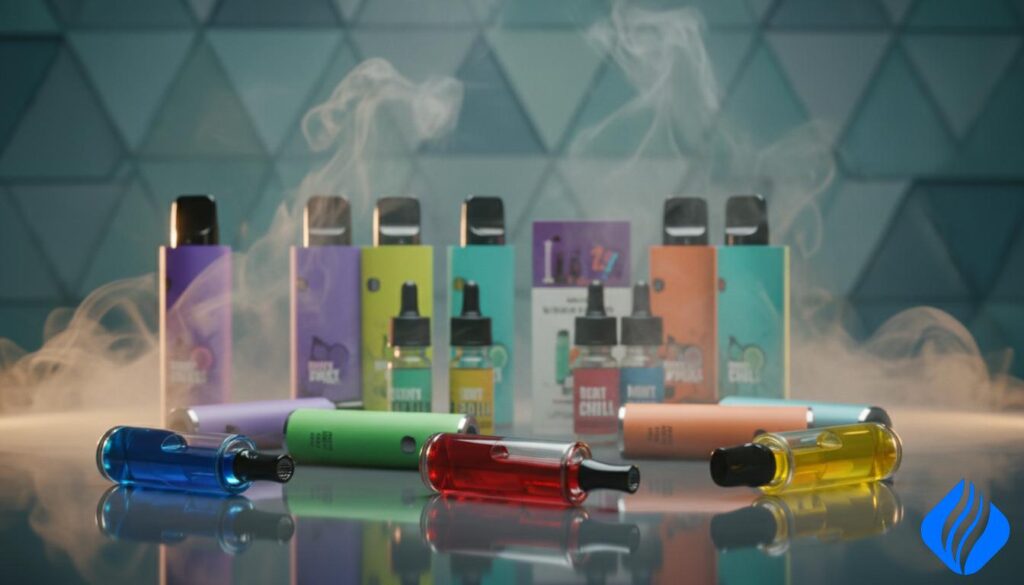
Key Takeaways
- We identify nicotine delivery and ingredient irritation as the main causes.
- Hands-on tests cover throat hit, puff count, and battery efficiency for clear comparisons.
- We compare Geek Bar, Lost Mary, and Raz on puffs per dollar and flavor consistency.
- US buying tips and verification, plus links to Sokvape categories, help secure reliable supply.
- If symptoms persist or worsen, consult a healthcare professional immediately.
Why Do Disposable Vapes Make Me Feel Sick? The Most Common Causes in Today’s Devices
We begin with a clear cause list and quick fixes. Nicotine overload is the top culprit. Symptoms include nausea, dizziness, headache, and a rapid heart rate.
Nicotine overload and rapid uptake
High-strength nicotine salts (5%) absorb fast. Auto-draw designs can deliver more nicotine per minute than users expect. That stimulant effect raises pulse and can upset the stomach.What to change:step down to 2% or lower and shorten each puff.
New-to-vaping adjustment vs chain vaping
New vaping users adapt over several sessions. Experienced vapers can chain vape without breaks. Both patterns raise nicotine intake and trigger symptoms.
Dehydration, PG/VG, and ingredient irritation
PG/VG can pull moisture. This causes dry mouth, throat irritation, and fatigue. Some flavor additives irritate airways and cause coughing or nausea. Slow inhalation, hydrate, and test different e-liquids.
“Lower nicotine, pace your puffs, and hydrate first—those steps stop most problems fast.”
| Cause | Common Symptoms | Quick Fix |
|---|---|---|
| Nicotine overload (5% salt) | Nausea, dizziness, rapid heart rate | Step down to 2% or less; shorter puffs |
| Chain vaping / hard pulls | Lightheadedness, stomach upset | Increase time between puffs; take shallow draws |
| PG/VG dehydration or flavors | Dry throat, cough, fatigue | Hydrate, try different e-liquids, test single-flavor options |

Red flags: breathing trouble, chest tightness, persistent vomiting, fainting, or facial/throat swelling. Stop use and seek medical care immediately.
How Disposable Vapes Work and Why That Can Trigger Nausea
A clear look at battery, coil, and airflow shows how intake volume drives user symptoms. We translate the mechanics into practical steps you can test and change.
Core system in plain terms
Battery → coil → e-liquid → user inhales. The battery powers the coil. The coil heats the e-liquid and creates vapour. That vapour carries nicotine and flavor into the mouth and lungs.
Auto-draw airflow and common inhalation errors
Auto-draw sensors remove the button but can encourage longer pulls. Longer or harder pulls raise nicotine intake fast.
- Overly long draws increase dose per puff.
- Mouth-filling vapour with little fresh air raises throat irritation.
- Rapid repeated puffs stack nicotine and heighten effects on the stomach and head.
Heat, vapour density, and power delivery
Higher coil heat produces denser vapour and a stronger throat hit. That increases nicotine absorption and can feel harsh quickly.
Inconsistent wattage or falling battery voltage changes throat hit and vapour volume mid‑session. Those swings often trigger coughing, nausea, or dizziness.
Test: take short, measured puffs and compare symptoms after one minute versus longer pulls.
For more on symptom patterns and stepwise fixes see our symptom guide. We cover coil types and battery behavior next, since those specs change the vaping experience and health effects.
Ingredient Checklist: PG/VG Ratios, Flavorings, and Allergens That Can Make You Feel Sick
Below we map core ingredients to likely physical responses so readers can shop smarter and test safely.
PG vs. VG: Propylene glycol (PG) often gives a sharper throat hit. Vegetable glycerin (VG) feels smoother but produces denser vapour and a heavier mouth feel. Both can cause dryness that worsens nausea and throat irritation during long sessions.
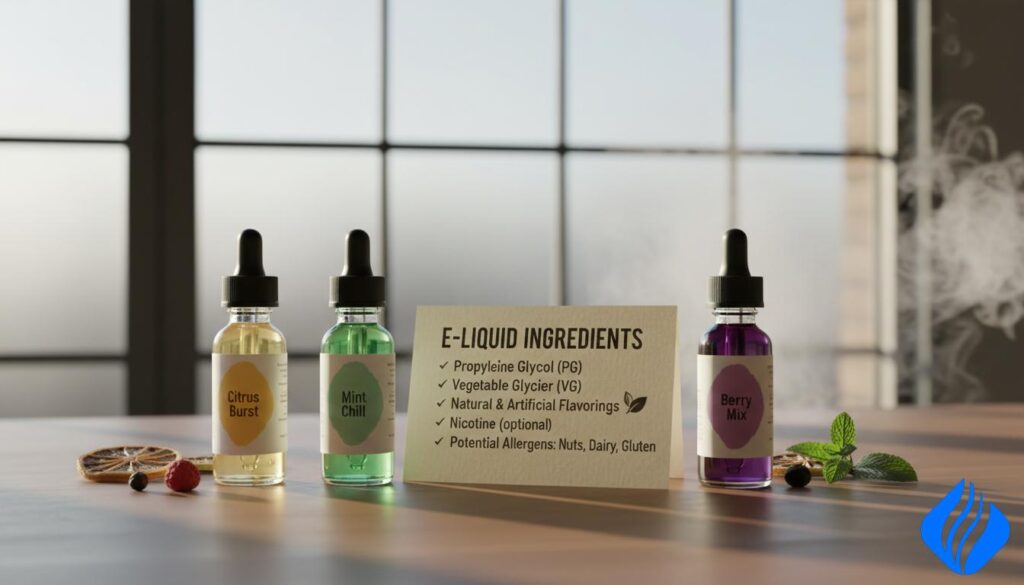
Common flavoring triggers
Cooling agents, concentrated sweeteners, and some aroma chemicals can cause coughing, tightness, or headache-like reactions. Sensitive people may show symptoms similar to allergy or asthma.
Warning signs and immediate actions
- Watch for: wheeze, persistent cough, throat swelling, rash, or worsening shortness of breath.
- Stop use at once if severe signs appear and seek medical care.
- If reactions repeat across products, consult a clinician for allergy testing.
Practical pre-buy checklist
- Check e-liquid PG/VG ratio on the label. Prefer 50/50 or higher VG if PG causes sharp throat hits.
- Choose single-flavor e-liquids to isolate triggers.
- Start with lower nicotine and test one variable at a time: flavor → nicotine → device.
- Keep hydrated to reduce PG/VG-related dryness and related nausea.
Note: For allergy-focused guidance, see our linked resource on sensitivity testing: can you be allergic to vapes.
Hands-On Testing Insights: Throat Hit, Vapor Production, and Flavor Consistency After 5000 Puffs
We conducted controlled runs to track how throat sensation, vapour output, and taste evolved after heavy use. Our hands-on testing used the same puff cadence and environment to keep results repeatable and symptom-focused.
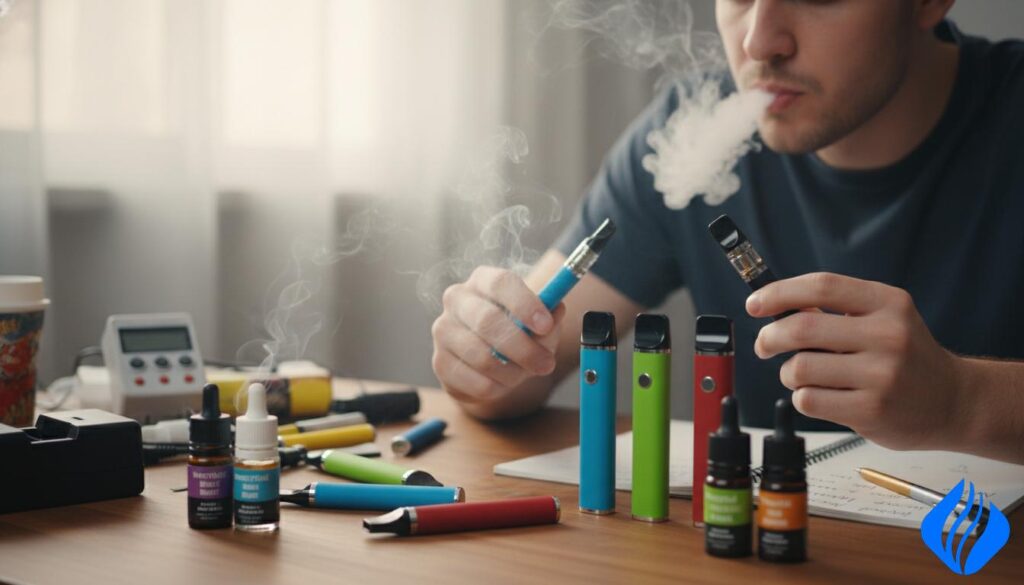
Smooth vs. strong throat hit
Across 2% and 5% nic salt options, 2% read as smoother and more forgiving. That lower strength reduced coughs and sudden lightheadedness.
By contrast, 5% delivered a stronger, faster throat impact. Back-to-back draws raised nicotine uptake and the risk of nausea for some testers.
Vapour output changes over time
Vapour volume fell gradually as coils and airflow passages aged. Users often compensate by pulling harder.
This compensation increases dose per puff and can worsen throat irritation and other symptoms in the body.
Flavor consistency after 5000 puffs
Sweetness typically faded and cooling agents shifted in intensity. Off-notes appeared in several e-liquids, signaling coil stress or nearing end-of-life.
Burnt / harsh taste troubleshooting
“Harsh or burnt notes, sudden flavor change, or reduced vapour are red flags—stop and inspect the device.”
- Stop use at first harsh taste.
- Check for dry pulls and confirm the e-liquid isn’t empty.
- Avoid forcing more hits; replace the device if harshness returns.
Contaminated vapour signs include sudden peppery or burnt notes and unexpected throat burn. These often come from coil degradation or contamination and can irritate lungs and stomach, raising the chance of nausea.
Core Technical Data That Matters When You Feel Sick: Specs to Check Before You Blame Vaping
Reading the numbers on a product label helps link sudden symptoms to battery, coil, or e‑liquid choices.
Why specs matter: unstable power or high heat changes vapour density and nicotine absorption rate. That can cause abrupt throat harshness, dizziness, or nausea-like symptoms.
Battery capacity and power delivery
Battery (mAh): lower mAh often means faster voltage drop and inconsistent hits. Look for 500–1500 mAh in larger reusable systems; many single-use devices list 350–1000 mAh. Confirm the label.
E-liquid volume and nicotine strength
E-liquid (ml): larger reservoirs (10–20 ml) can encourage longer sessions. Pace matters.
Nicotine strength: typical US options are 2% (20 mg/ml) or 5% (50 mg/ml) nic salt. Step down to lower nicotine if you notice lightheadedness or rapid heart rate.
Coil type and heat profile
Mesh coil vs dual mesh: mesh gives even heating and smoother output. Dual mesh can boost flavour and vapour but may run hotter and deliver denser aerosol. Denser aerosol raises nicotine uptake and irritation risk for sensitive users.
Charging port safety
USB‑C: preferred for faster, more consistent charging on rechargeable devices. For safety, avoid charging in hot places, do not leave charging unattended overnight, and stop use if the device runs hot while charging.
“Check mAh, ml, nic strength, coil type, and charging method on the package—those numbers predict real-world harshness and consistency.”
| Spec | Typical Range | Effect on symptoms |
|---|---|---|
| Battery (mAh) | 350–1500+ | Low mAh → voltage sag → unexpected harsh hits |
| E-liquid (ml) | 5–20 ml | Large volume → longer sessions → higher cumulative nicotine |
| Nicotine (mg/ml) | 20 (2%) / 50 (5%) | Higher levels → faster absorption → stronger systemic effects |
| Coil | Mesh / Dual mesh | Dual mesh → denser vapour; mesh → smoother, steadier hits |
Quick checklist to use on any listing or box:
- Confirm mAh value and expected wattage if listed.
- Note ml of e-liquid and intended puff count.
- Verify nicotine strength and opt for lower nicotine if needed.
- Check coil type and whether the device uses USB‑C charging.
Device-to-Device Comparison: Puffs per Dollar and Flavor Consistency vs Geek Bar, Lost Mary, and Raz
We translate advertised specs into expected user outcomes for cost, taste, and nicotine impact.
Puffs per dollar = advertised puffs ÷ price. Adjust for real use: longer draws and higher power cut puff count. Use that quick math to compare value across models.
Puffs per dollar: a quick method
Calculate advertised puffs ÷ price. Then reduce by 20–30% for intense draw habits. That gives a practical rate to compare Geek Bar, Lost Mary, Raz, and the baseline device.
Flavor consistency matchup
Coil and airflow drive repeatability. Mesh coils with stable airflow keep flavor steadier. Dual mesh boosts initial taste but can drift as the coil stresses.
Nicotine delivery feel
Devices with higher heat or dense aerosol often feel stronger. For sensitive vapers, models with gentler heat and balanced airflow read as smoother and less likely to trigger nausea.
| Model | Typical Specs (mAh/ml/nic/coil/USB‑C) | Notes on puffs per $ & flavor |
|---|---|---|
| Baseline model | 500 mAh / 10 ml / 5% or 2% / mesh / USB‑C | Balanced value; flavor steady if mesh holds. Confirm exact numbers per model. |
| Geek Bar | 650 mAh / 10–12 ml / 5% / dual mesh / some USB‑C | Strong initial flavor; puffs per $ varies with draw intensity. |
| Lost Mary | 600 mAh / 10 ml / 2%–5% / mesh / USB‑C | Smoother delivery on 2%; consistent taste on longer runs. |
| Raz | 450 mAh / 8–10 ml / 5% / dual mesh / limited USB‑C | High vapor density; value depends on puff length; flavor can shift late-cycle. |
Verify exact mAh, ml, nicotine levels, and coil type on the box before buying. For a curated list, see our best disposable vape 2025 guide.
How to Fix the Problem Fast: Safer Vaping Practices and Buying Tips (US)
Start by pausing your session and following a simple recovery routine to stop escalating symptoms fast.
Stop the nausea loop: Stop vaping for 15–30 minutes. Sip water and rest. When you restart, take shorter puffs and longer breaks to avoid nicotine stacking.
Step down nicotine strength: If 5% nic salt causes repeated nausea or dizziness, move to 2% or lower. Lower nicotine intake often stabilizes heart and stomach responses.
Hydration and recovery: Drink water or an electrolyte drink. Avoid alcohol and excess caffeine while dizzy or shaky. If symptoms persist, seek medical advice.
How to know if it’s empty
Signs of an empty or failing unit: weak vapor, sudden flavor drop-off, blinking LED (model dependent), and dry or harsh pulls. Do not force hard draws; that can worsen throat irritation and body symptoms.
How to recharge safely
Use the correct USB‑C cable and a rated adapter. Charge on a hard, non-flammable surface and avoid overnight charging. Stop charging if the device gets hot or the casing swells.
Is it authentic?
Check the QR code on the package before first use via: Sokvape Email. Confirm the code matches the vendor listing and the product page on Sokvape.
Where to shop on Sokvape
For safer buying, browse the site sections: Disposable Vapes, Hot Sale, and brand pages using the site navigation for RandM and Bang.
“If a specific device repeatedly makes people feel sick, the best fix is lower nicotine and a model with steadier coil/airflow—not just new flavors.”
User FAQ
- How to know if it’s empty? Weak vapor, flavor loss, blinking lights, or dry pulls.
- How to recharge safely? Match cable/adapter, charge on a hard surface, avoid overnight charging, stop if hot.
- Is it authentic? Scan the QR on the box via the Sokvape check link above before first use.
Conclusion
This conclusion links system behavior, ingredients, and user patterns to real-world effects.
We summarize the main reasons people may feel sick: nicotine overload, chain use, high-strength salts, dehydration and ingredient sensitivity, and coil or end-of-life harshness. These factors change how the delivery system hits the body and can raise heart rate or upset the stomach.
Practical next steps: slow your puff rate, step down nicotine, hydrate, try different PG/VG or flavors, and verify authenticity with the QR check. Prioritize flavor consistency and steady delivery over the biggest puff numbers.
If nausea, chest tightness, palpitations, breathing trouble, or allergic signs recur, stop and seek medical care. Nicotine is an addictive chemical. This guidance is for adults 21+ and is not medical advice.
 English
  German
  Dutch
Dutch  Danish
  Czech
Czech  Italian
  Slovenian
  French
  Hungarian
  Spanish
  Polish