

We present a concise, practical guide for adults (21+) who want clear, stepwise instruction and honest testing notes.
First, we define what people mean by O’s — steady vapor rings. We outline the learning path: ring formation, launch mechanics, control drills, and beginner tricks that build breath discipline.
Technique matters. Keep vapor in your mouth, shape lips into an “O,” then release short bursts using glottis contractions. Ring quality depends on airflow control, mouth shape, and timing—not only big clouds.
Device choice also matters. We preview specs: coil type (mesh vs dual mesh), airflow style, battery mAh, e-liquid VG, and nicotine salt strengths (2% and 5%).
Later sections deliver hands-on testing: throat hit, indoor vapor density, flavor after 5,000 puffs, and comparisons with Geek Bar, Lost Mary, and Raz. We also cover safety checks, QR verification, and internal links for buying by category at SokVape.
Key Takeaways
- Rings form from mouth hold, lip shape, and timed glottis bursts.
- Beginners should expect imperfect puffs until technique stabilizes.
- Mesh vs dual mesh and higher VG liquids affect ring definition.
- Lower nicotine salts (2%) help longer practice sessions.
- We test for throat hit, vapor density, and flavor over 5,000 puffs.
- We compare disposables by specs and puffs per dollar among main brands.
What “O’s” Are and Why Most Beginners Struggle With Them
A stable donut-shaped vortex is the practical goal for most beginners. A clear ring forms when airflow speed and consistency meet a steady mouth frame. The result is a visible, repeatable vortex rather than a dispersed cloud.

What makes a clean ring
Airflow matters more than brute force. A sharp initial pulse creates the ring edge; inconsistent flow makes it wobble.
Lip mechanics are simple: form a rounded opening with firm edges. If lips or jaw move, the ring collapses. Keep the tongue slightly back and hold vapor in the mouth before release.
Quick expectations: rings vs. clouds vs. ghost inhale
Rings require short, timed glottis bursts. Clouds come from volume and continuous exhale. The ghost inhale or mushroom cloud is easier and trains breath control without precise vortex shaping.
| Issue | Cause | Fix |
|---|---|---|
| Wobbly rings | Jaw or lip movement | Steady lips; practice mirror drills |
| Weak rings | Low vapor density or light pulse | Increase VG or firmer initial burst |
| Short travel | Late pulses or weak air speed | Time first pulse; train glottis contractions |
Choosing the Right Setup for Vape O’s in the US
Good ring production starts with equipment that favors dense, steady vapor. Pick a device that delivers volume without forcing throat strain. Open airflow and higher output make rings easier to see and correct.
Device type: output vs tight draw
Open draw yields more visible vapor but needs measured bursts. An ultra-tight draw limits volume and can mask timing faults.
Coil tech: mesh vs dual mesh
Mesh coils heat evenly and give consistent production, which helps keep ring edges steady when pulses stay uniform.
Dual mesh uses more surface area. That often produces thicker vapour at similar effort and helps beginners see cleaner rings indoors.
E-liquid basics: higher VG for thicker clouds
Higher VG blends (≈70%+) make denser vapor that “holds” a ring edge longer. Lower-PG mixes feel thinner and disperse faster under room lighting.
Nicotine strength for practice
In the US many disposables come in 2% or 5% nicotine salts. For extended practice we prefer 2% — it reduces harsh throat hit and keeps timing steady.
Five percent can tighten the throat response and interrupt build-up of technique during longer drills.
“Choose equipment that supports repetition; denser output lets you see mistakes and correct them faster.”
- Prepare for later spec checks: battery (mAh), e-liquid (ml), coil type, USB‑C.
- Pod vs disposable: pods can offer adjustable airflow; disposables are convenient but check coil tech and nic salts.
- For further practice tips see practice tricks.
How to do os on a vape Step-by-Step (Formation and Launch)
We provide a compact, repeatable routine that focuses on mouth hold, tongue placement, and throat pulses. This method favors safety and consistency over showy force.
Preparation
One pull setup: take a controlled draw and keep the vapor in your mouth. Do not fill the lungs. A mouth-only hold gives steady output and finer control.
Formation
Pull the tongue slightly back and down. That clears the airway and prevents turbulence.
Shape a small-to-medium rounded “O” with firm corners. Bigger openings lose edge definition for beginners.
Launch
Use short, repeatable pulses from the throat. Think micro “cough” or the phrase butter without the t. Do not move the jaw.
Start with three light pulses, then adjust pulse strength while keeping mouth shape constant.
Control tips
- Steady lips: keep corners firm.
- Minimal jaw motion; keep head still.
- Practice in still indoor air; drafts break rings and mislead timing.
Practice routine
Begin mirror drills with no vapor. Time throat pulses, then add vapor and refine spacing. Repeat short sessions for consistent gains.
| Step | Key cue | Common fault |
|---|---|---|
| Preparation | mouth-only hold | Lung inhale — too strong |
| Formation | tongue back + rounded lips | Tongue forward — turbulence |
| Launch | micro throat pulses | Jaw movement — wobble |
“Start slow, focus on mouth control, and practice short sessions for steady improvement.”
Beginner-Friendly Vape Tricks That Build Better O’s
These practical drills focus on core skills: breath control, directionality, density, and timing. Each exercise isolates one skill so errors are easier to spot and correct.
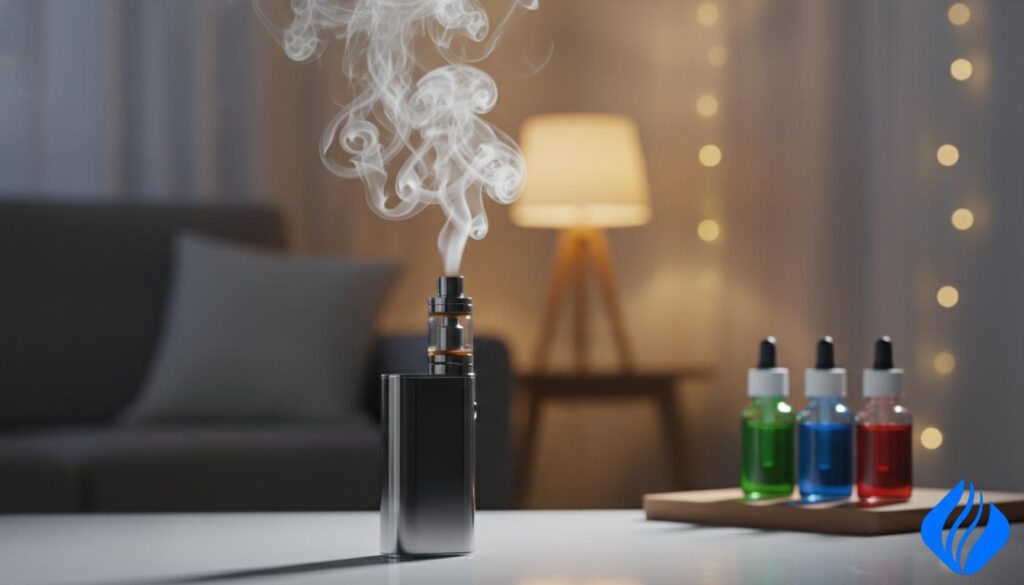
Smoke rings basics
Start with the classic ring as the foundational drill. Keep the mouth hold steady and use short, repeatable throat pulses. Modern gear gives denser output, which lets you judge pulse consistency faster.
Ghost inhale (mushroom cloud)
This is a breath-control drill. Release vapor gently—do not push—and then inhale it back. That teaches you minimal force and timing without stressing the throat.
Dragon exhale
Focus on direction. Split the stream through small facial adjustments: mouth and nasal exits. Small changes will show how symmetry breaks and how to correct it.
Tornado on a flat surface
Lay a thin, dense layer near a flat surface. Move your hand upward quickly. This makes density and hand speed obvious, which helps you tune pulse strength and motion.
Bull ring combo
Blow a ring, move toward it, then inhale through the nose. This trains distance judgment and pacing, which improve launch consistency and follow-up control.
- Optional: The French inhale is useful for mouth-to-nose timing but not required for rings.
- Practice constraints: short sessions, stay hydrated, and avoid overuse—fatigue changes throat pulse timing.
“Practice alone first; make the mechanics repeatable before performing for others.”
For extra drills and step progression see our practice tricks.
Hands-on Testing Insights: What Actually Works After Real Use
We ran hands-on testing in still indoor air and recorded repeatable patterns. The aim was clear: separate what comes from user technique and what comes from device output.
Throat feel and nic strength
Observation: 2% nic salt generally feels smoother for longer practice. It lets users keep mouth shape steady without tensing the jaw.
Observation: 5% often produces a sharper throat response. That makes beginners rush pulses and break ring symmetry.
Vapor production in normal air
What helps: stable coil temperature, dual mesh or mesh coils, and higher VG content. These factors raise density so rings hold form under average lighting.
Note: Too much force still causes turbulence. Technique and calm room conditions remain critical for clean travel.
Flavor after ~5000 puffs
Our tests show top notes — brightness and cooling — fade first. Sweetness and base flavors flatten as coils and wicks age, especially with chain sessions or sweetener-rich liquids.
“Prioritize consistent vapor output and a manageable throat hit over maximum nicotine strength for reliable ring performance.”
- Technique-driven: pulse timing, lip stability, steady mouth hold.
- Hardware-driven: coil type, airflow, VG ratio, and device power.
- Practical tip: choose lower nic for longer practice and calm indoor air for accurate feedback.
Disposable Vape Specs and Competitor Comparison for Better “Puffs per Dollar”
We compare common disposable specs so vapers can judge real value per puff.
Main checklist for ring-friendly purchases:
- Battery capacity: 800–1500 mAh
- E-liquid volume: 10–20 ml
- Nicotine: 2% or 5% nic salt
- Coil: mesh or dual mesh
- Charging: USB‑C support
Puffs per dollar — quick method
We calculate advertised puffs ÷ listed price. Real puffs vary by draw length.
| Model | Puffs (advertised) | Price (USD) | Puffs per $ |
|---|---|---|---|
| Main pick | 10,000 | $18 | 556 |
| Geek Bar | 7,000 | $15 | 467 |
| Lost Mary | 6,000 | $12 | 500 |
Flavor consistency vs Raz
Our testing shows the main pick keeps brightness longer than Raz. Raz often loses top notes first; sweetness flattens after heavy use.
Why coil design matters: mesh heats evenly for steady flavor. Dual mesh raises density, which helps ring edge definition and cloud production.
Check current deals at Disposable Vapes and Hot Sale.
Brand shortcuts for fast filtering: RandM and Bang.
“Prioritize the spec mix that supports rings and consistent flavor rather than chasing the highest puff number alone.”
Conclusion
This final note ties the core technique into safe use and quick troubleshooting steps.
Repeatable checklist: mouth-hold (not full lung), tongue back, rounded “O” lips, short throat pulses, and minimal jaw movement. Practice drills such as tornado, dragon, and bull ring sharpen timing in calm indoor air.
User FAQ — empty signs: weaker vapor, muted flavor, blinking indicator, burnt taste, or poor clouds despite a charged battery.
Recharge safely: use the correct USB‑C cable if supported, avoid damaged cords, never leave charging unattended, stop if the device heats abnormally, and follow manufacturer guidance.
Authenticity check: verify the QR/authentication code on packaging and confirm seller details. For leak and seal guidance visit leak prevention.
Nicotine warning: This product contains nicotine. Nicotine is an addictive chemical. For adult (21+) users only. Keep out of reach of children and pets; avoid use if pregnant or breastfeeding; consult a clinician if you have heart or respiratory conditions.
 English
  German
  Dutch
Dutch  Danish
  Czech
Czech  Italian
  Slovenian
  French
  Hungarian
  Spanish
  Polish