

Can an anesthesiologist tell if you vape is the core question we answer up front. We state plainly: clinicians usually cannot visually detect recent use, yet physiology during pre-op checks and monitoring may reveal nicotine effects that alter care.
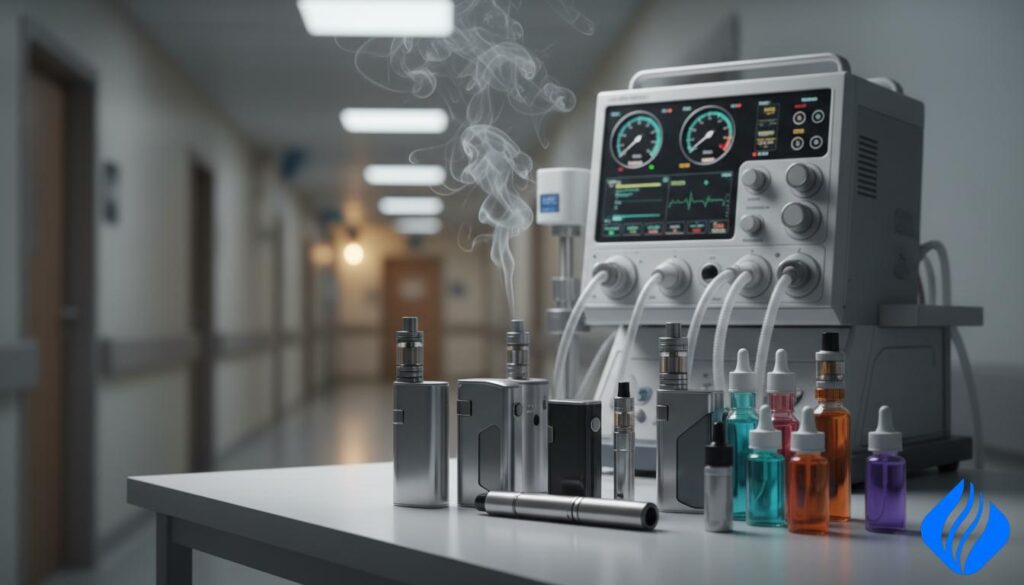
We frame this page as a safety-first FAQ for adult vapers aged 21+. We explain what follows: limits of detection, intraoperative clues, lung and oxygen effects, heart-rate and blood-pressure shifts, medication interactions, and recommended abstinence timing before surgery.
Scope and boundaries: this is informational and not medical advice. We will not diagnose or promote nicotine use. A separate, clearly labeled device-testing section will cover technical specs (mAh, ml, 2%/5% nic salts, mesh vs dual mesh, USB-C), Puffs per Dollar, flavor consistency, and hands-on notes. Transparency about nicotine strength and product variability guides safer disclosure to clinicians.
Key Takeaways
- Clinicians often rely on physiological signs rather than a direct test to spot recent nicotine exposure.
- Accurate pre-op history improves anesthesia planning and reduces perioperative risks.
- We separate medical guidance from later device-spec reviews and comparisons.
- Nicotine strength (2% or 5%) and product variability change symptom profiles and risk.
- Our goal is harm reduction, clear facts, and guidance for adult patients facing surgery.
What anesthesiologists can and can’t detect about vaping before surgery
We emphasize patient safety. Before surgery, anesthesia planning depends on accurate history and physiologic data. Routine exams do not label someone as a vaper without direct history or targeted testing.
Why vaping often isn’t visible unless disclosed
There is no standard bedside test that flags device use. Skin and breath clues are subtle and overlap with other exposures.
Patients frequently underreport because they view this use as different from smoking. That gap reduces useful information for the doctor.
What the body can reveal during anesthesia monitoring
During anesthesia, continuous monitors may show altered oxygenation, airway reactivity, or sudden heart-rate and blood-pressure shifts. Those signals prompt adjustments to ventilation and medications.
Why honest disclosure matters for safety and planning
Full disclosure lets the team anticipate airway irritation, nicotine effects, and withdrawal risk. It helps tailor induction, dosing, and recovery plans.
| Detectable Signs | Limits | What staff may record |
|---|---|---|
| Low oxygen saturation; bronchospasm | Cannot identify device type or last puff time | Frequency of use; last reported use |
| Tachycardia or blood-pressure variability | Cannot confirm nicotine concentration | Nicotine strength reported; co-use of other substances |
| Increased airway secretions or cough | Signs may mimic infection or chronic lung disease | Notes on airway reactivity and ventilation adjustments |
Can an anesthesiologist tell if you vape during a procedure?
In the operating room, real-time physiology often speaks louder than reported habits. We monitor continuous vitals and watch how the body reacts under anesthesia.

Vital signs that may raise suspicion
Hands-on monitoring tracks heart rate, blood pressure, and oxygen levels every second. Unexpected tachycardia, wide blood-pressure swings, or drops in oxygenation may prompt extra checks.
Nicotine-related symptoms clinicians may notice
Signs that may point to nicotine exposure include nausea, dizziness or vertigo, headache, and faster heartbeats. In severe toxicity, seizures are possible but rare.
Why the team may “figure it out” once asleep
Unusual anesthetic response, airway reactivity, or autonomic instability can lead staff to re-evaluate history and treat the case as higher risk. Many complications share these signs—pain, anxiety, dehydration, or medication effects—so disclosure speeds accurate management.
“can an anesthesiologist tell if you vape”
Our advice: report recent use before a procedure. Clear disclosure helps the team reduce perioperative risk and manage possible complications faster.
How vaping affects lungs, breathing, and oxygen levels under anesthesia
Acute airway irritation from recent aerosol exposure can complicate controlled breathing under anesthesia. Inhaled aerosol may inflame airways, increase secretions, and trigger cough or wheeze. These reactions matter when protective reflexes are reduced during induction and mechanical ventilation begins.
Respiratory impact
Signs include shortness of breath, persistent cough, chest tightness, and wheeze. Under sedation, bronchospasm risk rises because coughing is suppressed and airway tone changes. Staff must manage secretions and airway reactivity quickly.
What changes about oxygen delivery and ventilation
Oxygen delivery means supplying oxygen while monitoring saturation. Ventilation means moving air and removing CO₂. When lungs are inflamed, maintaining stable oxygen saturation becomes harder. Clinicians may increase oxygen fraction, adjust tidal volume, or use bronchodilators.
- Why this matters: Bronchospasm or excess secretions can cause rapid drops in oxygen and require urgent adjustments.
- Smoking vs vaping: Both cause airway inflammation; differences in particle mix do not remove perioperative risk.
- Individual variation: Baseline lung health, frequency of use, and nicotine-salt strength affect response.
“Pre-op disclosure and short abstinence reduce acute airway irritation and help smooth induction and recovery.”
Heart rate, blood pressure, and nicotine: perioperative cardiovascular risks
Nicotine’s effects on circulation matter during surgery and shape anesthetic choices. We explain how stimulant effects interact with sedative drugs and why that matters for safe care.
How nicotine shifts heart rate and pressure during surgery
Nicotine is a stimulant that may raise heart rate and blood pressure in some patients. Those effects can appear as sudden tachycardia or blood-pressure spikes.
At the same time, many anesthesia drugs lower both measures. Opposing forces complicate dosing and fluid plans.
Why we track cardiovascular stability continuously
We monitor heart rate, pressure, and oxygenation in real time. Trends—not single readings—guide use of fluids, vasopressors, and anesthetic depth.
For higher-risk cases, arterial lines or extra monitors provide continuous blood data to maintain stability.
When symptoms resemble other complications
Tachycardia, nausea, or dizziness may reflect nicotine exposure, withdrawal, pain, anxiety, or an evolving complication.
Clear history shortens diagnosis time. Disclosure lets the team prioritize likely causes and avoid unnecessary tests or delays.
| Clinical Sign | Nicotine-related Pattern | Possible Look-alikes | Typical Response |
|---|---|---|---|
| Tachycardia | Gradual rise or intermittent spikes | Pain, hypovolemia, drug reactions | Adjust fluids, give beta-blocker or reduce stimulants |
| Blood-pressure rise | Transient elevation around induction | Pain, inadequate anesthesia depth | Increase anesthetic depth, vasodilator if needed |
| Post-op irritability | Withdrawal with nausea and tachycardia | Pain, opioid side effects, infection | Symptom-targeted care and monitoring |
“Accurate pre-op disclosure helps us anticipate drug interactions and reduce perioperative risk.”
Medication interactions and recovery concerns anesthesiologists think about
Anesthesia involves multiple medications; added stimulant effects shift how those drugs perform. We plan for an induction agent, inhaled anesthetic, opioid or non-opioid for pain, and anti-nausea drugs. Any recent stimulant exposure may change drug response and monitoring needs.
Potential interactions between vaping chemicals, anesthesia drugs, and pain medications
Evidence-based: clinicians watch for altered heart rate, blood-pressure swings, and airway reactivity when certain substances are reported. We adjust doses and choose agents with predictable profiles.
Inflammation, healing, and post-op recovery: what’s known and what’s still uncertain
Some products contain chemicals that may boost inflammation. The impact on wound healing and long-term recovery is still evolving in the literature.
We separate firm monitoring steps from open questions about specific chemical interactions and healing outcomes.
Withdrawal considerations: irritability, nausea, tachycardia after surgery
Nicotine dependence can lead to withdrawal during recovery. Signs include irritability, nausea, and fast heartbeats and may be misread as other post-op issues.
| Concern | Likely sign | Typical response |
|---|---|---|
| Cardiovascular variability | Tachycardia or BP spikes | Adjust anesthetic depth, fluids, or give beta-blocker |
| Airway irritation | Bronchospasm or secretions | Bronchodilator, suction, modify ventilation |
| Withdrawal | Irritability, nausea | Symptom-targeted care; consider nicotine replacement per policy |
“If cravings are likely, ask the team about approved nicotine replacement rather than self-managing.”
Practical point: tell your care team about recent use and ask about allowed patches or gum. That short step helps tailor treatment and improves recovery time.
How long before surgery should you stop vaping?
Most care teams recommend a short abstinence window before scheduled procedures to reduce avoidable risks.

Practical baseline: many clinicians advise stopping vaping at least 24–48 hours before anesthesia. This time frame helps lower acute airway irritation and nicotine-driven cardiovascular variability.
Why 24–48 hours is common advice
Short abstinence often reduces coughing, bronchospasm, and sudden heart-rate shifts during induction. More time usually improves these acute effects, though long-term lung recovery needs extended abstinence and depends on baseline health.
Day-of-procedure steps if there was recent use
- Do not try to hide last use. Tell the pre-op nurse and doctor the exact time and nicotine strength.
- Follow NPO rules and avoid additional nicotine or oral products before arrival.
- Expect extra monitoring or medication adjustments based on reported use and current vitals.
Questions the anesthesia team may ask
The team will ask about frequency (daily vs occasional), last use timing in hours, nicotine strength (2% vs 5%), and any symptoms such as cough, wheeze, or dizziness. Honest answers let clinicians tailor care quickly.
“The final decision to proceed or delay rests with the clinical team and depends on procedure urgency and current vital signs.”
For more on how tobacco and nicotine affect pre-op planning, see preparing for surgery risks.
Hands-on testing: device performance that can affect nicotine delivery and throat hit
Hands-on testing notes below are consumer-technical and separate from medical guidance. We report controlled trials with consistent puff timing and comparable airflow settings to track performance drift and delivery changes across device life.
Throat hit: 2% vs. 5% nic salt
2% nic salt gives a smoother mouth‑to‑throat sensation. It feels milder for many people and reduces harshness during long sessions.
5% nic salt produces a stronger throat impact. Higher nicotine often feels sharper and can amplify perceived effects in short draws.
Vapor production and airflow
Open airflow yields greater vapor output and a cooler draw. Tighter airflow reduces visible cloud but increases throat sensation and perceived nicotine punch.
Flavor consistency after ~5000 puffs
Flavors mute over mid life. Sweet notes flatten and cooling agents lose crispness after roughly 5000 puffs. Users may lengthen draws when taste fades, raising nicotine intake.
Why coil design matters: Mesh vs. Dual mesh
Mesh coils heat evenly and offer strong early‑life flavor. Dual mesh spreads heat under heavier demand and reduces hot spots, improving mid‑life consistency.
Practical note: degraded performance may lead people to compensate with longer draws. That behavior affects nicotine exposure and dependence risk. For component checks and material queries see product materials.
Disposable vape specs and value comparison for adult users
Device technicals determine real-world delivery more than advertised numbers alone.

We define the main product as the model you are evaluating on site. We assess value using listed puff count, sale price, and observed flavor drift from hands-on testing.
Key specs to verify before purchase
- Battery capacity (mAh) — runtime and charge cycles.
- E-liquid volume (ml) — longevity and leak risk.
- Nicotine strength — 2% or 5% nic salt and perceived intensity.
- Coil type — mesh vs dual mesh for flavor consistency.
- USB-C — standardized, safer charging.
Puffs per Dollar and flavor longevity
Calculate Puffs per Dollar = advertised puffs ÷ current price. Real draws vary with airflow and coil efficiency.
| Model | Advertised puffs | Price (USD) | Puffs per Dollar | Flavor consistency |
|---|---|---|---|---|
| Main Product | 8000 | 24.99 | 320 | Good early, mid-life drift |
| Geek Bar | 6000 | 19.99 | 300 | Stable to mid-life |
| Lost Mary | 5000 | 14.99 | 334 | Sweetness mutes after weeks |
| Raz | 7000 | 21.99 | 318 | Dual mesh holds flavor longer |
For structured shopping research, browse Disposable Vapes and the Hot Sale section. Compare batches on brand pages like RandM and Bang.
“Verify core specs, then judge value by real-world puffs and flavor decay.”
Final advice: check mAh, ml, nic strength, coil type, and USB-C before purchase to reduce risk and improve use satisfaction.
Practical safety checks for patients who vape and for device handling
Practical device checks and patient safety steps reduce last-minute surprises before a procedure. We bridge clinical safety and basic device care. This short guide helps preserve perioperative stability and reduce avoidable problems.
How to know when a device is empty
Signs of emptiness: taste drop-off, thinner flavor, and weaker vapor at the same draw. Blinking lights often mark low battery or end-of-life. A tighter or oddly hot draw shows the coil is struggling.
Harm reduction: avoid chasing flavor with longer draws. That raises exposure and irritation and may cause nausea, dizziness, or tachycardia in some people.
How to recharge safely
Use a reputable USB‑C power source and official cables. Do not charge unattended or on soft surfaces. Stop charging when the device becomes hot, shows swelling, or reports persistent blinking errors.
Is the product authentic?
Scan the QR code and follow verification at the brand site via this link: https://www.google.com/url?sa=E&source=gmail&q=sokvape.com. Proceed through the authenticity flow on sokvape.com to confirm batch data.
Nicotine warning
“This product contains nicotine. Nicotine is an addictive chemical.”
| Indicator | Meaning | Quick action |
|---|---|---|
| Taste drops | Low e‑liquid or degraded coil | Stop long draws; replace or refill |
| Weak vapor | Low battery or blocked airflow | Charge with USB‑C; clean airway |
| Device hot or swelling | Battery fault | Unplug, stop use, dispose per local rules |
“Simple checks reduce device risk and help clinicians focus on patient care.”
Conclusion
Final note, our closing summary highlights practical steps to reduce perioperative risk and improve anesthesia outcomes.
We stress transparency. An anesthesiologist may not spot recent vaping at the bedside, yet the body often reveals nicotine-related changes during surgery and anesthesia.
Honest pre-op disclosure helps the team interpret heart and blood-pressure shifts, manage breathing and airway stability, and avoid misreading withdrawal as other complications.
Follow common steps: stop use for the time your doctor recommends (often 24–48 hours), obey NPO rules, and report last use and nicotine strength honestly. Verify product specs (mAh, ml, 2%/5% nic salts, mesh vs dual mesh, USB‑C) and authenticity at sokvape pages.
Warning: Nicotine is addictive. Prioritize health and safe recovery over short-term cravings when a procedure is planned.
 English
  German
  Dutch
Dutch  Danish
  Czech
Czech  Italian
  Slovenian
  French
  Hungarian
  Spanish
  Polish