

Quick answer: A blinking light usually signals a protection mode such as low battery, a short, or a contact problem. If you have hot spitback or active leaking, stop use immediately and power down the device.
We at SOKVAPE created this practical guide for frustrated users who need fast, safe fixes. Blinking paired with gurgle often points to power/connection faults or a flooded coil and airflow path.
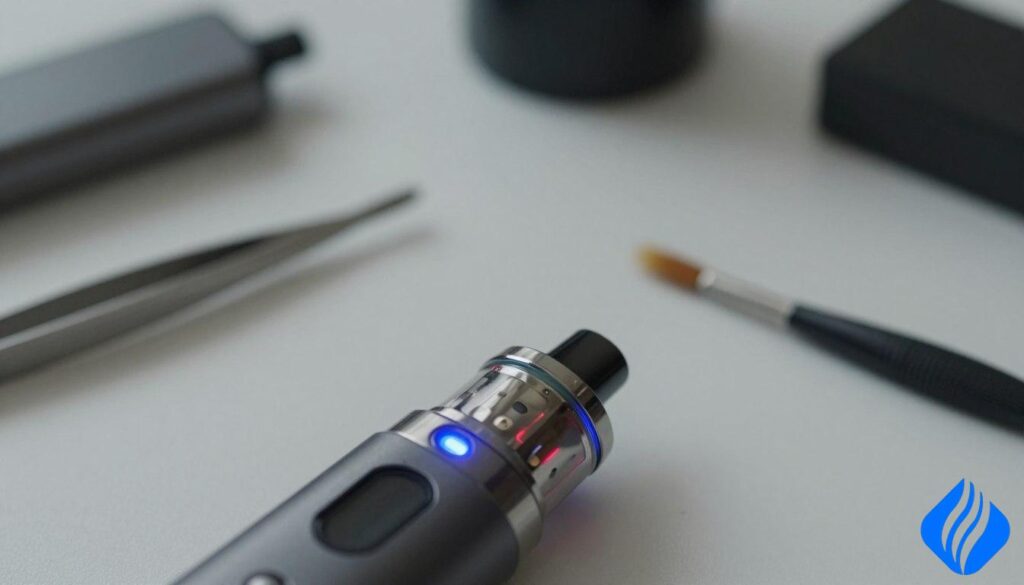
Device behavior varies. For example, some blu devices show a rapid red blink while charging; removing the battery or pod for 10 seconds and reconnecting can reset the circuit. Repeated rapid blinking may mean the unit is defective or fully depleted.
What we’ll cover: clear steps for disposables, pods, and tanks; brief definitions of coil, airflow vents, mouthpiece, chimney, and wattage; and safety flags that require stopping use.
Key Takeaways
- Blinking often signals protection mode—check battery and contacts first.
- Stop use if you feel hot spitback or see active leaking.
- Cleaning and technique fixes most gurgle and airflow issues.
- Device-specific steps vary for disposables, pods, and tanks.
- We can help match a better setup through t if problems persist.
Direct Answer: What Bubbling or Gurgling Means and What to Do First
Short answer: A brief crackle after filling is often normal as the wick soaks. Persistent wet gurgling signals coil flooding or a related problem and needs immediate attention.
When bubbling is normal: Small, short noises right after a refill or a few puffs usually mean the wick is priming. This clears quickly and vapor returns to normal.
When it signals trouble: A sloshy, wet gurgle, reduced vapor, or spitback shows excess fluid in the coil chamber. That pooled liquid can reach the mouthpiece and cause hot spitback.
Do this first (fast, safe checklist)
- Stop inhaling hard and set the device down.
- Check for visible leaks at the mouthpiece, chimney, and airflow vents.
- Remove the pod or tank if the model allows it; inspect the coil area.
- Wipe away condensation and trapped liquid with a clean tissue.
- Only take a gentle test puff after clearing pooled liquid.
Note: vape bubbling can also stem from low wattage or a weak battery that fails to vaporize fluid. Tackling excess e-liquid and power settings prevents repeat issues and guides the fixes we cover next.
Immediate stop-use signs
- Hot spitback or liquid reaching the mouth.
- Burnt taste on inhale.
- Visible leaking at airflow vents or around the base.
- Rapid blinking that persists after basic resets.
Quick Symptom Check: Match the Sound to the Most Likely Cause
Start by listening closely: the sound you hear points to a likely fault and directs your next move. Identify the noise, then locate where liquid collects before attempting fixes.
Bubbling, popping, gurgling, weak vapour — what each means
Bubbling — wet boil from pooled liquid. Popping — droplets hitting a hot surface. Gurgling — air moving through trapped liquid. Weak vapour — underheating or blocked air path.
| Symptom | Likely cause | First action |
|---|---|---|
| Gurgling or wet noise | Liquid in mouthpiece or chimney | Remove pod, clear chimney, wipe mouthpiece |
| Popping clicks | Droplets in coil chamber | Tap device, short pulses, consider coil change |
| Weak vapour | Blocked airflow vents or low power | Check airflow vents, increase wattage or battery |
Check these spots: mouthpiece tip for condensation, inside the chimney for pooled condensate, airflow vents for leaks, and the coil chamber for a flooded wick. Do not inhale hard to clear it; strong suction can pull more liquid into the air path and worsen bubbling gurgling.
“If liquid reaches battery contacts or a charging port, stop and clean before any further use.”
When the chimney holds liquid, cleaning and technique usually fix it. If the coil chamber is flooded, power or airflow tuning and coil replacement may be required. For more step-by-step help, see our troubleshooting guide. Next: battery safety and blinking indicators.
Safety Warning: Lithium-ion Battery Safety While Troubleshooting
Lithium-ion battery safety must come first when you troubleshoot any device. If a device gets unusually hot, gives off a strange smell, or shows physical damage, stop use immediately and place it on a non-flammable surface.

Safe charging basics and blinking indicators
Rapid blinking can mean low charge, a contact fault, short protection, or a defective unit. For blu-style chargers: charge fully on first use, the red light stays on while charging, and it turns off when complete. If the red light blinks rapidly, disconnect for 10 seconds and reconnect.
Simple charging checklist
- Use the correct cable and manufacturer-rated charger.
- Align and clean contacts before seating the cell or pod.
- Charge on a stable, non-flammable surface in view.
- Do not leave charging devices unattended for long periods.
- If rapid blinking persists after a reset, stop charging and consider device service.
What to avoid
- Damaged wraps on removable cells or loose batteries in pockets.
- Exposure to heat, such as leaving devices in a hot car.
- Charging with unknown or low-quality chargers.
“If a device feels hot to the hand or shows signs of liquid near the contacts, power down and clean before any further use.”
Maintenance matters: wiping e-liquid from contacts reduces misfires, prevents corrosion, and often clears blinking faults. We recommend keeping spare cells in a dedicated battery case and always using manufacturer-rated chargers to lower voltage and thermal stress.
After you confirm battery safety, return to diagnosing root causes of bubbling and gurgle in the next section.
why is my vape bubbling: The Most Common Root Causes
Most cases trace back to coil flooding. The wick soaks faster than heat can vaporize the liquid. That creates wet gurgles, spitback risk, and weak vapor.
Coil flooding and excess e-liquid
Too much e-liquid around the coil happens from overfilling, storing the device on its side, or hard pulls that create a vacuum. Rapid chain hits also overwhelm wicking speed and cause flooding.
Condensation in chimney and mouthpiece
Condensed vapor can pool over time and mimic a flood even when the coil is fine. Regular clearing prevents buildup and reduces need for coil swaps.
Airflow imbalance and wattage limits
An adjustable airflow set too open increases suction-driven flooding. Blocked vents force air through liquid paths and gurgle.
Low wattage prevents full vaporization. Match wattage to coil resistance and liquid flow to avoid a persistently wet coil.
User technique and draw-activation
Hard pulls, chain vaping, and overly sensitive draw-activation trigger extra heat cycles. That raises condensation and creates the same issue.
- Note: Each root cause maps to targeted fixes later in this guide, so don’t replace parts without diagnosing first.
- For a focused walkthrough, see our why is my vape bubbling guide.
Device Type Matters: Disposable, Pod, and Tank Setups Troubleshoot Differently
Not all units respond to the same solutions — the device type guides every troubleshooting choice.
Identify the class first. That tells us which checks, cleaning steps, and replacements are realistic. We then follow a simple flow: confirm seals and contacts, adjust technique or power, and only replace parts if needed.
Quick take: sealed disposables have limited repair options. Pod systems rely on seating and clean contacts. Refillable tanks tolerate parts swaps and cleaning.
| Device | What to check | What to clean | When to replace |
|---|---|---|---|
| Disposable | Airflow path, mouthpiece for condensate | Exterior mouthpiece only | Persistent gurgle or leak — replace unit |
| Pod / vape pod | Pod seating, contacts, draw sensor | Pod contacts, mouthpiece, chimney | Damaged pod or failing contact after cleaning |
| Refillable tank / vape tank | Chimney seals, O-rings, coil fitment | Chimney, base, threads, O-rings | Worn O-rings or incompatible coil |
We recommend this step order: identify device type → make sure seals and contacts are clean → tune power and draw → replace coils or the unit if the issue persists.
Next: e-liquid factors drive many floods, so we cover liquid viscosity and filling best practices in the following section.
E-Liquid Factors That Trigger Flooding and Bubbling
The composition and fill habits of your vape juice shape how reliably a coil wicks and heats.
PG/VG ratio explained
Propylene glycol heavy blends run thin. These thinner e-liquid formulas wick fast and can flood small pod coils. Higher VG makes a thicker liquid that resists seepage but needs enough power to vaporize cleanly.
Device design and viscosity
Compact pod systems with tight airflow are more sensitive to thin vape juice. Sub-ohm tanks tolerate thicker blends better. Match liquid viscosity to the coil and power range to avoid excess e-liquid near the wick.
Nic salt versus freebase
Nic salts give a smoother throat hit. That often leads to more frequent, short puffs. More pulls increase condensation and raise the chance to flood coil areas in small devices.
Overfilling and pressure changes
Filling past the max line or snapping a pod closed too fast creates pressure. That pressure can force liquid into the coil chamber and cause bubbling issues. Travel, altitude, and temp swings also change internal pressure and prompt random bubbling.
| Factor | Effect | Prevention |
|---|---|---|
| High PG / propylene glycol | Fast wicking, floods small coils | Use slightly higher VG for pods |
| Nic salt | More frequent pulls, more condensation | Limit chain puffs; allow cool-down |
| Overfill / pressure | Liquid forced into coil; excess e-liquid | Fill below max, leave air gap, wait 2–3 minutes |
“Control liquid choice and fill habits, and the hands-on fixes we cover next will hold longer.”
- Fill slowly and stop at the fill line.
- Let a fresh pod sit for a minute to stabilize pressure.
- Match vape juice viscosity to your device’s coil and power range.
Step-by-Step Fixes for a Gurgling or Flooded Vape
Begin by tackling the airway gently; small moves often stop most gurgle and spitback.
- Paper towel method:
Twist a corner of a paper towel into a thin wick. Gently insert it into the mouthpiece and chimney. Do not push hard—wicking removes condensation without forcing debris deeper.
- Reverse-blow technique:
Cover airflow vents and give short, gentle bursts from the mouthpiece outward. Hold a clean piece of paper under vents to catch droplets.
- Flick and tap:
Lightly tap the base on a paper towel and flick the unit with controlled wrist motion. This moves excess e-liquid away from airflow paths.
- Warm activation:
For button devices, pulse the fire button in short bursts with no inhale. For draw-activation, take light primer puffs. These warm pulses help evaporate remaining fluid.
SOKVAPE Pro-tip: blow gently into the mouthpiece to clear a flood, then retest with slow, steady pulls. Hard suction often causes re-flooding.
“Stop immediately if you taste burning, leaking worsens, or liquid reaches battery contacts.”
If gurgling or bubbling returns right away, suspect poor coil priming, wattage mismatch, or damaged seals. Address those next.
Coil and Wick Diagnostics: When to Prime, Replace, or Upgrade
A coil’s health decides whether cleaning will fix gurgling or a full replacement is needed. We focus on safe, quick checks so you waste less time and limit risk.
Coil Priming checklist
- Pre-wet the cotton and fill juice ports before seating the coil.
- Install the coil snugly so seals sit flush.
- Fill the tank or pod and wait two to five minutes for soak time.
- Start at low wattage, then ramp up slowly.
- Avoid hard pulls for the first few hits.
Mesh coils versus standard coils
Mesh Coils spread heat evenly. They cut hot spots and lower spitback over time.
Standard coils can have hot zones that scorch wicking faster. Match coil type to your liquid and use pattern.
When to replace
Replace coils when persistent gurgling comes with a burnt taste, or when vapour runs weak despite correct settings. Some coils wear out faster with sweetened juice or heavy chain hits.
| Sign | Likely issue | Action |
|---|---|---|
| Burnt taste + gurgling | Worn or scorched coil | Replace coil; check watt range |
| Weak vapor | Underheating or clogged wick | Increase wattage slightly; prime or replace |
| Rapid blinking / lockout | Possible shorted coil | Stop firing; replace coil or power down |
“If a short is suspected, do not keep firing the device.”
For step-by-step clearing methods and extra tips, see our guide on fix gurgling sounds. Next we tune airflow and wattage to match coil choice and device style.
Airflow, Wattage, and Draw Technique Tuning for a Cleaner Vape
Tuning airflow, wattage, and draw technique creates a simple performance triangle that stops most gurgle and spitback. We coach practical, small changes you can test in one or two puffs. These moves improve flavor, reduce noise, and lower leak risk.
Adjustable airflow settings that reduce suction-driven flooding
Adjustable airflow controls how much vacuum pulls liquid toward the coil. For wet gurgle, slightly tighten the air holes to cut suction. Open the ring slowly if the draw feels too tight.
Wattage range matching to coil resistance and wicking speed
Stay inside the coil’s rated wattage range. Low wattage leaves liquid unvaporized and causes wet sounds. Raise power in small steps if the coil stays too wet, but avoid overheating the wick.
Inhale technique: slow, steady pulls and cooldown time between hits
Use slow, steady draws and pause between puffs. Hard inhales and chain hits force liquid into the airway and trigger draw-activation unintentionally on some pods. Give the wick a 20–40 second cool-down after 3–4 puffs.
| Problem | Airflow change | Wattage tweak |
|---|---|---|
| Gurgle / spitback | Tighten airflow slightly | Raise wattage 5–10% within coil range |
| Weak output | Open airflow moderate | Increase wattage toward mid-range |
| Condensation buildup | Balance slightly restricted airflow | Pulse fire briefly to dry wick at rated power |
“Match airflow, power, and draw to the coil and liquid, and you get a cleaner vaping experience.”
Quick guide: tune one variable at a time. Test two puffs, then adjust again. Proper setup cuts noise, mess, and overuse harms while boosting consistency.
Storage and Temperature: Preventing Bubbling Before It Starts
An upright position is the simplest way to stop liquid from drifting into air channels. Store a device standing whenever you can. This keeps the mouthpiece and chimney clear and reduces condensation build-up.
Keep it upright
Why it helps: gravity holds fluid away from airflow paths. That lowers the chance of pooled liquid and cut short gurgle.
Temperature matters
Heat thins liquid and raises flood risk. Cold thickens juice and can cause poor wicking. Store at room temperature for steady performance.
Tip: on cold days warm the unit briefly in your hand before use. Do not apply direct heat or leave the device in a hot car.
After a drop
An impact can shift seals or dislodge a coil. Bubbling may return even after clearing because internal parts moved. Inspect the pod, O-rings, and seating after any fall.
Quick checklist
- Store upright and capped when idle.
- Keep devices at room temperature; avoid heat and deep cold.
- After a drop, check for new leaks at airflow vents and listen for fresh gurgle.
- If a seal looks compromised, replace the pod or tank section.
| Factor | Effect | Action |
|---|---|---|
| Upright storage | Reduces liquid migration | Store standing, mouthpiece up |
| High temperature | Thins liquid; raises flood risk | Avoid hot cars; store at room temp |
| After-drop | Shifted seals; renewed bubbling | Inspect seals, reseat coil, replace parts |
Prevention note: simple storage habits cut maintenance and extend coil life. We recommend these steps before travel and shipping checks in the next section.
Legal Disclaimer: U.S. Travel and Shipping Considerations
Travel with powered devices demands clear rules to avoid fines, seizures, or safety incidents. Regulations change often, and carriers update policies at short notice. We are not providing legal advice. Confirm rules with your airline, shipper, and local authorities before travel.
TSA/FAA compliance basics for carry
Carry-on preferred: most airlines require spare lithium packs and powered devices to stay in carry-on luggage. Power off the device and protect exposed contacts before packing.
PACT Act and shipping notes
The PACT Act imposes age-verification and restrictions on online sales and delivery in the U.S. This affects where and when you can receive e-liquid and related items. Expect extra checks and possible delivery limits.
- Power off the device before packing.
- Protect exposed contacts with tape or cases.
- Store spare battery cells in a rigid battery case.
- Keep devices upright and sealed to prevent leaks.
- Use a leak-proof bag and avoid leaving items in hot cars.
- Plan extra time for order verification and checks.
| Carry-on | Checked bag | Notes |
|---|---|---|
| Devices allowed (power off) | Often restricted | TSA/FAA favor carry-on for safety |
| Spare batteries allowed (in case) | Usually prohibited | Loose cells must never be checked |
| Small quantities of e-liquid | Subject to airline limits | PACT Act may limit shipped volumes |
“Rules vary by airline and state; check current policy before travel.”
Practical note: temperature and pressure swings during transit can force liquid into the coil chamber and cause issues on arrival. Keep spares and plan for extra time to source parts if local laws restrict sales in your destination.
Next: we wrap up with a concise conclusion and FAQ to help you act fast and stay safe.
Conclusion
A simple, calm routine cuts repeated flooding and false alarms in most devices.
Most bubbling and gurgling trace to pooled e-liquid from a flooded coil or condensed vapor. Blinking usually signals a power, contact, or protection state. The fastest path: identify the sound, find pooled liquid, clear the mouthpiece and chimney, then tune airflow and wattage.
Replace parts when gurgling comes with a burnt taste, visible leaks, or weak output after clearing. Different types — disposable, pod, or tank — need different fixes. Make sure you store upright and use slow, steady pulls to reduce recurrence.
If you’re stuck, we can help match the right coil, airflow style, and e-liquid for your setup through t.
FAQ
Why is my vape bubbling when I inhale but not leaking? Minor condensation or slight flooding in the chimney; clear the mouthpiece and test with gentle puffs.
Can low battery cause a vape to gurgle? Yes; low power can leave liquid unvaporized. Charge fully and retest.
Why does my vape bubble after I refill the pod/tank? Overfilling, pressure change, or poor priming can push liquid into the coil chamber.
What does rapid blinking mean when charging? Try disconnecting for ~10 seconds and reconnecting; persistent blinking may mean a defect or depleted cell.
When should I replace the coil? Replace when gurgling pairs with burnt taste, visible leaks, or weak vapor after troubleshooting.
 English
  German
  Dutch
Dutch  Danish
  Czech
Czech  Italian
  Slovenian
  French
  Hungarian
  Spanish
  Polish