

Direct answer: We usually find that a gentle hiss or tiny crackle during vapor production is normal. If you notice persistent or loud hissing sounds, check coil buildup, airflow settings, and excess e-liquid first, and treat any idle noise as a safety concern.
We write this as SOKVAPE consultants to help you fix common faults fast and safely. This short guide covers disposable, pod, and tank/mod users in the United States.
A few key causes we will diagnose include coil behavior, airflow dynamics, PG/VG ratio and liquid viscosity, flooding or overfill, poor priming, and mismatched power or heat settings. We favor practical checks first, escalation second, and replacement only when needed.
If the device makes unusual noise while idle, or if it smells hot, stop using it and follow lithium-ion battery safety steps later in this guide. For replacements or compatible coils and pods, consider t. as an easy next step.
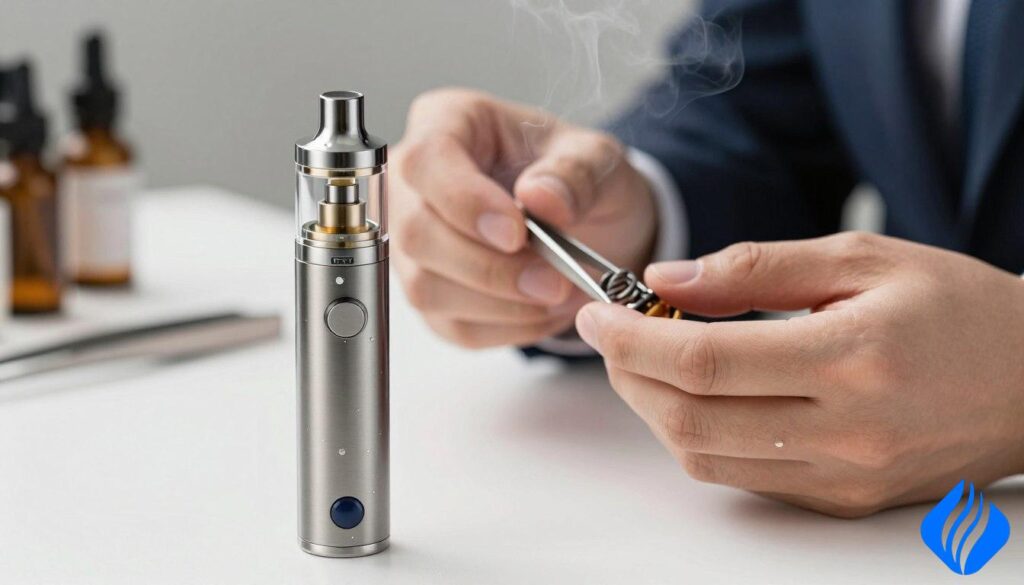
Key Takeaways
- Some sound during vaporization is normal; loud or constant hissing often signals a problem.
- Start troubleshooting with coil, airflow, and e-liquid checks.
- Priming and correct PG/VG balance prevent flooding and spitback.
- Stop use if the device hisses while idle or emits unusual smells.
- We recommend practical fixes first; replace parts only when necessary.
Direct Answer: What a Hissing Vape Usually Means
Most brief hissing comes from e‑juice contacting a red‑hot heating element and vaporizing. That rapid vaporization is the normal sound of the coil heats and the vapor forming during the process.
When the sound is short and light, treat it as normal vaporization. Continuous or louder hissing usually points to an imbalance: excess liquid on the coil, restricted airflow, or too much power for the coil.
Spitback happens when droplets form as liquid boils over the coil. These droplets can travel into the mouthpiece and create a popping or spitting sensation alongside the hiss.
Quick triage:
- Confirm airflow holes are open and clear.
- Check e‑liquid level to avoid overfill.
- Inspect coil condition and seating.
- Verify wattage is inside the coil’s recommended range.
Hissing while the device is not in use is not normal; treat it as a potential malfunction.
We map each recorded sound to likely causes and fixes in the next sections so you can move from detection to repair fast.
Normal vs. Problem Hissing Sounds During Vaping
Start by noting whether the sound is brief and gentle or loud and persistent; that tells us a lot fast. We use clear distinctions and calm guidance so you can decide what to do next.
Normal sounds include a soft hiss, light crackle, and occasional popping. These noises come from vapor bubbles forming and bursting at the coil surface as liquid vaporizes. A short pop or faint crackling sound during a hit usually signals efficient vaporization, not a fault.
Soft hiss, light crackle, and popping as normal vaporization sounds
Soft, transient noises are expected when the coil heats properly and wicking keeps up. These sounds do not indicate problem and require no action other than routine maintenance.
When loud, continuous hissing suggests restricted airflow, flooding, or overheating
Problem sound profiles include loud continuous hissing, harsh crackle, gurgling, or a whistling noise. These often link to restricted airflow, excess liquid (flooding), or overheating from high settings or chain use. If the device feels hot or the sound persists after the hit, pause and troubleshoot before continuing.
We will next explain the mechanics of how coils and airflow create these sounds and what each noise may indicate.
| Sound | Likely Cause | Immediate Action |
|---|---|---|
| Soft hiss / light crackle | Normal vaporization, proper wicking | No action; routine cleaning |
| Occasional pop | Bubble burst at coil surface | Adjust draw or lower wattage slightly |
| Loud continuous hissing | Restricted airflow, flooding, or overheating | Stop use, cool device, check airflow and liquid level |
| Gurgling / heavy spitback | Excess liquid in airflow channels | Clear mouthpiece, remove excess e-liquid, re-prime if needed |
How the Coil Creates a Hissing Sound
The coil converts liquid into vapor by applying focused heat, and that phase change makes much of the sound you hear.
The physics: The heating element warms a thin film of e‑liquid until vaporization occurs. Rapid boiling forms tiny bubbles that burst at the surface. Those micro‑pops register as a crackle or light spitback during a draw.
Large droplets form when liquid pools on the element. When the coil heats a pooled droplet it can flash into vapor and propel a hot spit of liquid through the airflow.
Residue and sweetener buildup create hot spots. Carbonized gunk leads to uneven heating, louder pops, reduced flavor, and a shorter coil life.
Mesh Coils vs. standard coils: Mesh spreads heat across more surface area, which often yields a smoother, more consistent sound profile. Standard round‑wire coils concentrate heat in a smaller zone and can be poppier when partly flooded or gunked.
What this means for your setup: keep coils clean, prime properly, and choose mesh when you want gentler, steadier vapor production.
Airflow System Issues That Make Vapes Noisy
Air movement through tight passages often turns a faint puff into a loud, sharp hiss. We focus on practical checks that let you tell restriction from a leak fast.
Restricted airflow raises velocity and turbulence. That amplifies sound like wind through a narrow tube. Common blockages include condensation in the mouthpiece, lint in vents, and sticky e-liquid residue in airflow channels.
How to spot a clog
Draw feels tight. The sound gets sharper or whistlier. Vapor can taste hotter or thin. Safely remove the mouthpiece and inspect airflow holes for visible buildup.
How to spot an air leak
Leaks make the sound airy and the vapor thin. You may find liquid or condensation around seals, or a pod/coil that won’t seat snugly. Check O-rings and seating for wear.
- Clear visible residue with a soft brush.
- Re-seat pods and coils to restore proper pressure.
- Test draws after cleaning to confirm the noise change.
Quick test: cover the airflow holes lightly; a louder hiss suggests restriction, while airy change suggests a leak.
| Issue | Sound Clues | Simple Fix |
|---|---|---|
| Clogged airflow holes | Sharp, whistly hiss; tight draw | Clean mouthpiece and vents |
| Air leak at seal | Thin, airy sound; weak vapor | Replace O-rings; re-seat parts |
| Pressure changes | Variable noise during draws | Adjust airflow setting; test |
For deeper diagnostics and stepwise fixes, see our detailed guide on causes and fixes.
PG/VG Ratio and E-Liquid Viscosity: Why Thin Juice Can Hiss More
Viscosity drives how fast liquid reaches the wick, which directly affects vaporization timing and audible output.
PG/VG ratio describes the blend of propylene glycol (PG) and vegetable glycerin (VG) in your e‑liquid. Viscosity controls how quickly the liquid travels through the wick and how it spreads over the coil.
High‑PG e‑liquid is thinner. It wets the coil fast and can vaporize quickly. That rapid vaporization often produces a sharper, more pronounced sound during a draw.
High‑VG blends are thicker and vaporize more slowly. When wicking keeps up, these liquids tend to make quieter pulls and smoother sounds. But thicker liquid needs coils with stronger wicking, such as mesh or larger‑wick setups.
Tradeoff: choose higher VG for quiet, dense vapor but only with compatible coils. If the device can’t replenish liquid fast enough, thicker blends cause harsh crackle or dry hits.
- Match tight MTL pods with higher PG for faster wicking and throat hit.
- Use higher VG for sub‑ohm mesh tanks to minimize sharp popping.
- If a new flavor started the noise change, check viscosity and sweetener content.
| Blend | Viscosity | Sound Profile | Best Use |
|---|---|---|---|
| High‑PG (e.g., 70/30) | Thin | Sharper, quicker hiss | MTL pods, tight draws |
| Balanced (50/50) | Moderate | Neutral, moderate sounds | General use, many coils |
| High‑VG (e.g., 70/30 VG) | Thick | Quieter pulls if wick keeps up | Sub‑ohm tanks, mesh coils |
Flooding, Overfilling, and Excess Liquid on the Coil
Too much e-liquid can swamp the coil and push juice into channels meant for air. This forces liquid into the airflow path and changes how pulls feel and sound.
How overfilling pushes e-liquid into airflow channels
When tanks or pods are overfilled, pressure during a draw can shove e-liquid past seals. That liquid pools in the tube and near the coil.
Pooled liquid reduces vapor flow and creates bubbling. This makes the device gurgle and can wet the mouthpiece.
Spitback vs. gurgle vs. hiss: what each sound suggests
- Spitback: hot droplets propelled into the mouth; caused by boiling pooled liquid.
- Gurgle: free liquid sitting in airflow channels; you hear bubbling.
- Hiss: rapid vaporization or pressure through a restricted path, often louder after flooding.
SOKVAPE pro-tip: gently blow through the mouthpiece into a paper towel at the airflow side to clear a flood—no hard blasts that force liquid deeper.
After clearing, re-check e-liquid level and wipe condensation from seals. This prevents repeat flooding and prepares the coil for proper priming and wicking.
| Issue | Likely Cause | Quick Fix |
|---|---|---|
| Gurgle | Pooled liquid in airflow | Blow gently, remove excess liquid, dry mouthpiece |
| Spitback | Boiling droplets from pooled juice | Lower wattage, clear mouthpiece, re-prime coil |
| Loud hiss after refill | Overfill or blocked vents | Check fill level, clean vents, inspect seals |
Coil Priming and Wicking Problems That Trigger Spitting
Coil Priming means saturating the wick before first use so the heating element never runs dry. We recommend a short pre-soak and a few primer puffs at low power to confirm saturation.
Under-primed coils and early-session sizzling
Under-primed coils commonly produce early-session sizzling and a sharp noise as the wick fails to supply liquid fast enough.
Action: re-prime, wait a minute, then start at low wattage.
Wick saturation imbalance from chain vaping and short rest times
Rapid chain vaping can outpace capillary action. The wick needs time to pull liquid; short rests create dry zones and unstable sound.
Dry hit warning signs and coil damage risk
Watch for a harsh crackling sound, burnt taste, throat irritation, or sudden drop in vapor. These indicate problem and can cause permanent coil damage.
- Prevent flooding and dry hits: prime correctly, take steadier draws, and allow short rest time between hits.
- Device settings: match wattage to coil resistance; even well‑primed coils will spit if power is too high.
“A dry, angry crackle differs from a wet, gurgly spit — respond immediately to avoid damage.”
Power, Coil Resistance, and Heat Settings That Cause Aggressive Hissing
A mismatch between resistance and heat output can push a coil into boil‑over and noisy operation.
Wattage vs resistance: Too much power for a given coil can flash liquid into steam. Rapid vaporization forces droplets out and creates aggressive hissing and spitback.
Wattage mismatch and rapid vaporization “boil‑over”
Stay inside the coil’s recommended range. For most coils that means ±5–10W around the labeled wattage.
High power on low resistance causes boil‑over. Reduce wattage gradually and test again.
Hot coil behavior after a hit and residual heat hiss
A hot coil may sizzle briefly as it cools. Short post‑hit hiss is normal.
Longer hiss, rising heat, or a burnt taste might indicate overheating or wick failure. Let the device rest 30–60 seconds between hits.
When a used coil or tight wick changes sound and vapor production
A used coil with residue or a compressed wick narrows liquid flow. That change lowers vapor production and alters sound and draw.
Replace the coil when flavor drops, spitback rises, or cleaning no longer helps. Always follow manufacturer settings and avoid risky tweaks.
why is my vape hissing When Not in Use?
If the device emits a sound while idle, treat it as a higher‑risk symptom than a post‑hit sizzle. Idle hissing can come from residual heat, unintended activation, or an internal fault.
Auto‑firing often stems from a stuck fire button, debris around the switch, or a draw-activation sensor misfire after moisture or condensation. A sustained, warm hiss during rest usually points to unintended activation.
Electrical malfunction and short‑circuit red flags
Stop use immediately if you detect persistent heat, a burning odor, erratic lights, or continuous sound after powering off. These signs might indicate a short and potential damage risk.
Environmental pressure changes
Temperature swings or altitude shifts can create brief pressure-release sounds. Those hisses feel cool and short and typically do not signal activation.
Quick differentiation: a cool, brief pressure hiss differs from a warm, sustained auto‑firing noise.
Immediate steps: power down, remove from pockets, isolate on a non‑combustible surface, and follow the Safety Warning section if overheating occurs. For sealed disposables, do not open the unit; see the next section for guidance on sealed devices.
Disposable Vape Hissing: What’s Different vs. Refillable Devices
When a one‑use device starts making odd noises, the options for repair are limited by design.
Disposable units have sealed airflow, a fixed coil, and set power output. That makes some noises normal near end of life. But unusual, warm, or idle noise can mean low liquid, a weak battery, or a manufacturing fault.
Safe checks you can try:
- Wipe the mouthpiece and clear visible condensation.
- Check external airflow holes for lint or debris.
- Adjust draw style: slower, gentler pulls often steady output.
Do not attempt: prying open the casing, soldering, or battery repairs. These actions risk injury and void safety expectations.
When to replace: persistent idle hiss, heat buildup, visible leaks, or repeated spitback that returns immediately. In these cases, replacement is the safest path.
| Symptom | Reason it might indicate | Try first | Replace if |
|---|---|---|---|
| Intermittent noise | Low e‑liquid or weak battery | Wipe mouthpiece, change draw | Noise persists after simple checks |
| Idle warm hiss | Auto‑fire or internal fault | Stop use, isolate device | Any sustained heat or smells |
| Gurgle or spitback | Leak or poor seating | Clear condensation, gentle blow | Visible leakage or repeated spitback |
Next: we provide a step‑by‑step troubleshooting guide that works for sealed and refillable units.
Step-by-Step Troubleshooting Guide to Stop the Hiss and Spitback
Use this step-by-step flow to fix sound and spitback safely. Work in order and stop if the device feels hot or the noise continues while idle. We keep actions simple and doable with household items.
- Clean the mouthpiece and remove condensation buildup. Wipe with a paper towel and use a cotton swab to clear residue.
Pass: sound reduces.
Fail: move to step 2. - Inspect airflow paths and clear blockages. Check vents and holes for lint or gunk. Gently brush or blow through the airway.
Pass: draw feels freer.
Fail: continue to step 3. - Check coil condition, seating, and wicking saturation. For refillables, confirm the coil is snug and the wick looks saturated. For sealed pods, replace the pod if access is limited.
Pass: crackle lessens and flavor returns.
Fail: replace coil or pod. - Adjust airflow to a balanced setting and refine draw technique. Try slower, steadier pulls. Open airflow incrementally to remove whistling or tight draws.
Pass: noise evens out.
Fail: test e-liquid level next. - Confirm e-liquid level is in the recommended range. Avoid overfilling and don’t run nearly dry. Correct levels stop flooding gurgles and spitback.
Pass: gurgling stops.
Fail: proceed to step 6. - Let the device rest to cool down between hits. Give the coil time to recover. Short pauses prevent dry-hit crackle and overheating.
Pass: hiss fades after rest.
Fail: escalate. - Escalation: discontinue use and replace or contact the manufacturer if symptoms persist.
Stop immediately for sustained heat, idle noise, or burning odors. For replacement parts or matched specs, t. can help pick compatible coils and e-liquid viscosity for quieter use.
| Symptom | Targeted Step | Quick Pass/Fail |
|---|---|---|
| Condensation hiss | Step 1: Clean mouthpiece | Pass: quieter; Fail: step 2 |
| Whistle or tight draw | Step 2: Clear airflow | Pass: freer draw; Fail: step 3 |
| Gurgle/spitback | Step 5: Check e-liquid level | Pass: gurgle gone; Fail: step 6 or 7 |
Pro tip: use a dry cotton swab and gentle breath tests; never disassemble sealed units or attempt battery repairs at home.
Symptoms vs. Fixes Quick Reference Table
This quick table pairs typical sound cues with likely faults and the safest first steps to try. Use it for a fast lookup so you can act without rereading the entire guide.
Continuous hiss after a hit vs. brief sizzle at activation
Timing matters. A short activation sizzle during a puff usually signals normal vapor formation. A loud, continuous hiss after a hit often points to restricted airflow, excess liquid, or overheating and needs checks.
Gurgling/bubbling vs. dry crackle with burnt taste
Wet, bubbling noise normally means flooding or pooled e-liquid. A dry, harsh crackle with a burnt taste indicates wick failure or a dry hit. The fixes for each are different and must match the sound.
Hissing while idle vs. normal cooldown sounds
An idle warm hiss can indicate unintended activation or electrical trouble. A short, cool cooldown hiss after a hit often needs no action. Treat sustained idle noise as a safety concern.
“Match the sound to the fix: a wet gurgle needs clearing; a dry crackle needs rest or coil change.”
| Symptom | What It Usually Means | Quick Fix | When to Stop Using It |
|---|---|---|---|
| Brief activation sizzle | Normal vapor formation | None — use normal draws; lower wattage if harsh | No stop needed unless it turns loud or hot |
| Continuous hiss after hit | Airflow restriction, excess liquid, or overheating | Open airflow, clear condensation, lower wattage | Stop if hiss stays while idle or device feels hot |
| Gurgling / bubbling | Flooding or pooled e‑liquid in airflow | Blow gently, clear mouthpiece, remove excess liquid | Stop if leaks persist or liquid reaches battery area |
| Dry crackle + burnt taste | Wick dry or damaged; coil failing | Prime coil, reduce chain vaping, replace if needed | Stop if burning smell or repeated dry hits occur |
Quick checklist:
- Listen to the sound and note timing (during draw, after hit, or idle).
- Try the matching quick fix. If noise continues, escalate to safety steps.
- We focus on keeping your vaping experience safe and predictable.
Safety Warning: Lithium-ion Battery Safety and Overheating Red Flags
Auto-firing can create heat and noisy, sustained operation that may cause battery damage or fire. Treat this as an urgent safety event and stop troubleshooting until the unit is safe.
Immediate actions for suspected auto-firing
- Stop use immediately.
- Turn the device off if it has a power switch.
- Disconnect from any charger or power source.
- Isolate the device on a non-flammable surface away from people and pets.
- For removable-battery mods: if it is safe, remove the cell and place it in a battery-safe case.
- Replace or contact the manufacturer if symptoms persist.
Safe storage and everyday precautions
Lithium-ion battery safety outranks troubleshooting. Do not carry loose cells with keys or coins. Metal contact can bridge terminals and trigger heat or continuous firing.
Keep devices out of direct sun and hot cars. Use a dedicated battery case for spares. Check buttons and draw sensors before putting a device in a pocket.
When to stop using a device
Cease use if you feel pronounced warmth through the body, smell burning or chemical odor, see swelling, or hear persistent or unusual noise such as a sustained hissing noise. These signs indicate problem and potential overheating or damage.
| Symptom | Immediate Action | When to Stop Use |
|---|---|---|
| Auto-firing or constant heat | Turn off, isolate, remove battery if safe | Always stop and seek replacement |
| Burning odor or swelling | Disconnect power, isolate device | Never use again; contact manufacturer |
| Persistent abnormal noise | Power down and follow steps above | Stop use until inspected |
Legal Disclaimer for U.S. Travel and Shipping Awareness
We provide general compliance guidance, not legal advice. Rules change, so confirm TSA/FAA and airline requirements at the time you travel. This section covers common safety steps and regulatory highlights for the United States.
TSA/FAA compliance basics for carrying batteries and devices
TSA/FAA compliance usually requires carrying lithium‑ion cells and powered devices in carry‑on baggage only.
Key points: power off the device, lock buttons if available, and protect spare cells in a battery case to prevent shorting. Keep devices accessible for screening.
PACT Act awareness for shipping and delivery
PACT Act awareness matters for shipping vapes and related products in the United States. Many carriers restrict delivery, require age verification, or disallow certain flavored products.
Check seller policies early to confirm eligibility for shipment to your destination.
Local-rule variability in 2026: check before you go
State and city rules can change for several reasons. Local venue policies may also block device use indoors or at events.
Always verify rules for your route and destination at the time of travel to avoid fines or confiscation.
- Power off the device and lock buttons if available.
- Store spare batteries in a dedicated case; never loose with metal items.
- Carry devices and spares in carry‑on per airline and TSA/FAA guidance.
- Check destination rules for state and city restrictions before you go.
- Confirm shipping eligibility early due to PACT Act restrictions and carrier policies.
| Rule | Action | Note |
|---|---|---|
| Carry-on requirement | Keep device on person or in cabin | Avoid checked baggage for safety |
| Battery storage | Use protective case for spares | Prevents accidental activation |
| Shipping limits | Verify seller and carrier rules | PACT Act may restrict delivery |
Reminder: we share practical steps to reduce travel‑day surprises. For final compliance, always check official TSA/FAA pages and carrier rules at travel time.
Conclusion
If sound changes from brief to ongoing, treat it as a signal to run the simple troubleshooting flow.
Most brief noises come from vapor meeting heating wire. Persistent or new noises often trace to restricted airflow, excess e-liquid, coil residue, or a power mismatch. Follow the fast‑fix order: clear condensation, open vents, check levels, then inspect or replace the coil.
Safety first: idle noise, warmth, burning odor, or erratic behavior requires immediate power down and isolation. These signs can point to auto‑firing or battery fault.
If routine steps do not restore a clean vaping experience, t. can help select compatible replacements and matched e‑liquid for quieter operation.
Quick FAQ
1. Why is my vape hissing after I hit it?
2. Is it normal for a vape to crackle and pop?
3. Why is my vape spitting hot liquid into my mouth?
4. Why is my vape hissing when not in use?
5. How do I stop gurgling and flooding in a pod or tank?
 English
  German
  Dutch
Dutch  Danish
  Czech
Czech  Italian
  Slovenian
  French
  Hungarian
  Spanish
  Polish