

can k9s smell vapes is the exact question we answer up front. K9 olfaction detects scents people miss, and that ability drives real-world outcomes in airports, schools, and traffic stops.
We outline how canine detection works, what dogs are trained to alert on, and why nicotine often falls outside formal alerts while THC-related odors may trigger a response.
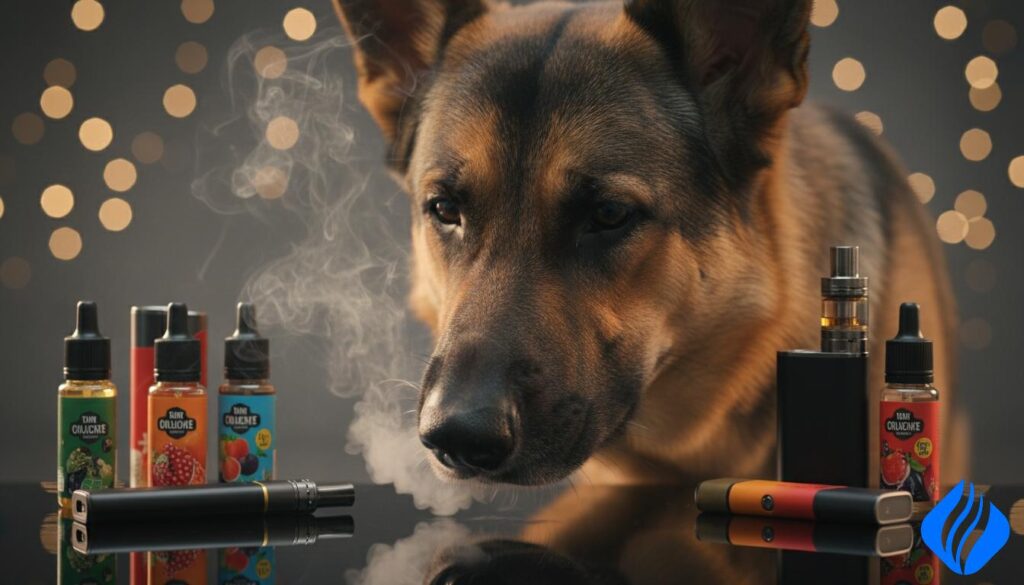
We preview a technical testing section that compares disposable device specs — battery life, puffs per unit, coil type, and e-liquid volume. We also explain how trace residue and handling affect outcomes.
Our tone is objective and safety-first. We will not offer tips to evade law enforcement. Instead, we cover compliance-aware storage, cleaning residue, and a final FAQ that includes nicotine warnings and device authenticity checks.
Key Takeaways
- Dogs have far finer noses than humans, but training determines alert targets.
- THC odors may trigger alerts; nicotine usually is not a scheduled target.
- Detection often hinges on trace residue and handling, not just device contents.
- We will test puffs, battery efficiency, coil types, and compare value across models.
- Advice focuses on legal compliance, safe storage, and consumer safety.
Why Dogs Detect What Humans Miss: The Science Behind a K9’s Sense of Smell
A detection dog’s brain separates and tracks odor layers in complex airflows. We rely on this to explain why trained teams find traces humans overlook. The difference is anatomical and neural: dogs have far more receptors and a brain wired for scent patterns.
How searches work in real environments
Drug dogs and drug sniffing dogs follow moving air. Handlers lead them along seams, vents, zippers, and door lines. They inspect vehicles, luggage, clothing, and buildings where volatile compounds travel on currents.
What affects distance and detection
Wind direction, odor concentration, temperature, and humidity change outcomes. Heat raises volatilization; recent use increases signal. In crowded or turbulent settings competing scents reduce range.
Why airtight materials matter
Truly sealed metal or glass can block airflow and limit alerts. Many consumer containers leak at threads, gaskets, and zippers. External residue on hands, pockets, or surfaces often provides the cue.
| Factor | Effect on Detection | Practical note |
|---|---|---|
| Airflow & wind | Increases or disperses odor plume | Approach from upwind when possible |
| Container material | Glass/metal can block volatiles | Seals matter more than label claims |
| Residue & handling | External traces often trigger alerts | Clean surfaces; residue persists |
Legal frameworks shape deployments. Police protocols and local law affect training targets and operational use. We will revisit how training choices change real results.
Can k9s smell vapes? What They Can Detect vs. What They’re Trained to Ignore
Dogs detect volatile traces and transfer residue on surfaces, which often drives alerts more than the enclosed device contents. We separate what a nose can register from what a program rewards.
THC vape cartridges and cannabis terpenes
Vape cartridges containing THC often retain terpenes. These aromatic compounds give concentrates a “weedy” profile.
Terpenes travel with vapor and stick to mouthpieces and housing. Even sealed cartridges may show external odor at seams or on hands.
Nicotine reality
Dogs may detect nicotine or flavored e-liquid molecules. However, most programs do not train a drug dog to alert on nicotine because it is not an enforcement priority.
Residue and handling
Oils and resin transfer to fingers, pockets, and bags. That exterior contamination is often the signal police dogs follow.
Where dogs are used in the United States
- Local units: targeted searches and patrol support.
- Checkpoints: selective deployments in traffic and events.
- Customs & international arrivals: higher focus on drug detection.
Practical takeaway: many dogs can register components of these devices, but outcomes depend on whether the dog is trained for that odor. If a product is illegal where you are, odor control is not a substitute for compliance.
How Drug Dogs Are Trained to Detect Substances
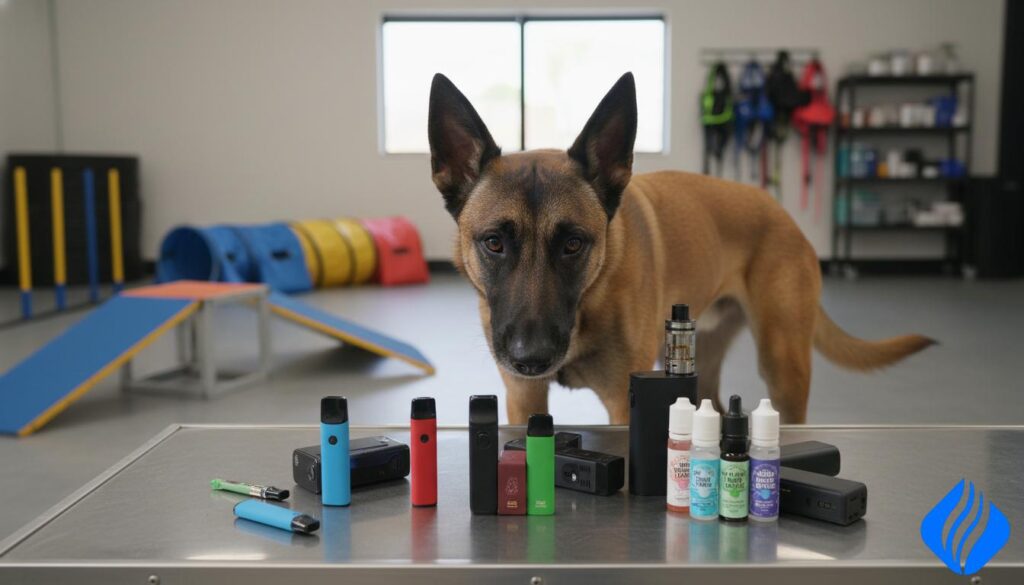
Field-ready detection relies on systematic conditioning, not raw ability alone. We describe how positive reinforcement shapes reliable alerts and why certification matters.
Positive reinforcement training and certification basics
Handlers teach targets by pairing an odor with a reward. Repetition builds a clear association. Over time the animal generalizes that odor across cars, rooms, and bags.
Most agencies require periodic certification. Tests use standardized hides and controlled settings. Standards vary by state and unit, so two teams may differ in what they reliably alert on.
What substances are commonly detected
Common targets include: cannabis, cocaine, heroin, methamphetamine, MDMA, and fentanyl. Not every dog is trained on every odor.
| Training element | Purpose | Typical targets |
|---|---|---|
| Primary reward drills | Builds odor–reward link | Cannabis, cocaine, heroin |
| Generalization runs | Transfers alert across contexts | Meth, MDMA |
| Requalification | Maintains reliability | Fentanyl, other emerging drugs |
Why cannabis training changed and practical effects
In recent years agencies reduced cannabis training due to legalization and policy shifts. This creates real-world inconsistency.
Practical takeaway: dogs trained detect a narrow hit list. Training quality, environment, and handler choices shape outcomes. Understanding that reduces myths and clarifies actual risk.
How to Reduce the Chances Your Vape Smells Like Contraband
Reducing odor transfer starts with small habits that limit airborne compounds and residue. We focus on practical, hygiene-forward steps for lawful, low-odor carry. These steps lower the chance of detection and show respect for shared spaces.
Keep ends capped and avoid using devices before sensitive areas
Cap mouthpieces and avoid fresh use right before entering airports, schools, or checkpoints. Heat and recent draws increase volatile release and make the scent plume stronger.
Use airtight containers and understand vacuum-seal nuance
Choose containers with intact seals, undamaged gaskets, or rigid metal/glass housings. These limit air exchange under pressure changes.
Vacuum sealing reduces airflow and often lowers transmission in stable conditions. It will not help if oil or resin is on the device exterior or if the seal is imperfect.
Pack smart to reduce airflow and scent spread
Isolate cartridges and disposable carts in separate compartments. Keep items away from fabrics that trap odor like jacket pockets or cloth bags.
Avoid masking with perfumes or coffee; sniffer dogs and other detection teams often ignore masking layers and focus on core residues.
Know the limits: residue, training, and realistic expectations
Residue control is the highest-impact step: clean hands, wipe mouthpieces, and prevent leaks. Exterior contamination is a common trigger.
“Odor control lowers spread but does not guarantee non-detection when dogs are trained on a signature.”
| Step | Why it helps | Limitations |
|---|---|---|
| Cap ends | Stops direct volatile escape | Doesn’t remove residue on surfaces |
| Airtight container | Limits airflow and plume | Fails if seal is compromised |
| Vacuum seal | Reduces exchange under many conditions | Ineffective with exterior oil or punctured bags |
| Residue cleaning | Removes transfer cues for dogs and sensors | Requires regular repetition over time |
Final note: If legality is unclear, the safest course is not to carry restricted products. For more on how detection works and operational realities, consult our guide on detection.
Real-World Scenarios in the United States: Airports, Traffic Stops, Schools, and Events
Operational priorities and local policy decide when a dog will join passenger screening or a roadside check. That choice shapes what teams look for and how often they search people or property.
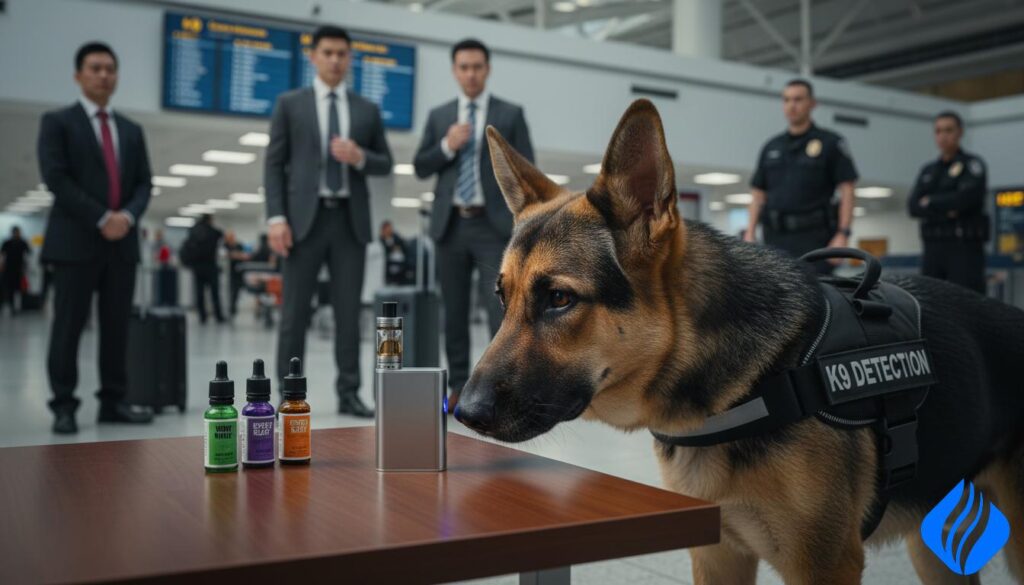
Domestic airports vs. international customs
In most U.S. domestic terminals, visible teams focus on explosives and public safety. You are less likely to encounter routine drug searches in passenger lines.
Customs and international arrivals are different. Enforcement here targets import controls. The chance of a search for drugs is higher and consequences can be severe.
Traffic stops and K9 deployment
Not every patrol carries a dog. Officer discretion and departmental policy determine whether a unit calls specialized drug dogs to a stop.
That makes deployment inconsistent. Some motorists see a dog often; others never do.
Schools, events, and variable practice
Schools and venues use teams under distinct rules. Policy, parent concerns, and local law guide whether dogs are used and what they target.
“Encounters feel random because different units train for different targets and follow varied protocols.”
| Setting | Typical K9 focus | Likelihood of drug search | Practical note |
|---|---|---|---|
| Domestic airport | Explosives / safety | Low | Passenger screening emphasizes security, not routine drugs |
| International / customs | Drugs & contraband | High | Stricter enforcement and search authority |
| Traffic stops | Depends on callout | Variable | Specialized teams often respond when suspicion exists |
| Schools & events | Policy-driven (drugs/explosives) | Variable | Rules differ by district and venue |
We note that K9 searches intersect with civil-liberty issues and municipal law. Outcomes depend on jurisdiction, court rulings, and department practice.
Safety-first takeaway: never vape while driving. Impairment and distraction risk public safety, and stopping use reduces roadside complications.
For more on operational roles and how teams work, see a technical primer on detection and handler practice at how sniffer dogs detect explosives.
Hands-On Vape Testing Insights and Product Specs That Affect Odor, Consistency, and Value
We tested popular disposables under daily-carry conditions to evaluate leakage, residue transfer, and long-run flavor. Our frame replicated pocket and bag exposure because external residue—not the sealed core—often drives detection risks for dogs and police.
Core technical specs to check before buying or carrying a disposable
- Battery capacity (mAh) — affects heat and puff stability.
- E-liquid volume (ml) — higher volume usually means longer life and fewer dry hits.
- Nicotine strength — typically 2% or 5% nic salt.
- Coil type — mesh vs dual mesh impact flavor consistency.
- Charging port — USB-C preferred for safe, stable charging.
Representative spec comparison
| Model | Battery (mAh) | E-liquid (ml) / Nicotine | Coil / Charging |
|---|---|---|---|
| Main disposable (example) | ~650–850 | 14–20 ml / 2% or 5% | Mesh or Dual mesh / USB-C |
| Geek Bar | ~500–650 | 14–16 ml / 5% | Mesh / USB-C (model-dependent) |
| Lost Mary | ~500–650 | 13–16 ml / 5% | Mesh / USB-C (model-dependent) |
| Raz | ~650–800 | 15–20 ml / 5% | Mesh/Dual mesh / USB-C |
Hands-on testing notes: throat hit, vapor, and flavor after 5000 puffs
We graded throat hit as smooth or strong, and measured vapor volume as low, medium, or high. Mesh coils gave steady flavor early. Dual mesh delivered a stronger initial profile but sometimes muted after heavy use.
After ~5000 puffs we saw sweeteners flatten and cooling agents fade. Devices with secure mouthpieces and tight seals showed less sticky buildup. That reduced surface residue that dogs trained to detect may follow.
Value and performance lens
Puffs per dollar is puffs claimed ÷ purchase price. In our bench checks the main high-capacity unit often led on value, while Geek Bar and Lost Mary offered predictable mid-range returns. Raz matched value when dual-mesh models maintained wick flow under heavy use.
Quick shopper links and mini-FAQ
Browse: Disposable Vapes, Hot Sale, RandM, Bang.
“Tighter tolerances and stable coils reduce leaks and exterior residue—key factors in detection risk.”
Mini-FAQ
How to know if it’s empty? Flavor drops, vapor falls, or a burnt taste. Some models blink or change airflow feel. Stop once it tastes off.
How to recharge safely? Use a quality USB-C source. Avoid overnight charging. Inspect ports for lint or liquid. Stop if the device gets hot.
Is it authentic? Verify the QR code on packaging and buy from reputable listings. Check packaging consistency and vendor verification flows.
Conclusion
The bottom line: a dog’s alert depends on training, not just raw odor power. Dogs detect volatile traces, but whether a team warns on THC versus other compounds varies by program and local policy.
Two practical controls reduce risk: limit air exchange with tight seals and remove external residue through regular cleaning. These steps address the outside cues that most dogs follow.
Be aware that domestic airport screening differs from customs. Over the past years policy shifts changed what units train for. That creates real-world variability in outcomes.
Device choice matters: prefer secure mouthpieces, stable coil designs, and safe charging. Verify authenticity via QR codes and consult our detection guide for more.
Nicotine warning: This product category contains nicotine. Nicotine is an addictive chemical. Intended for adults 21+. If you do not use nicotine, do not start.
Final safety note: avoid smoking near children, store devices securely, and stop using any unit that leaks, overheats, or tastes burnt.
 English
  German
  Dutch
Dutch  Danish
  Czech
Czech  Italian
  Slovenian
  French
  Hungarian
  Spanish
  Polish