

Short answer: Nicotine is detectable in urine for up to 4 days, while its primary biomarker, cotinine, guides most testing and exposure assessments.
This guide explains why aerosol droplets and dissolved flavorings leave perceptible traces. Odor arises from propylene glycol/vegetable glycerin (PG/VG), volatile organic compounds (VOCs), and added scents, not from a mysterious invisible source.

Detection is twofold: sensory traces in indoor air and biochemical markers in biological samples. Photoelectric sensor technology and chemical assays detect particles and metabolites, respectively. This 2026 update aligns with current testing windows, device limits, and best practices for indoor air management.
The goal is practical guidance for privacy-minded residents, roommates, and landlords. The focus is on reducing odor, lowering residue, and clarifying what detectors and tests actually measure—not on evasion.
Key Takeaways
- Nicotine metabolites such as cotinine determine most lab detection windows; urine shows positivity up to about 4 days.
- Sensory odor comes mainly from flavorings, PG/VG residue, and VOCs; intensity varies by device and e-liquid.
- Photoelectric sensors detect aerosols; chemical tests detect metabolites—these are different tools for different purposes.
- Ventilation, activated carbon, and targeted cleaning reduce indoor scents and surface buildup.
- This guide reflects the most updated 2026 standards for detection, testing, and odor management.
Can you smell vape smoke in a room or on someone?
Short answer: aerosol from modern devices often smells lighter and sweeter than tobacco. This difference comes from flavor chemicals and PG/VG solvents rather than combustion byproducts.
What the scent usually resembles versus cigarettes
Common impressions are fruity, minty, or candy-like notes. These are volatile flavor compounds that dissipate faster than the burnt, tarry profile of cigarettes.
When others notice it most
- Fresh exhaled clouds — scent peaks immediately after release.
- Close distance — breath, hair, and clothing pick up odor at short range.
- Enclosed room — bathrooms, cars, and small bedrooms hold scent longer.
Why scent varies across products
Flavor type, nicotine strength, and device power affect aerosol density and perceived intensity. Strong flavors and high-output devices produce denser clouds and longer-lasting odor.
Practical note: Reducing output and improving ventilation is the most reliable way to lower noticeability in shared spaces.
Why vape vapor smells different than cigarette smoke
Aerosol chemistry explains much of the difference. Aerosols are tiny liquid droplets suspended in the air. Combustion from a cigarette produces solid particles and gases formed by burning organic matter. That yields tar, char, and many heavy odor compounds.
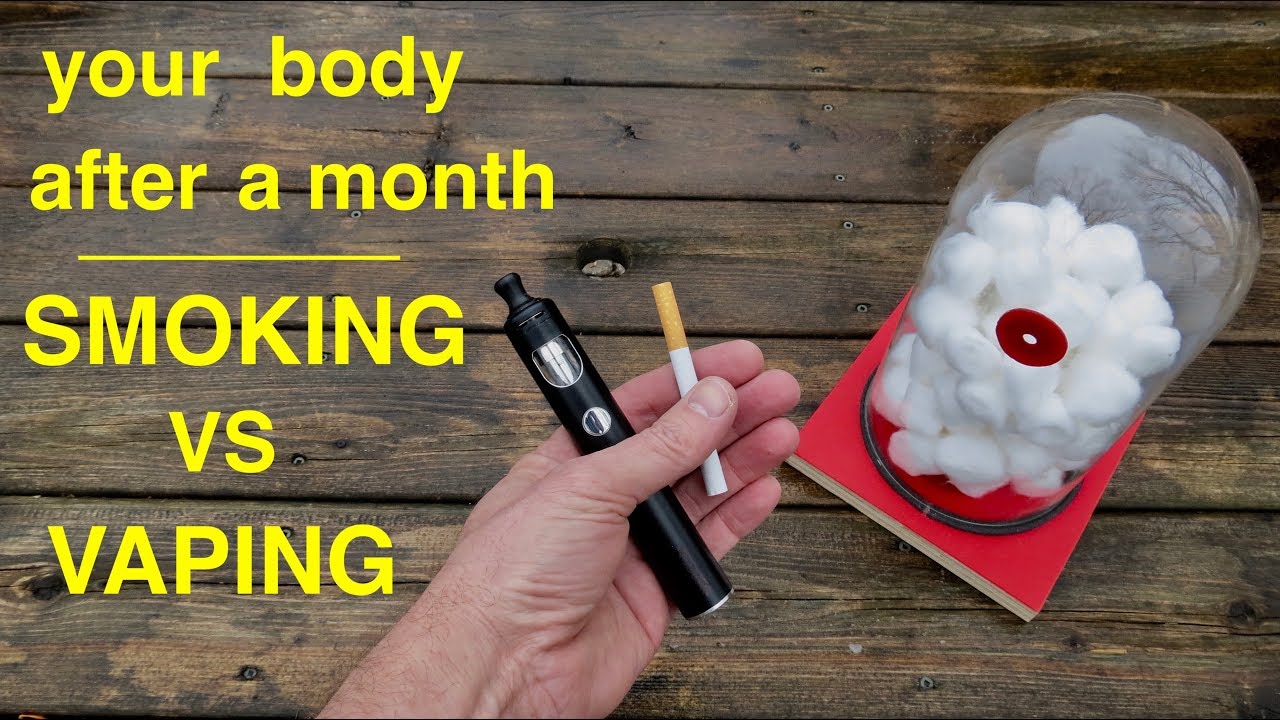
Aerosol droplets versus burned particles
Liquid droplets carry dissolved flavorings and solvents. These molecules evaporate or disperse quickly, so the immediate scent often feels lighter than tobacco smoke.
PG/VG, flavorings, and VOCs
Propylene glycol (PG) and vegetable glycerin (VG) are the solvents that form the aerosol. PG gives stronger throat feel and more scent; VG makes denser clouds. Volatile organic compounds (VOCs) are the main odorants. They evaporate fast, so absence of visible vapor does not always mean no odor.
Residue and lingering traces
Compared with cigarette smoke, aerosol usually clings less. Still, frequent indoor use can produce a light film on windows, screens, and fabrics. Over time, nicotine and oxidized compounds may create a stale residue that affects indoor air and leaves faint scents on surfaces.
How long does vape smell last in indoor air?
Aerosol scent fades at a pace set mostly by airflow and room size, not by waiting alone.
Typical time ranges: in a well-ventilated room with an open window or fan, scent often falls below detection within about 10 minutes. In a closed room, the same release may persist noticeably for tens of minutes, especially after repeated use.
Ventilated room versus closed room
Good ventilation speeds dilution. Fresh exchanges of air remove aerosol droplets and volatile compounds quickly. With limited ventilation, aerosol and residual gases linger longer and settle on surfaces.
Why larger clouds and frequent use matter
Larger clouds introduce more particles and VOCs, which increases the time needed for dilution. Frequent sessions keep concentrations elevated and extend the minutes before the air feels neutral again.
“Removal is governed by airflow and source strength; waiting alone does not guarantee full clearance.”
Practical note: many find scent hard to detect after ~10 minutes with decent ventilation, but microscopic residue can remain. For mitigation tips, see this guide on odor duration.
Where vape odor and residue can build up at home
Textiles and cushions act like sponges for airborne droplets and their scent compounds. Soft surfaces in a living space trap more deposits than hard surfaces. Over time those deposits form a faint background odor in frequently used rooms.
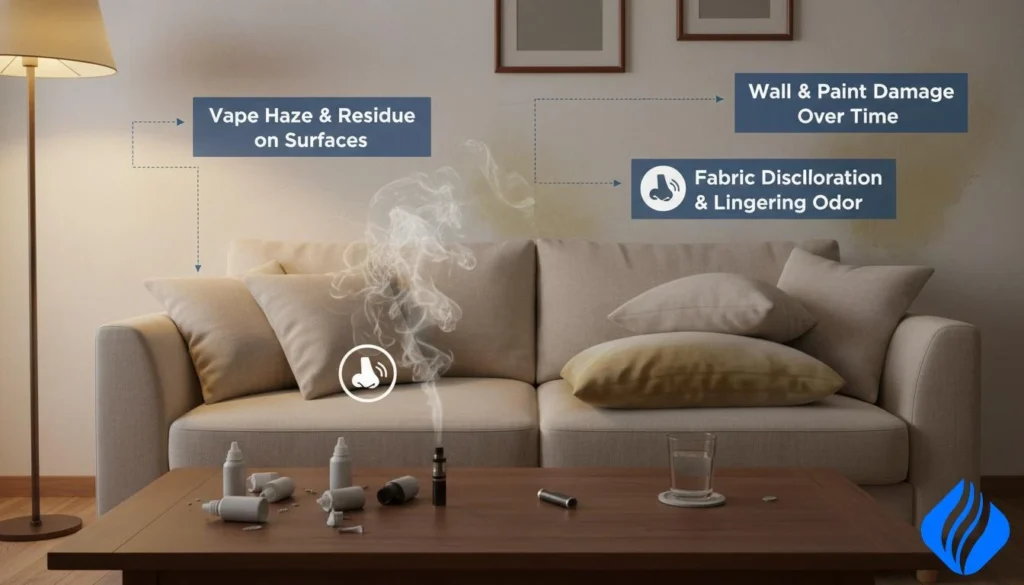
Soft surfaces that trap scent
High-retention areas: carpets, rugs, curtains, pillows, and upholstery hold aerosol deposits longer. These fabrics absorb volatile compounds and small droplets, so scent and residue collect where fabrics see repeated use.
Signs someone has been using vapes indoors
Look for a calm checklist of indicators rather than a single proof. Common signs include a light sweet smell, visible mist soon after a session, and physical items such as pods, cartridges, chargers, or discarded disposables.
Secondary clues beyond scent
Physical patterns help confirm observations. Increased drinking of water, persistent throat irritation, and occasional coughing suggest PG-related dryness. These clues support—rather than prove—that someone vaping has used the area.
Considerate next step: address shared house rules or a designated space to reduce long-term buildup and keep household harmony.
| Area | Common signs | Why it matters |
|---|---|---|
| Living room fabrics | Sweet odor, faded sheen on cushions | High traffic; repeated sessions create background odor |
| Bedroom textiles | Clinging mist, pods or small devices | Close proximity leads to stronger transfer to fabrics |
| Car interiors | Fogging, residue on headliner | Small enclosed space traps VOCs and droplets |
Drug testing and vaping: nicotine, cotinine, and THC metabolite basics
Drug screening detects chemical traces that linger in biological samples long after indoor scent fades.
The essentials: nicotine versus cotinine
Nicotine is the active compound. Cotinine is the main metabolite most labs measure because it stays detectable longer and is more stable in tests.
THC metabolites and body storage
THC converts to metabolites like THC-COOH. These bind to fat and can be released over time, so frequent use raises the odds of longer detection times.
How metabolites move through the body
Blood shows recent exposure. Urine reflects filtered metabolites over the next days. Saliva (brief) can show recent intake and breath or saliva tests detect short-term traces. Hair captures longer-term patterns rather than single events.
“Controlling room scent or breath does not alter how metabolites form, store, or appear in tests.”
Detection windows at a glance
| Specimen | Nicotine / Cotinine | THC Metabolites |
|---|---|---|
| Urine | Up to 4 days (occasional); 1–3 weeks (frequent) | 3 days (single); 30+ days (chronic) |
| Blood | Hours to 48 hours | Hours to ~7 days (heavy use longer) |
| Saliva / Breath | Hours to 2 days | Up to 24–72 hours |
| Hair | Up to 90 days (long-term) | Up to 90 days (long-term) |
What shifts results: frequency of use, dose, body fat, and metabolism. These factors change detection times, so ranges above are conservative estimates.
Practical note: managing room odor or using odor-control products does not affect biochemical testing. For employment or legal concerns, consult test policies and a clinician rather than relying on anecdotal timelines.
How vape detectors work and what they can actually detect
Modern indoor sensors watch for sudden rises in aerosol particles or unusual VOC patterns that match common vaping events.

What sensors look for and what they do not measure
Air-monitoring devices are designed to flag rapid increases in fine droplets or volatile organic compounds linked to flavored e-liquids and concentrates.
They do not test biology or measure metabolites such as cotinine. An alert shows that vaping-like aerosol or chemicals were present in a monitored space, not who produced them.
Detector mechanics: particle sensing versus chemical sensing
Photoelectric-style particle sensors respond to aerosol density by detecting light-scattered particles. Chemical or VOC sensors sense specific gas-phase compounds tied to flavorings or solvents.
Practical limitation: steam, sprays, and strong airflow may trigger false positives or dilute signals and affect reliability.
Why they are used and where placement matters
Schools and homeowners use these devices for deterrence, policy enforcement, and indoor-air protection. Small enclosed spaces with predictable airflow—like bathrooms or hallways—offer the clearest signals.
- Avoid placement directly over vents that dilute readings.
- Place units where aerosol movement is constrained for faster detection.
“These tools support rules and air-quality goals, but they are not mind-readers and should not replace clear policies.”
| Sensor type | Detects | Best placement |
|---|---|---|
| Photoelectric particle | Fine aerosols, sudden particle spikes | Small enclosed spaces, mid-height walls |
| Chemical / VOC | Volatile compounds from flavorings | Near likely release points, away from vents |
| Hybrid systems | Both particles and select gases | Bathrooms, locker rooms, common corridors |
How to minimize vape smell and reduce detection in your space
Immediate airflow changes and targeted cleaning cut scent persistence most effectively. Start with ventilation: open windows, place a fan to push air out, and direct airflow so aerosols leave the room rather than drift into shared halls.
Fast ventilation and fan tactics
Open at least two opposing openings when possible. Use a fan near a window to create directional air flow toward an exhaust point.
Avoid letting clouds spread into corridors; keep the source close to the exhaust path.
Air purifiers and activated carbon
Activated carbon layers are essential for VOC and scent reduction, while HEPA filters remove particles. Choose units that combine both.
Replace carbon filters per the manufacturer’s schedule and replace sooner if odor returns.
DIY neutralizers and cleaning habits
Place a bowl of white vinegar overnight or sprinkle baking soda on upholstery before vacuuming to break down molecules rather than mask scents.
Wipe hard surfaces, wash removable fabrics, and vacuum with a HEPA-equipped unit to limit residue buildup.
Long-term solutions and realistic expectations
Designate a well-ventilated area, reduce indoor frequency, and prefer less aromatic liquids to limit recurring scents. These solutions improve comfort but do not alter formal testing or device-based detection policies.
“Reducing nuisance odor and residue supports household harmony and better indoor air quality.”
Conclusion
Final summary, many people notice vaping in a small room or on close contact, especially right after exhalation.
It usually smells sweeter and fades faster than a cigarette, yet repeated indoor use will build residue in fabrics and create a persistent background odor in the home.
Science takeaway: vapor is an aerosol of PG/VG and flavored VOCs; combustion from cigarettes produces heavier, longer-lasting particles.
Practical steps work: prioritize ventilation, use activated carbon for VOCs, clean textiles regularly, and set shared-space rules to protect indoor air quality.
Air detectors flag patterns in a space; drug tests measure metabolites in the body. Managing odor does not change test results. For risks tied to secondhand aerosols, see this secondhand aerosol risks.
If irritation, coughing, or household conflict follows vaping, seek medical advice, and favor transparent, health-focused choices.
 English
  German
  Dutch
Dutch  Danish
  Czech
Czech  Italian
  Slovenian
  French
  Hungarian
  Spanish
  Polish