

Yes, you can bring an e-cigarette on a plane, but strict 2026 rules apply: lithium batteries must stay in carry-on luggage and Mexico fines reach up to $12,500 for prohibited use. This guide is updated for 2026 and focuses on U.S. travel, safety, and compliance.
We explain what travelers mean by “use in public places” and why the short answer is often “it depends.” State law often sets the minimum standard, while local ordinances and property policies set the daily rules that matter most to travelers.
Electronic nicotine delivery systems are battery-powered devices that vaporize liquid nicotine rather than burning tobacco. The FDA treats these as tobacco products and requires nicotine addiction warnings on packaging.
Safety-first: treat battery handling as non-negotiable. Assume indoor spaces, workplaces, venues near children, and most transport settings restrict smoking and device use unless signage says otherwise.
Key Takeaways
- State and local law vary; always check local rules before travel.
- Keep lithium batteries in carry-on and pack devices safely for flights.
- Indoor venues and transport usually ban smoking and device use.
- Mexico enforces steep fines; international rules differ widely.
- This guide updates 2026 rules and offers quick checklists for flights, hotels, Disney, and cruises.
What “Vaping in Public” Means As of 2026
As of 2026, regulation separates common areas into categories that matter for travelers and commuters. We describe how rules apply to outdoor public spaces, enclosed venues, and employer sites so readers know what to expect on the road.
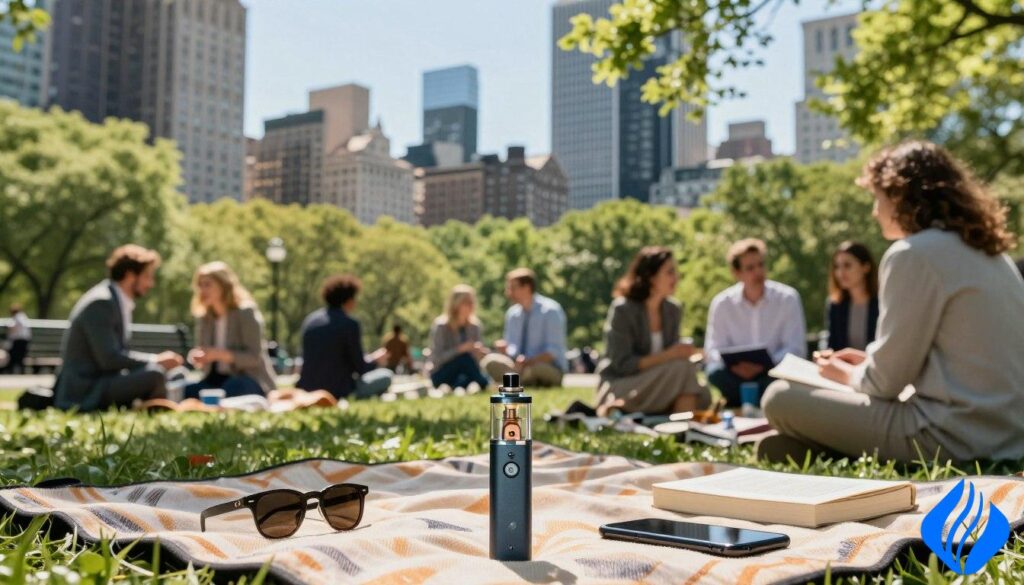
Public places vs. enclosed public places
Public places are sidewalks, parks, beaches, plazas, and other outdoor spots. Outdoor status does not automatically mean permitted use. Local signs and rules may still restrict activity.
Enclosed public places include restaurants, bars, theaters, stadium concourses, and retail centers. Clean air policies usually apply here. Expect limits and active enforcement.
Workplaces and owner discretion
Workplaces cover offices, break rooms, hallways, warehouses, and employer vehicles. Employers often adopt smoke-free frameworks that are stricter than the state baseline.
Private property owners may set a no-device rule even when state law is silent. Local ordinances can also be stricter than state law. This is why the same device and behavior may be legal one block and restricted the next.
“Ask first, then act.”—A simple rule that avoids fines and disputes.
- When signage is unclear, ask staff or step to a designated area.
- Keep a checklist for city rules; local ordinances vary widely.
- For etiquette and quick tips see vaping etiquette and travel gear at Sokvape.
As of 2026, Are E-Cigarettes Treated Like Cigarettes Under the Law?
We see most jurisdictions treating modern ENDS the same way they treat cigarettes for indoor rules. Regulators favor clear, simple standards that venues can enforce without guessing about device types.
Technical difference: smoking uses combustion of tobacco. ENDS use a battery-powered vaporizer to produce aerosol from e-liquid. That difference matters for chemistry, but not always for law.
Why laws group ENDS with smoking
States fold ENDS into smoke-free and clean indoor air frameworks for three practical reasons:
- Enforcement simplicity: staff and police apply one rule instead of parsing device types.
- Indoor air protection: lawmakers aim to limit airborne exposure in workplaces and venues.
- Business consistency: owners prefer a single policy for guests and employees.
When signage says “no smoking” or references a local indoor air act, assume the rule includes ENDS unless a venue states otherwise. That approach keeps travel plans simple and reduces disputes.
| Feature | Combustible cigarettes | ENDS / battery devices |
|---|---|---|
| Mechanism | Burning tobacco | Battery vaporizer creates aerosol |
| Typical legal treatment | Covered by clean indoor air laws | Often folded into same smoke-free rules |
| Traveler takeaway | Assume prohibited in enclosed venues | Assume prohibited unless venue permits |
| Labeling | Sold as tobacco or tobacco products | Regulated as tobacco products by federal rules |
Federal Baseline Rules in the United States (FDA, Age Limits, and Labeling)
A clear federal baseline sets how tobacco products are sold and labeled across the United States as of 2026. This baseline governs marketing, warnings, and sales age checks while states and localities control where use is allowed.
FDA regulation and product classification
The FDA classifies many modern devices as tobacco products. That designation forces packaging, marketing limits, and premarket review requirements for those products.
Minimum age and ID expectations
Federal law sets a national sales floor for minimum age. Retailers routinely ask for valid photo ID for anyone who appears near the legal age.
Expect checks even if a traveler looks older. Proof reduces refusal and fines for sellers.
Warning labels and what they signal
Mandatory language: “WARNING: This product contains nicotine. Nicotine is an addictive chemical.” Seeing that text means the product is sold under tobacco product rules.
| Rule | Federal | State/local |
|---|---|---|
| Product classification | Regulated as tobacco products by the FDA | May add sales or ingredient rules |
| Minimum age | Uniform sales floor; ID required | May raise age or add penalties |
| Where use is restricted | Does not set use zones | Controls venues, parks, workplaces |
“Buy legally, carry receipts and packaging during travel.”
Departments of health often lead education and enforcement locally. We recommend keeping proof of purchase and following venue rules to avoid surprises while traveling.
can you vape in public in the United States?
As of 2026, travelers face a patchwork of local rules that often decide whether device use is allowed. State law sets a baseline, but city and county ordinances or venue policies usually control day-to-day practice.
The safest rule of thumb when signage or policies are unclear
If permission isn’t obvious, don’t use the device. Ask staff or move to a clearly marked area before you act.
That simple step shields you from unexpected fines and venue enforcement. It also avoids conflicts with owners who may adopt stricter clean-air rules than the state.
Where use is commonly restricted even without explicit state bans
- Airports, transit platforms, and terminals
- Hotel rooms and indoor common areas
- Hospitals, clinics, and school-adjacent zones
- Most indoor venues and family attractions
Enforcement often follows a sequence: staff warning, direction to leave, then possible trespass or civil fine.
“Do you have a designated vaping area?”
Use that short question when confirming rules. Be discreet near entrances, crowds, and kids to reduce complaints.
| Location | Typical rule | Common enforcement |
|---|---|---|
| Airports/terminals | Use usually prohibited | Fines or confiscation |
| Hotels | Rooms often banned; designated outdoors allowed | Cleaning fees, eviction |
| Hospitals & schools | Smoking prohibited and treated strictly | Immediate removal, possible citation |
Where Vaping Is Most Often Prohibited: Public Places and Workplaces
Across towns and states, hospitality venues and transit hubs top the list of restricted areas as of 2026. We map the spots where enforcement is most likely and offer quick checks to avoid fines or removal.
Restaurants, bars, nightclubs, and enclosed venues
Most indoor dining and entertainment buildings ban smoking. That includes restaurants, bars, and nightclubs. Staff enforce rules to protect air quality and customer comfort.
Fast check: look for door signage or ask staff where a permitted outdoor area is.
Schools, day care, and youth-centered areas
Places serving minors are strict. Schools and day care settings almost always prohibit device use.
Enforcement is swift. Expect staff or security to intervene immediately.
Health care facilities and medical offices
Hospitals, clinics, and other health care facilities keep indoor air clean for patient safety. Rules often extend to entrances and grounds.
Mass transportation and stations
Buses, trains, taxis, planes, and transit stations are typically no-go zones. Violations risk fines, removal, or confiscation.
Quick traveler checklist: read signs, check a venue FAQ, and ask the front desk or security about designated outdoor zones.
- Designated outdoor zones are the usual legal alternative.
- Never assume a patio equals permission.
- Shared lobbies and conference centers follow the same rules as the businesses they house.
Pennsylvania Example: Clean Indoor Air Act Enforcement in Real Life
Pennsylvania offers a clear example of how a clean-air statute plays out day to day. We use this state to show how definitions, signs, and fines shape behavior inside buildings and workplaces.
How the law defines places and workplaces
The Air Act (Act 27 of 2008) bars smoking in most enclosed areas that serve the public. That includes restaurants, bars, healthcare sites, schools, transit vehicles, and other buildings where the public is invited.
The law also defines workplaces as indoor areas used for employment: offices, hallways, restrooms, warehouses, and employer vehicles.
Signage rules and where signs must appear
No Smoking signs or the international no-smoking symbol must be posted prominently where smoking is prohibited. Entrances and interior common areas are high-priority spots for visible signs.
Penalties and enforcement
Pennsylvania fines range from $250 to $1,000 for failures such as allowing smoking, missing signs, or patrons ignoring rules. Businesses and individuals may both face citations.
Outdoor areas and the 20-foot best practice
The Act mostly excludes outdoor property, though some facilities set broader limits. The Pennsylvania Department of Health recommends keeping smoking at least 20 feet from entrances, windows, and air intakes.
Traveler habit: step away from doors and vents. That reduces complaints and follows the spirit of local clean indoor air rules.
| Topic | What PA law says | Practical effect | Traveler tip |
|---|---|---|---|
| Definitions | Public place and workplace are indoor, invite-public spaces | Most buildings and workplaces prohibit smoking | Assume indoor ban unless sign says otherwise |
| Signage | No Smoking signs required at entrances and inside | Clear notice for staff and visitors | Look for signs when entering |
| Penalties | $250–$1,000 fines for noncompliance | Businesses enforce rules; fines possible | Comply to avoid citations and fees |
| Outdoor rule | Generally not covered; Dept. Health suggests 20 feet | Outdoor areas often allowed but limited near doors | Stand 20 feet away from openings when possible |
“Step away from doors and vents to respect clean air rules.”
New York, New Jersey, and Other State-by-State Differences to Watch
As of 2026, state law sets a baseline, but municipal rules shape daily practice. We explain why a short walk across a river or city line may change what is allowed and what officials enforce.
Why the same act might be legal one block and ticketed the next
States give cities and counties authority to add local rules. That leads to a patchwork across metro areas.
New York often grants cities broad clean-air powers. New Jersey towns frequently adopt stricter park and transit restrictions. Crossing a border may mean different penalties or signage.
Quick checks before acting
- Fast routine: check the city county website, search the venue policy, then read door signs on arrival.
- Search phrases that work on mobile: “[city] vaping ordinance,” “[county] smoke-free air vaping,” “[venue] vaping policy.”
- If verification fails, default to not using a device or move to a designated outdoor area to avoid tickets.
Tip: tourist zones, downtowns, and transit hubs are higher-enforcement areas; follow posted rules and keep trips simple.
Indoor Air Acts, Clean Indoor Air Laws, and “No Smoking” Signs
Signs have become the first line of enforcement for clean air rules at many venues as of 2026. A visible “No Smoking” notice often covers all aerosol devices even when no vape icon appears.
When “No Smoking” effectively means “No Vaping” as of 2026
Many jurisdictions fold e-cigarettes into the indoor air act approach. That means a plain “No Smoking” sign may mean e-cigarettes prohibited.
Practical read: treat smoking language as broad. If a venue enforces clean indoor air or posts “smoking prohibited,” step to a designated outdoor area before using any device.
What signage does and doesn’t do on private property
- Signs can reflect a legal duty from a clean indoor air law, an owner’s corporate rule, or both.
- Common overlooked spots: lobby doors, elevator bays, stairwells, partially enclosed patios, and near restrooms.
- Lack of a sign is not permission—workplaces and venues covered by an indoor air act still restrict use.
“Treat any smoke-free language as a no-use rule unless a venue posts explicit permission.”
Compliance habit: ask staff for a designated area and avoid arguing the chemistry. That simple step protects guests from fines and preserves clean indoor spaces.
How to Vape Legally on Private Property Without Getting Kicked Out
The fastest way to avoid fines or eviction on private property is to check rules with the property owner first. Owners set the practical limits, and their rules often beat local law for day-to-day enforcement.
What to ask:
- “Is use allowed anywhere on-site?” — short, polite, and direct.
- “Do you have a designated outdoor area?” — points staff to a specific solution.
- For rentals: confirm lease or house rules about odors and cleaning fees.
Patios, balconies, and designated areas
Partial enclosures often count like indoor spaces. Step at least 20 feet from doors and vents when possible.
Look for signage, ash bins, or staff directions. If an area has a roof or three walls, treat it as restricted.
Etiquette and retail notes
- Avoid exhaling toward others and keep distance from kids and lines.
- Retail shops may allow samples but set strict in-store rules—ask before any use.
- Respect an owner’s restrictions. That preserves access and avoids fees or eviction.
Quick script: “Hi — is there a designated outdoor area where device use is allowed?”
We recommend getting clear permission on arrival. That simple step protects guests, honors owners, and keeps travel plans smooth.
Travel Rule: Flying With a Vape in 2026 (TSA/FAA + Airline Policies)
Air travel rules now treat battery-powered devices as potential fire risks that need special handling at security checkpoints. As of 2026, TSA and FAA guidance requires travelers to keep lithium batteries and devices in carry-on luggage.
Lithium batteries MUST be in carry-on luggage. Checked bags are off-limits for spare cells and assembled devices. Airlines often echo this rule and may impose additional limits.
Luggage risk and screening
Checked baggage hides battery incidents from crew and ground staff. That makes fires harder to spot and control. Confiscation, delays, or fines may follow if rules are violated.
Disposable vs. refillable: screening simplicity
Disposable products are usually simpler at security. They have fewer loose parts and no refill bottles.
Refillable devices need leak-proof tanks and compliant liquid containers. Pack e-liquid under current liquid limits and seal reservoirs.
Traveler’s checklist: do’s and don’ts
- Do carry devices and spare batteries in your carry-on, protected from short circuits.
- Do power devices off and cover triggers or remove batteries if airline policy asks.
- Do store e-liquid in approved clear bags and follow liquid rules at security.
- Don’t place batteries or devices in checked baggage.
- Don’t use devices onboard; cabin crew enforce no-use rules and airports are often smoke-like places with tight controls.
“Follow carry-on battery rules and obey crew instructions to avoid most travel issues.”
| Aspect | Disposable | Refillable |
|---|---|---|
| Screening ease | High — single unit, no loose liquids | Moderate — may need sealed tanks and liquid declaration |
| Battery handling | Integrated battery; carry-on required | Removable batteries must be packed in carry-on, protected |
| Airport use policy | Possession allowed; use often prohibited in terminals | Same rules; added risk of leaks and extra scrutiny |
How to Pack Vapes Safely for Trips (Leaks, Pods, and Spares)
A tight kit and smart stowage cut leak risk and keep luggage clean on every trip. We focus on practical steps travelers should follow as of 2026.
Why leaks happen and quick prevention
Pressure changes and jostling push liquid through weak seals. Altitude shifts during flights are a common trigger.
Simple fixes: store pods upright when possible and never overfill reservoirs. Seal each pod in a small zip bag to trap drips.
Pods and e-liquid storage
Keep liquids contained and separate from electronics. Use clear bags so security checks move fast.
Pack e-liquid bottles upright, capped, and cushioned inside a dedicated pouch. That reduces mess and avoids damage to other products.
Heat, cars, and sun protection
High heat degrades batteries and increases leak risk. Do not leave devices in hot cars or direct sun on beaches.
Store devices in insulated pouches during summer travel and move spares to shaded areas during day trips.
Spares and pack strategy
Bring only what is needed. Protect mouthpieces from lint with small caps. Keep backups organized so nothing is opened in shared areas.
Keeping gear tidy lowers odor and residue. That helps avoid hotel cleaning fees and complaints.
“A small travel kit prevents leaks, speeds security, and protects batteries.”
| Risk | Prevention | Traveler benefit |
|---|---|---|
| Pressure-induced leaks | Store upright; double-bag pods | Less mess during flights and transfers |
| Heat damage | Insulated pouch; avoid hot cars | Longer battery life and safer carry |
| Spare handling | Limit spares; cap mouthpieces | Fewer surprises and fast replacement |
Traveler kit checklist: small zip bags, paper towel or wipes, insulated pouch, mouthpiece caps, and a compact tool for battery protection.
For a detailed leak-proof packing routine and product tips see our leak-proof pod guide. For up-to-date carry-on battery rules consult this resource on carry-on battery rules.
Hotels, Hospitals, and “Vape Detectors”: How to Spot Compliance Traps
Hotels and hospitals often treat device use as a hygiene and safety issue. These properties prioritize patient comfort, fire safety, and clean air. That means staff respond quickly to complaints and violations.
Where detectors are most common and why they’re used
Detectors sit in rooms, corridors, and near bathrooms or vents. Care facilities and many hotels install them to protect patient health and reduce cleaning costs.
Clues in room rules, signage, and ventilation areas
Look for room rule cards, “smoke-free property” wording, fee warnings, and signs by elevators. Vent grills and bathroom fans are often monitored.
Do’s and don’ts to avoid cleaning fees and eviction
- Do ask the front desk where designated outdoor areas are.
- Do step 20 feet from doors and vents if permission is given.
- Don’t assume bathrooms or fans hide use.
- Don’t try to mask odor with steam or air fresheners.
“When health and patient care are at stake, default to compliance.”
| Location | Common sign | Risk |
|---|---|---|
| Guest rooms | Room rule card / fee notice | Cleaning fees, eviction |
| Hospital wings | Smoke-free / no-smoking | Immediate removal, sanctions |
| Corridors & vents | Warning signs near air intakes | Detector alerts, inspection |
Disney Parks and Family Venues: What to Expect As of 2026
We advise planning ahead for family venues. Major parks and resorts separate guest flow and air zones to keep children and families comfortable.
Designated areas vs. prohibited zones
As of 2026, most parks restrict smoking to specific areas. Device use outside those zones leads to quick staff intervention.
Designated areas exist but are often set away from main walkways. Plan breaks so a single quick use does not become a rule breach.
High-enforcement spots to avoid
Entrances, ride queues, stroller parking, and restrooms get extra attention. Staff protect families and enforce restrictions near children.
Disney day bag checklist (legal, discreet, safe)
- Carry-on safe case for devices and spare batteries.
- Small wipes and a sealed pouch for pods or liquid.
- A park map note marking designated areas.
- Discrete storage to avoid smells and cleaning fees.
“Respect venue rules and step to marked areas to keep days smooth for everyone.”
| Item | Why | Benefit |
|---|---|---|
| Safe case | Protects batteries and gear | Less risk, faster screening |
| Wipes & pouch | Contain leaks and odor | Avoid cleaning fees |
| Park map note | Find areas fast | Save time, reduce violations |
Cruises and Ports: Ship Policies, Balcony Rules, and Shore Excursions
As of 2026, a cruise itinerary mixes private vessel rules with local port laws, so plan for two rule sets.
Ship rules often exceed land standards. Cabins are usually non-smoking and penalties include cleaning fees or early disembarkation. Balconies may allow limited use but often forbid lighting or open flames.
What to expect at sea and ashore
Designated smoking areas appear on most decks. Follow posted maps and crew instructions. Once ashore, local law applies immediately and enforcement may differ sharply from ship policy.
Cruise traveler’s checklist
- Pack a small protective case, spare batteries, and leak-proof pouches.
- Use only labeled deck zones and avoid cabins, enclosed lounges, and lines.
- Respect crew direction instantly; disputing policy escalates issues fast.
“Identify designated areas on day one and schedule breaks around them.”
| Location | Typical rule | Risk |
|---|---|---|
| Cabin | Non-smoking | Cleaning fee / fines |
| Balcony | Restricted use | Inspection / penalties |
| Designated deck zones | Allowed | Low risk if rules followed |
Mexico and Other High-Risk Destinations: Fines, Confiscation, and What Not to Do
As of 2026, some countries apply strict rules to nicotine products, treating possession like a customs or criminal matter.
Why that happens: authorities set tight public-health law and import controls. That leads officials to treat certain products as restricted at borders and inside public buildings.
How confiscation occurs: screening at airports, vehicle checkpoints, and security stations at public buildings often flags gear. Staff may seize items on sight or issue fines before return.
Mexico do’s and don’ts (as of 2026)
- Do research arrival rules and follow airport signage exactly.
- Do pack minimal gear and keep receipts; that reduces loss if items are taken.
- Don’t use devices near government sites or inside public buildings.
- Don’t argue with officials; escalate via consular help if needed.
“Travel light and obey local entry rules to avoid fines and confiscation.”
| Risk point | Typical action | Traveler tip |
|---|---|---|
| Airport screening | Seizure or fine | Declare, pack minimal items |
| Road checkpoints | Immediate confiscation | Avoid visible use; stay discreet |
| Public buildings | Penalties and removal | Respect signage; step well away from entrances |
Choosing a Travel-Friendly Vape: Reliability, Convenience, and Disposables
We recommend simple, well-made disposable products for many trips. They have fewer parts to fail, no loose bottles, and lower leak risk during transit.
Why disposables often win for travel
Fewer moving parts reduce maintenance. That means less chance of spills in a carry bag or a rental car.
What matters when choosing a device
- Consistent draw — avoids frustration on long travel days.
- Leak resistance — seals and pod design matter.
- Battery integrity — stable power and built-in protections protect luggage.
Where to source dependable options
Buy from reputable retailers to reduce counterfeit risks. Keep original packaging and receipts for travel checks.
Example: many travelers source gear at Sokvape.com but always verify age checks and local rules before purchase.
Practical reminder: carry batteries in carry-on only, shield cells from heat, and never transport loose cells unprotected.
The right travel device is reliable, discreet, and keeps travelers compliant with smoking rules and safety guidance.
Conclusion
A final, action-oriented summary helps travelers avoid fines and safety risks: verify local law, seek a designated area, and secure lithium batteries in carry-on luggage.
As of 2026, whether an activity is allowed depends on the location type, state rules, and a property owner’s policy. Clean indoor air rules and signage set practical limits in many enclosed venues and workplaces.
High-risk spots include airports and planes, hotels and hospitals with detectors, family attractions, and cruise ships. International travel to places such as Mexico requires extra caution due to fines and possible confiscation.
Travel smart: check local law before arrival, respect posted signs, follow staff directions, and choose reliable gear. With a few simple habits, we travel confidently and avoid the most common legal and safety problems.
 English
  German
  Dutch
Dutch  Danish
  Czech
Czech  Italian
  Slovenian
  French
  Hungarian
  Spanish
  Polish