

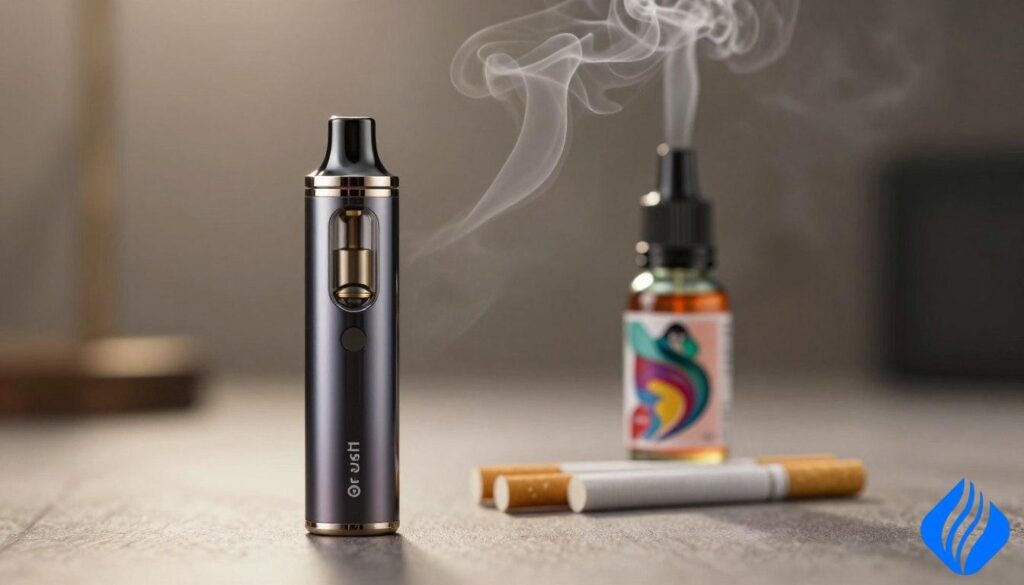
We start with a clear fact: modern devices can pack nicotine equal to a pack or to the potency of three cartons due to nicotine salts, a shift noted by UCSF expert Pamela Ling.
We set expectations: the “cigarette equivalent” is an estimate. Our method converts puffs → nicotine strength → absorbed nicotine for a realistic range.
We compare a primary disposable against Geek Bar, Lost Mary, and Raz using puffs per dollar and flavor consistency. We also report hands-on testing for throat hit, vapor production, and flavor after 5000 puffs.
Searchers should note this is for adult readers (21+). Nicotine is addictive. This content is informational and not medical advice.
Browse verified options at Disposable Vapes or check discounts at Hot Sale to estimate cost per puff and supply reliability.
Key Takeaways
- Estimates combine puff count and nicotine delivery; math is directional, not exact.
- Nicotine salts raised potency; older cartridges matched ~20 cigarettes, some modern devices match ~600.
- We compared puffs-per-dollar and flavor consistency across top brands and measured performance to 5000 puffs.
- Device airflow and coil design change perceived strength even with similar labels.
- Adults (21+) should treat high-strength disposables cautiously and review assumptions before buying.
What “Cigarette Equivalent” Really Means for Vaping and Nicotine Delivery
We define “cigarette equivalent” as a practical comparison tool, not a medical measurement. It helps translate device specs into a usable range of likely intake.
Why puff count and nicotine absorption aren’t the same:
Why puff count and absorption diverge
Counting puffs gives one number. Actual nicotine reaching blood depends on strength, device output, and draw style.
Modern disposables use nicotine salts that feel smoother. That makes delivery more efficient and can raise total intake before throat discomfort limits use.

What research and market data show
“Nicotine salts reduce throat irritation, enabling higher concentrations.”
- Popular high-strength devices may contain nicotine content comparable to roughly 600 cigarettes in extreme cases.
- Vaping likely exposes users to fewer combustion toxins than smoking, but cardiovascular risks and addiction remain relevant to health.
- Youth use is high: about 1.6 million U.S. students vaped in 2023; nearly 90% tried flavored products.
Core takeaway: labels alone don’t predict real exposure. Airflow, coil efficiency, and draw length change nicotine delivery and user risk.
How Many Cigarettes in One Vape: A Step-by-Step Estimation Method
We provide a repeatable conversion you can apply to any disposable. Start with a practical baseline: 10–15 puffs per cigarette.
Quick conversion
- Take the listed puff count.
- Divide by 10–15 → estimated cigarettes.
- Divide that result by 20 → estimated pack count.
Layer nicotine strength
A 2% (20 mg/mL) product yields far less total nicotine than a 5% (50 mg/mL) product at equal puffs. Use the listed milligrams to scale your estimate.
Reality check
Smokers absorb ~1–1.5 mg nicotine per cigarette. Compare that to inhaled nicotine from the device: e-liquid at 1 mL ≈ 200–300 puffs. A 5% liquid can deliver roughly 25–30 mg inhaled per mL—near a pack’s absorbed total.
Worked example and daily sanity check
For a 2,000-puff disposable: 2,000 ÷ 10–15 = 133–200 cigarettes (≈6–10 packs). If the product is 2%, nicotine-equivalents fall sharply versus 5%. If estimates imply dozens per day, reassess draw style, strength, and use. This method gives a realistic range, not exact blood levels.
How Vape Juice, Nicotine Strength, and Device Power Change the Math
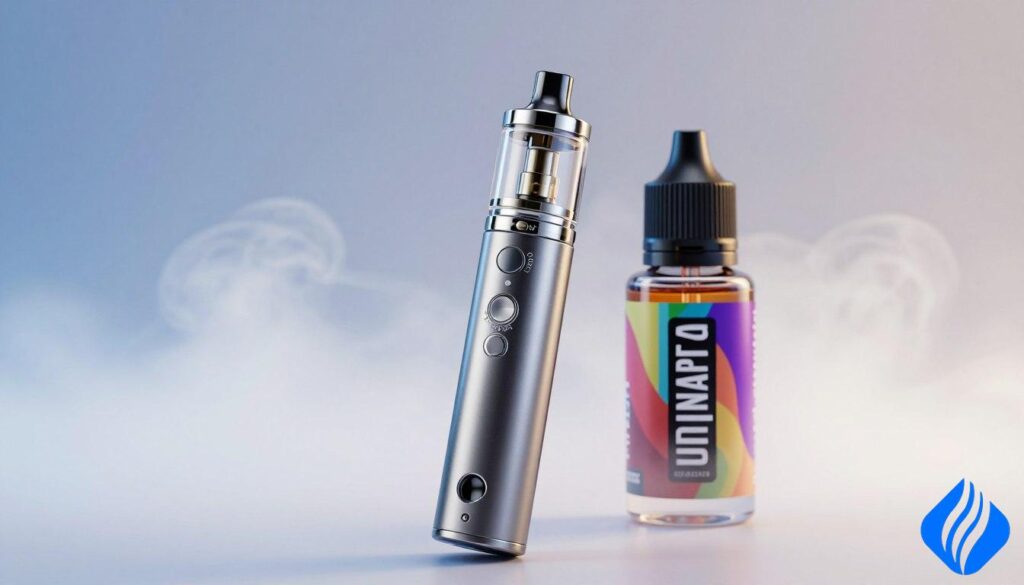
Device specs and liquid chemistry together change the simple math of puff counts and nicotine intake. We start with two core facts: 1 mL of e-liquid ≈ 200–300 puffs, and 5% = 50 mg/mL while 2% = 20 mg/mL.
Read labels as two numbers: volume and concentration. Volume predicts longevity. Concentration predicts density of nicotine per milliliter.
mL of e-liquid to pack-of-cigarettes comparisons (and where it breaks down)
Under typical assumptions, ~1 mL gives a puff count similar to a pack’s worth of draws. That does not guarantee the same absorbed nicotine.
Power and efficiency change the result. Higher wattage, open airflow, or a long draw burns more liquid per puff. That raises nicotine per session and shortens device life.
Nicotine salts vs freebase: smoother hits, faster absorption, different risk of overuse
Nicotine salts feel smoother and absorb faster. That allows manufacturers to pack higher nicotine content with less throat irritation.
Freebase feels harsher at high strength and often limits intake. Smoother hits can lead to accidental overuse.
How airflow and draw style can increase nicotine delivery per puff
MTL (mouth-to-lung) draws conserve liquid and often match a cigarette-style intake. DTL (direct-to-lung) draws use more juice and deliver more vapor per puff.
What to look at: coil type (mesh vs standard), airflow path, battery stability, and USB-C charging for sustained power. These specs affect coil efficiency and real nicotine delivery.
| Spec | Effect on intake | What to check |
|---|---|---|
| mL capacity | Predicts total puffs; higher mL lasts longer | Listed mL and stated puff count |
| Nicotine % (mg/mL) | Determines nicotine density per mL | 2% (20 mg/mL) vs 5% (50 mg/mL) |
| Coil type & power | Changes liquid consumption and vapor production | Mesh coils, wattage, battery mAh |
| Airflow & draw | Open airflow raises delivery per puff | MTL vs DTL setting, adjustable airflow |
| Charging & stability | Stable power keeps output consistent | USB-C, battery capacity, voltage sag |
Hands-On Testing: Throat Hit, Vapor Production, and Flavor After 5000 Puffs
We conducted hands-on trials with a consistent puff cadence and matched draw length to capture changes over time. Our method logged periodic check-ins to note throat sensation, cloud density, and flavor drift.
Smooth vs strong throat hit
We found the 2% nic salt delivered a gentler throat feel and allowed longer sessions without sharp bite. The 5% nic salt produced a faster nicotine impact and a stronger perceived bite for some testers, despite the salt formulation reducing raw harshness.
Vapor production with mesh-style coils
Mesh-style coils produced dense clouds early and stayed stable while battery output remained steady. Output dipped near the end of charge, showing that power delivery affects long-term performance.
Flavor consistency after 5000 puffs
After roughly 5000 puffs sweetness tended to flatten and cooling agents shifted in prominence. Subtle muting appeared before any burned note, which we flagged as an end-of-life signal.
- We reported tests in past tense to be transparent about observed changes and the implied consumption range.
- Note: if flavor remained strong while nicotine strength was high, it was easier to exceed intended intake.
For technical context and dosing reference see our vape nicotine levels guide.
Disposable Vape Comparison: Puffs per Dollar and Flavor Consistency vs Geek Bar, Lost Mary, and Raz
A side-by-side look at specs and real-world flavor performance clarifies which disposable offers true value.
Comparison criteria: listed puff count, flavor stability, burnt-hit resistance, and value measured as puffs per dollar.
Main device technical specs to check before you buy
- Battery (mAh) — influences sustained output and puff life.
- E-liquid (mL) — predicts longevity and total puffs.
- Nicotine strength — 2% (20 mg/mL) or 5% (50 mg/mL) nic salt.
- Coil type — Mesh vs Dual mesh for even heating and reduced burnt hits.
- Charging — USB-C improves recharge speed and stability.
Competitor snapshot: Geek Bar, Lost Mary, Raz
Model names vary. Always confirm printed specs: mL, mAh, nic % and coil description.
| Brand | Common Specs to Check | Flavor Consistency | Value Signal |
|---|---|---|---|
| Geek Bar | mAh, mL, 2%/5% nic salt, mesh coil, sometimes USB-C | Generally steady early; some flavor fade before end | Puffs per dollar depends on listed count vs retail price |
| Lost Mary | mAh, larger mL options, 5% common, dual mesh on higher models, USB-C on hybrids | Strong midlife flavor; dual mesh helps consistency | Often good value when listed puffs are realistic |
| Raz | Compact mAh, mid mL, 2%/5% choices, mesh coils common | Clear flavor early; can thin near depletion | Best when price aligns with verified puff claims |
Puffs per dollar = (listed puffs) ÷ (price). Use this over price alone, since many devices promise thousands of puffs.
Coil type matters. Mesh coils give even heating and clearer taste. Dual mesh improves consistency and lowers burnt-hit risk when wicking and power match demand.
Charging and longevity. USB-C and higher mAh keep output stable. That preserves flavor longer but can raise total nicotine intake if people don’t track sessions.
“Check mAh, mL, and coil design before you assume a listed puff count equals real-world value.”
Compare options directly at best disposable vape 2025 and browse Sokvape’s Disposable Vapes or Hot Sale. Shortcut brand filters: RandM and Bang.
How to Tell It’s Empty, Recharge Safely, and Confirm It’s Authentic
We outline simple signs and steps to keep devices reliable and reduce unexpected nicotine intake. Read within the context of adult use and nicotine’s addictive properties.
Signs it’s empty or at end-of-life
Flavor drop-off is the clearest signal. A muted or sweeter taste that used to be bright usually means the e-liquid is low or the coil is starving.
Weaker vapor and a tighter draw follow. If clouds thin and pulls feel drier, stop forcing hits; continued draws can produce harsher, burnt notes.
Blinking LEDs or cutoff behavior also indicate battery or safety cutouts. Some models flash when battery voltage is low or the device hits an internal limit.
Recharge safely with USB-C
Use a reputable, low-output adapter and a certified cable. Charge on a hard, non-flammable surface and monitor temperature. If the device becomes hot, unplug immediately.
Stop charging once the indicator shows full. Avoid overnight charging and frequent fast-charge cycles that can degrade battery life and stability.
Verify authenticity and where to buy
Always scan the QR code on the device and verify on the official domain path. Use the verification format provided (https://www.google.com/url?sa=E&source=gmail&q=sokvape.com) to reach sokvape’s check page.
Shop verified collections to reduce counterfeit risk: Disposable Vapes and Hot Sale. For quick brand comparison use RandM and Bang.
Quick FAQ
- How to know if it’s empty? Look for flavor fade, weaker vapor, tighter draws, or LED warnings.
- How to recharge safely? Use proper USB-C gear, charge on a hard surface, stop at full, and avoid overheating.
- Is it authentic? Scan the QR and verify at the official sokvape path linked above.
| Issue | Indicator | Action |
|---|---|---|
| Low e-liquid | Muted flavor, dry draw | Stop use; do not force hits |
| Battery low | Blinking LED, weak output | Charge with certified USB-C adapter; monitor temp |
| Counterfeit risk | Missing QR, odd packaging | Verify QR at sokvape link; buy from verified collections |
Safety note: Modern nic salts deliver nicotine efficiently. If daily use approaches the intake you previously got from smoking, consider lowering strength or limiting sessions. This content is informational and not medical advice.
Conclusion
Conclusion
We end with a clear, usable rule: convert a device’s listed puff count into a cigarette-equivalent range using a 10–15 puffs per cigarette baseline, then adjust for nicotine strength and device behavior.
Key anchors: remember ~1–1.5 mg absorbed per cigarette and that modern nic salt disposables can carry high concentration. Use specs—mL, mAh, coil type, and USB‑C—then compare puffs per dollar and flavor consistency when choosing.
For a compact reference see our nicotine estimation guide.
Warning: nicotine is addictive. This content is for adults 21+ and not medical advice. If use approaches prior smoker levels, lower strength, limit sessions, or seek professional cessation support.
 English
  German
  Dutch
Dutch  Danish
  Czech
Czech  Italian
  Slovenian
  French
  Hungarian
  Spanish
  Polish