

Want a clear, reliable answer? This guide breaks down label claims and turns them into real numbers you can trust.
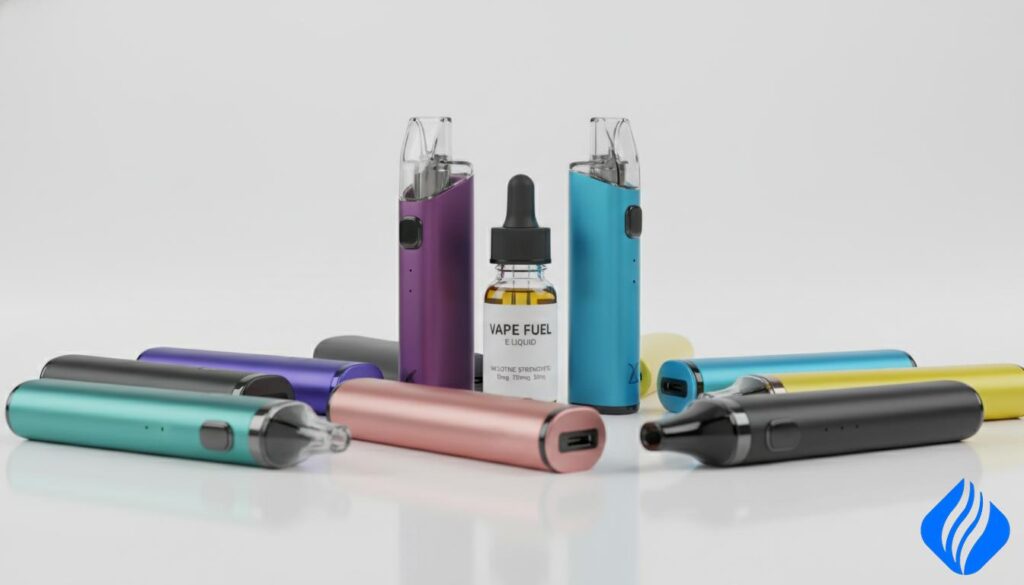
You’ll learn to read strength labels, convert mg/mL to total content, and estimate consumption using e-liquid volume and puff count. We’ll show simple math that works for U.S. single-use units, where common labeling runs up to 5% (usually 50 mg/mL).
Expect short formulas, practical examples, and a checklist for spotting fake products. Power output, coil efficiency, and your puff style change how a device delivers its dose, so two items with the same label can feel very different.
Note: this is technical guidance meant to help you manage intake. Nicotine is addictive, and informed choices reduce risk.
Key Takeaways
- You’ll learn three numbers to translate packaging into total dose: strength, volume, and puff count.
- U.S. units commonly list up to 5% strength; always verify the label and authenticity.
- Device power and puff style affect real delivery more than label alone.
- Cigarettes and vapers deliver doses differently; equivalency is an estimate, not exact.
- The article provides a repeatable formula, examples, and a buyer’s checklist for safe purchases.
Featured Snippet: How much nicotine is in a disposable vape?
Quick answer: A single-use unit’s labeled concentration, total e-liquid volume, and your inhalation pattern determine the actual dose delivered. Use the simple formula: total nicotine = mg/mL × mL. Typical labeling ranges from 0% to 5% (0–50 mg/mL); per-puff delivery often falls between ~0.05–0.5 mg.
Nicotine strength refers to concentration on the label (mg/mL or percent). It tells you how concentrated the solution is.
Total nicotine content is the full amount inside the device. Multiply concentration by e-liquid volume to find that value.
What your body absorbs differs from the liquid content. Device efficiency, coil design, and puff length change delivered dose. Absorption from aerosol can be high, so measured intake may approach the labeled amount.
- Salts vs freebase: Nicotine salts feel stronger at the same labeled strength because they inhale smoother and satisfy faster.
- Next: conversion of percent to mg/mL, total-content math, then per-puff estimates and cigarette comparisons.
| Factor | Typical Range | Effect on Dose |
|---|---|---|
| Strength (mg/mL) | 0–50 mg/mL | Directly proportional |
| E-liquid volume (mL) | 1–20 mL | Scales total content |
| Per-puff delivery | ~0.05–0.5 mg | Depends on device and puff |
Understand nicotine labels on disposable vapes: percent vs mg/mL
Manufacturers list concentration two ways: as a percent or as mg per milliliter. Both describe the same concentration but use different units. You can switch between them with a simple rule.
What “5%” means and common U.S. ranges
In the United States, 5% typically equals 50 mg/mL. Most single-use products run from 0% up to 5% depending on the brand and style.
Convert percent to mg/mL (and back)
Quick rule: 1% ≈ 10 mg/mL. So 2% ≈ 20 mg/mL, 3% ≈ 30 mg/mL, and 5% ≈ 50 mg/mL. To reverse, divide mg/mL by 10 to get percent.
Total content vs label strength
Label strength tells concentration, not total content. You need e-liquid volume to find total amount.
“Same percentage can feel very different depending on coil, airflow, power, and whether salts or freebase are used.”
- Strength is concentration; volume gives total dose.
- Device tech and formulation affect perceived hit.
- Regulations differ globally (EU limits are lower), but the conversion math stays the same.
| Label | Equivalent mg/mL | Common U.S. Range |
|---|---|---|
| 0.3% | 3 mg/mL | Low |
| 2% | 20 mg/mL | Moderate |
| 5% | 50 mg/mL | High (common in U.S.) |
Calculate total nicotine content in your disposable vape (with examples)
Turn label numbers into a clear total by multiplying concentration by liquid volume. This gives the total nicotine contained in the device, not what you will absorb.
The simple formula
Formula: total nicotine (mg) = nicotine strength (mg/mL) × e-liquid volume (mL).
Find the label strength first. Convert percent to mg/mL if needed (1% ≈ 10 mg/mL).
Step-by-step
- Locate the labeled strength. If it shows a percent, convert it to mg/mL.
- Find the e-liquid capacity in mL on the package.
- Multiply strength (mg/mL) by volume (mL) to get total nicotine (mg).
Worked example #1
Example: 5% (50 mg/mL) × 2 mL = 100 mg total nicotine in the whole device.
Worked example #2
Example: 2% (20 mg/mL) × 10 mL = 200 mg total nicotine in the whole device. A lower percent can hold more total if volume is larger.
Sanity check: If packaging lists percent but not mg/mL, convert; if it lists mg/mL but not percent, divide by 10 to confirm consistency.
| Item | Value | Interpretation |
|---|---|---|
| Formula | mg/mL × mL | Gives total nicotine (mg) |
| Small device example | 50 mg/mL × 2 mL = 100 mg | High strength, low volume → moderate total |
| Large device example | 20 mg/mL × 10 mL = 200 mg | Lower strength, larger reservoir → higher total |
How much nicotine is in one puff of a disposable vape?
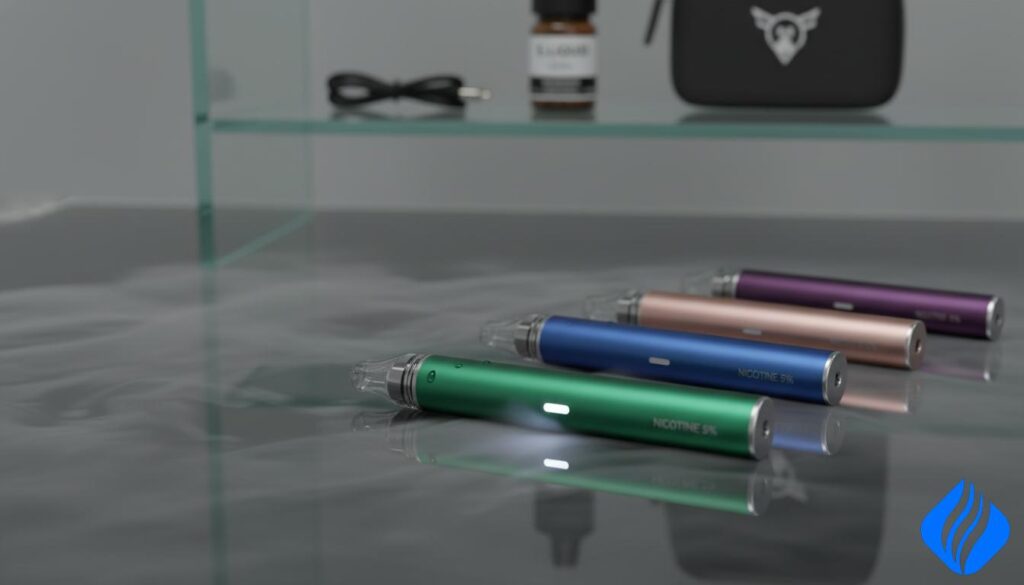
Estimate per-puff dose by dividing total milligrams of content by the advertised puff count. This gives a useful baseline but not a guarantee.
Typical per-puff ranges and why they vary
Measured delivery usually spans roughly 0.05–0.5 mg per puff. At the highest listed strengths, a single hit often lands near 0.25–0.50 mg.
Why numbers are fuzzy: devices differ in coil power, airflow, and aerosol efficiency. Some units aerosolize only about 50–60% of the liquid’s active content.
Why advertised puff counts mislead
Brands use lab machines with short, consistent draws. Real use includes longer pulls, chain sessions, and battery voltage drop. That makes printed puff counts optimistic.
- Quick method: total mg ÷ advertised puffs = starting estimate per puff.
- Main drivers: puff length, airflow, coil temp, liquid viscosity, and device efficiency.
- Practical tip: track time and cravings per day rather than relying on the box’s puffs claim.
Takeaway: Two products with identical puff numbers can feel very different because coil and airflow change actual intake.
| Factor | Effect |
|---|---|
| Puff duration | Higher duration → more mg per puff |
| Coil temperature | Higher temp → greater aerosolization |
| Device efficiency | Less efficient units lose more active content |
Nicotine absorption and how vaping compares to cigarettes
Understanding what reaches your bloodstream matters more than the label on the package. Labels show total content, but delivery speed and absorption control craving relief.
How much your body absorbs from vapor versus smoke
Traditional cigarettes often contain ~10–12 mg of active substance, yet the body absorbs roughly 1–2 mg per cigarette.
Research suggests aerosol from modern devices can transfer a high share of available active compound; some studies report uptake near 90% under lab conditions.
“How many puffs equal a cigarette?” practical ranges
Use conservative equivalency: for high-strength single-use units, about 10–20 puffs may feel similar to one cigarette for many users.
Other setups and puff styles can stretch that to 20–40 puffs to reach ~1–2 mg absorbed. Individual results vary with device efficiency and draw length.
Why nicotine salts can feel stronger than freebase
Nicotine salts inhale smoother. That lets you take larger draws at higher concentrations with less throat hit.
Compare that to freebase nicotine, which can feel harsher and may limit puff size. Faster delivery often equals quicker satisfaction for smokers switching.
Practical tip: start with a strength that stops cravings, then step down slowly. Avoid under-dosing (persistent cravings) and overdoing it (headaches or nausea).
| Comparison | Typical range | Effect |
|---|---|---|
| Per cigarette absorption | ~1–2 mg | Rapid delivery, strong throat hit |
| Per-puff (high-strength device) | ~0.05–0.5 mg | Variable; depends on draw and device |
| Puffs ≈ one cigarette | 10–40 puffs | Wide range; user- and device-dependent |
Disposable vape technical specs that change nicotine delivery
Compare core specs to predict real delivery. Hardware choices govern how steady a device performs and how satisfying each puff feels.
Technical specs comparison
| Puff Count | E-liquid Capacity (mL) | Battery (mAh) | Nicotine % | Coil Type (Mesh Coil) |
|---|---|---|---|---|
| 300 puffs | 2 mL | 350 mAh | 5% | Mesh Coil |
| 1200 puffs | 10 mL | 1200 mAh | 2% | Mesh Coil |
| 600 puffs (rechargeable) | 6 mL | 900 mAh (USB‑C) | 3% | Mesh Coil |
How each spec links to delivery
Puff count is an estimate from lab cycles. It interacts with capacity and power; more liquid plus higher strength raises total available dose.
E-liquid capacity sets total content. Larger tanks can store more active compound even at lower labeled strengths.
Battery and USB‑C charging affect voltage stability. Consistent output reduces weak hits and gives predictable delivery across the product life.
Coil type matters. Mesh coils heat evenly and improve aerosol efficiency, which lessens flavor drop-off and keeps intake steady from first to last puff.
MTL draw, airflow, and throat feel
A tighter mouth‑to‑lung draw increases perceived throat hit and satisfaction at lower airflow. Looser airflow makes larger clouds and can raise intake per puff.
For smokers switching, salts and higher strengths often feel stronger with tight draws. Choose the device and draw style that match your usual experience.
Expert note: Stable power, mesh coils, and predictable airflow give the most consistent throat and flavor performance across use.
- Practical tip: Treat puff counts as a guide, not a guarantee.
- USB‑C benefit: Faster, steadier charging keeps output consistent and reduces weak hits near end of life.
- Flavor consistency: Mesh + steady power reduces flavor drop and uneven intake late in the cartridge.
Health note: Consistency helps you control use, but active compounds are addictive. Pick strengths that avoid side effects and consult a professional if you have concerns.
Brand manufacturing, authenticity checks, and a quick comparison shoppers want
Where a product is made matters as much as the logo on the box for consistency and safety. Many brands design overseas but rely on factories and final assembly in Shenzhen, China. That affects coil performance, flavor stability, and whether the label matches the actual strength.
Who makes popular units and why it matters
Raz and Geek Bar are produced by Geekvape; Foger comes from Fogertech. Design teams may sit in different countries, but manufacturing and components often come from Shenzhen. Trustworthy makers use repeatable processes that keep nicotine strength and juice consistent day to day.
Verify authenticity: a simple checklist
- Find the QR or scratch-off code on the package.
- Scan the code and open the brand verification page.
- Confirm the site reports a valid or first scan.
- Avoid product packages with mismatched labels or missing codes.
Counterfeit red flags
- Unusually low price or misspelled flavor names.
- Inconsistent nicotine labeling or odd packaging art.
- Different weight, loose seals, or weak coil performance.
Quick comparison: Raz vs Lost Mary
Value: compare capacity and battery—higher mL and rechargeability often give better cost per day.
Flavor: Raz tends toward sweeter profiles; Lost Mary leans cleaner with stronger cooling on some types. Pick the product with steadier coil and airflow if you want predictable intake across the day.
Tip: Two units listed at the same strength can feel different. Choose the one with consistent delivery to help control use and avoid unintentional overuse.
| Brand | Value (capacity) | Flavor note |
|---|---|---|
| Raz / Geekvape | Mid–high mL | Sweeter, rich juice |
| Lost Mary | Varies; some high-capacity | Cleaner, icy profiles |
| Foger | Range of sizes | Balanced, mass-market types |
Conclusion
Bottom line: convert label percent to mg/mL, multiply by mL to get total mg, then use advertised puff counts as a rough per‑puff estimate. Device tech and your draw change real delivery.
Note: total content can exceed the amount in one cigarette because the unit is used over many sessions. Pace use to control intake and avoid side effects.
Who this suits: heavy smokers often benefit from higher salt strengths plus mouth‑to‑lung devices to reduce the number of puffs. Light smokers or people stepping down should choose lower strengths and reliable coil/airflow to avoid chasing satisfaction. If you don’t smoke, choose 0% to avoid risk.
Before you buy, compare e‑liquid capacity, labeled strength, coil type (mesh), airflow/MTL feel, and USB‑C charging. Always buy from reputable retailers and verify QR codes to confirm authenticity and labeled nicotine.
 English
  German
  Dutch
Dutch  Danish
  Czech
Czech  Italian
  Slovenian
  French
  Hungarian
  Spanish
  Polish