

what is a vuse vape is a common search for new users in the United States looking for clear, technical information. We define the brand and explain device types. This guide sets honest expectations on specs like mAh, ml, nicotine strengths (2% / 5%), mesh coils, and USB-C charging.
We outline hands-on testing criteria we use. Our tests track throat hit, vapor output, and flavor after heavy use up to ~5000 puffs. For product reviews we note exact puff counts and battery efficiency up front.
Readers get a practical view of device families (Alto, Solo, Vibe, Pro), pod vs disposable mechanics, and real-world metrics: puffs per dollar and flavor consistency. We compare these metrics against two leading competitors to show value and taste stability.
Safety matters. We flag lithium-ion battery care, authentic product checks, and why regulated e-cigarettes matter for nicotine delivery and user experience.
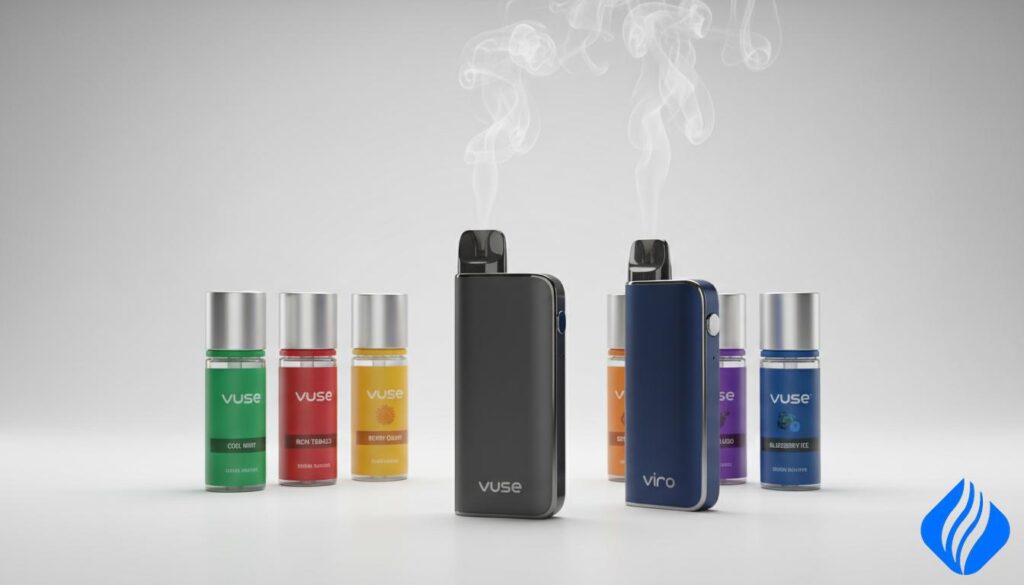
Key Takeaways
- We define Vuse as a brand of e-cigarettes and explain device families for U.S. buyers.
- Expect technical specs: mAh, ml, nicotine strength, mesh coil types, and USB-C.
- Hands-on testing covers throat hit, vapor, and flavor stability up to ~5000 puffs.
- We evaluate real value using puffs per dollar and flavor consistency vs competitors.
- Battery safety and product authenticity are essential for performance and risk control.
What is a vuse vape and how is it different from other e-cigarettes?
Understanding ownership and product design helps explain why some pod systems perform more predictably.
Vuse began in 2013 and is produced under Reynolds American, part of British American Tobacco, with U.S. manufacturing by R. J. Reynolds Vapor Company.
That corporate structure tends to support tighter quality control and wider distribution than many smaller brands. It also shapes marketing, retail access, and spare-part consistency across the united states.
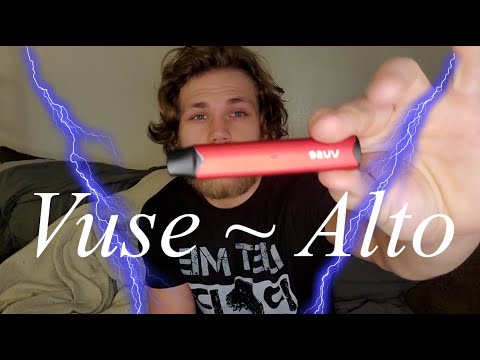
Where the brand sits in the market
Vuse has competed with pod leaders by offering a closed-system lineup and standardized nicotine salts (commonly 2% and 5% strengths). Closed systems limit refill variability and often produce steadier flavor and throat hit.
Common product families beginners see
- Vuse Alto — launched Aug 2018 as a pod mod competitor; notable in retail and online channels.
- Vuse Solo — simple, pocketable devices for everyday use.
- Vuse Vibe — compact designs with balanced output.
- Vuse Pro — aimed at users seeking premium pod performance.
| Family | Form | Typical Nicotine | Practical Strength |
|---|---|---|---|
| Alto | Pod mod | 2% / 5% | Balanced flavor, consistent puffs |
| Solo | Pod | 2% / 5% | Simple, low maintenance |
| Vibe | Pod | 2% / 5% | Portable, steady output |
| Pro | Premium pod | 2% / 5% | Higher fidelity flavor |
Regulatory context affects availability. For example, on Oct 12, 2023, the FDA issued Marketing Denial Orders for several Alto flavored pods while permitting tobacco-flavor pods for sale in the U.S. That reality matters when comparing long-term cost and stock availability across competing products.
How Vuse pod vapes and disposable vapes work
A clear look at the core parts clarifies why performance and reliability differ between device types.
Core components
Every device has three main parts: a battery (rechargeable lithium-ion), a pod or tank that holds e-liquid, and a heating element that vaporizes liquid.
Activation and power delivery
Activation happens either by draw sensor or a button. The trigger sends power to the coil and heats the e-liquid into vapor. Response time and warmth vary by power profile and coil design.
Closed systems versus disposables
Pod systems that use pre-filled pods are closed systems. That means fewer variables for leaking and coil mismatch. Many starter kits require brand-specific pods for proper operation, which helps consistency but limits refill options.
Disposable devices arrive pre-filled and pre-charged. Users discard them when the liquid or charge runs out. They trade flexibility for convenience.
- Pros of closed pods: consistent flavor, predictable throat hit.
- Cons: limited e-liquids and nicotine choices outside the brand.
For adult consumers, the choice often comes down to simplicity versus flexibility. We cover testing metrics later to show how power delivery and coil design shape real-world puffs and taste.
Vuse device and pod specs beginners should know
Begin by checking the numbers on the box; those specs tell you how the device will perform day to day. We translate common labels into clear expectations so you can compare options quickly.
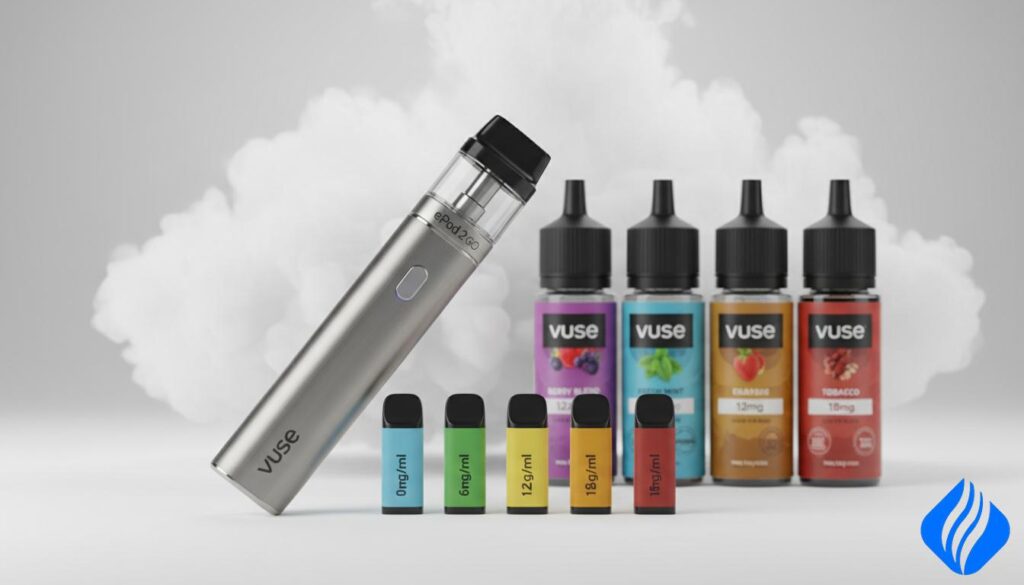
Key spec definitions
mAh — battery capacity. Higher mAh means steadier power late in the day and longer time between charges.
ml — pod e-liquid volume. More ml usually gives longer life but actual puffs depend on draw style and power.
Coils, nicotine, and charging
Mesh vs dual mesh: mesh warms evenly for clear flavor; dual mesh aims to keep intensity deeper into pod life.
Nicotine strengths commonly come in 2% and 5% nicotine salt formulations in the U.S.
Charging: USB-C improves durability and charge consistency. Avoid unstable power sources to reduce overheating risk.
Spec checklist for purchase
| Family | Battery (mAh) | Pod (ml) | Coil |
|---|---|---|---|
| Vuse Alto | 350–450 | 1.8–2.0 | mesh |
| Solo | 300–350 | 1.6–2.0 | mesh |
| Vibe | 300–450 | 1.6–2.0 | dual mesh |
| Vuse Pro | 450–550 | 2.0–2.5 | dual mesh |
Confirm exact mAh and ml on the box before buying. For non-pod alternatives, explore Disposable Vapes to compare options.
Hands-on testing insights: throat hit, vapor production, and flavor after heavy use
We run continuous-use tests to map how coil wear and liquid level alter sensory output. Our hands-on testing tracks draw feel, throat hit, vapor density, and taste stability over long sessions.
Throat hit expectations
Nicotine level drives throat snap. At 2% most adults report a smoother pull. At 5% the hit feels stronger and can be harsher during chain vaping.
Vapor production
Tight, MTL-style draws mimic cigarettes with less visible cloud. Airier draws increase volume but dilute perceived nicotine. Power delivery and coil design decide if output stays steady or grows thin near end of life.
Flavor consistency after ~5000 puffs
Sweetness often flattens first. Cooling agents may fade or briefly sharpen. Overall intensity drops as wick and coil age. When burnt or papery notes appear, check liquid level or replace the pod.
| Metric | 2% Strength | 5% Strength |
|---|---|---|
| Throat hit | Smoother | Stronger |
| Vapor trend | Consistent to thin | Denser then harsher |
| Flavor after 5000 puffs | Sweetness flattens | Intensity drops, cooling fades |
For related troubleshooting and coughing signals see our testing notes at why do vapes make me cough. This helps readers gauge real-world experience and flavor durability across long-term use.
Vuse vs Geek Bar vs Lost Mary vs Raz: puffs per dollar and flavor consistency
Real value comes from how many usable puffs you actually get, not the number printed on the box. We define puffs per dollar as total satisfying puffs divided by total cost. This factors in flavor fade, coil wear, and early discard when taste drops.
Puffs per dollar explained
Advertised puff counts can mislead. Longer draws and higher power burn liquid faster. Marketing totals rarely reflect real use or flavor decline.
Vuse vs Geek Bar
We find Vuse holds flavor steadier through a pod’s life. Geek Bar often delivers louder initial notes but fades sooner. For users valuing predictability, Vuse scores better in the current market.
Vuse vs Lost Mary
Lost Mary shows early sweetness then a sharp drop-off as coils brown. Vuse tends to lose intensity more gradually. That matters when judging puffs per dollar for regular use.
Vuse vs Raz
Raz pushes larger clouds longer. However, late-stage flavor can mute and vapor thins. Vuse retains more uniform draw and throat feel deeper into the unit.
Quick decision guide
- Choose pods for consistency and controlled ecosystem.
- Choose disposables for high initial flavor and cloud volume.
- Compare real cost using puffs per dollar, not box claims.
| Brand | Puffs per Dollar | Flavor Consistency |
|---|---|---|
| Vuse | Moderate–High | Stable, gradual fade |
| Geek Bar | High initial | Strong then early fade |
| Lost Mary | High | Sweet then sharp drop |
| Raz | High cloud per puff | Good early, muted late |
Deal-focused readers can compare true cost on our Hot Sale page to find the best puffs per dollar among these brands and products.
Using Vuse day to day: knowing when it’s empty, recharging safely, and checking authenticity
Small cues during use tell you when service or charging is due. We list common signals and clear steps so readers can act fast and safely.
How to tell if it’s empty
Signs of an empty pod: flavor fades first. Then vapor grows weak and pulls feel inconsistent.
Low battery signals: thin vapor right after good flavor, flashing lights, or slow response. Distinguish these so you don’t toss a usable pod.
How to recharge safely
Battery basics: devices use lithium-ion cells. Use a reputable cable and a stable USB source.
- Avoid damaged cords and stop charging if the unit gets unusually hot.
- Prefer moderate charging speeds and don’t charge overnight on soft surfaces.
- USB-C best practices: stable power, certified cables, and avoid high-heat environments.
Note: Past recalls for overheating reinforce cautious charging habits.
For typical charge times see our guide on charging time.
How to verify authenticity
Scan the QR code on packaging and confirm the landing URL. Check the verification link at: sokvape.com.
Genuine products list manufacturing details and do not contain THC or Vitamin E acetate. If you suspect a counterfeit, compare packaging and contact the seller.
Alternatives and further reading
To cross-shop, browse other reputable brands: RandM and Bang.
U.S. legal, quality, and safety context for Vuse products
Regulatory approvals shape which products adults can legally buy and how those products appear on shelves.
FDA marketing authorizations: what they mean
Marketing granted orders (PMTA/MGO) allow certain devices and tobacco-flavored pods to be sold in the united states. They do not declare any product safe. They only permit specific vuse e-cigarette items to remain on the market for adult consumers.
Products with granted marketing
- Vuse Vibe device with tobacco-flavored closed pod.
- Vuse Ciro device with tobacco-flavored closed pod.
- Vuse Solo closed device with tobacco-flavored pods.
Regulatory limits and past safety news
The FDA issued marketing denial orders on Oct 12, 2023 for multiple Alto flavored pods. That affects retail stock and long-term availability.
In April 2018 the Vuse Vibe recall cited overheating batteries. Users should inspect devices, avoid damaged chargers, and follow safe charging guidance.
Quality claims and science context
Manufacturer statements note e-liquid content excludes THC, Vitamin E acetate, and pulegone. Still, independent work found many unidentified chemicals in aerosols from popular brands, so inhalation risk remains.
This product contains nicotine. Nicotine is an addictive chemical.
| Topic | Implication for adult consumers | Action |
|---|---|---|
| Marketing authorizations | Limited to specific tobacco-flavor products | Check product MGO status before purchase |
| Battery recalls | Overheating risk documented (Vuse Vibe recall) | Inspect device; stop use if hot or damaged |
| Ingredient claims | No THC or Vitamin E acetate declared | Prefer verified packaging and QR code checks |
Conclusion
We summarize the practical factors that decide daily performance and long-term value.
Vuse began in 2013 and offers closed-system pods that favor consistent output over refill flexibility. To choose between products, compare: battery (mAh) for steady power, e-liquid (ml) for longevity, nicotine (2% vs 5%) for throat hit, coil (mesh vs dual mesh) for flavor, and USB-C for reliable charging.
Our tests show throat hit scales with nicotine, vapor links to airflow and power, and sweetness/cooling fade first as devices age. Judge true cost by puffs per dollar and by flavor consistency rather than headline counts.
Verify authenticity via QR codes and trusted links (see this research summary), charge conservatively, and stop use if units heat or behave oddly. This product contains nicotine. Nicotine is an addictive chemical.
 English
  German
  Dutch
Dutch  Danish
  Czech
Czech  Italian
  Slovenian
  French
  Hungarian
  Spanish
  Polish