

Nicotine can be detected in urine for up to 4 days, and that reality matters when people seek discretion. This introduction outlines practical, science-based steps that reduce visible vapor and lessen vape smell, while clarifying what odor control cannot change: metabolite detection.
The guide relies on firm science: cotinine metabolites explain detection windows, and modern sensors use photoelectric and chemical detection methods. Readers will learn about airflow, direction of exhale, and charcoal filters (Smoke Buddy-style) as proven ways to cut visible aerosol.
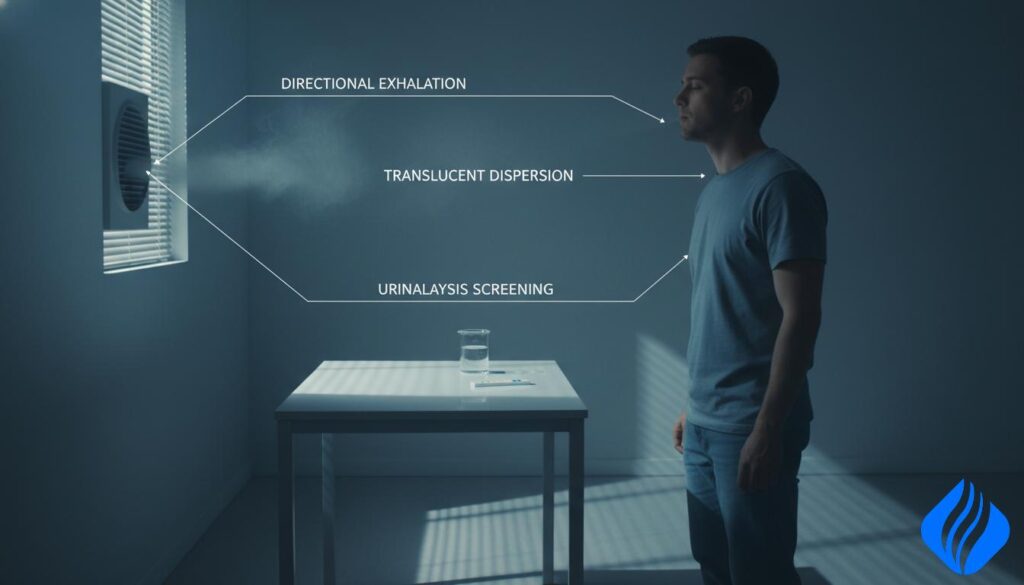
This is the most updated guide for 2026 standards. It separates odor management from drug-test realities, sets realistic expectations about vapor vs. cigarette smoke, and previews sections for rooms, cars, clothing, breath, testing, and detectors. Laws, leases, schools, and workplaces in the United States may still forbid vaping regardless of odor control.
Key Takeaways
- Nicotine metabolites like cotinine determine detection windows; urine often shows nicotine up to four days.
- Ventilation, exhale direction, and activated-charcoal filters reduce visible vapor and scent.
- Odor reduction does not guarantee negative drug tests; testing targets metabolites, not scent.
- This 2026 guide separates practical odor fixes from scientific detection facts.
- Always consider legal and policy limits in homes, schools, and workplaces in the United States.
What “Stealth Vaping” Really Means in the United States Today
Stealth vaping in contemporary U.S. use is best described as discretion and odor management. It emphasizes measurable steps—reducing aerosol output, improving air exchange, and keeping devices clean—rather than promising invisible results.
Why people look for discretion
Common motivations include roommates, landlords, parents, and public spaces. These concerns are practical and often driven by rules or social preference.
The biggest giveaways
A typical nose notices cloud density, lingering flavor scent, breath odor, and residue on mouthpieces or hands. These are reliable cues that vapor was present.
Device storage and disguise
Devices often appear as pens, USB-like sticks, phone-case formats, or key fobs. People commonly stash them in drawers, bedding, chair compartments, or bags.
Storage matters because a vape pen or disposable can release scent from mouthpiece residue. Confined air can concentrate that odor quickly.
Quick reality check
Masking sprays only cover odor temporarily. True reduction requires controlling aerosol, increasing fresh air exchange, and removing residue from fabrics and surfaces.
- Define: Minimizing visible vapor and detectable scent, plus routine cleaning of devices.
- Motivation: Privacy around roommates, property rules, family, and public settings.
- Tells: Cloud size, flavor persistence, breath, and sticky mouthpieces.
Vape vs. Cigarette Smoke Odor: Why Vapor Usually Dissipates Faster
Particle size and chemistry matter. E‑liquid aerosols are liquid droplets formed from propylene glycol (PG) and vegetable glycerin (VG). Combustion from cigarettes creates solid particulates, tar, and sticky byproducts.
Vapor basics: PG/VG aerosols versus combustion particles
PG/VG droplets are larger, wetter particles that evaporate in air. Combustion yields tiny soot and chemical residues that resist evaporation.
Why vapor sticks less to walls and fabrics
Cigarettes leave tar-like residues that bind to paint and textiles. Aerosol droplets usually deposit less and are easier to clear with ventilation and cleaning.
When scent lingers
Vapor can still hang around in small rooms, when airflow is poor, after many puffs in short time, or when soft surfaces absorb aroma.
- Sweet or dessert flavor profiles often leave stronger, lasting scent than mint or menthol.
- If cigarette odor is detectable hours later, aerosol typically fades sooner, but it is not odorless indoors.
“Vapor dissipates faster than cigarette emissions, yet closed spaces and fabrics can prolong detectable scent.”
How Long Does Vape Smell Last and What Makes It Stronger
Several factors determine whether a lingering odor fades in minutes or hangs around for hours.
Realistic range: With decent ventilation most scent fades in minutes to a few hours. In small, closed rooms or after repeated puffs, concentration rises and the effect can last longer.
Time drivers include number of puffs, air exchange rate, humidity, and room size.
- More puffs raise aerosol load and lengthen persistence.
- Higher humidity slows evaporation; dry air clears droplets faster.
- Larger rooms dilute odors; poor ventilation concentrates them.
Device issues also matter. Tank leaks, condensed residue at the mouthpiece, or a sticky film on surfaces create a steady scent source. Storing a device in a small case or drawer traps odor and releases it when opened.
Flavor profiles differ: mint and menthol often blend with common household scents, while sweet or fruity aromas stand out and are more noticeable.
Measurement mindset: If an open window and brief airing do not remove detectable scent, the culprit is likely fabric adsorption or device residue rather than air alone. For further practical steps, see this vape smell guide.
How to Hide Vape Smoke Indoors: Fast, Low-Drama Steps That Work
Simple ventilation and filtration steps provide the highest payoff for indoor odor control. Start with directional airflow: open windows and place a fan so fresh air moves out, not just around the room.
Ventilation strategy
Open windows on opposite sides when possible and use an exhaust fan or box fan aimed at the exit window. Proper ventilation speeds dilution and replacement with fresh air.
Note: HVAC returns can help exchange air in many U.S. homes, but a recirculating system may spread scent if it does not draw in outside air.
Exhale control
Exhaling toward a window or vent reduces visible vapor in the room. Directing exhale out an opening is more effective than blowing into the center of a space.
Take small draws when discretion matters; smaller output events are easier to manage and help reduce aerosol load.
DIY “sploof” and limits
A simple sploof (paper towel or toilet paper roll plus dryer sheets) lowers scent briefly. It traps some droplets but offers limited adsorption and can saturate quickly.
Activated charcoal options
Activated charcoal products, like Smoke Buddy-style personal filters and passive charcoal pouches, adsorb odor molecules rather than masking them. They outperform DIY sploofs for repeated use.
Neutralizers vs cover-ups
Sprays such as Febreze or Ozium can mask or neutralize some odor compounds but are not substitutes for air exchange. Use sparingly and avoid unnecessary inhalation of chemicals.
Room sealing tactics
Place a towel under the door and close vents in adjacent rooms to limit drift. Containment plus fresh air exchange and cleaning of device residue provides the best, evidence-based reduction.

How to Hide Vape Smoke in a Bedroom or Apartment Without Residue Build-Up
Soft fabrics act like sponges for flavored aerosol, creating a slow-release odor source in tight spaces. Bedrooms and small apartments have more textiles and less dilution, so deposits build up faster than in open areas.
Fabric targets: Focus on curtains, couches, rugs, and bedding. Wash bedding weekly and launder removable cushion covers. Steam or launder curtains and clean rugs on a scheduled basis to remove trapped fragrance molecules.
Baking soda and vacuuming
Sprinkle baking soda across upholstery and carpets, let sit for 15–30 minutes, then vacuum thoroughly. This reduces odor by adsorbing volatile compounds rather than masking them.
Wipe-down routine
Regularly wipe nightstands, door handles, desks, and window sills with a mild cleaner. Residue from aerosol can settle on hard surfaces and create a low-level background scent if left unattended.
Air purifier buying checklist
- Choose a unit with an activated carbon/charcoal filter plus HEPA for particles and odor.
- Confirm CADR for room size and aim for frequent air changes per hour.
- Replace carbon filters about every 6–12 months, depending on use and manufacturer guidance.
Device hygiene and storage: Clean mouthpieces and empty tanks regularly. Store devices in an airtight case to limit steady vapor release into a room.
Zero vaping or zero vape expectations should be realistic: reducing indoor use and output helps prevent long-term buildup, but complete elimination of all residual scent is unlikely without sustained cleaning and ventilation.
How to Hide Vape Smoke in a Car and Get Rid of Vape Smell Fast
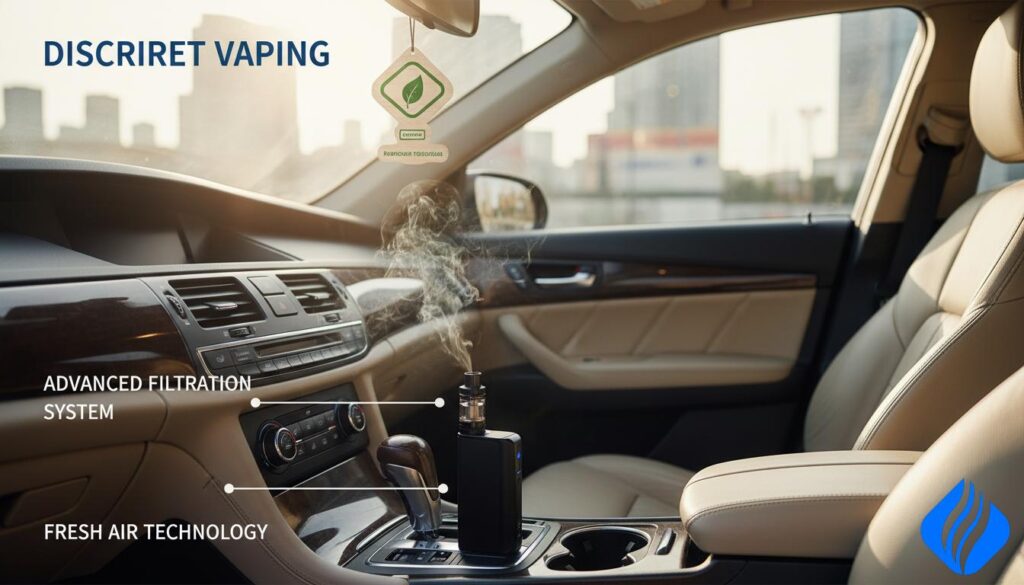
A car cabin concentrates odors quickly because it is small, warm, and often runs air in circles. That combination traps flavor compounds on fabric and plastic. Quick action gives the best results for a fresh interior.
Immediate reset
Roll down open windows and point airflow out of the vehicle. Switch HVAC to fresh air mode and avoid recirculation so odors are exhausted rather than redistributed.
Why it matters: recirculation keeps contaminated air inside the cabin and lets vapor condense on surfaces. Using outside air clears the cabin faster.
Upholstery rescue
For cloth seats and carpets, sprinkle baking soda, let sit 15–30 minutes, then vacuum thoroughly. The powder adsorbs volatile compounds and loosened particles.
Repeat weekly if fabrics show persistent scent; deep cleaning removes trapped residue more effectively than surface sprays.
Quick wipe protocol
Wipe dashboards, door handles, steering wheel, and cup holders with a mild cleaner. Condensed residue gathers on touchpoints and re-emits scent when the cabin warms.
Car-friendly odor control
Keep a compact activated carbon air purifier or charcoal pouch under a seat for continuous adsorption. Carbon removes volatile aroma molecules rather than masking them.
Prevention note: take small draws when possible and limit sessions in enclosed cabins. These steps help reduce lingering smell but do not guarantee complete elimination.
How to Get Rid of Vape Smell on Your Breath and Clothes
Small personal steps can make breath and clothing far less likely to announce recent vaping in close conversation. The focus is practical: address mouth, skin, hair, and fabrics quickly and with minimal fuss.
Breath basics
Why breath holds scent: aromatic compounds and residue linger in the mouth after repeated use and from nicotine residues on the tongue.
Hydrate with plain water and chew mint gum or a mint. Brush teeth and tongue when possible, and use mouthwash shortly before contact for best timing.
For close conversation: poor ventilation and a nearby nose make breath management as important as room air.
Skin and hair
Lightly scented lotion on neck, wrists, and behind ears adds a neutral fragrance layer. Avoid heavy perfumes that draw attention.
Clothing and device care
Swap outer layers like a hoodie or jacket if scent clings. Launder fabric-heavy items when practical—this removes trapped aroma more reliably than sprays.
Wipe the vape pen mouthpiece and store the device in an airtight case to prevent transfer of scent to hands and clothes.
Quick checklist: hydrate, gum, brush tongue, wipe device, swap an outer layer—these actions help get rid vape traces for close interactions.
The Science of Drug Testing and Vape Detection in the Body
Drug tests measure chemicals inside the body, not scents in the air. This distinction matters for anyone practicing stealth or managing odor.
Nicotine testing and cotinine
Nicotine is quickly processed by the liver into cotinine. Labs usually measure cotinine because it lasts longer and is more reliable than nicotine itself.
Cotinine appears in blood, urine, and saliva for longer windows. Frequency of vaping raises baseline cotinine and makes detection more consistent.
THC basics and fat storage
THC converts into metabolites that often bind with fatty tissue. These compounds can re-enter the bloodstream over days or weeks.
Body fat, use pattern, and metabolism explain wide variation in test results among individuals.
Why odor control is not the same as being test-free
Controlling room scent, using filters, or switching flavors does not change internal biomarkers. Labs analyze metabolites, not ambient air.
“An odor-free environment does not equal a negative lab result.”
| Substance | Main Marker | Storage | Detection variability |
|---|---|---|---|
| Nicotine | Cotinine | Bloodstream, urine | Moderate; rises with repeated use |
| THC | THC-COOH and others | Fat tissue (adipose) | High; influenced by body fat and frequency |
| Use pattern | — | — | Frequent use increases test positivity |
- Practical note: Abstinence (zero vaping / zero vape) reduces markers over time; quick masking techniques do not.
- Focus on test type, personal patterns, and reliable timelines rather than anecdotal news or tips claiming shortcuts.
Comprehensive Detection Window Table for Nicotine and THC
Understanding typical detection windows helps set realistic expectations before a lab test. This reference is for U.S. readers and gives general ranges by sample type. Only a certified lab can interpret a specific result.
Detection windows by test type
Notes: Ranges are general and vary with frequency, dose, body fat, and metabolism. Short-term checks detect recent use; hair reflects longer-term patterns.
| Substance (marker) | Urine (typical range) | Blood (typical range) | Saliva (typical range) | Hair (typical range) |
|---|---|---|---|---|
| Nicotine (cotinine) | Up to 3–4 days (single use); up to 7+ days for frequent users | Hours to 2 days; detects recent exposure | Up to 2 days; often used for immediate screening | Up to 90 days; shows sustained patterns, not single puffs |
| THC (THC‑COOH and metabolites) | Single use: 1–3 days. Moderate: up to 7 days. Heavy: 30+ days | Hours to 1–2 days for recent use; metabolites may persist longer | Up to 24–72 hours for recent use | Up to 90 days or more; reflects repeated use over months |
Why urine, saliva, and hair differ
Urine is common for workplace testing because it balances detection window and cost. Saliva catches very recent exposure. Hair offers a long record but cannot pinpoint a single event.
Main modifiers and common myths
Frequency and dose: Repeated use raises baseline markers and extends detection time.
Body fat and metabolism: Higher adipose stores retain THC metabolites longer. Faster metabolisms clear markers sooner.
Hydration myths: Drinking excessive water may dilute urine and can be flagged by labs. It does not reliably remove metabolites.
“A brief puff or a few puffs may show in saliva but is less likely to change long-term urine baselines unless use is frequent.”
Practical interpretation: A bit of recent vaping can appear differently across tests. Frequent patterns matter far more than isolated puffs for longer windows. Attempts to get rid odor or rid vape scent do not affect biological markers.
Reader caution: Sensational news headlines often oversimplify detection. When stakes are high, use conservative assumptions and rely on professional testing advice.
How Vape Detectors and Smell Sensors Work (and What They Can’t Prove)
Detection devices measure air disturbances and particle density, not “what” is in the aerosol. That distinction matters when readers weigh stealth choices and practical risks.
Smoke alarms and vapor sensors often use the same basic principle: they sense particle concentration or light scatter rather than chemical identity.
Smoke versus aerosol sensing
Traditional smoke detectors target combustion particles. Many modern units and standalone sensors react to droplets and fine particulate from vaping or cooking.
Photoelectric-style detectors in plain terms
Photoelectric units contain a light source and a sensor. When particles pass through, they scatter light and trigger the sensor.
This design means dense vapor or steam can set off the alarm just as small smoke particles can.
Why false positives happen
Humidity, dust, aerosol sprays, candles, and cooking oils can mimic particle signatures. A triggered alarm does not identify a person, a vape pen, or chemical contents.
Practical takeaway
Reduce aerosol output and manage airflow rather than trying to “beat” any detection system. Device maintenance and modest session control cut particle clouds most effectively.
Policy note: detectors are often enforcement signals in schools, rentals, and workplaces. Prioritize compliance, harm reduction, and proper ventilation over risky evasion.
Conclusion
This closing summary pairs practical steps with the science readers need for balanced discretion and safety.
Prioritize air exchange: an open window plus targeted airflow gives the biggest immediate benefit. Add an air purifier with activated charcoal and keep devices and fabrics clean to avoid steady odor sources.
Vapor often clears faster than odors from cigarettes, yet vape smell can persist on textiles and in small rooms. Testing looks at internal markers like cotinine and THC metabolites; odor control does not change those results.
Detectors sense particles, not intent, so reducing aerosol output is more reliable than assuming any stealth vaping trick will work. For maximum certainty, consider zero vaping or discreet nicotine pouches and apply three consistent steps: air exchange, carbon adsorption, and device hygiene.
 English
  German
  Dutch
Dutch  Danish
  Czech
Czech  Italian
  Slovenian
  French
  Hungarian
  Spanish
  Polish