

Dual Mesh Coils and smart-screen verification have changed the market; counterfeit devices now mimic packaging and fonts closely. We open with exact testing metrics: expected puff count and battery efficiency will be measured in every sample, and we track puffs-per-dollar for real-world value.
We define a counterfeit device in practical terms: a product that copies a brand without matching quality control, ingredient transparency, or safety standards. Our objective is clear. We help U.S. adult vapers (21+) spot fake vape products before purchase and confirm authenticity after purchase.
Preview of our workflow: source and price check → packaging inspection → QR/scratch-off verification → hands-on testing → technical spec sanity check → next steps if verification fails. Key specs we verify include mAh, ml, nicotine % (2% vs 5%), coil type, and USB‑C.
Safety note: overheating, leaking, harsh chemical taste, or verification failures mark a suspect device. We prioritize user safety and legal nicotine warnings over finishing any product.
Key Takeaways
- Counterfeits can look identical; check packaging and verification codes.
- Confirm stated puff count and battery efficiency during hands-on tests.
- Verify technical labels: mAh, ml, nicotine %, coil type, and USB‑C.
- Use QR/scratch-off workflow before use; prioritize safety signs.
- We measure value with puffs-per-dollar and flavor consistency.
- If a device shows overheating or odd tastes, stop use and report it.
Why counterfeit vapes are flooding the U.S. market right now
An expanding market and fragmented retail networks make it easy for counterfeit products to spread. High demand and rapid product cycles leave little time for thorough vetting. That gap lets imitation goods move fast through channels that vary in oversight.
Where fakes show up
- Gas stations, liquor stores, and small smoke shops with loose sourcing.
- Street sales and questionable online listings that undercut usual retailers.
- Unverified sellers on marketplace pages or third-party website listings.
Low prices are often a supply-chain signal. Counterfeiters cut corners on batteries, coils, and testing to underprice established brands. That can hide real safety and performance gaps.
What is copied best
Colorways, fonts, layouts, and familiar flavor names are the easiest tactics. Near-match spelling changes are common. We advise comparing any listing with the official product page before purchase and checking images, specs, and flavors for mismatches.
What makes a fake vape dangerous beyond wasting money
Beyond cost, imitation products can pose real safety and health hazards. We separate annoying failures from true dangers. Some units only taste bad. Others can harm users.
Unregulated contents and missing transparency are central issues. Legitimate brands include clear ingredients, batch codes, and lab results. Counterfeit vape products often omit these signals or fake them. That removes consumer checks on purity and composition.
Nicotine variability raises immediate side effects. An unknown strength can cause dizziness, nausea, or headache. Some cartridges deliver far more nicotine than labeled, producing a strong throat hit and worsened health effects.
Device hazards span overheating, leaking, and battery failures. Poorly made shells or coils can overheat during use or charging. Leaks can expose users to concentrated oil and solvents that were not intended for inhalation.
Contaminants matter for inhalation. Tests on illicit products often find heavy metals and pesticide residues. Cheap thickeners or cutting agents mimic viscosity but are not designed for lungs.
| Hazard | Common source | Likely effect | Mitigation |
|---|---|---|---|
| Unlisted ingredients | Unverified manufacturers | Unknown health impact | Prefer labeled products with lab reports |
| Nicotine spike | Inconsistent mixing | Dizziness, nausea, headache | Stop use; document pack and code |
| Battery/fire risk | Poor cells, bad charging | Overheat, malfunction, fire | Avoid charging suspect units; dispose safely |
| Contaminants (metals/pesticides) | Lack of screening | Long-term lung and systemic risks | Choose products with third‑party testing |
Our rule: if origin cannot be verified or the device behaves abnormally, stop using it and treat it as suspect. Prioritize safety and documented quality over low price.
How to tell if a vape is fake by checking packaging details first
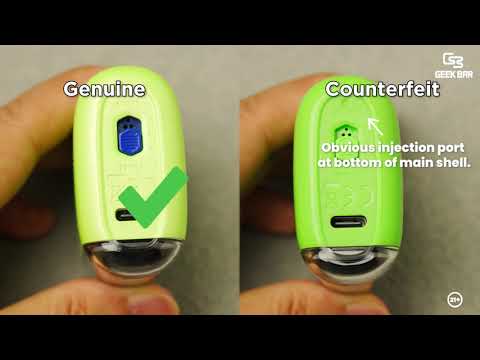
Packaging often reveals shortcuts; inspect every panel carefully. We start with the box because visual checks are fast and effective. A quick scan catches many counterfeit signs before any use.
Spelling errors, washed-out print, and inconsistent branding
Look for misspellings, mismatched fonts, or smudged colors. Misaligned logos or different brand language across panels are common slips. These signs often mean the product inside may also lack quality.
Missing required health warnings, batch info, or barcodes
Legitimate U.S. products include standardized warnings, batch/lot numbers, and scannable barcodes or QR codes. Absence or low-quality printing of these fields is a strong authenticity red flag.
Box size, seal quality, and tamper evidence that doesn’t line up
Check box dimensions against verified purchases. Weak glue seams, resealed tamper strips, or uneven cuts point to corner-cutting. Take clear photos before opening for returns or manufacturer reports.
| Red flag | What to check | Action |
|---|---|---|
| Spelling / fonts | All panels and ingredient lists | Reject listing; photograph and report |
| Missing batch/barcode | Bottom panel and inserts | Contact seller; hold product |
| Poor seals / wrong size | Edges, tamper strips, box fit | Do not use; document and dispose safely |
How to tell if a vape is fake using QR codes, scratch-offs, and verification pages
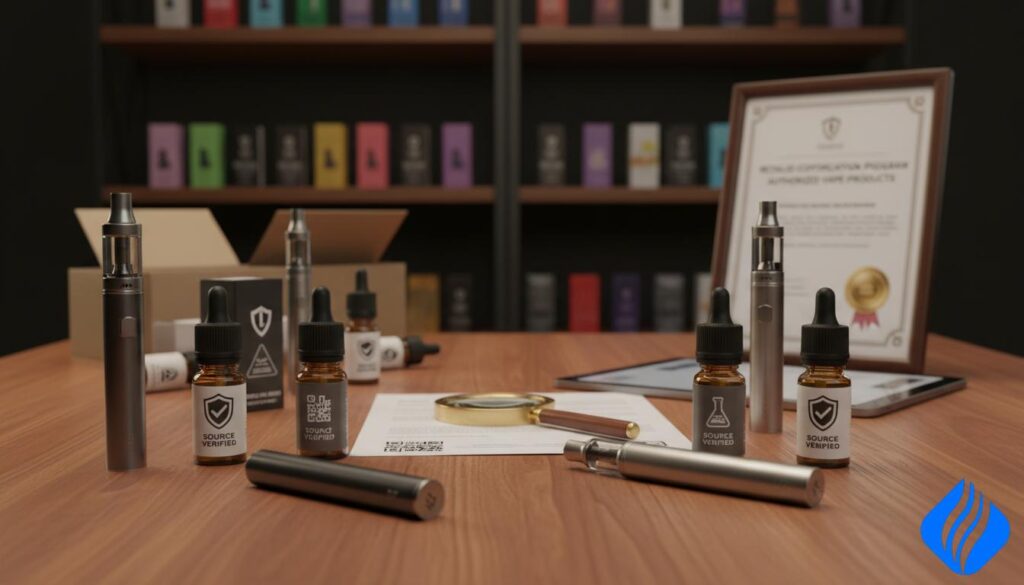
Scan-based verification is now the quickest way to confirm a product’s chain of custody. We use a simple workflow that checks the physical sticker, the online flow, and the returned result. Follow each step and document outcomes.
Step-by-step scanning and URL validation
- Locate the QR sticker or scratch-off panel. Scratch gently to reveal the security code.
- Use your phone camera to scan. Avoid third-party QR apps when possible.
- Read the full URL before tapping. Confirm the domain spelling and secure padlock.
- Enter the security code only on the official verification website. Is it authentic? Use the QR code check on Sokvape and proceed only when the flow is normal.
Interpreting failures and odd results
Common failure modes:
| Result | Likely cause | Action |
|---|---|---|
| Dead page / 404 | Bad link or counterfeit redirect | Document, do not use, contact manufacturer |
| Generic homepage | Non-official domain | Screenshot, reject product, report seller |
| Already verified | Reused code or secondhand item | Ask seller for proof of purchase; treat with caution |
“Verification codes bridge packaging and manufacturer records. A valid flow protects users and clarifies authenticity.”
Document everything: take screenshots of the code, URL, and result. Repeated redirects, obfuscated chains, or pages asking for unusual permissions are red flags for counterfeit vape products.
Hands-on testing signs: what a fake feels like when you actually vape it
A device’s behavior in use reveals many authenticity clues faster than labels. We treat hands-on testing as a secondary confirmation. Verify packaging and codes first, then use performance checks to confirm doubts.
Throat hit clues and tasting notes
Authentic units deliver a steady, predictable throat hit. Counterfeit units often swing between weak and overly harsh pulls. A sudden chemical bite or metallic note that does not match the labeled nicotine strength is a major red flag.
Vapor output and long-run flavor
Watch for thin, inconsistent clouds, delayed firing, or sputtering. These signs point to poor coil build, airflow leaks, or unstable power delivery.
Flavor consistency after 5000 puffs is a key metric. Early muting, sudden sweetness loss, or burnt notes well before the claimed puff count indicate inferior oil and coil quality.
Hardware tells and safety cues
Loose mouthpieces, internal rattles, uneven airflow, and a hot body are practical signs of low build quality. Moderate warmth is normal. Excessive heat at the mouthpiece or battery area is a stop-use signal.
- Quick checks: compare draw and taste with a known-authentic unit.
- Document: note poor battery life, unpleasant flavor, or overheating.
When performance fails, preserve packaging and run the verification flow or consult our hands-on testing checklist.
Core technical specs that counterfeit labels often get wrong
Technical labels often betray overstated claims when hardware and numbers don’t add up. We check core fields that counterfeiters pad with marketing figures rather than real measurements.
Battery capacity (mAh)
Compare claimed mAh with the device’s size. Tiny disposables that promise extreme puffs require unreal battery density. A realistic mAh range should match the physical battery volume.
E-liquid volume (ml)
Inspect fill windows or weight the unit. Exaggerated ml often pairs with inflated puff counts. Verify ml against typical norms for similar products and note oil quality.
Nicotine strength
Most mainstream disposables list 2% or 5% nic salts. Missing or inconsistent nicotine info is a clear red flag for safety and labeling accuracy.
Coil type and performance
Mesh vs. dual mesh affects flavor and consistency. Expect steadier output from mesh designs; erratic hot/cold hits suggest poor coil build or fake claims.
Charging port reality check
USB‑C must sit flush and fit snugly. Loose ports, intermittent charging, or heat during charge indicate substandard cells or poor assembly.
- Why this works: specs sell the story. Hardware that fails real tests usually betrays counterfeit products.
- Verification step: record serials and test charge behavior before regular use.
“If numbers on the box don’t match real-world behavior, treat the product with caution.”
Value and performance comparison: puffs per dollar and flavor consistency across top brands
Value in disposable products comes from measured puffs and steady flavor performance, not marketing claims. We define the main product benchmark as the unit you hold or view online. Then we compare it against Geek Bar, Lost Mary, and Raz on the same technical fields.
What to record on the box and in use:
- Battery (mAh) — expected runtime versus size.
- E-liquid (ml) — fill volume vs. claimed puff count.
- Nicotine strength — common: 2% or 5% nic salts.
- Coil type — mesh or dual mesh for flavor fidelity.
- USB‑C — presence, fit, and charge behavior.
Main product benchmark vs. Geek Bar
On the box check clarity of specs and batch IDs. In real use watch vapor steadiness and whether flavor holds under normal puff cadence. Counterfeits often mute flavor fast.
Main product benchmark vs. Lost Mary
Compare airflow feel (tight MTL vs looser draw), coil response speed, and whether flavor drops sharply before expected life. Abrupt flavor loss signals poor oil or coil build.
Main product benchmark vs. Raz
Track battery life patterns and end-of-life taste. Raz-style units often step down power near the end; a burnt finish versus muted taste reveals inflated puff claims.
Puffs per Dollar is a calculation, not an ad line. Use price ÷ realistic puffs (discount inflated counts) for a fair comparison. Document real use and then compute value.
| Brand | mAh | ml | Nicotine | Coil | USB‑C |
|---|---|---|---|---|---|
| Main product benchmark | Record actual mAh | Record actual ml | 2% / 5% | Mesh / Dual mesh | Yes / No |
| Geek Bar | Typical medium mAh | Typical 10–15 ml range | 2% or 5% | Mesh (steady output) | Often yes |
| Lost Mary | Medium mAh | 10–12 ml common | 2% or 5% | Dual mesh (flavor punch) | Often yes |
| Raz | Variable mAh | 9–14 ml | 2% or 5% | Mesh or hybrid | Sometimes yes |
Practical rule: if specs read premium but flavor consistency or output is weak, prioritize real-use data over package claims.
For a deeper cross-brand look, consult our brands comparison analysis.
How to avoid buying counterfeit vapes: source and retailer checks that work
Start by controlling the source: verified sellers cut risk far more than packaging checks alone. We advise buying from established online retailers that show clear support channels and consistent catalogs.
What defines an established retailer?
- Customer support: reachable contacts and documented return policy.
- Catalog history: stable listings and multiple product images.
- Transparent listings: full specs (mAh, ml, nicotine %, coil type) and batch details.
Price research is a simple filter. Compare across several listings and note the expected price range. Unrealistic discounts and bulk mystery lots often signal bad source choices in the U.S. market.
Before checkout, cross-check the product page against the brand’s official site. Match flavors, images, and specs. Confirm packaging photos align with verified brand assets.
| Risk sign | What to check | Why it matters | Quick action |
|---|---|---|---|
| Extreme discount | Compare price across retailers | Often bulk or counterfeit channels | Avoid purchase; research seller history |
| Thin product page | Missing specs or single image | May hide mixed or returned stock | Contact seller; request more images |
| Short-lived seller | New account, few reviews | Counterfeit sellers move fast | Prefer licensed retailers with records |
For safer browsing, use vetted category pages: Disposable Vapes and Hot Sale. For brand shortcuts, check RandM and Bang.
Prevention principle: controlling the source and buying from verified retailers reduces counterfeit risk more than any single packaging trick.
What to do if you think you bought a fake vape
Act fast: discontinue use, and collect packaging and code screenshots before you handle the device further. We emphasize this first step because unknown contents and unstable hardware create real safety risks.
Stop use and document results
Stop using the device immediately. Take clear photos of the front, back, and sides of the box. Capture close-ups of warnings, batch or lot fields, and the security code.
Screenshot any verification outcomes and save the URL from the brand website. Keep notes on odd behavior: overheating, odd taste, or rapid battery drain.
Safe handling and disposal
Isolate the product. Do not charge it. Avoid leaving it in hot cars or near flammable materials.
Treat the unit as e‑waste. Do not drop it in household trash. Use local battery or hazardous waste programs for disposal because lithium cells pose fire risks.
Report and seek help
Notify the seller for refund or record. Contact the legitimate manufacturer and share code screenshots and packaging images. Many brands track counterfeit vapes and can advise next steps.
Health note: if you feel nausea, dizziness, chest discomfort, or persistent cough after use, contact a clinician promptly and stop using similar products.
“Stop use, document packaging and code results, and report. These steps protect users and help brands track counterfeit products.”
Safety and legal essentials before you take your next puff
Before you draw another puff, review basic safety checks that prevent most battery incidents. These steps reduce risk across genuine and suspect products. Keep this short checklist handy when buying, charging, or using any unit.
How to know it’s empty
Observable indicators: noticeable flavor drop-off, weaker vapor, blinking lights (if present), and dry hits that show oil no longer reaches the coil.
Pushing past empty matters. Dry hits overheat the coil and taste burnt. Users may mistake that harshness for poor quality or counterfeit build when the unit has simply reached end-of-life.
How to recharge safely
USB‑C best practices: use a reputable low-output charger, avoid fast-charging bricks, and place the device on a non-flammable surface while charging.
Stop charging if the body gets hot. If the port is loose, charging is intermittent, or the unit heats excessively, discontinue use and treat the product as unsafe.
Nicotine warning and legal notes
Nicotine warning: This product contains nicotine. Nicotine is an addictive chemical.
Keep all products away from minors and pets. Follow U.S. local regulations; purchase only if 21+ where required. Use verification flows on the brand website when available and document odd behavior for support.
| Sign | Meaning | Action |
|---|---|---|
| Flavor drop-off | Low e-liquid or worn coil | Stop use; document and dispose per local e‑waste rules |
| Weak vapor / blinking | End-of-life or low battery | Recharge safely or replace |
| Excess heat during charge | Poor cells or assembly | Stop charging; isolate and seek proper disposal |
Practical rule: safe charging habits protect users and reduce battery incidents across all vapes and products.
Conclusion
Conclusion
We close with a clear checklist that makes verification quick and repeatable. Verify source and price, inspect packaging, run QR/scratch-off checks and confirm the code on the brand website. Follow with hands-on testing and core spec checks.
Counterfeit vapes threaten health and safety through unregulated oil, nicotine mismatch, and poor batteries. Use two performance metrics that cut through marketing: Puffs per Dollar and Flavor Consistency. Compare results against known brands like Geek Bar, Lost Mary, and Raz.
Watch for red flags: too cheap, missing warnings or batch data, odd redirects, “already verified” codes, harsh chemical bite, or overheating. When authenticity is uncertain, we choose safety: stop use, document, dispose responsibly, and report the seller or manufacturer. Prefer verified shopping paths and category pages to reduce exposure over time.
 English
  German
  Dutch
Dutch  Danish
  Czech
Czech  Italian
  Slovenian
  French
  Hungarian
  Spanish
  Polish