

Direct answer: Continued hitting usually points to auto-firing or a sensor/button misfire. Condensation, debris, poor contact, or a failing coil most often cause this firing behavior.
If it’s firing in your pocket, treat it as urgent. We are SOKVAPE, and we prioritize quick risk reduction and clear fixes. In this guide we give a safety-first response, a numbered troubleshooting workflow, and practical mouthpiece cleaning steps to reduce sensor misfires.
Mouthpiece hygiene matters for performance. Residue in the bore or chimney can cause flooding and condensation. That, in turn, can confuse draw-activation sensors on modern draw-activated kits and draw-activated pods.
We will show device-specific notes for disposable, pod, and box mod types. Expect numbered steps, a later comparison table, and battery safety plus brief TSA/FAA and PACT Act basics. For now, follow calm, direct instructions and remember we prioritize safety and clear fixes. t.
Key Takeaways
- Auto-firing often stems from condensation, debris, or poor contact at the mouthpiece.
- Cleaning the mouthpiece and airflow path reduces sensor misfires and flooding.
- We provide a safety-first, numbered troubleshooting workflow for all device types.
- Battery and legal basics (TSA/FAA, PACT Act) will be covered later.
- If device fires unexpectedly, remove power and treat the situation as urgent.
Direct Answer: What it means when your vape keeps firing after you stop
Extended heating after a puff often points to sensor or mechanical failures, not expected device behavior.
Generally this problem falls into two categories: true auto-firing (activation without user input) or delayed cut-off where the unit continues briefly due to sensor confusion or flooding.
Normal behavior is a short post-draw airflow noise or a tiny lingering puff. Actual continued heating creates visible vapor, warmth at the pod or tank, or a hissing sound.
Button vs. draw-activation and cut-off timers
A stuck fire button is a mechanical fault. Draw-activation relies on a sensor and smart chip. Condensation, debris, or pressure shifts in the air path often trick the sensor into repeated triggers.
Most kits use a safety cut-off around eight seconds to limit continuous output. That timer stops long runs but won’t fix the underlying reason. Repeat cycles can overheat a coil and stress the battery over time.
- Real-use signals: pocket activation, unexpected vapor smell, warmth at the pod, or device hissing — treat these as auto-firing until checked.
- Next we’ll prioritize immediate safety steps, then a systematic troubleshoot workflow and mouthpiece cleaning to reduce sensor misreads.
For further technical causes and prevention tips see this concise guide: vape auto-firing causes & prevention.
Safety first: what to do immediately if your device won’t stop firing
Unexpected continuous firing calls for quick, calm action to reduce risk. We prioritize battery handling and fire safety. Take these short steps now to remove power and limit heat.
Emergency shutoff steps for button-fire and draw-activation devices
- Perform the click-off sequence if supported. This is the fastest way to remove power.
- For pod or draw-activated kits, pull the pod to break the circuit. Wipe the pod bay dry.
- For mods with removable cells, remove cells immediately and place them in a safe battery case.
- If the fire button is stuck, avoid pressing it. Lay the unit down and follow steps 2–3.

Heat, e-liquid leakage, and where to place a hot unit
If the unit is hot, hissing, or smells burnt, move it to a non-flammable place such as a ceramic plate or metal tray.
Do not set it on paper, fabric, or bedding. Allow it to cool and never try to charge a hot battery.
Symptoms vs. risks
| Symptom | Likely risk |
|---|---|
| Rapid warming | Battery stress / overheating |
| Constant vapor or hissing | Burnt coil, wasted e-liquid, fire risk |
| Visible leaks in pod chamber | Contacts shorting, sensor confusion |
| Swollen cell or distorted case | Immediate fire hazard — stop use |
If shutoff attempts fail, stop using the device and seek professional help. Prioritize safety over saving hardware. Repeated auto-activation requires inspection before reuse, especially for disposable vape units and battery-powered mods.
why does my vape keep hitting after i stop
Small deposits and trapped moisture inside the pod chamber often trigger false sensor reads. We diagnose each symptom, state the likely cause, and note what to test next in the workflow.
Condensation and debris in the pod chamber blocking sensors
Moisture beads collect with dust and pocket lint. They form deposits that block airflow and confuse draw-activation sensors.
The usual sign is repeated short bursts or phantom firing. Next step: power down and inspect the pod bore.
Poor connection at the coil seat or battery contacts
Dirty or misaligned coil seats and residue on contact pads cause intermittent signals. The chip can read these as a command to fire.
Faulty or worn-out coil, including mesh coils at end-of-life
Worn coils darken e-liquid, taste burnt, and flood more. Mesh coils age fast and run hot near end-of-life.
Sensor glitches, overheating, chip limits, and impact damage
Flooded chimneys mimic a draw; gently blowing into the mouthpiece can reset the sensor briefly.
Chain vaping or sun exposure causes overheating that shifts sensor tolerance. The safety cut-off stops a long run but not repeated short cycles if the input stays stuck.
Drops can loosen connectors and create micro-damage that breaks communication between sensors and the control chip.
“Treat repeated auto-activation as a hardware signal, not normal behavior.”
| Symptom | Likely Cause | Next test |
|---|---|---|
| Phantom short puffs | Condensation + debris | Power down → inspect pod bore |
| Intermittent firing | Poor connection at seat | Reseat pod, clean contacts |
| Burnt taste / dark e-liquid | Worn coil / mesh coils end-of-life | Replace coil, prime before use |
| Repeated short cycles | Sensor glitch / overheating / chip fault | Cooldown → reset → test; if repeat, stop use |
What we’ll test next: power down → inspect → clean → reseat or replace → reset → cooldown → retest.
Step-by-step troubleshooting workflow to stop an auto-firing vape
Start with power isolation to reduce risk and make the unit safe to handle. We walk through safe, ordered steps so you avoid trial-and-error that can worsen issues.
- Power isolation: Click-off sequence, remove the pod or tank, and take out removable cells for mods. This removes battery energy before inspection.
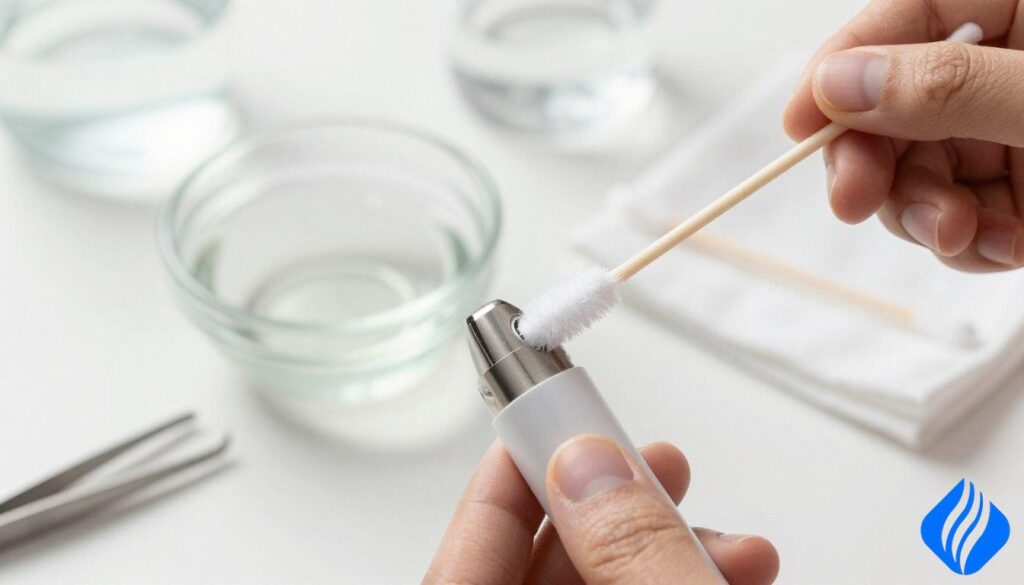
- Dry-clean contacts and the button area: Use a dry cotton swab to clean battery contacts, the pod slot, and the fire button. Dry first. If residue is stubborn, use a tiny amount of isopropyl, then fully dry with a fresh swab.
- Coil seating and Coil Priming: Check coil alignment and reseat the pod or coil so contacts mate cleanly. Prime new coils on the wick to reduce flooding that can trigger the sensor. Proper seating prevents leaks and false reads.
- Replace versus reseat: If the coil tastes burnt, shows dark e-liquid, or leaking continues, replace it. Repeated reseating is only a temporary way and can hide failing hardware.
- Controlled reset: Gently blow into the mouthpiece to clear a flood and re-center the draw sensor. Wait a few seconds, then reassemble and test with one short puff.
- Cooldown protocol: Let the device sit disassembled for 5–10 minutes if warm. Allow battery and chip to return to normal temperature before retesting. This reduces false triggers from heat.
Decision point: If auto-firing persists after these steps and a coil replacement, treat it as a chip or battery fault. We then move to device-specific guidance.
“Power isolation, clean contacts with a dry swab, and a short cooldown time fix most sensor-trigger issues.”
Cleaning the mouthpiece and airflow path to prevent sensor misfires
A clear airflow path prevents false triggers and keeps the device reliable. Follow a quick routine that targets the mouthpiece bore, chimney, intake vents, and sensor area.
Where residue builds and how it tricks sensors
Warm vapor condenses into droplets on the chimney walls. Droplets trap dust and debris and then migrate toward the pod and sensor. This “residue loop” changes air pressure and fools draw-activation chips.
Best-practice tools and dry-time
- Map the path: mouthpiece bore → chimney → intake vents → sensor area.
- Dry-clean first: use a paper towel or cotton swab to remove e-liquid and dust.
- Contacts only: if needed, dampen a swab with isopropyl and dry fully before reassembly.
- Dry-time is mandatory: wait at least 5–10 minutes until no moisture remains near sensors.
High-risk spots: chimney walls, mouthpiece corners, and intake vents where lint collects. Quick wipes at every pod swap and a deeper weekly cleaning prevent most debris-related misreads.
Cleaning is maintenance, not just hygiene — it protects performance and safety.
Device-specific fixes: disposable vape vs. pod system vs. box mod
Different device classes demand different fixes; a single step won’t suit every kit.
Disposable units
Disposable vape units often fail when e-liquid reaches the battery. That causes shorts and an unsafe condition.
Action: If you see leaks, corrosion, swelling, or repeated auto-activation, discontinue use. With popular brands like Geek Bar, replace the unit rather than attempt a repair.
Pod systems
Pods need clean pod chambers and flush coil seating to avoid sensor misreads.
- Dry the chamber and clean contacts.
- Reseat the pod so the connection is flush.
- Let the airway dry before testing to reduce false triggers.
Box mods and removable cells
Mods allow safe power removal. Inspect cells, contacts, and the fire button for residue or stickiness.
Clean battery contacts and the button area. If the fire button sticks after cleaning, service or replace the device.
Quick comparison
| Type | Pocket firing risk | Leak risk | Repairability |
|---|---|---|---|
| Disposable vape | High | High | Low |
| Pod | Medium | Medium | Medium |
| Box mod | Low | Low | High |
When cleaning and a coil swap do not stop auto-activation, escalate to warranty support or replace the device. We prefer losing hardware over risking a thermal event.
Preventing repeat issues: storage habits, e-liquid choices, and maintenance cadence
Smart e-liquid choices and proper storage cut down on flooding and false triggers. Small, regular habits reduce mechanical and sensor problems and keep a device reliable over time.
PG/VG, wicking speed, and flooding
Higher PG liquids move faster than some wicking can manage. This mismatch raises condensation and leaks, which confuse draw sensors.
Choose a PG/VG ratio matched to your pod and respect wicking time when filling new coil heads.
Leak prevention and storage
Fill carefully, don’t overfill, and reseal firmly. Keep devices upright and avoid hot cars or direct sun to limit overheating and leaks.
Coil life signals and quick maintenance
Replace coils at first signs: darkened e-liquid, burnt taste, or low vapor output. When swapping, wipe the pod bay to remove dust and residue.
SOKVAPE pro-tips
- Rotate devices to avoid chain vaping stress.
- Carry a dry swab kit for quick mouthpiece and contact wipes.
- Disposable users, including Geek Bar shoppers, should focus on storage and prompt replacement when leaks start.
Make sure pods are fully seated before travel. For more accessories and guidance, reach out to t.
Safety Warning and Legal Disclaimer for US users
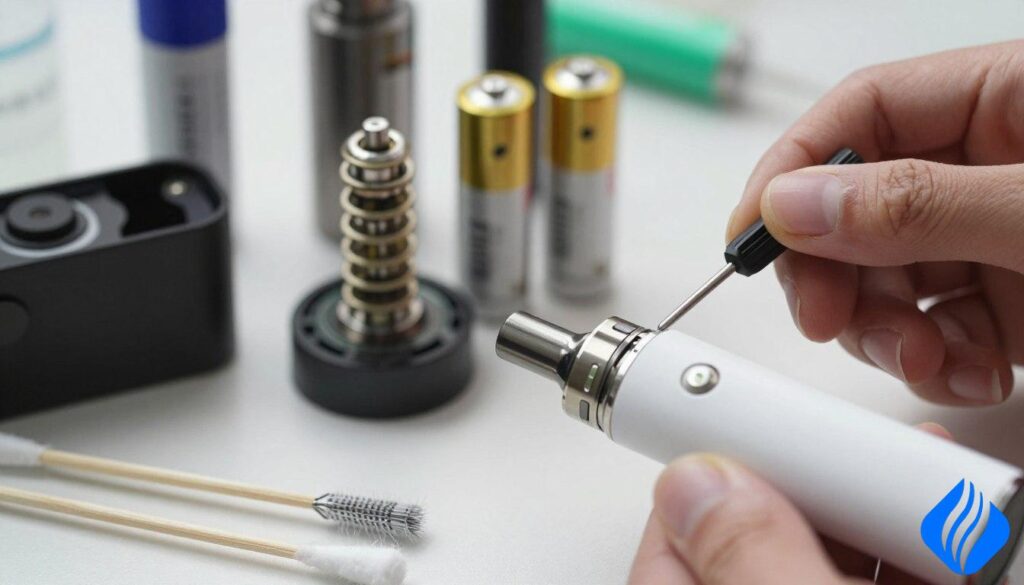
Battery incidents rise when devices heat unexpectedly or show visible damage. Treat any swollen cell, split wrap, or rapid heating as an immediate hazard. Power down and place the unit on a non-flammable surface.
Lithium-ion battery safety
Safety Warning: Stop using a device that shows swelling, ripped wraps, or odd heat. Avoid loose cells in pockets where coins or keys can short terminals.
Charge with the manufacturer charger. Do not leave charging unattended. If the battery gets hot or the device behaves erratically after an auto-activation event, disconnect power and let it cool.
Battery cases matter: Use a hard case for spare cells to prevent terminal bridging and reduce fire risk during carry and storage.
TSA/FAA compliance and PACT Act awareness
Below is a concise carry-on vs checked bag comparison. Rules change; confirm current TSA/FAA guidance before travel.
| Item | Carry-on | Checked bag |
|---|---|---|
| Device with installed cell | Allowed | Usually allowed, better in carry-on |
| Spare batteries | Allowed in protective case; terminals taped | Generally prohibited |
| Damaged or swollen cell | Not allowed | Not allowed |
Legal Disclaimer: This is informational guidance, not legal advice. Comply with federal, state, and local rules, including 2026 laws and PACT Act requirements for sales, shipping, and age verification.
Following these steps reduces risk during transport and lowers the chance of accidental activation or battery incidents in transit.
Conclusion
, Close the guide by reinforcing that prompt action and routine care stop most activation faults. Treat any unexpected activation as an auto-firing risk first. Cut power, isolate the device, and allow it to cool before handling.
Fix path: dry-clean the pod chamber and contacts, reseat or replace the coil, gently blow to reset the draw sensor, then test with one short puff. These simple steps fix most issues caused by condensation, debris, poor connections, worn coils, or sensor glitches.
If the device misfires after cleaning and a coil swap, presume an internal fault. Seek warranty support or replace the unit rather than risk repeated faults. Learn more or get support via t. For parts and options visit our shop premium vapes.
FAQ (People Also Ask)
1) Why does my vape keep hitting after I stop? Condensation, sensor misreads, a stuck button, or contact and coil faults commonly cause this.
2) Is it dangerous if my vape auto-fires in my pocket? Yes. Heat build-up, battery stress, and leak-to-short risks mean power down and isolate immediately.
3) Will cleaning the mouthpiece actually stop auto-firing? Yes. Residue and moisture alter airflow pressure and trick sensors; cleaning often helps.
4) Should I replace the coil or the whole device? Replace the coil first. If problems persist, a chip or button fault or a disposable vape failure means replace the device.
5) Can heat or sunlight make my vape keep firing? Heat can shift sensor tolerance and chip behavior. Cooldown and proper storage prevent repeat incidents. For US battery and travel rules see the safety/legal section earlier in this article.
 English
  German
  Dutch
Dutch  Danish
  Czech
Czech  Italian
  Slovenian
  French
  Hungarian
  Spanish
  Polish