

Direct answer: A hissing sound most often means airflow restriction or partial flooding in the airway. We will diagnose whether it’s trapped oil, a blocked mouthpiece, low battery behavior, or an empty cart, then walk through safe, tool-light fixes and prevention.
Nothing ruins a session faster than odd sounds or spitting. We know this frustration, and at SOKVAPE we address these issues calmly and safely.
Users describe hissing as a tight draw with bubbling, sputters, or audible turbulence. This usually stems from oil or condensation sitting in the airway or a partially blocked mouthpiece.
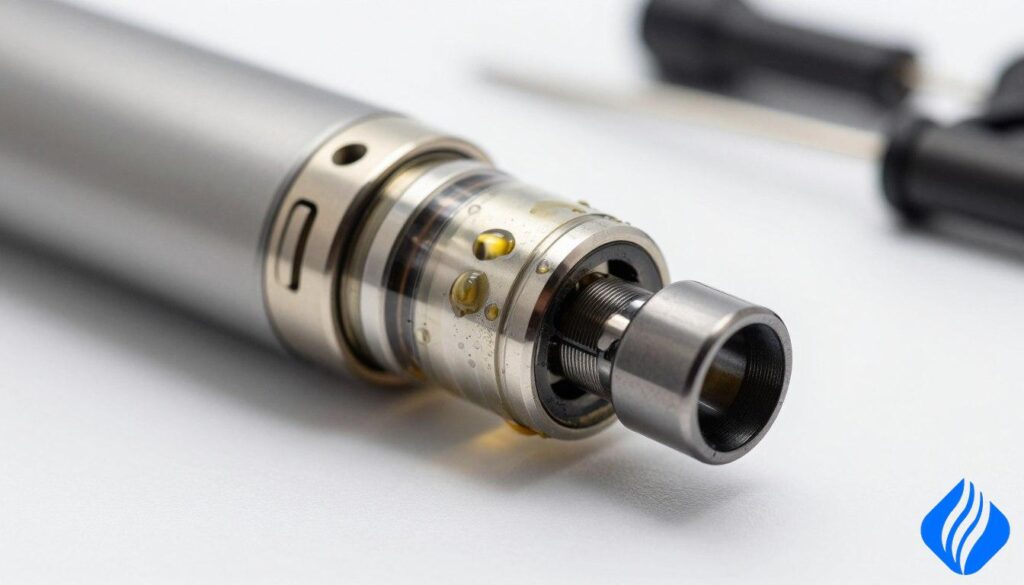
We’ll prioritize safe steps first: gentle warming, short sharp puffs to pop a clog, and careful mouthpiece clearing. We caution against excessive direct heat or forcing long pulls, which can worsen flooding or stress the coil and battery.
Later sections will cover safety warnings, U.S. 2026 travel compliance, a quick diagnosis table, tool-free fixes, cleaning options, and prevention habits. We’ve seen these symptoms across carts and disposables; most issues are fixable with the right technique.
Key Takeaways
- Hissing typically signals airflow blockage or flooding from trapped oil.
- Start with gentle warming and short puffs before using tools.
- Blocked mouthpiece and low battery can mimic the same symptoms.
- Avoid high heat and forceful draws to protect the device and coil.
- SOKVAPE favors safe, tool-light fixes first, then step-by-step cleaning.
- We will show when replacement is the smarter, safer choice.
Direct Answer: What a Hissing Vape Usually Means
A hissing sound most often means airflow is meeting resistance from condensed oil or residue. Air is squeezing past a partial blockage, or oil has flooded the airway and is bubbling as air moves through.
- Airflow-path blockage: the chimney, mouthpiece, or vents hold residue that narrows the air channel and causes hissing or sputters.
- Wicking restriction: oil fails to reach the coil efficiently. The coil then heats unevenly, which can thin oil and cause flooding or produce weak, burnt hits.
“Short, sharp puffs and gentle warming often pop a soft clog without tools.”
Quick next steps: stop chain vaping, check battery charge, try gentle warming or a brief Coil Priming pulse, then take controlled short puffs before using tools.
Why it matters: restricted airflow can hiss while producing little vapor. If the airway is flooded, you may hear hissing and get spit or wet hits. These outcomes shape the overall vaping experience and point you to the right fix.
Safety Warning: Battery Handling and Lithium-Ion Best Practices
Battery and heat mistakes cause more hazards than the hiss itself. We put safety first and cover clear limits for warming and clearing. Follow these rules before taking any step that might stress the power cell or plastic components.
What not to do with heat
- Do not use lighters, torches, ovens, or microwaves. Open flame warps plastics and shorts internal components.
- Do not leave a device in a hot car. Heat can rupture seals and trigger leaks or shorts.
- If warming, use low heat only—body warmth, a brief pen warm, or a low preheat setting.
Draw-activation vs. button-fire risks
Draw-activation can pull unvaporized oil into the airway and worsen flooding. Repeated aggressive pulls may cause auto-firing cycles that heat the battery.
Button-fire pulses are safer than long holds. Use short taps or preheat mode and allow cool-down intervals to protect the battery and wick.
When to stop and replace the device
- Cracked tank or persistent leaking into the battery area
- Burnt electrical smell, battery swelling, or an unusually hot battery
- Repeated hard shorts or rapid blinking patterns
“If a clog needs forced heat or tools, replace the device—safety first.”
SOKVAPE pro-tip: Remove the cartridge before cleaning contacts. Never fire while the device is wet with alcohol. When core components show damage, replacement beats risk.
Legal Disclaimer: United States Travel and Shipping Rules (2026 Compliance)
We are not offering legal advice. Regulations change often. Verify federal, state, and airline rules before you travel or ship any devices or products.
TSA and FAA basics: lithium-ion cells are generally safer in carry-on baggage where crews can respond to incidents. Protect terminals, prevent accidental activation, and keep spare battery packs separated from metal objects.

TSA/FAA quick practical rules
- Keep batteries in carry-on, not checked luggage.
- Use a dedicated battery case or silicone sleeve for spares.
- Stow cartridges upright in a sealed bag to reduce pressure or temperature changes.
PACT Act and shipping expectations
The PACT Act affects online orders and interstate delivery of vaping products. Carriers may require age verification, an adult signature, and may limit service to some areas. Expect longer delivery times and possible carrier restrictions.
| Item | Carry-on | Checked |
|---|---|---|
| 510 batteries | Allowed; protect terminals; battery case recommended | Generally discouraged; many airlines forbid |
| Disposables | Allowed but follow airline rules; pack upright | Risky; check carrier policy |
| Cartridges | Allowed in carry-on; keep sealed | May be restricted; verify before packing |
“Confirm retailer and carrier policies, and never try to bypass shipping rules.”
SOKVAPE pro-tip: store spare batteries in a case and keep cartridges sealed and upright. Always confirm local possession rules before you place products in luggage.
Identify the Real Problem: Clog, Flood, Low Battery, or Empty Cart
Identify the real cause fast — clog, flood, low power, or an empty cart.
Use this quick snapshot to match symptoms with likely causes. Start simple and safe. Follow the airflow test next.
| Symptom | Likely Cause | Safest First Fix |
|---|---|---|
| Hissing | Airflow clog | Check mouthpiece/chimney and vents; short puffs |
| Bubbling or gurgle | Oil flooding in airway | Blow gently through mouthpiece; upright rest |
| Tight draw | Clogged airway or residue | Inspect for residue lines; clear vent paths |
| Weak vapor | Low battery or poor contact | Check indicator light and clean contacts |
| Burnt taste | Wicking restriction | Short preheat pulses; allow re-wick time |
Airflow test and indicator lights
Try a finger-over-mouthpiece pull. If you can’t pull air, the airflow is clogged. Focus on vents, mouthpiece, and chimney.
Indicator light: a light that fires but yields weak vapor often points at low power or poor contact. No light usually means a dead battery or a connection fault. Check the cart fit and contacts before assuming battery failure.
Oil visibility cues and timing
Look for thick oil that moves slowly, residue lines on the chimney, stalled bubbles near the coil, or pooling near the mouthpiece. These signs show flooding or condensation.
Note: cold temps make thick oil worse, and rapid puff cadence forces oil into the airway faster than wicking can recover. If a cart is nearly empty and flavor drops sharply, replacement is often the faster, safer choice.
Why Vape Carts Clog and Start Hissing Over Time
Condensed vapor and sticky oil slowly narrow internal air paths until that initial hiss appears. This process begins when warm vapor meets a cooler chamber or mouthpiece and re-liquefies.
Condensation and residue
Vapor cools along the chimney and collects as droplets. Over time, this residue narrows the airflow and causes bubbling or hissing.
Chain puffs and flooding
Aggressive draws can pull hot, unvaporized oil into the airway. That oil then cools and forms a plug that blocks the mouthpiece or chamber.
Temperature, viscosity, and aging
Cold storage increases viscosity and slows wicking. High-viscosity oil resists movement, which leads to intermittent hits and stressed coils.
Older devices also gather residue on the coil assembly and seals. Worn parts reduce flow and speed clog formation.
PG/VG ratio vs concentrate viscosity
PG/VG ratio matters for e-liquids, but many oil formulations depend on concentrate viscosity and additives. Changing PG/VG won’t fix a thick concentrate or a mechanical blockage.
“Understanding the cause helps us choose the least invasive fix and protect the coil.”
SOKVAPE note: once the root cause is clear, follow low-impact fixes first. For replacement options and product choices, see our premium vapes.
how to unclog vape cartridge Safely: Fast Fixes That Don’t Require Tools
Begin with simple, tool-free steps that loosen sticky oil without stressing the device.
We recommend a staged approach. Try each step, then test draw. Stop if the cart feels hot or the battery gets unusually warm.
- Warm gently and rest: Hold the cart in your hands or tuck it in a pocket for a few minutes. Let it sit at room temperature so thick oil thins naturally.
- Coil priming / preheat pulses: Use a short preheat or brief button pulses rather than long holds. This lowers oil viscosity and encourages wicking without scorching the coil.
- Short, sharp pulls: Take a few quick, controlled puffs. These “pop” soft blockages and move trapped oil without forcing more into the airway.
- SOKVAPE pro‑tip — reverse pressure: Gently exhale a short burst into the mouthpiece or apply light back‑pressure. This can nudge a mouthpiece plug away from the chimney.
Guardrails: Never use open flame. If you use low heat (hair dryer), keep it on low for about 30 seconds and maintain distance. If the device becomes hot to the touch, pause and cool.
| Step | Main Benefit | Risk if Overdone |
|---|---|---|
| Warm with hands / pocket | Thins oil safely at room temperature | Minimal; avoid prolonged sun exposure |
| Preheat / coil pulses | Encourages wicking without burning | Long holds can scorch wick or stress battery |
| Short sharp puffs | Pops soft blockages quickly | Aggressive pulls can flood airway |
| Reverse pressure | Moves mouthpiece plugs without tools | Excess force may push oil deeper |
If airflow remains blocked after these steps, proceed with mouthpiece and chimney clearing or contact cleaning. For step‑by‑step tool methods, see our next section or consult this guide: clear a cart safely.
Step-by-Step: Clear the Mouthpiece and Chimney Without Damaging the Coil
We’ll walk through a safe, numbered process for removing hardened residue from the mouthpiece and upper chimney. Follow each step and stop if you feel firm resistance near the coil assembly.
- Prepare the area: Lay a paper towel on a flat surface. Have a clean toothpick or an unbent paperclip ready. Work in good light.
- Work only the upper chimney: Gently insert the tool into the mouthpiece opening and nudge any visible residue. Use light motions and keep the tip away from the coil at the bottom.
- Remove flakes carefully: Lift out softened residue pieces rather than scraping. If the tool meets resistance, stop—that’s the coil area and you must not push further.
- Blow out soft floods: Place a folded paper towel over the intake holes, then blow gently into the mouthpiece. The displaced oil usually exits via the vents and should be wiped away immediately.
- Test pull: Take a short, unpowered test pull to confirm airflow. If air moves freely, resume normal use cautiously.
Do’s and Don’ts
- Do: use a clean toothpick or lightly unbent paperclip; limit work to the upper chimney; stop when you feel resistance.
- Do: catch expelled oil with a paper towel and clean hands or surfaces afterward.
- Don’t: jab deeply, scrape the coil, or force the airway wider—this can cause permanent leakage or coil damage.
SOKVAPE pro‑tip: blowing gently pushes oil toward intake vents. That oil usually pools near airflow inlets; wipe it away and repeat a soft test pull before any heating step.
If performance stays inconsistent, the next likely culprits are dirty vents, threads, or contact points. Move next to an alcohol cleaning step or review our guide on passing nicotine tests at testing tips.
Step-by-Step: Clean Airflow Vents and Contact Points with Isopropyl Alcohol
A clean contact surface and clear vents often restore steady airflow and reliable firing. Follow this careful, numbered process. We prioritize safety and avoid soaking any electronics.
- Power down and separate the cartridge. Remove the cartridge from the battery or device. This prevents accidental activation and protects internal components.
- Lightly dampen a cotton swab with isopropyl alcohol. The swab should be damp, not dripping. Gently clean air holes, threading, and magnetic or press-fit contacts where residue can interrupt current.
- Wipe with a dry swab. Use a clean cotton swab to remove dissolved oil and avoid re-depositing residue into airflow paths. Repeat until the swabs look clean.
- Enforce dry time and check for odor. Allow full evaporation—wait at least 5–10 minutes in open air. Do an odor check: there should be no alcohol smell. Then take a test pull without firing to confirm airflow.
- Reassemble and fire briefly at low power. If airflow feels clear, reattach the cartridge and fire with short, low-power puffs. Monitor for odd sounds or leaks and stop if anything feels wrong.
Safety caution: never pour alcohol into the cartridge, and never submerge electronics. Targeted swabbing is the safe method. Do not fire the device while surfaces remain wet with alcohol—fumes can ignite or cause poor contact.
Quick dry-time reference
| Action | Minimum wait | Risk if rushed |
|---|---|---|
| Light swab cleaning | 5 minutes | Residue or odor remains |
| Thorough spots or threads | 10 minutes | Poor contact or short |
We recommend this stepwise approach as a final tool-free option before device replacement or deeper repair. Proper contact cleaning often restores power delivery and clears restricted airflow without risk.
Step-by-Step: Fix Burnt Hits When the Wicking System Is Clogged
Diagnosis: Burnt flavor while air still flows usually means oil sits in the reservoir but the wick won’t carry it to the coil fast enough.

Warm-from-inside priming: Use short preheat pulses or brief button taps. Pulse for 1–2 seconds, wait 10–15 seconds, then repeat up to five times. This gradual heating thins oil and draws it into the wick without scorching the filament.
- Pulse the coil: Short bursts, cool pauses. Watch for improved draw and less charring.
- Test pulls: Take a few controlled, unlong pulls. Look for smoother vapor and clearer flavor.
- Observe bubbles: Small bubbles near the coil show oil absorption—this is a success signal.
Warm-water bag vs. hair dryer
The warm-water bag gives even, gentle heating and works well for very thick oil or cold carts. Use a sealed bag and keep temperature moderate.
The hair dryer is faster for mild thickening. Keep it on low heat and move it constantly to avoid warping plastic or cracking glass.
| Method | Best place | Risk |
|---|---|---|
| Warm-water bag | Cold, viscous oil; long sit time | Low; even warming |
| Hair dryer (low) | Minor thickening; quick fix | Medium; heat spots can damage cart |
| Coil pulsing | Immediate priming at firing device | High if held too long; wick scorch |
Realistic expectations: Some thick oil formulations and worn coils won’t recover. If burnt hits persist after careful priming, if flavor quality drops sharply, or if the pen overheats repeatedly, replace the cart. Don’t force repeated heating—safety and consistent flavor matter more than extended troubleshooting.
Tip: If improvement stops, replace the cart and note storage temperature next time; cold and long time in storage make thick oil worse.
Disposable vs. 510-Thread Carts: What Changes in Troubleshooting
Not every unit shares the same airflow route; that alters both cause and fix. We’ll compare common designs so you can target the right spot without risking damage.
Where condensation and residue collect
What stays the same: clogs form from condensation, sticky residue, and oil viscosity. The goal is simple — restore clear airflow without harming components.
Design differences that matter
- Disposable units: often use bottom airflow or vents near the charging port. That shifts where flooding exits and where lint can gather.
- 510-thread carts: route air through the chimney and threads. Clean contacts and avoid over-tightening; poor threading can cause a blockage or poor draw.
Practical, safety-first guidance
Blow gently through the mouthpiece or near base vents for disposables. For 510-thread devices, prioritize contact cleaning and correct seating.
| Design | Common clog site | Best safe action |
|---|---|---|
| Disposable | base vents / charging port | gentle warming; identify vents; do not puncture |
| 510-thread | chimney / threads | clean contacts; check threading tension |
Safety reminder: sealed disposables are often non‑serviceable. If it leaks, overheats, or shows internal damage, replacement is the safer route.
Prevent Future Clogs and Hissing: Storage, Technique, and Maintenance Habits
Preventing a hiss begins with steady temperature and a gentle draw rhythm.
Storage basics
Store each cart upright at room temperature and out of direct light. Cold temps thicken oil and slow wicking.
Avoid leaving a device in a hot car or freezing conditions. That protects seals and reduces residue build-up.
Puffing technique
Take short, gentle draws and allow a few seconds between pulls. Overdrawing forces liquid into the airway and creates a mouthpiece plug.
Pause during long sessions and use brief preheat pulses rather than long, hard pulls.
Routine maintenance
Wipe threads and the chamber area every ~20 drags or when you charge the device. This quick habit cuts residue and keeps contacts clean.
Replace a cart when flavor drops or performance stays inconsistent. Repeated fixes cost more than a swap.
Hardware choices
Ceramic housings and clear airflow paths resist gumming. Mesh Coils spread heat evenly and reduce hot spots that char oil.
If one product repeatedly clogs across devices, consider changing products or hardware style.
| Issue | Preventive Action | Why it works |
|---|---|---|
| Condensation | Upright storage at room temperature | Stops droplets from pooling in the chamber |
| Overdrawing | Short draws, cooldown between hits | Keeps oil out of the airway and wick balanced |
| Residue at threads | Quick wipe every ~20 drags | Maintains good contact and airflow |
| Frequent scorch | Choose Mesh Coils or ceramic parts | Improves heat distribution and longevity |
SOKVAPE: small prevention habits are cheaper and safer than repeated heating or aggressive clearing attempts.
For a stepwise maintenance guide, see our quick maintenance guide.
Conclusion
Before you replace anything, run one calm check: battery, seating, then airflow. Make sure the cart has charge and sits upright in its place. If power and fit are fine, address a blockage with gentle warming, short priming pulses, and a few sharp puffs.
Core safe steps: room-temperature recovery, brief coil priming, careful mouthpiece clearing, and targeted alcohol‑swab contact cleaning with full dry time. If burnt flavor or repeated leaks persist, replace the cartridge or device.
Don’ts: no open flame, no forcing sharp tools deep, and stop firing an overheated or leaking unit.
Remember travel rules for lithium batteries and PACT Act limits when you order products or pack for a trip. For a smoother setup, explore SOKVAPE’s clog‑resistant hardware and maintenance guide.
FAQ
Q1: Why is my vape hissing but not producing vapor? A1: Often airflow blockage, poor contact, or a low battery. Check charge, seating, and vents first.
Q2: How do I unclog a cartridge without a paperclip? A2: Warm at room temp, use short preheat pulses, take sharp puffs, and try gentle reverse pressure.
Q3: Is it safe to use a hair dryer to unclog a cart? A3: Yes if on low heat, held at a distance, and only for short bursts to avoid warping plastics.
Q4: Why does my cart taste burnt even though there’s oil left? A4: Wick starvation or coil scorch. Try brief priming; replace if burnt flavor stays.
Q5: How can I prevent my vape cart from clogging overnight? A5: Store upright at room temp, use short draws, and wipe contacts regularly.
 English
  German
  Dutch
Dutch  Danish
  Czech
Czech  Italian
  Slovenian
  French
  Hungarian
  Spanish
  Polish