

Short guide, clear choices. You’ll get a US-focused primer on pre-filled, disposable-style devices that merge cartridge and battery into one unit. These AIO formats span nicotine and cannabis oil products. They remain popular for portability, low maintenance, and beginner-friendly use.
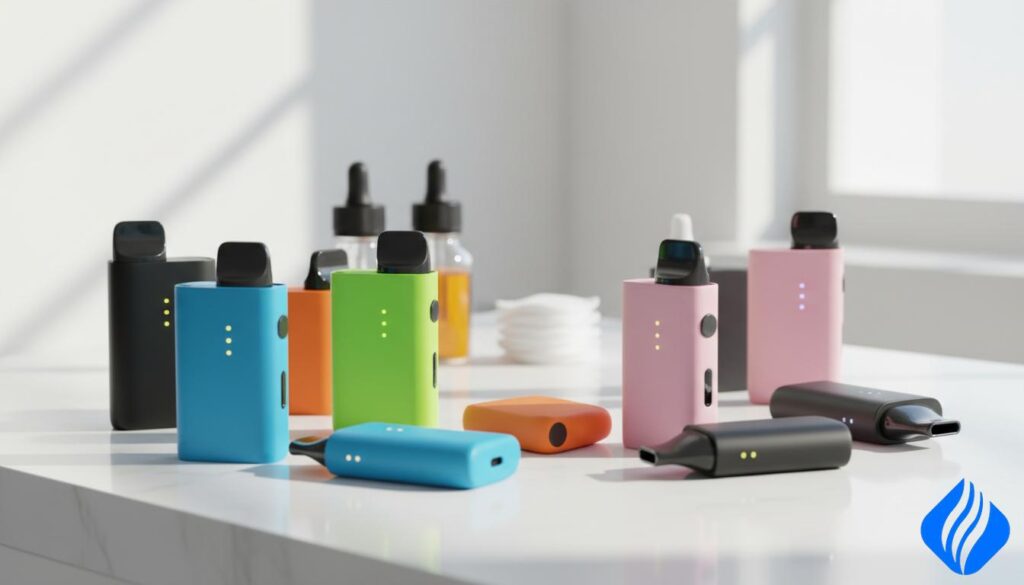
Expect a practical, shopping-ready approach. You’ll learn core specs to compare fast: puff count, capacity, mAh, nicotine percent, and coil type. We’ll preview real performance cues you can feel—tight MTL draws, flavor stability over sessions, and charging speed when USB‑C appears.
Tradeoffs matter. Convenience and simplicity come at the cost of limited customization and more waste. Upfront prices run from about $15 to $100 depending on oil and size, and heavy use can cost more long term than reusable systems.
Safety and authenticity are central. The guide will steer you to licensed sellers for THC products and show authentication checks for the US market. By the end, you’ll know which type fits your use case: beginner, traveler, occasional, or daily user.
Key Takeaways
- These AIO devices pair cartridge and battery for easy use and portability.
- Compare specs like puff count, capacity, mAh, and nicotine % to shop smart.
- Expect MTL draws, steady flavor, and occasional USB‑C charging on higher-end models.
- Lower upfront cost but higher long-term cost if used daily.
- Prioritize safety: buy THC products from licensed dispensaries and check authentication.
Quick Answer: What an AIO Vape Is and Why It’s Popular
Featured snippet intro
Featured answer: what is aio vape: an all‑in‑one device that combines a built‑in battery and pre‑filled oil or cartridge into a single unit you use straight from the box. You inhale or press a button to activate. It’s prized for portability, low maintenance, and being beginner‑friendly.
What “all‑in‑one” means
All‑in‑one translates to one purchase that contains both the battery and the pre‑filled cartridge. You do not need a separate battery, charger, or coil to start.
Where these devices sit today
On the device spectrum, AIO units sit between simple disposables and flexible pod/mod systems. Pod systems offer refillable pods and some customization.
Traditional mods give the most power and control but require learning and maintenance. Many people opt for AIO for its simplicity and grab‑and‑go portability.
“Most beginners pick a single‑unit device because it removes setup steps and delivers consistent performance.”
- Pick AIO for ease, predictability, and low maintenance.
- Pick pods or mods if you want customization, lower long‑term waste, or adjustable airflow.
What is aio vape: Definition, Basics, and Common Use Cases
Many shoppers now treat all-in-one devices as ready-to-use single purchases that skip setup and extra parts. The label on US retailer menus often covers cannabis oil AIOs and nicotine disposable-style units that behave the same for the user.
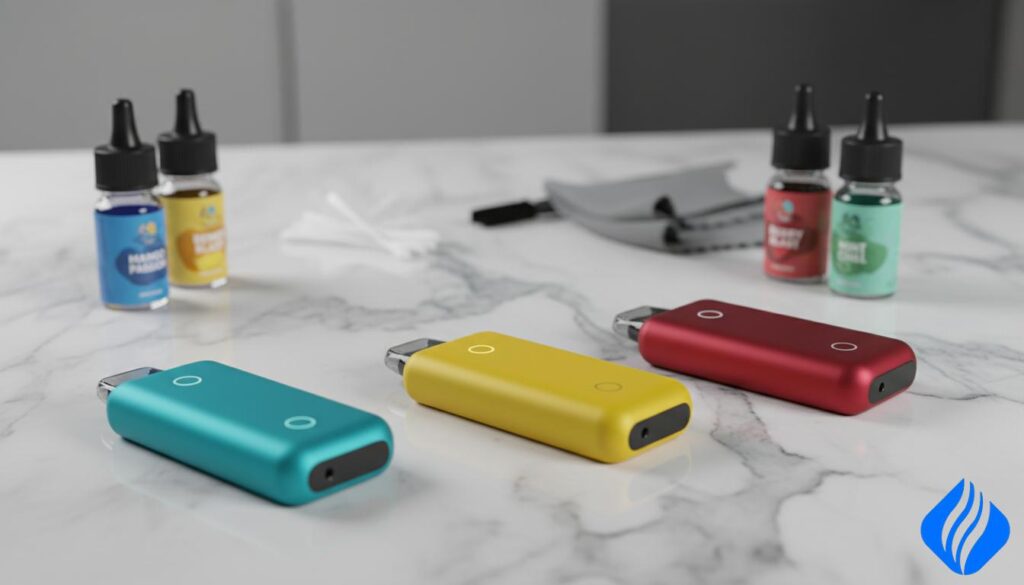
A visual definition of "What is AIO Vape": These sleek devices combine portability with the ability to use your preferred e-liquids, bridging the gap between disposables and complex mods.Overlap with disposable pens: People call them disposable vape pens even when some models recharge. The full unit is still discarded at end of life, so the user experience matches a disposable product.
Two dominant formats: cannabis oil AIOs (THC distillate, live resin, rosin) and nicotine disposable-style devices (nicotine salts, higher strengths). Each targets portability and flavor-first sessions.
Best for beginners: travel, nights out, trying a new strain or flavor, and avoiding maintenance. Choose these for ease, fast setup, and low time investment.
When to pick refillable or pod systems
Pick a refillable pod or mod if you want customization, adjustable airflow, lower long-term cost, and less waste. Swappable pods and 510 cartridges let you reuse a separate battery and test many flavors without buying a new unit.
“An all-in-one wins for convenience; a pod or 510 setup wins when customization and economy matter most.”
How AIO Vapes Work: Components, Airflow, and Vapor Production
Start by looking under the shell: the parts inside determine how a device performs and feels.
Core parts you’ll find
The mouthpiece directs the draw. The tank or reservoir holds oil or e-liquid. The atomizer and coil heat that liquid into vapor. A built-in battery supplies power to the whole system.
How vapor is made
When you activate the unit, the battery sends current to the atomizer. The coil heats and vaporizes the oil. Vapor moves up a narrow chimney and exits the mouthpiece.
Activation styles
Some devices are inhale-activated for instant use. Others use a button for controlled puffs and safer pocket carry. Both styles work; button control can boost consistency.
Why many units favor a tighter draw
Internal airflow channels are often narrow. That yields a tighter MTL draw—more cigarette-like restriction, stronger throat hit, and efficient nicotine or THC delivery with less cloud.
Rechargeable vs non-rechargeable
Rechargeable units let you finish the tank and reduce wasted oil. Non-rechargeable pens can die early, leaving usable oil behind and creating more waste.
“Airflow, coil placement, and battery size together shape the smoothness, flavor, and consistency of every session.”
Technical Specs and What They Mean for Your Vaping Experience
Specs on the label translate directly to throat hit, run time, and flavor clarity. Use this short cheat sheet to read listings confidently and compare products fast.
Typical market ranges you’ll see
| Puff Count (claimed) | E-liquid Capacity (ml) | Battery (mAh) | Nicotine % | Coil Type |
|---|---|---|---|---|
| 200–6,000 puffs | 0.5–3.5 ml | 200–1,500 mAh | 0–5% (5% common for salt) | Mesh coil (common) |
| Estimate varies by draw | Smaller tanks empty faster under heavy use | Higher mAh = longer runtime and steadier output | THC products label potency differently | Mesh gives faster ramp and even heat |
Puff count vs capacity
Puff counts are estimates. Your draw length, device power, and airflow change real totals. A tight draw uses less oil per puff than an open draw at the same capacity.
Battery size and charging
Read mAh as daily usability. Higher mAh usually means more consistent output and fewer charge interruptions for a rechargeable unit. Low mAh units can feel weak late in the day.
Nicotine salt vs THC oil types
Nicotine disposable-style pen models often use 5% nicotine salt for fast satisfaction. THC AIOs list potency or milligrams and may use distillate or terpene-rich live resin/rosin for fuller flavor.
Why mesh coils matter
Mesh coil tech uses more surface area. That yields even heating, faster ramp, and clearer flavor. Mesh reduces hotspots and often extends coil life compared with traditional wire wraps.
“Focus on battery, tank capacity, and coil type first—those three specs predict most of the user experience.”
Real-World Performance: Draw, Flavor Consistency, and Charging Speed
Hands-on testing highlights draw quality, flavor retention, and charge behavior under real use. You’ll get practical cues to judge a purchase quickly and avoid surprises during daily sessions.
MTL pull quality: smoothness, restriction, throat hit
Expect a tight, cigarette-like pull. A solid MTL-style draw offers controlled restriction, steady throat hit, and little turbulence. That pattern helps former smokers switch comfortably.
Flavor from first to last puff
Flavor fades for a few common reasons: coil buildup, residue from sweeteners, terpene loss in cannabis oils, or poor wicking near tank end. Minimal drop-off is realistic; perfect uniformity is not.
To reduce fading: take shorter draws, avoid chain sessions, store the unit upright, and keep airflow ports clear.
USB‑C charging and pass-through expectations
USB‑C typically charges faster and adds convenience. Actual speed varies with battery size and internal charge limits. Some models allow pass-through use, but expect extra heat and slower charging when in use.
“Look for steady output from first puff to near empty; that predicts a reliable daily experience.”
- Tip: Recharge before zero to keep consistent vapor and flavor.
- Tip: Follow manufacturer warnings on vaping while charging.
Safety, Authenticity, and Buying Tips in the United States
Before you buy, protect your health and your wallet. Counterfeits circulate widely, so quick checks matter. Follow a short checklist and favor licensed sellers for regulated products.
Verify authenticity fast
Two-minute counterfeit checklist:
- Scan the QR code and confirm it resolves to the brand’s official domain. Avoid redirects or shorteners.
- Use scratch-and-check panels: enter the revealed code on the manufacturer’s verification page. Watch for “already verified” alerts.
- Inspect packaging for batch/lot info, clean print, and state-mandated THC labeling when relevant.
- Red flags: unusually low price, missing lab results, inconsistent photos versus the brand site.
Where to buy for safer THC products
Licensed dispensaries are the safest US option for THC AIOs. They must follow testing and tracking rules, which lowers risk of badly labeled or adulterated products.
Manufacturer context and quick brand lens
Many mass-market products are manufactured in Shenzhen, China, with design and QA work split across brands and partners. Verify parent-company claims on official sites; relationships change.
“Authenticity, testing, and reliable sourcing come before bargain hunting.”
Compare value and flavor: a short shopper’s frame
Raz often targets bold flavors and high puff counts. Lost Mary tends toward smoother balance and consistent draw. Your choice depends on whether upfront cost per puff or steady flavor matters more.
Waste, disposal, and environmental tradeoffs
AIO units deliver high convenience but generate more e‑waste than reusable 510 systems. With a 510 option you keep the separate battery and swap cartridges, which cuts waste and long‑term cost for frequent users.
Buyer-first rule: Don’t deal-hunt on inhalables. Prioritize verified products from trusted sellers and licensed dispensaries for the safest outcome.
Conclusion
For quick decisions, treat this format as a ready-made solution for portable sessions.
Recap: an integrated pen pairs a built-in battery and prefilled cartridge so you can use it out of the box. Choose this when you value low friction, predictability, and minimal maintenance.
Prioritize these specs: claimed puff count versus actual capacity, battery mAh for rechargeables, and mesh coil for steady flavor. Expect a tighter MTL draw and decent flavor retention on better models.
In the United States, verify authenticity with QR or scratch checks and buy THC units from licensed dispensaries for tested labeling.
Verdict: this pen suits beginners, travelers, and casual users. If you vape daily or want more flavor variety and less waste, a refillable pod or 510 setup is the smarter choice.
 English
  German
  Dutch
Dutch  Danish
  Czech
Czech  Italian
  Slovenian
  French
  Hungarian
  Spanish
  Polish