

We wrote this buyer’s guide for adults trying to navigate the 2026 landscape. Federal T21 sets the minimum purchase age at 21, while state rules and FDA enforcement shape which products stay on shelves.
Kentucky’s SB 100 added retailer licensing this year, and many stores now vet inventory against FDA authorization or registry lists. This means a product can be lawful to buy yet hard to find if it lacks proper approval.
We explain how age checks, product compliance, taxes, and local policies affect access. Expect changes as regulators enforce the Vapor Registry model used by other states. For practical background and updates, see this summary on regional developments at state vape news.
Disclaimer: This page offers general educational information, not legal advice. Check local ordinances and retailer policies before you buy.
Key Takeaways
- Adults 21+ may buy and possess vaping products, but availability depends on compliance.
- Product authorization and state registries determine which items remain on shelves.
- SB 100 added retailer licensing that affects local supply and enforcement.
- Taxes and local indoor rules can change prices and where you can use devices.
- Always verify age checks, ID rules, and adult-signature delivery for online orders.
What vapes are legal in kentucky in 2026
We explain the split shoppers need to know: Kentucky allows adult possession, but federal rules limit which items may be marketed and sold.
Kentucky versus federal limits. State law permits adults to use vapor devices, yet FDA marketing authorization and PMTA timelines set real limits on distribution. Many wholesalers now avoid stocking products without authorization or a qualifying PMTA “safe harbor” filing.
Why availability changes on shelves. Nationwide registry trends — North Carolina’s HB 900 directory, Virginia’s ban on non-authorized disposables, and California’s tobacco-only list — show how market access narrows even when personal use remains lawful. Only a small number of e-cigarette items have full FDA authorization (for example, several NJOY products), so enforcement can pull product lines from retail quickly.
How to spot compliant options
- Check packaging for clear manufacturer details and scannable identifiers.
- Ask the retailer if the product is on an authorization list or covered by an earlier PMTA filing.
- Watch for consistent labeling and retailer willingness to discuss authorization without overstating safety.
| Issue | Buyer impact | Practical check |
|---|---|---|
| FDA authorization | Product stays on shelves | Ask for authorization list name |
| PMTA “safe harbor” | Temporary market protection | Confirm filing date (pre-Sept. 9, 2020) |
| Wholesaler compliance | Retail stock decisions | Request manufacturer ID and recent inventory update |
Kentucky vape laws buyers should know before purchasing
The nationwide 21+ requirement is the baseline; retail checks and local ordinances determine everyday access. Under Federal T21, adults must be 21 to buy vape products anywhere in the U.S., even if older state texts differ. This rule protects legal sales and limits confusion for people traveling between states.
Minimum age and photo ID expectations
We expect stores to ask for photo ID at the point of sale. Retailers refuse a sale if an ID is expired, altered, or the name does not match the purchaser.
Enforcement targets underage sales and retailer compliance. That pressure explains why many stores are stricter today than before.
Public use, local ordinances, and facility rules
Kentucky has no single statewide indoor ban, but local ordinances often restrict use in government buildings, healthcare facilities, and workplaces. Assume posted rules apply and respect no-use signage.
Online orders, shipping, and delivery rules
Online retail requires age verification at checkout and an adult-signature on delivery. Ship to a location where a responsible adult can sign to avoid refused packages or returned shipments.
- Practical tips: Keep ID handy, avoid sellers who skip verification, and plan for delivery delays when a signature is required.
- Flavor choices remain shaped by marketing rules and product authorization, not just state preference.
- For recent enforcement updates and regional vaping developments see regional vaping developments.
| Issue | Buyer impact | Action for shoppers |
|---|---|---|
| Federal T21 | Must be 21 to purchase | Carry valid photo ID |
| Retail ID checks | Sales refused if ID questionable | Use government ID that matches purchaser |
| Local ordinances | Limits where you can use products | Check signage and venue policy |
| Online shipping | Adult-signature required | Ship to residence or workplace with an adult |
SB 100 and Kentucky retailer licensing requirements
We summarize the new licensing rule and what it means for buyers and sellers after January 1, 2026.
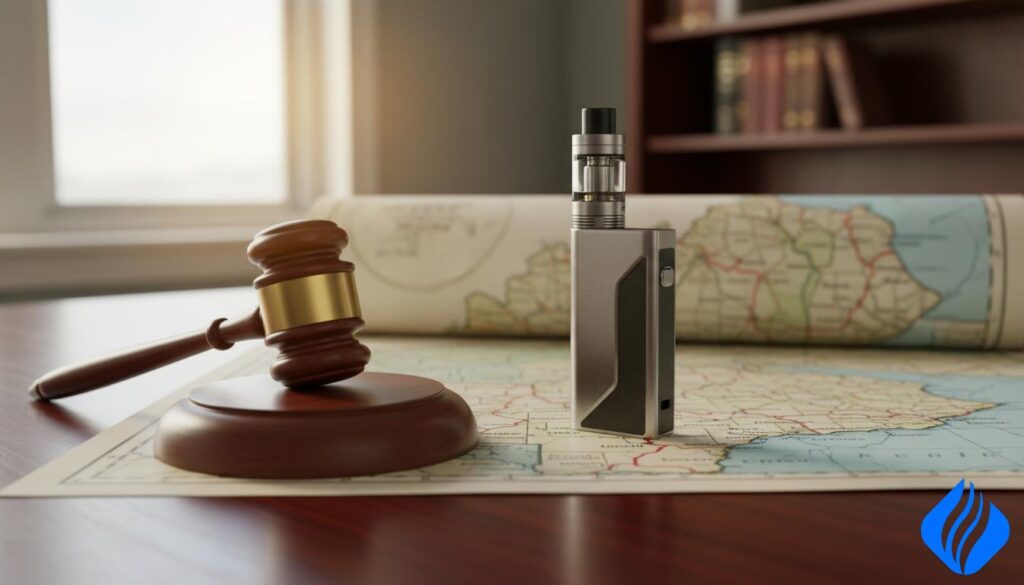
What changes on January 1, 2026 for stores selling nicotine and vaping products
SB 100 requires every retailer that sells nicotine, tobacco, or vapor products to hold a state license. Licensed retailers must register locations, submit contact information, and renew yearly.
How licensing supports enforcement checks and tracks retail locations
The Department of Alcoholic Beverage Control (ABC) can now map retail locations and run routine compliance visits. This makes enforcement faster and more predictable for stores and shoppers.
What happens to retailers that sell unauthorized products
Penalties are meaningful: fines, license suspension, and placement on noncompliance lists. Retailers selling unauthorized product lines risk rapid removal of those items from shelves.
How compliance impacts product availability, pricing, and access
Shoppers should expect fewer mystery brands and more documented sourcing. Some items may disappear, and costs can rise as retailers absorb licensing and compliance expenses.
- Look for a clearly operating storefront and staff who check ID.
- Ask about sourcing and whether a product is on an authorization list.
- Prefer licensed retailers for steady access to documented products.
| New rule | Buyer impact | Retail consequence |
|---|---|---|
| Mandatory license (SB 100) | More traceable sales and fewer off‑market items | Registration, annual renewal |
| ABC tracking & checks | Faster enforcement, clearer store status | Inspections and compliance notices |
| Penalties for unauthorized product sales | Reduced access to risky inventory | Fines, suspension, removal from directories |
Authorized products, FDA status, and Kentucky’s enforcement direction
We separate two labels that matter for buying today: full FDA marketing authorization and PMTA-pending “safe harbor” status tied to filings made by Sept. 9, 2020.
FDA marketing authorization means a product may be marketed and faces lower enforcement risk. PMTA-pending safe harbor covers items under timely review or appeal but can still be removed if regulators act.
Why the market narrows
Kentucky enforcement follows regional models that favor authorized items. That concentrates sales around a short list of e-cigarette devices and approved vapor products, including a few NJOY authorizations noted in national news.
Synthetic nicotine disposables and risk
Synthetic nicotine disposables draw extra scrutiny. These items often face rapid removals and higher enforcement risk compared with documented tobacco product pathways.
How wholesalers and retailers decide
- Prefer manufacturers with clear authorization or documented PMTA filings.
- Choose inventory with traceable supply chains to avoid fines and seizures.
- Refuse products that lack labeling, origin data, or realistic pricing.
| Factor | Buyer impact | What to check |
|---|---|---|
| Authorization | Stable sale availability | FDA lists, manufacturer docs |
| PMTA safe harbor | Temporary market access | Filing date (pre‑9/9/2020) |
| Synthetic nicotine | High removal risk | Avoid stockpiling unknown imports |
Taxation, flavors, and what’s changing across the United States
We track how taxed rates and flavor rules now affect price and product access for adult shoppers.
Kentucky tax basics and retail impact
Kentucky applies about a 15% wholesale excise tax on vapor products. That taxed rate raises retail prices even when a product remains lawful to sell.
Price jumps often reflect taxes, compliance costs, or supply shifts — not solely new restrictions. Expect stores to pass taxed costs to shoppers at checkout.
Flavor policy differences across nearby states
Kentucky has no statewide flavor ban today, though local ordinances and facility rules still limit where vaping is allowed.
By contrast, Utah enforces a tight flavor ban with tobacco and menthol exceptions and an active registry of allowed products.
Regional laws shaping availability
North Carolina uses the HB 900 directory (effective July 2025) so only FDA‑authorized or PMTA‑pending items listed may be sold. This model narrows retail selection quickly.
Virginia banned non‑FDA‑authorized disposables as of December 31, 2025, removing many single‑use items from shelves.
California moves to a tobacco‑only product list on January 1, 2026, which limits flavors by approved category rather than a blanket ban.
Alabama hemp rules and enforcement
Alabama’s HB 445 (Jan 1, 2026) requires licensing for hemp consumables. Repeat unlicensed sales can escalate to a Class C felony by the third offense. Smokable hemp is illegal.
“Expect price and product mix to change faster than labels — taxes and state lists drive retail choices.”
We recommend buying from licensed stores, checking product listings if you travel, and remembering that cross‑state news often predicts supply changes at local shops.
| State | Key action | Buyer impact |
|---|---|---|
| Kentucky | 15% wholesale tax; no statewide flavor ban | Higher prices; varied flavor access |
| North Carolina | HB 900 directory (July 2025) | Only listed products sold; narrower retail mix |
| Virginia / Utah / CA | Disposables ban / flavor registry / tobacco‑only list | Reduced flavor selection; registry checks for sales |
Conclusion
In 2026, buyers should expect fewer shelf choices. Licensing under SB 100, FDA authorization rules and registry trends limit which products a retailer will stock. We recommend checking source documents before you buy.
Federal T21 sets the age at 21. Compliant sellers will verify age and require adult signature for deliveries. Online orders remain possible for verified adults who can sign on receipt.
Prioritize licensed sellers, clear sourcing, and items tied to FDA authorization or a legitimate safe‑harbor filing. Note that flavor availability depends on enforcement and supply decisions, not just policy text.
Stay informed. Members can subscribe via email for timely updates and alerts about product availability and enforcement. For a concise state summary, see our linked state guide.
 English
  German
  Dutch
Dutch  Danish
  Czech
Czech  Italian
  Slovenian
  French
  Hungarian
  Spanish
  Polish