

Direct answer: A blinking blue light usually signals an error in power delivery, contact alignment, or a poor coil/pod connection. We recommend checking battery charge, electrical contacts, and coil seating first.
We know a device that shows a light but produces no vapor wrecks a session. As Sokvape experts, we guide quick checks that fix most problems in minutes.
Start with simple items. Confirm the battery has charge and the pod or tank sits flush. Inspect contacts for debris and ensure draw-activation or fire button works.
Flooded coils from excess e-liquid often cause crackling and block airflow. That can stop hits entirely by preventing proper vapor formation. Coil priming and correct PG/VG mix help prevent this.
Safety note: If the device feels hot, shows damage, or the battery bulges, stop and move to the Safety Warning section immediately.
Key Takeaways
- Check power, contacts, airflow, then coil saturation in that order.
- Most problems come from setup or routine use, not permanent failure.
- Flooded coils can block airflow and stop vapor production.
- Use proper coil priming and compatible PG/VG ratios to reduce issues.
- Stop use and seek help if the device shows heat or battery damage.
Direct Answer: what’s causing the blinking and the no-hit
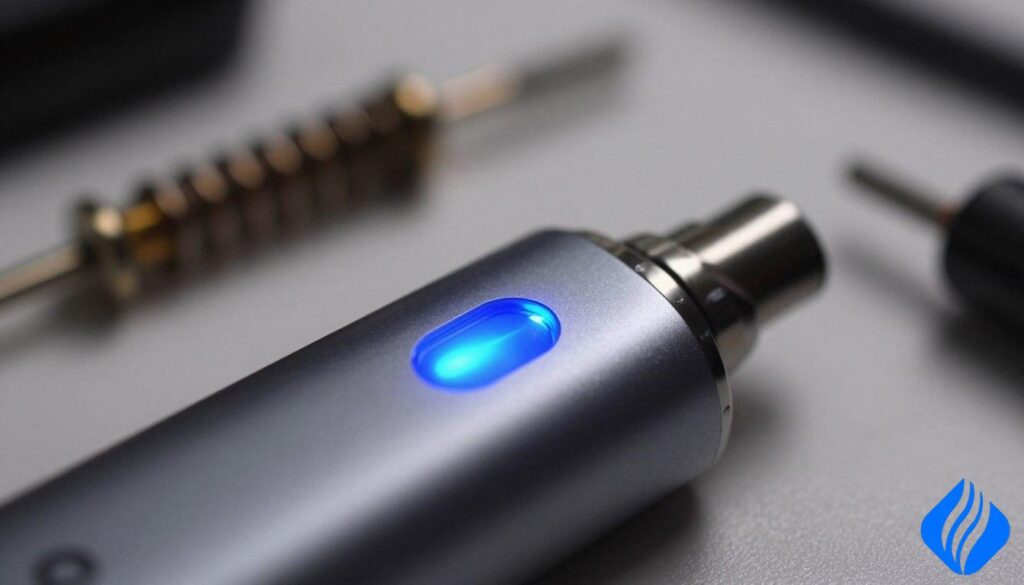
Begin by identifying the exact blink pattern and when it happens. A blinking blue LED often signals a detected fault: low charge, short protection, a pod or coil not detected, or an auto-draw sensor error. Note whether the light flashes during inhale, button press, or while charging.
Draw-activation systems need the sensor to detect airflow. If airflow is blocked or condensation sits in the airway, the device won’t register a draw and may blink instead.
Draw-activation vs. button-fired behavior
On draw-activation devices, a blink at inhale usually points to sensor or airflow problems. On button-fired devices, a blink during or right after a press often means the system saw a short or unstable coil resistance and cut power.
Power issue vs. airflow or coil saturation
If the LED blinks as soon as you try to fire, treat it as a connection or protection event. That suggests charging contacts, pod seating, or low battery.
If the light blinks after repeated attempts, or vapor is weak, suspect airflow blockages, a flooded coil, or condensation in the chimney. Too little e-liquid gives dry hits; too much floods the coil and chokes vapor.
- Record the blink timing and pattern.
- Note whether the pod system has adjustable settings or fixed output.
- Check if the device heats up or shows charging contact misalignment.
What to note before troubleshooting:
- Exact blink pattern and when it occurs.
- Whether it happens during inhale, button press, or charging.
- Any adjustable settings on the device or pod.
| Symptom | Likely Cause | Quick ID | Next check |
|---|---|---|---|
| Blinks on inhale | Auto-draw sensor fault or blocked airflow | Occurs only when drawing | Inspect airflow path and pod fit |
| Blinks when pressing | Short protection or poor coil contact | Immediate blink after press | Reseat pod and check contacts |
| Weak/no vapor, light blinks later | Flooded coil or low power | Attempts produce little to no hits | Note e-liquid level and charge |
| Blinks while charging | Charging contact alignment or battery fault | Flashes during charge cycle | Realign contacts; stop if battery hot |
When you are ready, run the quick checks in the next section to confirm the most likely cause without tools or disassembly. For a focused troubleshooting flow, see our dedicated guide on blinking disposables at blinking disposable troubleshooting.
Quick checks before you take anything apart
Begin with a quick checklist that avoids taking the device apart. We’ll walk through safe, non-invasive steps that fix most contact and airflow faults in minutes.
Confirm charge and clean contacts
1. Check the battery charge. A low cell often triggers protection blinking.
2. Inspect the metal contacts on the device and pod or tank base. Wipe residue or lint with a dedicated wipe.
3. Reseat the pod or tank until it sits flush. A slightly unseated pod can read as no atomizer.

Indicator-light behavior when charging
4. Note the charging LED: steady light during charge, off when full. Rapid blinking during charge means remove power for 10 seconds and retry.
If blinking persists, the device may be defective or fully depleted. Stop use if the battery gets hot.
Check seating and airflow
5. Confirm airflow inlets and mouthpiece are clear of stickers, fingers, or condensation.
6. Do an airway test: take a gentle pull without firing. Tight or gurgly air points to flooding or blockage.
- Charge check and LED behavior.
- Clean and align contacts.
- Reseat pod/tank firmly.
- Verify clear airflow and mouthpiece path.
Pro tip: Keep a small wipe in your case for routine contact cleaning. For more on leaks and maintenance, see our guide on common leaking problems.
why is my vape spitting and crackling while it won’t hit
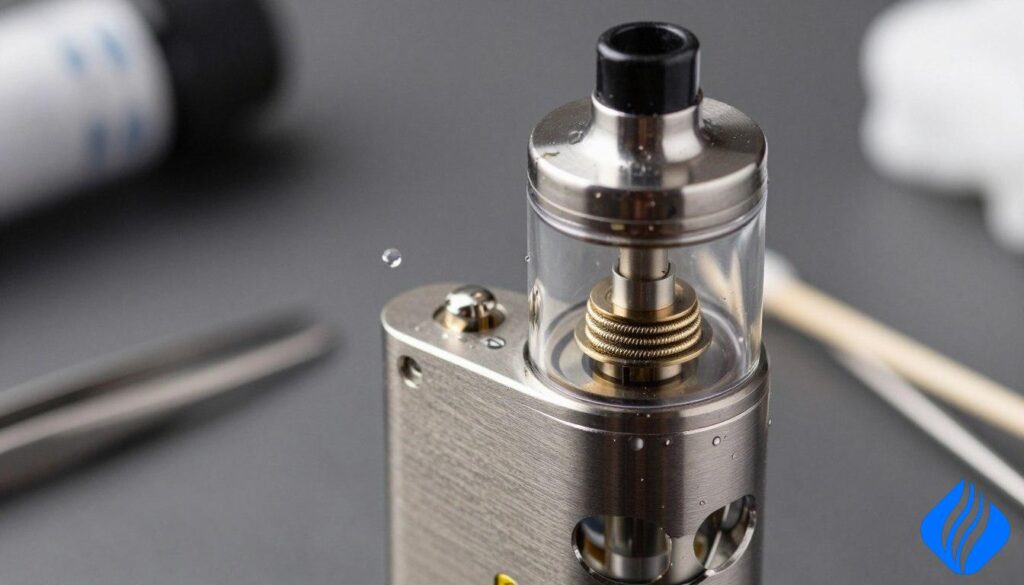
Crackling and small liquid drops at the mouthpiece often point to a coil that has become over-saturated. Spitback means droplets of e-liquid pop through the airway because the wick holds too much liquid and the juice “cooks” instead of vaporizing.
Common real-world causes
- Over-priming coils during installation floods the cotton.
- Overfilling a pod or tank lets liquid sit in the chimney.
- Hard pulls or strong suction pull extra e-liquid into the coil chamber.
- Wearing coils: degraded cotton holds and releases excess liquid unevenly.
PG/VG ratio and device matches
Thin blends (higher PG) can oversaturate tight-draw pods. Thick, high-VG e-liquids may under-wick in small coils and cause dry hits.
Mesh coils wick fast and make vapour efficiently, but they still flood when overfilled or used at too-low wattage. Sub-ohm tanks favor thicker liquids; pods often prefer thinner blends.
“Crackling + gurgle + droplets = oversaturation; harsh or burnt = under-saturation.”
Goal: remove excess liquid from the chimney and then correct fill level, draw technique, ratio, and wattage. For hands-on clearing tips, see our guide on spitback and popping.
Step-by-step fixes to stop spitting, clear a flooded coil, and restore hits
We’ll cover safe, fast actions you can do in minutes to remove excess e-liquid and get solid hits again. Follow the numbered steps and do not fire the device while clearing liquid.
Common symptoms and quick solutions
| Symptom | Likely fix | Action |
|---|---|---|
| Gurgle + spitback | Flooded coil / chimney liquid | Clear chimney, tissue blow-out, wipe mouthpiece |
| Weak hits | Wattage too low or airflow blocked | Adjust wattage to recommended range; open airflow |
| Repeated droplets at mouthpiece | Overfilled tank or worn coils | Reduce fill level; replace coil if it recurs |
Clear the chimney and airflow without firing the device
- Remove the pod or tank. Hold a rolled paper towel at the mouthpiece.
- Cover airflow vents with the towel and do a controlled blow through the mouthpiece to expel liquid.
- Alternate: tissue over mouthpiece, gentle downward shake, then immediately wipe the chimney and mouthpiece clean.
- Reassemble only after chimney and contacts are dry.
Adjust wattage and prime coils correctly
- Check the recommended wattage printed on the coil. Set wattage at the low end.
- Raise power slowly until vapor stabilizes. Too-low wattage can let liquid pool and cause spitting.
- For a new coil, add two small drops to exposed cotton, install, fill, and let sit 5–10 minutes.
- If you over-prime often, skip drops and extend soak time before firing.
Technique, PG/VG, and replacement cues
Draw gently. Short, hard pulls pull much e-liquid into the coil chamber. Open airflow slightly to reduce suction-driven flooding.
Match PG/VG to your device: 50/50 or higher PG for many pods; higher VG for sub-ohm tanks. Using wrong viscosity raises the likelihood of leaks and spitback.
Replace the coil when flooding repeats after cleaning, the taste turns burnt, or cotton appears degraded. A worn coil causes most repeat issues.
Sokvape pro-tip: Use the tissue method and a controlled mouthpiece blow-out after any overfill. Keep a paper towel in your kit for quick chimney wipes to protect your vaping experience.
Safety Warning and compliance notes for maintenance and travel in the United States
Safety Warning: Lithium-ion batteries demand careful handling. Stop using a device that feels unusually hot, smells odd, shows swelling, or has visible damage. Never charge damaged cells. Dispose of compromised batteries per local hazardous-waste rules and seek professional help if a cell appears punctured or bulging.
Charging best practices:
- Use a reputable charger and approved cable; avoid cheap, uncertified chargers.
- Align charging contacts before connecting; the charging light stays on while charging and turns off when complete.
- Avoid overnight charging when possible and keep contacts dry and clean.
- If rapid blinking happens during charge, disconnect for 10 seconds and reconnect. Persistent rapid blinking may indicate a defect or a deeply depleted battery—stop use if the problem continues.
Travel packing basics: TSA/FAA compliance
Follow these numbered packing steps for safe transport on US flights:
- Carry batteries and devices in carry-on baggage only; do not place loose lithium batteries in checked bags.
- Protect terminals with tape or a dedicated battery case to prevent short circuits.
- Pack e-liquid bottles upright in a sealed bag and limit quantities to airline and TSA rules.
- Store spare pods upright in a sealed bag with a small absorbent wipe to catch any pressure-related seepage.
| Carry-on | Checked Bag | Notes |
|---|---|---|
| Recommended for batteries and devices | Not recommended for lithium batteries | Carry-on allows crew access if a thermal event occurs; use a battery case |
| Pods and e-liquid allowed with limits | May be restricted or prohibited | Pack liquids to meet TSA 3-1-1 rules and airline policies |
| Terminals protected and devices powered off | Risk of fire and loss | Always check airline-specific rules before travel |
Legal Disclaimer and PACT Act awareness
Legal Disclaimer: We provide general safety and compliance guidance, not legal advice. You must follow federal rules, state and local laws, carrier policies, and airline regulations. Laws change; verify current requirements before shipping, buying, or traveling. PACT Act restrictions affect shipping, purchase, and delivery of nicotine products. Rules vary by state and carrier and changed through 2026; confirm the latest rules before ordering or moving products across state lines.
Safe charging, proper storage, and lawful use protect you and those around you.
Conclusion
We end with a tight recap to get you back to consistent hits fast.
Check power and clean contacts first. Reseat the pod or tank and confirm clear airflow. Then clear excess liquid, prime coils properly, and set wattage at the recommended range.
Recurring spitting usually stems from workflow: priming, fill level, draw strength, or PG/VG mismatch—not a permanent fault. Change one variable at a time so you can spot the true cause.
For matched coils and guidance, contact Sokvape or view t. for device-specific help.
FAQ
Q: What causes repeated spitting? A: Over-saturation from overfilling or hard pulls.
Q: How do I stop gurgle without tools? A: Remove the pod, blow gently through the mouthpiece, wipe dry, then reseat.
Q: When should I replace a coil? A: If flooding keeps returning or taste turns burnt.
Q: Can wattage fix weak vapor? A: Yes—start low and raise to the coil’s recommended range.
Q: Is a blinking light dangerous? A: If the battery feels hot or bulged, stop use and seek professional help.
 English
  German
  Dutch
Dutch  Danish
  Czech
Czech  Italian
  Slovenian
  French
  Hungarian
  Spanish
  Polish